5 Critical Minerals Leading the Pentagon’s Rush to Restock
 |
| By Dawn Pennington |
The ceasefire between Iran and the U.S. has collapsed.
President Trump notified Congress in writing on July 10 that fighting had resumed on July 7.1
His team says this starts a new 60-day period where the military can act in the region without legislators’ approval.
Since the news hit the tape yesterday, oil markets have celebrated the talks. Brent crude, the international benchmark, surged above $85 a barrel for the first time in a month.2
Meanwhile, China had its own response to the conflict. It has ceased liquid helium exports.3
With the initial Strait of Hormuz closure, one-third of the world’s supply got stranded at its source.
Helium is a critical component of semi chips and cooling components for MRI machines. It also has a six-week shelf life.
Supply has literally evaporated. So, prices have soared.
Now that the war is back on, China isn’t taking any chances.
Especially when it comes to other resources that are increasingly challenging to come by.
Restocking the Mineral Supply
During the first phase of the war, the U.S. burned through missiles and drones in this conflict faster than it could build them.
The Department of War's $1.1 billion Drone Dominance Program calls for 150,000 drones in two years, though they will likely need as many as 1 million, and faster.
Consider that on July 13, the U.S. used Texas-based Saronic’s sea drones for the first time. The destination was an Iranian naval base.

The Pentagon is now asking Congress for an extra $80 billion to cover the U.S.-Iran War bill.
That’s on top of the historic $1.5 trillion fiscal 2027 defense budget the Trump administration is seeking.
At the end of the day, the Pentagon can write all the checks it wants.
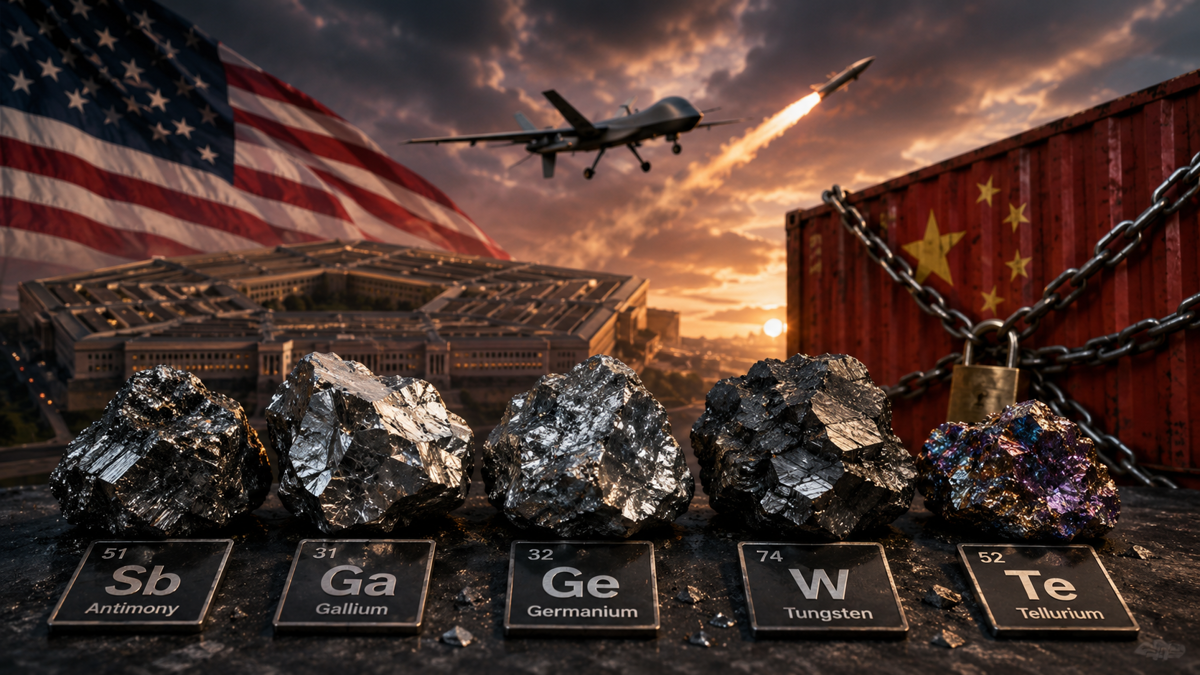
But the weapons it's racing to build still run on a short list of obscure minerals that are still mostly controlled by China.
Every drone needs the same handful of critical metals. And it’s not just drones …
5 Critical Minerals We Need More Of
The chip material called gallium-nitride (GaN) powers the amplifiers that drive military radar and communications.
Germanium goes into infrared optics and night-vision.
The tech that lets a missile find its target are built from compounds like indium antimonide.
Strip these elements out, and the modern American arsenal simply doesn't function.
Bit by bit, the banned building blocks of modern weaponry add up to a major supply crunch.
No fewer than 80,000 components across roughly 1,900 U.S. weapons systems depend on Chinese-sourced minerals. That’s according to defense data analytics firm Govini.5
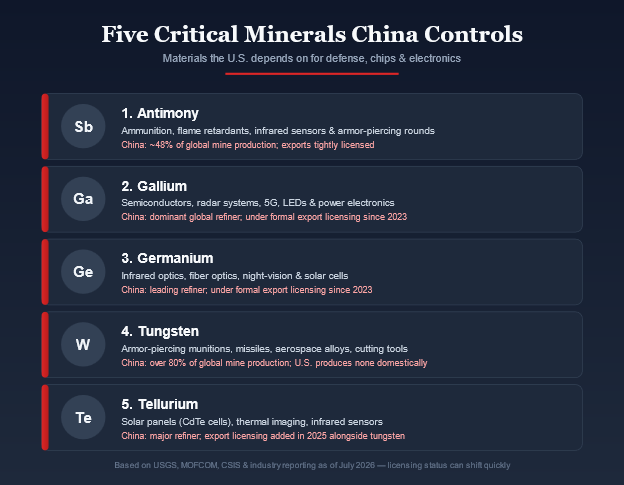
Govini identified five elements where China dominates and the U.S. is exposed: antimony, gallium, germanium, tungsten and tellurium.
By their analysis, 78% of U.S. military weapons systems are potentially vulnerable to a Chinese cutoff. However …
That Mineral Cutoff May Never Come
In November, China's Ministry of Commerce suspended its export ban on gallium, germanium, antimony and superhard materials to the U.S. through Nov. 27, 2026.
But according to Fastmarkets, a Chinese export ban on metals for military uses remains in effect. And exporters must still apply for a license from Chinese authorities for every single overseas shipment, Reuters has reported.
A "suspension" that requires Beijing to approve each cargo, one by one, is a leash China can yank at any moment.
If the controls had really loosened, you'd see it in the price. You don't.
The Price Divergence
The Shanghai Metals Market’s latest data shows, as of July 1, germanium in Western U.S. warehouses was fetching about $6,250 per kilogram versus roughly $3,417 in China's domestic market.6
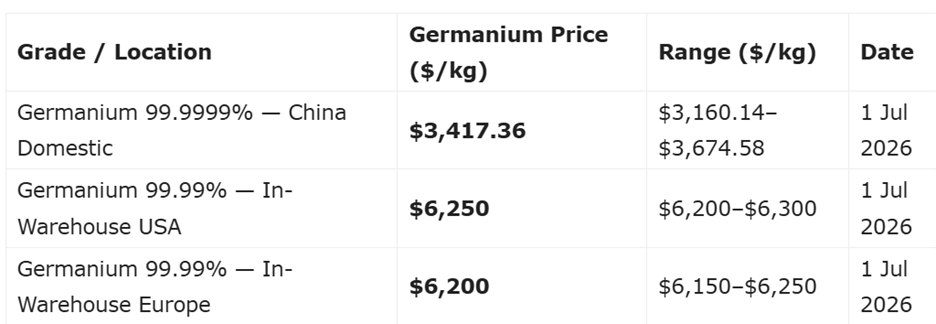
That’s an 83% premium. And the gap is widening, not closing.
The "thaw" was supposed to pull those prices together.
Instead, germanium climbed about 30% from April through June, the strongest performer across the strategic-metals complex.
The two-tier market is still in effect.
The problem is nobody can easily flood the market with new supply.
These metals aren't mined directly. Germanium is a byproduct of zinc refining, gallium of aluminum.
You can't simply drill for more.
Kazakhstan's Padvolar Aluminum Plant refinery, for instance, won't run at scale until late 2026 at the earliest.
The same goes for Alcoa’s (AA) Wagerup Alumina Refinery slated for Western Australia.
How to Play It
For the time being, the bottleneck holds. And the value accrues to whoever can produce these metals outside China's license regime.
Now, to be clear, there's no retail physical market or ETF for germanium itself (unlike gold or silver).
So, equity exposure is the only route … and every equity route is indirect.
But one way to potentially benefit is to check out the by-product refiners and recyclers, like the 5N Plus (VNP.TO).
The Montreal-based refiner-recycler of germanium, gallium and indium won an $18M U.S. government award in early 2026 to expand germanium recycling at its St. George, Utah plant.
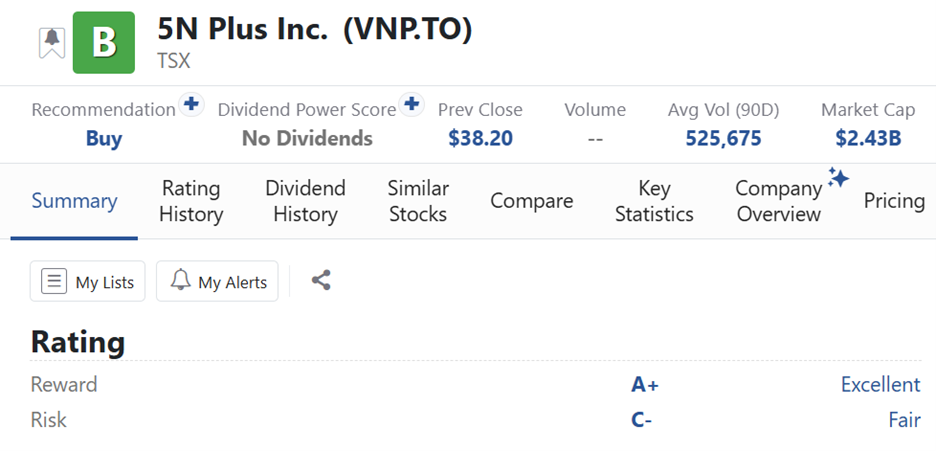
It does trade on the Toronto Stock Exchange. And not all brokers in the U.S. make that easy. But there are still two more you can use.
Teck Resources (TECK), is the largest North American germanium source via its Trail, British Columbia, Canada, smelter.
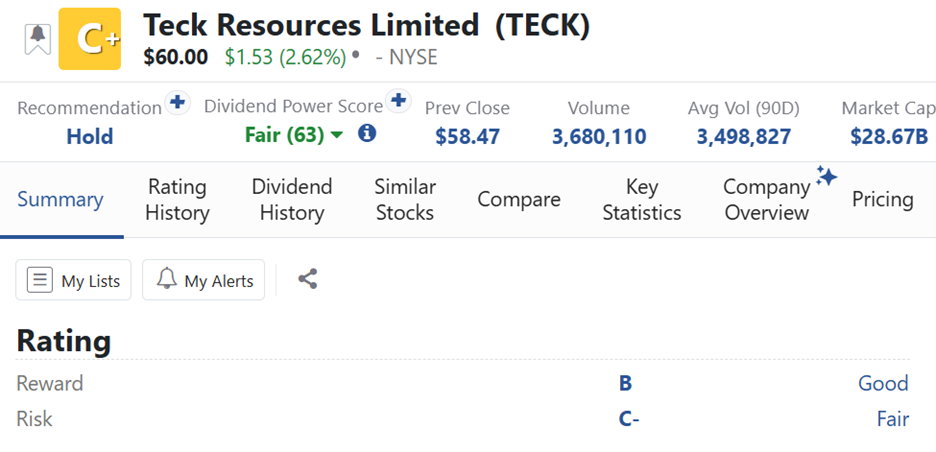
It is rated a “Hold” currently. But it is quite a bit larger and has a listing on the NYSE.
Umicore (UMICY) is a scrap recovery firm that specializes in recovering and producing high-purity germanium located in Brussels, Belgium.
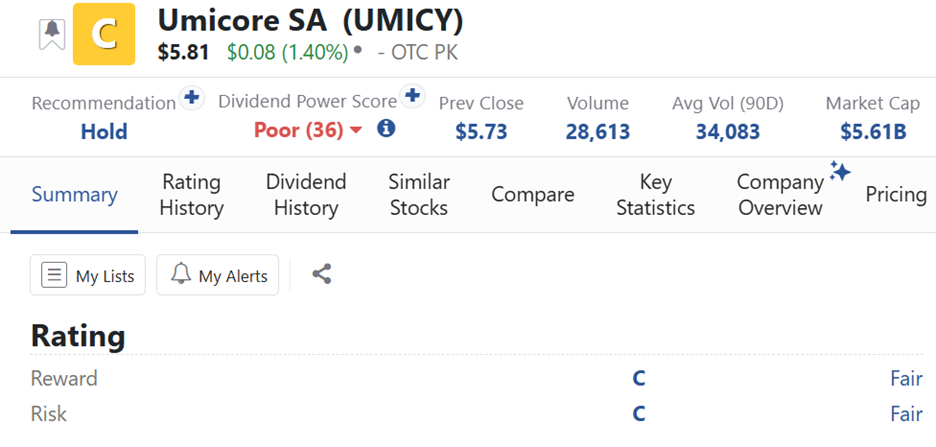
It trades over the counter and without a lot of volume. So, if you go with this backdoor metal play, be sure to use caution and a limit order if possible.
We’ll continue to mine for new ways to play this Chinese stranglehold on critical minerals.
And one of the best ways for you to keep up on this market is to keep reading your regular Wednesday issues from Sean Brodrick.
He’s covered this idea plenty in the past. And he continues to track it closely for his paid readers.
But it’s not the only one he has his attention on.
In fact, he’s looking beyond the minerals under our feet and into the sky above us for his next Supercycle trend.
He plans to outline exactly what that is and how to participate in a special live event on Tuesday, July 21, at 2 p.m. Eastern here.
To your health and wealth,
Dawn Pennington
Editorial Director
2https://www.nytimes.com/2026/07/14/business/oil-prices-iran-war.html
3https://apnews.com/article/china-helium-export-iran-war-chips-346d8806f8ba410d81de6ced150acb87
4https://www.cbsnews.com/news/us-iran-war-first-sea-drone-attack-bandar-abbas-naval-base/