 |
| By Chris Graebe |
Something unusual is happening in the IPO market right now.
It's quiet … weirdly quiet.
September was supposed to be one of the busiest stretches of the year for new public offerings.
Wall Street came back from its summer vacation in the Hamptons …
Major capital is chomping at the bit to be invested …
And the period between Labor Day and Thanksgiving is historically one of the most active windows on the IPO calendar.
This year?
Only four IPOs have priced since Labor Day.
And this isn't happening by accident …
The Anthropic Effect
Anthropic, the maker of Claude, pushed its planned listing from October to November, giving the company time to present fresh third-quarter financials before locking in pricing.
The target remains a valuation near $2 trillion and a raise of up to $100 billion.
That would surpass SpaceX's (SPCX) record-breaking $86 billion June IPO as the largest public offering in history.
But the delay hasn't reduced the anticipation …
It’s only extended it, by keeping institutional investor attention anchored to Anthropic while the rest of the IPO calendar waits.
And the OpenAI wildcard is off the table for now.
CEO Sam Altman has decided not to IPO until 2027.
Given the current debate around AI safety, he thinks that now would be "an ill-advised moment to go public."

The pathway being cleared for two historic listings to close out 2026 now belongs entirely to Anthropic.
This makes how Anthropic prices and trades in November even more consequential.
And not just for its own shareholders … but for the entire IPO market heading into year-end.
Last week, nuclear services firm Holtec and venture capital-backed Bamboo Insurance both postponed their IPOs within days of each other, each citing market conditions.
On the surface, that sounds like weakness. But market-watchers are reading it very differently.
These companies have looked at the calendar, looked at where institutional investor attention is pointed and made a rational decision to get out of the way.
When a $2 trillion offering is in the future, the smart move for smaller issuers isn't to compete for the same pool of capital but to wait for the dust to settle and price into the wave that follows.
Essentially, the entire market has paused to wait for the biggest debut since SpaceX to set the tone.
What Happens Next
Here's the part of this story that should interest investors most.
Bankers are already anticipating what follows an Anthropic listing.
The expectation is a cluster of AI and technology names that have been holding their IPO plans in reserve is ready to jump quickly once Anthropic prices and the market digests the result.
If Anthropic prices cleanly and trades well, it validates the entire AI investment thesis for public market investors.
Capital that has been sitting on the sidelines waiting for a signal gets deployed.
And the issuers that wisely stepped aside in September will come pouring back to the market with institutional investors freshly reminded of why they want exposure to this sector.
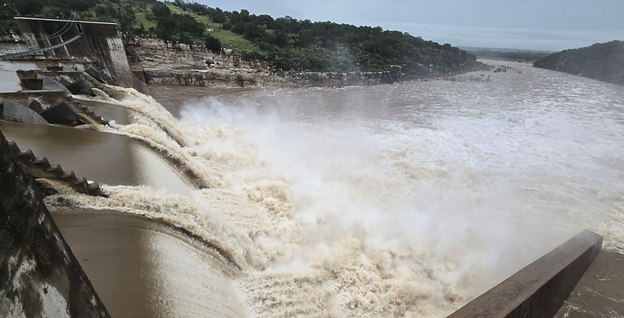
Think of it as a dam. Pressure will build and once Anthropic opens the gate, you can imagine what that looks like …
But if Anthropic stumbles — prices below target, trades down in the first week or generates the kind of post-IPO volatility that SpaceX has experienced since its June debut — the dynamic reverses quickly.
In that case, those waiting in the wings delay again.
The window narrows, and the question of whether 2026 becomes the strongest IPO year since 2021 gets a lot more complicated.
That’s what we’re staring at right now.
One single company and its pricing decision will set the tone for the rest of the year.
Why the Scorecard Matters More Than Ever
This is exactly the kind of environment where having a disciplined framework separates good outcomes from expensive mistakes.
When a flood of IPOs follows a blockbuster debut, the quality varies enormously …
Some of the companies rushing to market in Anthropic's wake will be genuinely strong businesses with real revenue, defensible competitive positions and management teams that have earned the right to go public.
But the others?
They'll be piggybacking on the market's enthusiasm and using that opportunity to access capital at valuations the fundamentals don't fully support.
Unfortunately, the difference between these two groups usually isn’t obvious in the roadshow excitement.
That’s Why I’m Posting an Urgent IPO Warning
The reality is that nine out of 10 IPOs are duds.
In fact, the bigger and more overhyped the IPO, the harder it usually falls.
Just look at what happened with SpaceX …
Wall Street called the SpaceX IPO "the financial event of the decade."
The financial media — along with Elon Musk — spent months whipping investors into a frenzy.
But here at Weiss, we warned our members to steer clear of the hype. Not just once. But multiple times.
Just 72 hours before launch I basically told folks, point blank: Do NOT touch SpaceX.
Many folks thought I was talking them out of a great opportunity.
But I've analyzed thousands of potential IPOs over the past decade … and SpaceX had all the warning signs.
Turns out, I was right.
SpaceX crashed as much as 50% from its peak, making it one of the worst IPOs of the last 15 years.
And it wasn't a one-off.
Many hyped IPOs play out the same way.
A small number of IPOs — just one in 10 — defy those odds.
Here at Weiss, we call them Apex IPOs.
According to our research — a six-month study spanning 3,300 stock debuts across every major U.S. exchange over the last 15 years — these rare opportunities beat the average IPO by 25-to-1.
We’re going to walk you through the difference between the two on Tuesday, Oct. 6 at 2 p.m. Eastern.
And show you how you could have spotted Apex IPOs ahead of time. Before they ran up as high as 1,924% … 4,178% … even 7,245%.
In the 55 years since Dr. Martin Weiss founded this firm, we've never done an event exclusively about IPOs. Until now.
I hope you join us.
Happy hunting!
Chris Graebe