Cars, Robots & Submarines: BlackBerry’s Building Backlog

 |
| By Michael A. Robinson |
In 2009, the newly inaugurated President Barack Obama ran into a big problem.
He wanted to keep his prized BlackBerry, but the Secret Service and his lawyers advised that he ditch it.
One of the first well-known “smart” phone models, the BlackBerry had too many security holes and could potentially violate too many records laws.
He fought them and won a hardened, locked-down version. "They're going to have to pry it out of my hands," he famously quipped at the time.
He had plenty of company. By the mid-2000s, the BlackBerry became the great status object of corporate America.
When the little black slab with the chiclet keyboard buzzed on the conference table, it told everyone in the room you were a big shot.
In 2006, the word “CrackBerry” became the word of the year in Webster's New World Dictionary to poke some fun at the device’s addictiveness.
BlackBerry Messenger was one of the first group chats to send instant messages via mobile.
At its January 2010 peak, the company had roughly 85 million subscribers and owned about 43% of the U.S. smartphone market.
That was all before Steve Jobs entered the chat, released the iPhone and crumbled BlackBerry’s empire, all within about four years.
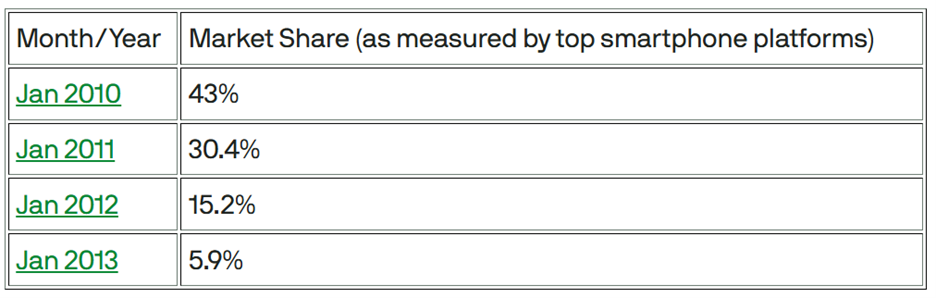
The iPhone and Android made the physical keyboard a museum piece. And BlackBerry's touchscreen answer, the Storm, became a punchline.
Its do-or-die operating system, BlackBerry 10, shipped in 2013, years too late to rebuild an app store anyone cared about.
The stock fell from a high near $147 to the low single digits.
By 2016, the company had stopped designing phones altogether.
For most investors, that's where the story ended. As a Canadian cautionary tale, the Blockbuster of mobile.
Which is exactly why many people didn’t notice what happened next …
BlackBerry’s ‘Toll Booth' Pivot
Turns out, the operating system that failed as a phone platform turned into one of the most embedded pieces of software around, only inside your car.
That system is called QNX.And today, it’s the foundation of the company’s growing software and IoT business.
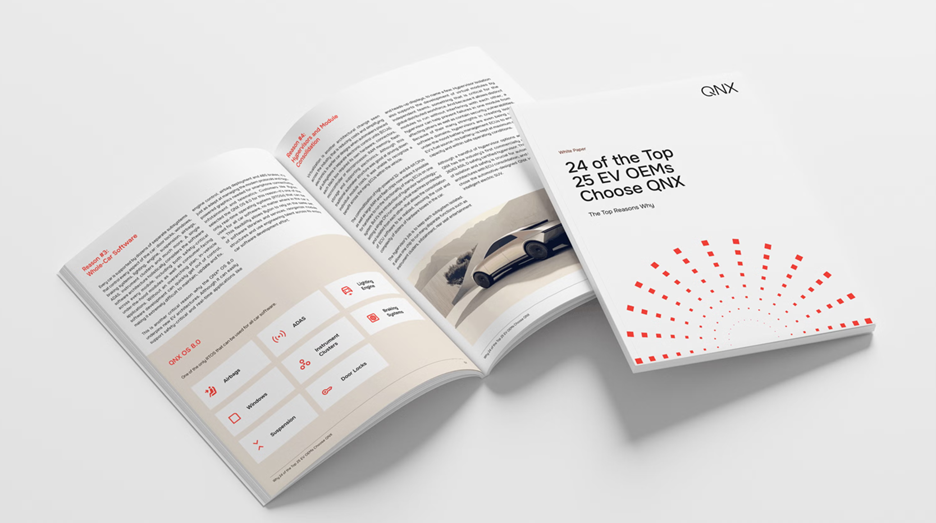
QNX is a real-time, safety-certified operating system running your car’s instruments, driver-assist features and digital cockpit.
It now runs in over 275 million vehicles, up from 100 million in 2020.
And here’s the best part …
Every time an automaker ships a car with QNX inside, BlackBerry gets a royalty.
In other words, it’s a toll booth that collects a small, high-margin fee (from $5 to $15) on a vehicle someone else built, marketed and sold.
It’s become like the “Intel-inside” of your car’s dashboard.
BlackBerry’s Big Turnaround
This summer, BlackBerry Limited (BB) reported the latest results from a turnaround quarter like it hasn’t seen in a very long time.
Sales climbed 26% from a year ago to $152.9 million.
Earnings rose 144% to $36.3 million, up 144%.
Operating income of $15.3 million increased from a loss a year ago.
QNX sales were up 26% to $72.3 million, at an 86% gross margin.
The latest results mark the fifth straight quarter of positive net income and the first cash-positive fiscal first quarter in nine years.
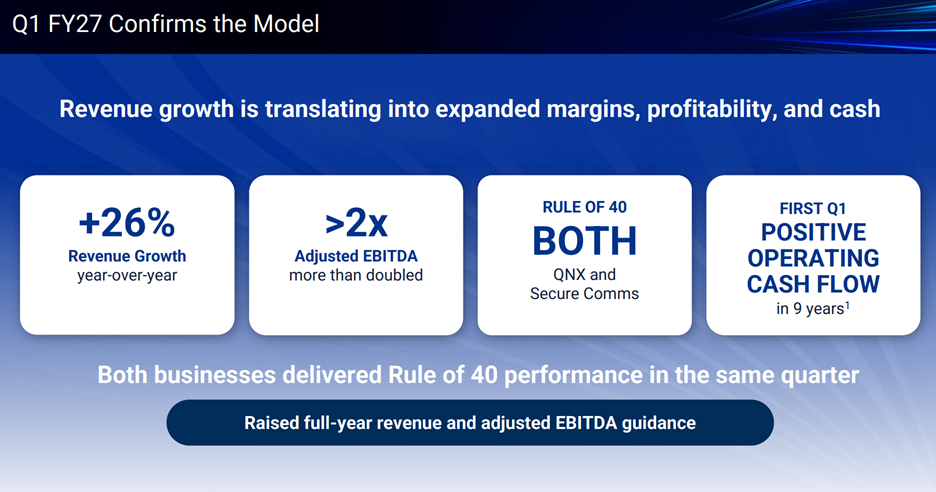
With $422.9 million in cash, management is now buying back stock.
Looking ahead, QNX’s royalty backlog now stands at about $950 million, after increasing 85% from 2020 to 2024.
For a company this size, that is an unusual amount of forward visibility.
Its Secure Communications franchise also boasts healthy growth and profit.
The company once synonymous with missing the future is, suddenly, a clean software story.
A CEO with a Scalpel
BlackBerry’s turnaround didn't happen by accident, and it didn't happen overnight.
John Giamatteo, who took over as CEO in late 2023 after running the cybersecurity unit, made several key surgical cuts.
Those included roughly $150 million of annual overhead and a 37% reduction in headcount.
He shed more than a quarter of the company's real estate and refinanced debt.
Crucially, Giamatteo scrapped the prior plan to spin off or IPO QNX and Secure Communications and instead ran them as two focused businesses.
The Future: Cars, Robots & Submarines
Giamatteo is now positioning QNX as the must-have safety software not just for vehicles but for “physical AI.”
That’s the robots, medical devices and industrial machines that need rock-solid, certified real-time code.
And he’s built partnerships with a who’s who of the tech world, including …
- A deal with Nvidia (NVDA) to use QNX's safety systems with Nvidia’s IGX Thor and Halos safety stack for edge AI.
- A new design win with Chinese EV maker Leapmotor for a premium SUV.
- A push into the defense sector with German naval-defense giant ThyssenKrupp Marine Systems tied to Canada's submarine program. Plus, a partnership with the U.S. military on secure comms.
Management raised full-year guidance to a range of $594 million to $621 million in revenue and about $100 million of operating cash flow.
One bullish analyst framework sizes the long-term prize at something like 10 times current QNX revenue by 2030, as software content per car keeps climbing.
Bottom line: The company many wrote off long ago as a dead phone brand has turned into a high-margin toll booth on cars, robots and defense systems.
Best,
Michael A. Robinson
P.S. Because of BlackBerry’s past failures and its current market size, you don’t often see it in many mainstream portfolios.
The same could be said for many of the stocks my colleague Gavin Magor finds with his U-AI system.
He will reveal how it works and what it’s pointing to ahead of the midterm election on Tuesday, Aug. 18 at 2 p.m. Eastern.
1https://techcrunch.com/2022/01/03/blackberry-phones-once-ruled-the-world-then-the-world-changed/
3https://irp.cdn-website.com/586e2b1b/files/uploaded/BB+FY26+AGM+Presentation.pdf