 |
| By Bob Czeschin |
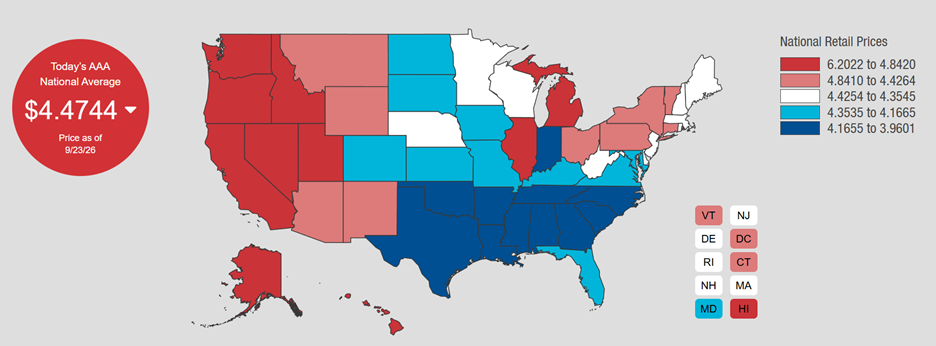
Gasoline prices across the country average $4.47 a gallon for regular unleaded. A hefty 42% above last September’s prices.
And that’s a national average. Which means even worse numbers in some individual states.
In California, the average price is about $6.20. Other high-cost states include Washington ($5.55) and Hawaii ($5.56).
Gas prices are politically sensitive, because most folks remember a time when $100 seemed like a lot of money.
That’s now barely enough to fill up your tank … crystallizes pent-up frustration over relentlessly rising prices. And energizes voters to find somebody to blame.
Oil prices have dominated headlines since the Iran War halted oil tanker traffic shipping through the Strait of Hormuz (the world’s most famous maritime chokepoint). And for good reason.
In a single stroke, it cut the oil-rich Mideast — Saudi Arabia, Kuwait, Iraq, Iran, Qatar and United Arab Emirates — off from global energy markets.
However, the price impact this is having is very different from other major global supply shocks. Such as the 1973 Yom Kippur War. Or the 1979 Iran-Iraq War. What’s different today, is …
Gasoline & Diesel Fuel Have Been Going Up Far Faster Than Crude Itself
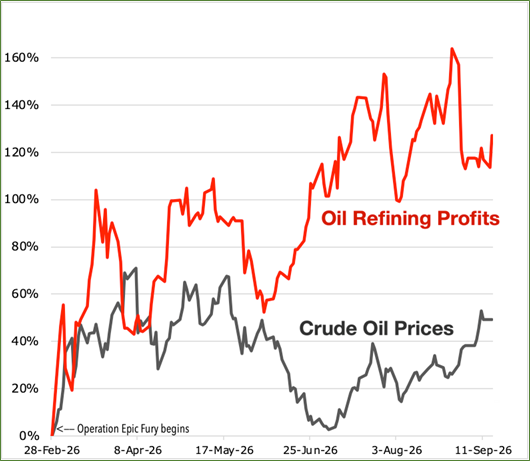
Since Operation Epic Fury, a barrel of crude is up a hefty 50%.
However, the suite of the refined products that barrel can produce is presently up a whopping 120%.
Diesel fuel is by far the most-consumed petroleum product in the world.
Freight trucking consumes the lion’s share of it.
Agriculture, construction, factories, mining, marine and railway freight accounting for most of the rest.
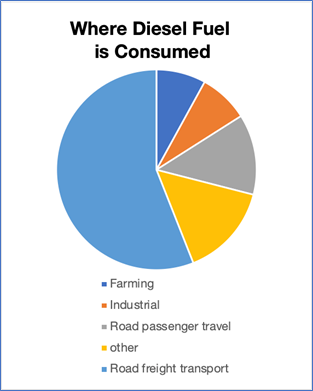
As the lifeblood of global commerce, sharply rising diesel prices have a huge impact on many industries as well as consumers.
3 Reasons Refined Product Prices Are Rising Faster than Oil
First, refineries have only recently been targeted.
Early in this war, armed forces on both sides avoided attacking petroleum targets.
But that was mainly because both sides hoped for a short war, followed by a negotiated settlement and quick return to something resembling business as usual.
But as failed cease-fires and negotiations stacked up, the Trump White House concluded attacking Iranian oil installations offered the only hope of satisfactorily concluding the war before America’s critical midterm elections.
Second, vulnerability of oil installations to military attack varies.
During World War II, retreating forces turned Dutch East Indies oil fields into an inferno to keep them out of the hands of advancing Japanese.
Iraqi saboteurs did the same thing to Kuwaiti oil fields ahead of U.S. troops in the 1991 Gulf War.
It didn’t work. In both cases, oil in the ground proved almost impossible to destroy. And production recovered to near pre-attack levels in 24 or fewer months.
By contrast, refineries are among the most vulnerable oil targets.
Acres of tanks and pipes full of flammable liquids and explosive gases. Operating at high temperature under enormous pressure … you could almost say they were primed to blow up all by themselves!
To wreck a refinery, you need neither big bombs nor precision delivery.
And once the first small bomb goes off, there’s a good chance chains of secondary explosions will finish the job.
Third, low-cost drones are refineries’ new worst enemies.
Built by Ukraine and Iran with cheap, off-the-shelf parts, they are already changing the shape of 21st-century warfare.
Ukrainian drones have hit Russian oil refineries at least 70 times since the beginning of 2026, knocking Russian refining output to 20-year lows.2
That has forced half of the country’s top diesel refineries to slash production.
Meanwhile, at least 19 oil refineries and depots across Saudi Arabia, Kuwait, United Arab Emirates, Bahrain and Iraq, have been hit by Iranian drone strikes this year.3
These attacks have likely taken at least 9.5% of global refining capacity offline.
How to Fight Back
Because we all have to get from place to place, there’s no way not to be exposed to the galloping prices of motor fuels — like gasoline and diesel.
But there are a number of publicly listed refiners that should do very well indeed as long as crack spreads remain as robust as they are today.
So, instead of railing at how much it costs the next time you top up your tank, why not get in on some of the action?
Consider investing in one or two in pursuit of sufficient gains to offset — or even dwarf — your annoying motor fuel bill.
One way to buy many of them is the Van Eck Oil Refiners ETF (CRAK).
As you can see, it’s been having a wonderful year …
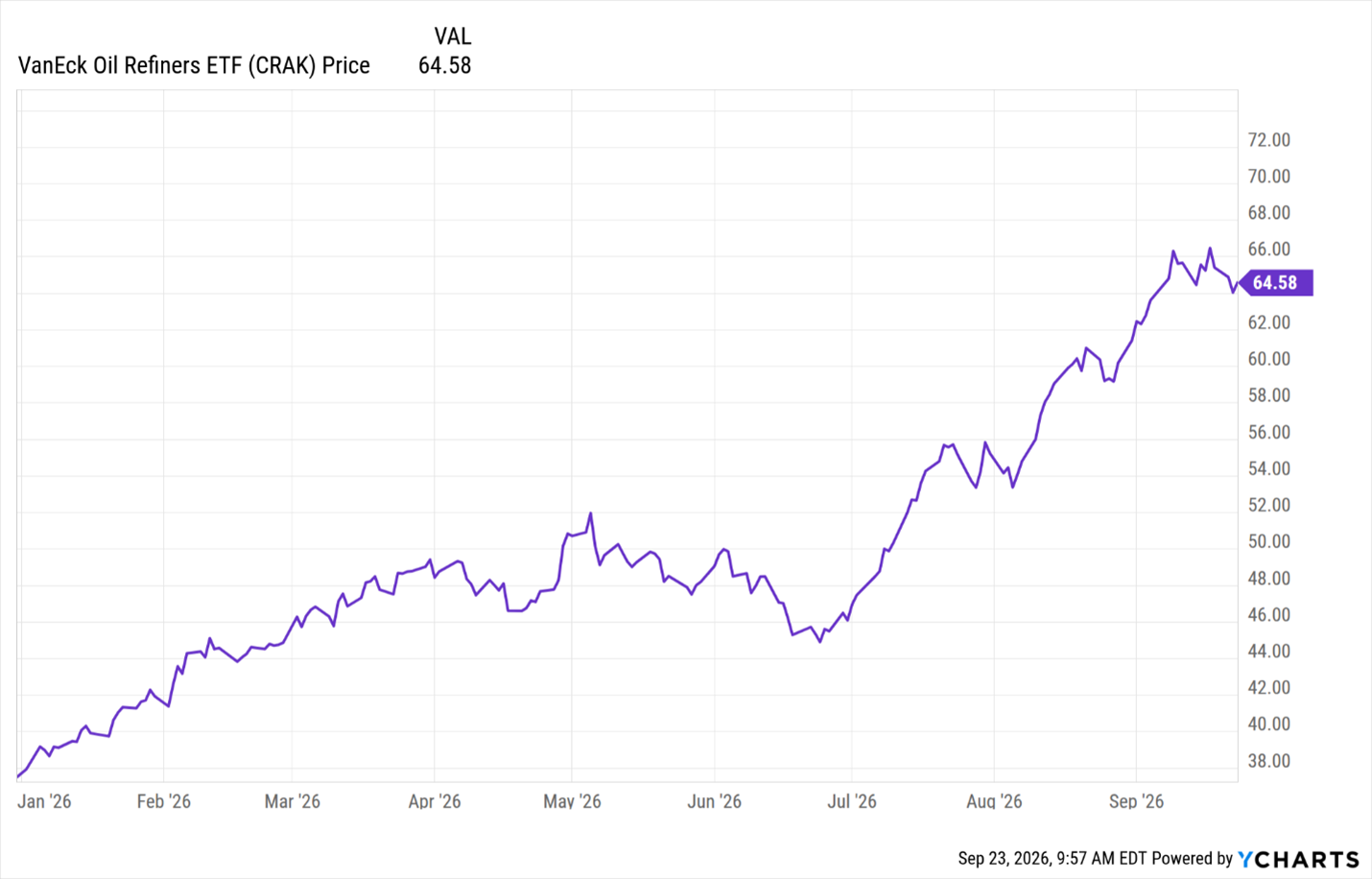
With as much damage as has already been done to the refineries in the Middle East and Russia, this might be just the start.
So, don’t get angry at high fuel costs. Get paid.
Best,
Bob Czeschin
1https://gasprices.aaa.com/state-gas-price-averages/
2https://www.kyivpost.com/post/84579
3https://abcnews.com/International/worst-case-scenario-23-oil-gas-sites-targeted/story?id=131308766