 |
| By Michael A. Robinson |
Don’t worry if you’ve never heard of Marcus Leng. Few investors have.
But when the history of urban air travel is written, he may be front and center.
He runs a California-based company now taking reservations for a personal electric aircraft — essentially a flying car — priced around $190,000.
The firm expects to make deliveries within nine to 12 months.
And because it falls under the FAA’s ultralight rules, no traditional pilot’s license is required.
This isn’t a prototype. It’s for sale.
And it’s launching into a market with serious growth behind it.
Grand View Research estimates the urban air mobility market was worth $3.6 billion in 2023 and could reach $29 billion by 2030 — roughly 34% annual growth.
In other words, this is shaping up to be a target-rich field for investors.
But rather than try to decide which flying car will come out ahead, I’ve identified a pick-and-shovel supplier set to profit across the sector.
The Jetsons Have Landed
If you’re of a certain age, you probably remember The Jetsons.
They lived in the sky. They commuted in flying cars. It was pure cartoon fantasy.
Back then, personal flight felt as far away as Mars.
Today, it’s sitting on a price list.
Leng’s company, Pivotal, has spent more than a decade developing electric vertical takeoff and landing aircraft — known as eVTOLs.
Its latest model, Helix, weighs about 355 pounds, cruises near 60 mph and offers roughly 30 minutes of flight time per charge.

More than 50 pilots have already been trained.
It’s early. Production is limited. But cash is changing hands.
As far as urban flight is concerned, he’s far from alone. At least two companies are gearing up for urban air taxis.
Joby Aviation (JOBY) is preparing operations overseas and has partnerships with Delta (DAL) and Uber (UBER).
It’s also set to launch air taxi service in the United Arab Emirates.
Another big player in the U.S. is Archer Aviation (ACHR).
It has commercial deals with Southwest Airlines (LUV).
It’s just wrapping up its FAA Phase 4 certification process and should be flying this year.
In other words, this isn’t about one brilliant and daring founder.
It’s an emerging transportation sector.
But here’s the problem for investors: Picking the winning aircraft manufacturer is risky.
Early leaders don’t always survive the scaling phase.
That’s why I’m focused on the supplier that stands to benefit from nearly every aircraft that takes flight.
Blue Chip, Blue Skies
One thing I’ve learned over decades in the market:
Never overlook Old Economy companies when New Economy booms emerge.
In this case, that company is Honeywell (HON).
Founded more than 120 years ago, Honeywell began with thermostats.
Today, it sits at the center of aerospace, automation and advanced materials.
If Honeywell equipment hadn’t been onboard, the Apollo missions might never have left the launch pad.
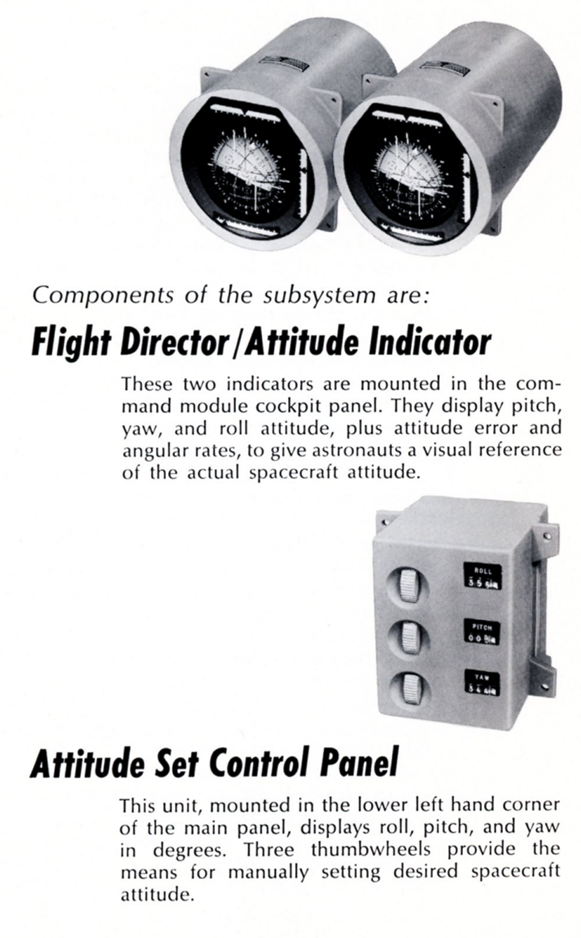
Now the company is repositioning itself again.
It recently began breaking into three separate businesses to unlock value.
Its Advanced Materials division has already spun off. And later this year, its Automation and Aerospace units are set to separate.
That aerospace division is where the urban air opportunity lives.
Honeywell builds avionics, flight control systems, navigation tools, propulsion technologies and safety systems — the kinds of components every serious aircraft needs.
And unlike the startups, Honeywell doesn’t need to “win” the flying car race.
It supplies it.
AAM Is the New Game in Town
Advanced Air Mobility — AAM — is where Honeywell is concentrating its aerospace push.
This is the bridge between mechanical flight and digital flight.
One of its newest offerings is a compact fly-by-wire system that replaces traditional cables and hydraulics with electronic controls.
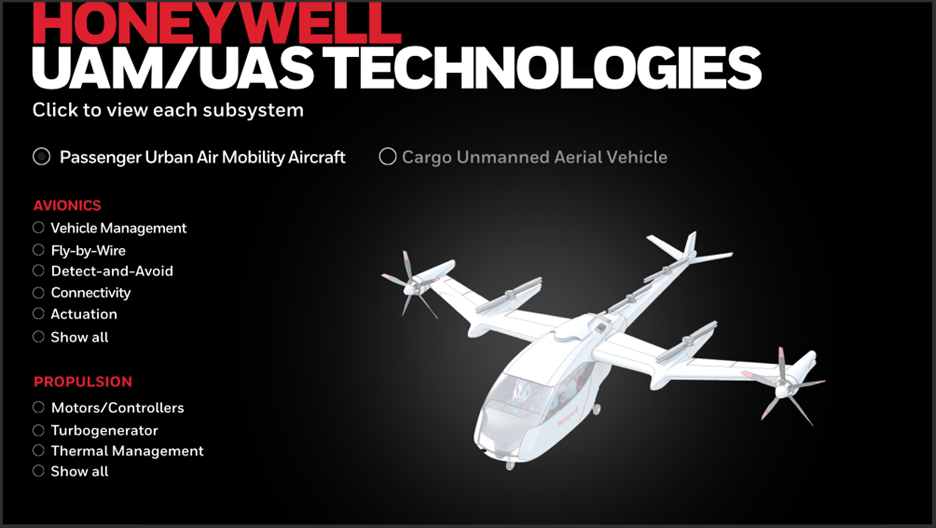
That means lighter aircraft, improved stability and more automation — exactly what electric air taxis require.
Honeywell also works with companies like Vertical Aerospace (EVTL) and maintains deep relationships across commercial aviation, defense programs and unmanned systems.
That’s important.
Because even if personal flying cars remain a niche for wealthy early adopters, the broader AAM ecosystem includes:
- Air taxis
- Cargo drones
- Military logistics aircraft
- Urban commuter fleets
There are already proposals for $200-per-ride air taxi corridors that could cut two-hour drives into 20-minute hops.
If even a fraction of those networks scale, the avionics, flight systems and safety hardware market expands dramatically.
And Honeywell is already embedded in it.
Prepare for Takeoff
Here’s the opportunity.
Honeywell gives you exposure to urban air mobility and commercial aviation.
Not only that, it has strong aerospace programs for defense, not to mention space contracts with NASA and the Pentagon
And thanks to its corporate restructuring, the aerospace business could soon trade more like a focused pure-play rather than a diversified conglomerate.
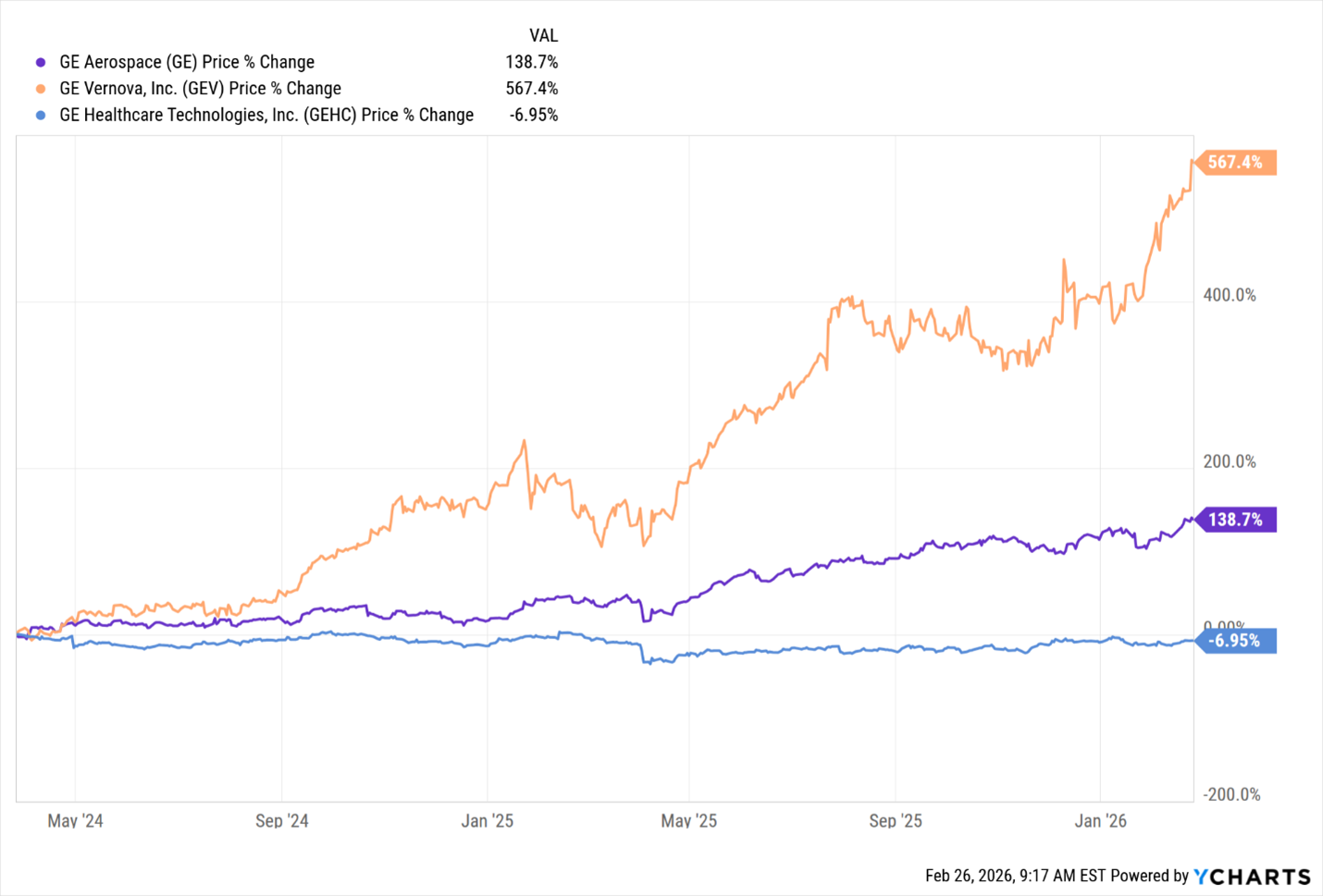
We’ve already seen how powerful that dynamic can be when a legacy division is spun out and allowed to grow on its own.
Just look at how GE’s own energy and aerospace companies performed since spinning off its healthcare division:
Sure, even today, flying cars may still sound futuristic.
But as Leng takes deposits for aircraft, the future is being written in real time.
- Training programs are operating.
- FAA pathways are being navigated.
- And capital is flowing.
In gold rushes like this, the smartest money often backs the supplier.
A great way to play this opportunity is to buy HON now.
Then, when the company spins off, you’ll have stock in the new aerospace company as well.
On top of all that, earnings growth is on the rise.
They were basically sideways over the last three years as the company invested in new tech and internal operations.
That is on pace for a big change this year. Forecasts call for 7% earnings growth for all of 2026.
Don’t scoff. That’s the first of many increasing earnings gains to come as the New Honeywell targets the broad sector with a big hook in urban air mobility.
Best,
Michael A. Robinson
P.S. I’m recommending you consider HON over the many small companies designing their own “flying cars.”
But the biggest winner will still likely end up being a company you’ve never heard of yet … maybe even one that hasn’t begun trading on the stock market.
My colleague, Chris Graebe, specializes in these kinds of pre-IPO opportunities. In fact, one of his 2025 finds just IPOed two days ago!
Sign up for free to see what he’s lining up next. It kicks off on Tuesday at 2 p.m. Eastern.