Government-Owned AI Isn't About Sharing the Wealth

 |
| By Michael A. Robinson |
Last month, aboard Air Force One, President Trump told reporters he'd been talking with AI executives about taking a public stake in their companies.
This is more than just subsidizing AI projects like the administration is doing with its Stargate Project.
However, this would still be a voluntary, passive arrangement with no government board seats or voting rights.
Essentially the American public would become a silent partner in the AI boom.

Then days later, Bernie Sanders proposed something far more aggressive …
A one-time 50% tax on the largest AI firms, paid in stock, with the government holding voting rights and a board seat at each company.2
What's the oddest thing about all this?
Two men who agree on almost nothing arrived at the same basic idea in the same week.
Dress it up however you want … a passive stake or an outright power grab, Washington ownership in private companies historically doesn’t end well for anyone.
Anyone except the government.
The Pitch Sounds Reasonable
OpenAI's Sam Altman is also proposing that Washington hold 5% stakes in each of the leading AI developers, potentially including Anthropic, Google (GOOGL) and Meta (META).
He argues that giving the public a slice of these companies is the best way to share in the upside of the AI revolution.
With Anthropic filing for an IPO valuation around $965 billion, and OpenAI valued at $852 billion in its last private round, we're talking about potentially $900 billion in federal equity under the Sanders proposal alone.
And with the chatter growing ever louder about AI replacing jobs while a handful of companies capture almost all the financial gains, the political pressure to do something is real.
But there’s something big that the wealth distribution debate is leaving out.
This Isn't Really About Wealth — It's About Power
OpenAI, Anthropic, Google and Meta don't own power plants or transmission lines. Their entire value rests on one thing, which is data center demand.
And guess what … that demand runs entirely through an energy grid the federal government already regulates.
See where I’m going with this?
“The government should own a piece of AI companies," actually translates to “The government should hold a financial stake in how fast it permits the grid to be built for AI.”
That has nothing to do with wealth distribution and everything to do with energy policy.
The conflict of interest it creates is staggering.
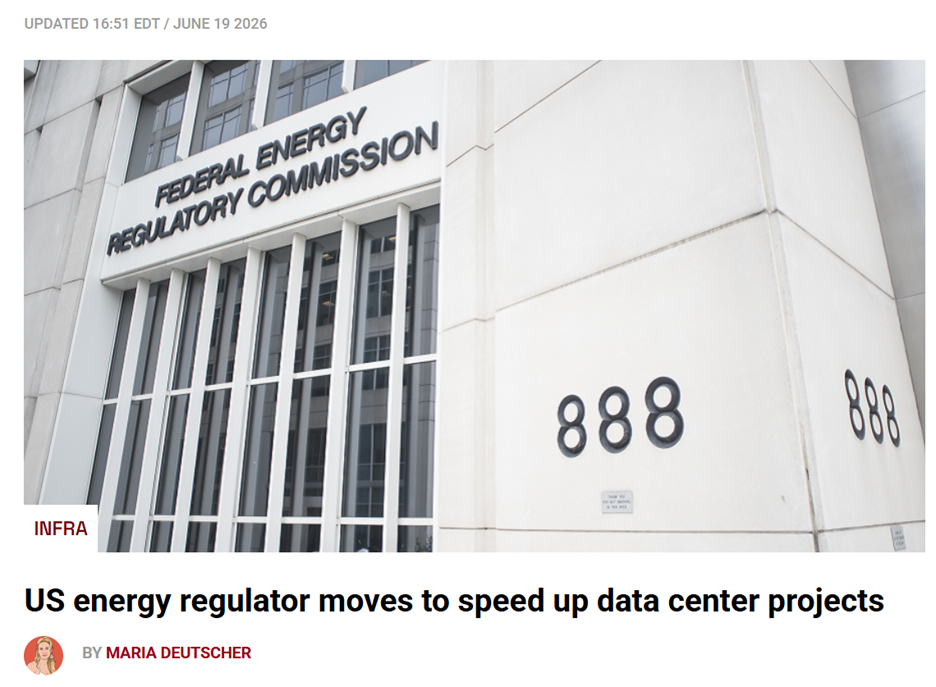
Energy Secretary Chris Wright has already directed the Federal Energy Regulatory Commission to write new rules for connecting large electrical loads, like data centers, to the transmission system.
And as for regulations meant to protect the public by slowing grid approvals and connections?
It only stands to reason that a government with skin in the game would be far less willing to enforce those rules if it means devaluation of its own investment.
This is the fox guarding the henhouse, but with a financial incentive to leave the door open.
The Sanders Version Is Even Worse
At least Trump's proposal doesn’t entail board seats or voting rights.
But Sanders wants the government in the boardroom.
Under his bill, federal representatives would sit on the board of every major AI company, with an explicit mandate to push for policies that benefit the public.
On the surface that sounds appealing.
But in practice, it means political appointees making decisions about where data centers get built, how power gets contracted and how technology gets deployed.
If you've watched how Washington manages anything with this level of complexity, from healthcare to banking to energy, you already know how this story ends.
Consider what's already happened even without equity involved …
Anthropic suspended its best models last month after the government ordered the company to restrict access to foreign nationals.
Washington has already shown it has no qualms about reaching in and pulling a company’s levers.
Now imagine it owns the levers.
What Does This Mean for Us?
For anyone watching the upcoming AI IPOs, here's the bottom line …
Government involvement, even the most passive, adds political risk. And political risk is the one variable no model can accurately price.
When regulatory decisions get tangled with financial self-interest, predictability goes out the window.
When a company falls out of political favor, the consequences have nothing to do with market fundamentals.
The AI opportunity is real. But a government role in that opportunity changes the rules in ways that are hard to see coming and nearly impossible to undo.
Does that mean there’s no benefit to investors today? No. In fact, I have been tracking other companies Trump might have his eyes on for a direct investment.
We all saw what happened when the White House announced a large direct stake in Intel (INTC):
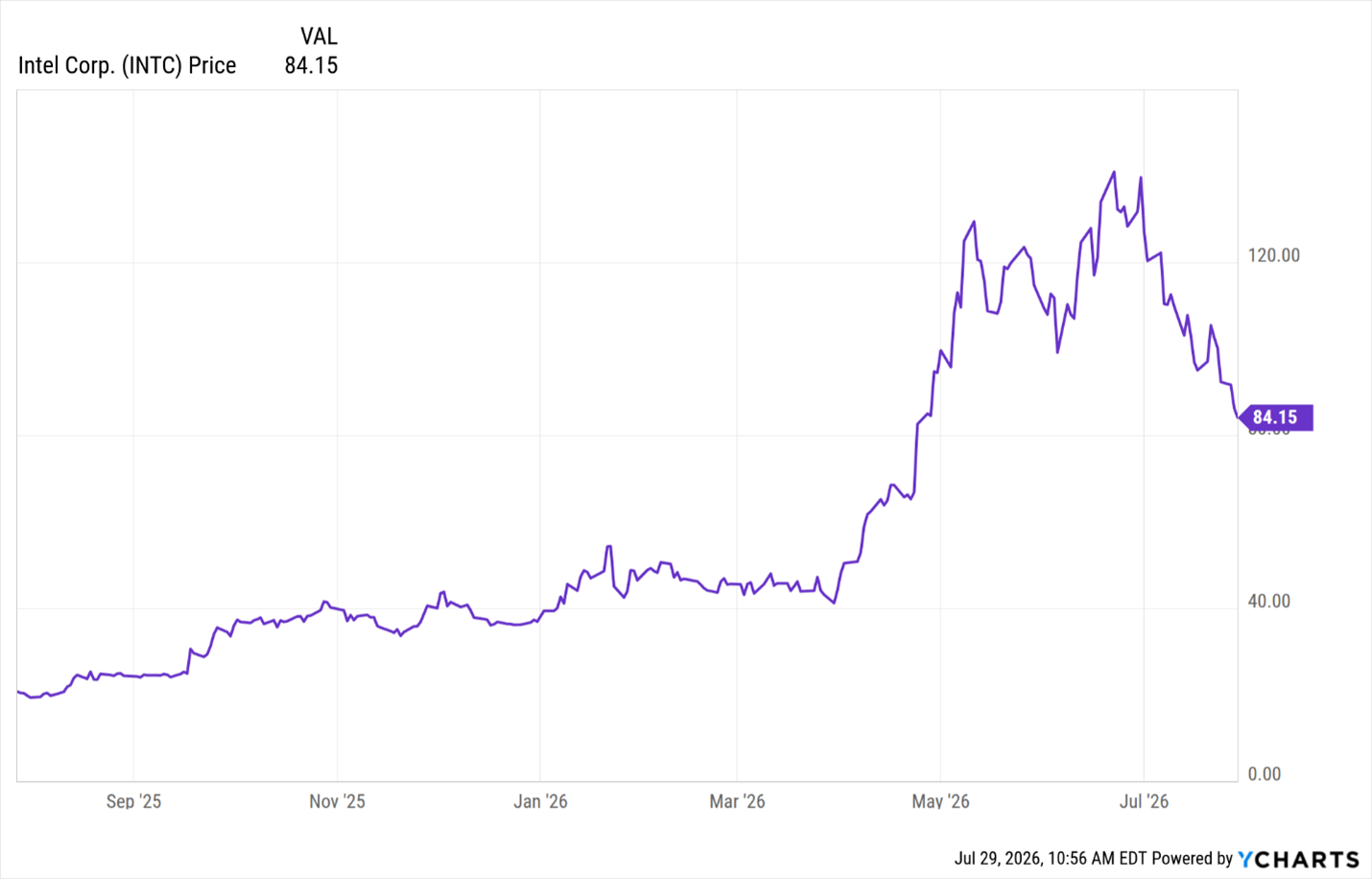
I have a very short list of companies that are next on his list. I even put together this special presentation exposing what they are.
While the government should not sit on the boards of these AI giants, it can push prices higher … at least temporarily.
But you need to be invested before the next deal is announced.
Best,
Michael A. Robinson
2 https://apnews.com/article/bernie-sanders-ai-public-ownership-57b9f20d96490083e2749adba0f13977
3 https://siliconangle.com/2026/06/19/us-energy-regulator-moves-speed-data-center-projects/