How $100 Got Me Into a Startup Anheuser-Busch Bought for $490M

 |
| By Chris Graebe |
When you hear the words "angel investor," what do you picture?
Most people might see someone in a boardroom writing a $75,000 check without blinking …
Or someone with a Rolodex full of Silicon Valley connections and a family office managing their wealth …
Someone who might see 2x, 5x, even 10x their initial investment handed back to them.
For most of the history of private investing, that picture was accurate.
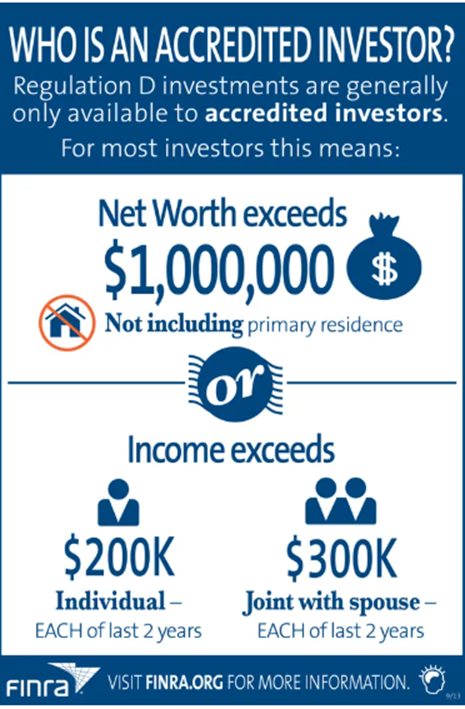
The earliest and most lucrative rounds of startup funding were completely off-limits to everyday investors. First, you had to be accredited.
Then, you had to be in the right rooms with the right people.
And the rest of us?
We got to read about those elite investors’ monster returns in the newspaper after the fact.
As envious observers, it was all part of some untouchable fantasy world.
But something changed …
And many people still haven't gotten the memo.
The Law That Opened the Door
In 2012, Congress passed the JOBS Act, which featured Title III: the CROWDFUND Act.
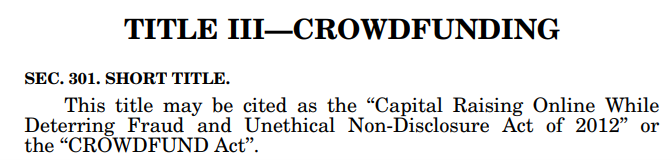
The goal was simple: democratize access to private investment opportunities.
Let everyday Americans, even those that are non-accredited, invest in private companies before they ever go public.
The rules took effect in 2016. And with that, one of the most significant shifts in the history of retail investing happened.
The door that had always been closed to ordinary investors suddenly flew open.
Today, there are around 55 registered investment portals where private companies can legally raise money from the general public.
Think of them like an Amazon marketplace, except instead of buying products, you're buying equity stakes in early-stage companies.
And the minimum to get started?
Sometimes as low as $100.
I'm not exaggerating.
BeatBox Beverage was an early startup I discovered in 2020. It was eventually bought by Anheuser-Busch (BUD) for $490 million.
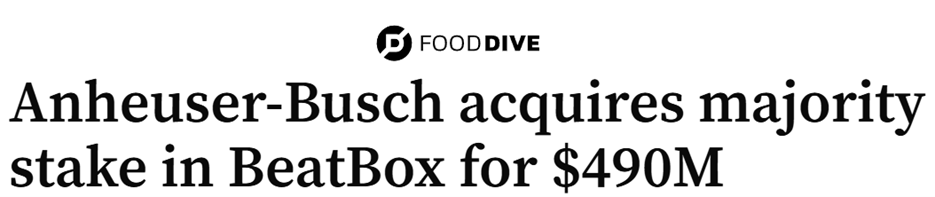
But way before that, we had a buy-in of around $100.
That’s the kind of money most people spend without thinking twice on a dinner out.
What Regulation Crowdfunding Actually Means
The technical name for this is Regulation Crowdfunding, or Reg-CF.
Under Reg-CF, private companies can raise up to $5 million per year from the general public through SEC-registered portals.
Both accredited and non-accredited investors can participate.
It's not the Wild West. There are rules, there are disclosures and there's oversight to give investors as much information as possible so they know what they’re getting into.
And it gives us access to the “Alpha Round,” which is the earliest stage of outside funding after founders and their inner circle … but before the big institutional money shows up.
That window of opportunity used to be exclusively reserved for venture capital firms and wealthy insiders.
Historically, this is where the biggest potential returns live.
Your Retirement Account Can Play Too
What surprises almost everybody I tell is that you can invest in these private deals through your IRA or your 401(k).
Yes, really.
And if you're investing through a Roth IRA, the implications get even more exciting …
All the gains on top of your original investment are tax-free.
Think about what that means if you had invested in the Starfighters Space pre-IPO at our pre-IPO entry price of $3.59.
If you held through the third day and then sold your shares near their high of $31.50, every dollar of that 750%+ return would have been yours to keep!
The Honest Truth About the Risk
I'm not going to paint this as a free lunch. It isn't.
I'll be straight with you the same way I am with every one of my Deal Hunters Alliance members.
A lot of investors ask, "Chris, should I push all of my chips in?"
My answer is always the same … absolutely not.
This is probably one of the riskiest asset classes you can invest in. The SEC even publishes limits for individual investors, to cap how much money they can commit each year.
But there’s another side to the risk coin.
Which is … you don’t have to spend a lot. In fact, if you invest a nominal across several deals, you increase your chances of being positioned in at least one potential winner.
I think it's smart to diversify and allocate a small percentage of your annual portfolio to this space — a deliberate, eyes-open decision to take a calculated risk with money you've specifically set aside for that purpose.
And no, I’m not talking about your emergency fund or your mortgage payment. Those are completely unsuitable for this.
I mean a measured slice of your portfolio that you're comfortable putting to work in higher-risk, higher-potential-reward territory.
That's the approach I take myself, and it’s what I've always encouraged my members to do.
In fact, in just the past nine months, three of the Alpha Round companies that I helped Weiss Members invest in went public.
Now, most startup deals don’t result in IPOs. That said, we wouldn’t be surprised to see at least another one in the next few months.
In the meantime, I'm here to educate you about something many others don't even know is possible.
This asset class isn't just for the ultra-wealthy or the connected insiders anymore.
It's available to anyone willing to do the homework and approach it with the right mindset.
The deals I've brought to my readers over the past year have shown what's possible when you get in early, choose carefully and size your bets intelligently.
A potential 8x on Starfighters (FJET), a 4x peak on Eagle Nuclear Energy (NUCL) and 8x on Conexeu Sciences (CNXU).
The best part? None of these required a $75,000 minimum check.
And neither is the startup I’m about to reveal to members soon.
I’ll be discussing the potential of this opportunity one week from today.
The private company I found is at the forefront of a disruption that could eclipse even AI in its economic impact.
Early private investors in this overlooked niche have seen returns up to 746x greater than IPO investors.
To see how you can potentially join them, grab your spot while you can.
Happy hunting,
Chris Graebe
1https://www.congress.gov/bill/112th-congress/house-bill/3606/text
2https://www.fooddive.com/news/beat-box-beverages-acquired-anheuser-busch-490m/806461/