How to Invest in Drone Warfare’s New Evolution
Editor’s note: SpaceX is expected to IPO today after the market opens.
Whether you plan to participate in this milestone event or not, there’s something you need to see first.
Chris Graebe is about to reveal a private deal that involves a different pre-IPO space company.
It doesn’t compete with SpaceX. In fact, it’s a partner.
What’s more, it isn’t worth $2 trillion already. So, it has a much higher profit potential.
Watch Chris explain it here before SpaceX shares begin trading today.
 |
| By Michael A. Robinson |
The Pentagon has learned a vital lesson Ukraine taught the hard way.
In modern warfare, quantity has a quality all its own.
Consider the numbers …
The U.S. military fields roughly 16,000 drones, many of them expensive and long range.
By contrast, Ukraine is manufacturing four million a year, mostly cheaper and shorter-range units.
No wonder President Trump just launched the Drone Dominance Program.
The goal: 300,000 combat drones in the field by 2028. And the first $1 billion in contracts is already moving.
It’s a watershed moment, not only for the U.S. but for the whole sector.
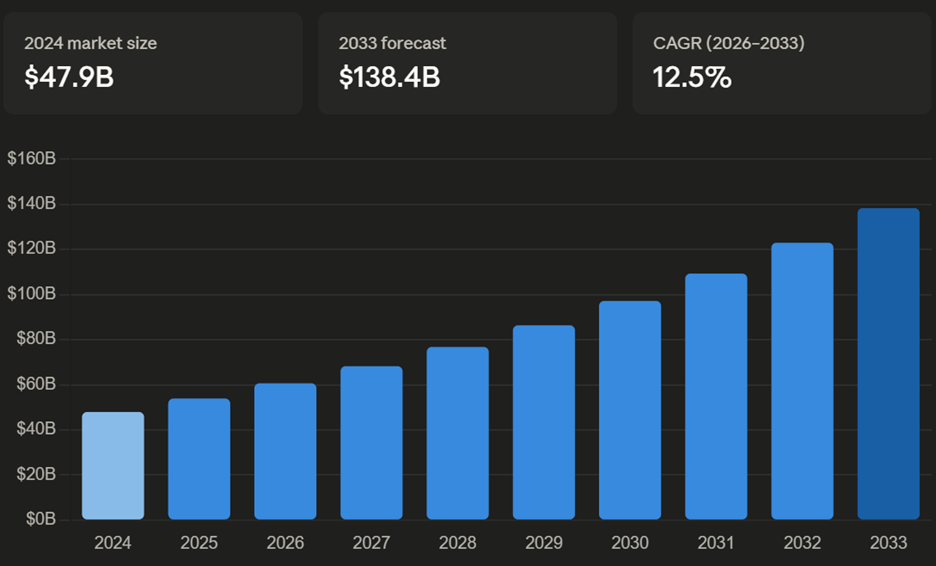
The global drone market is worth $54 billion today and is on pace to hit $138 billion by 2033.
The Pentagon’s interest is using drones where it can to keep pilots out of harm’s way unless it’s mission critical.
One investment has been quietly tracking this buildout for years.
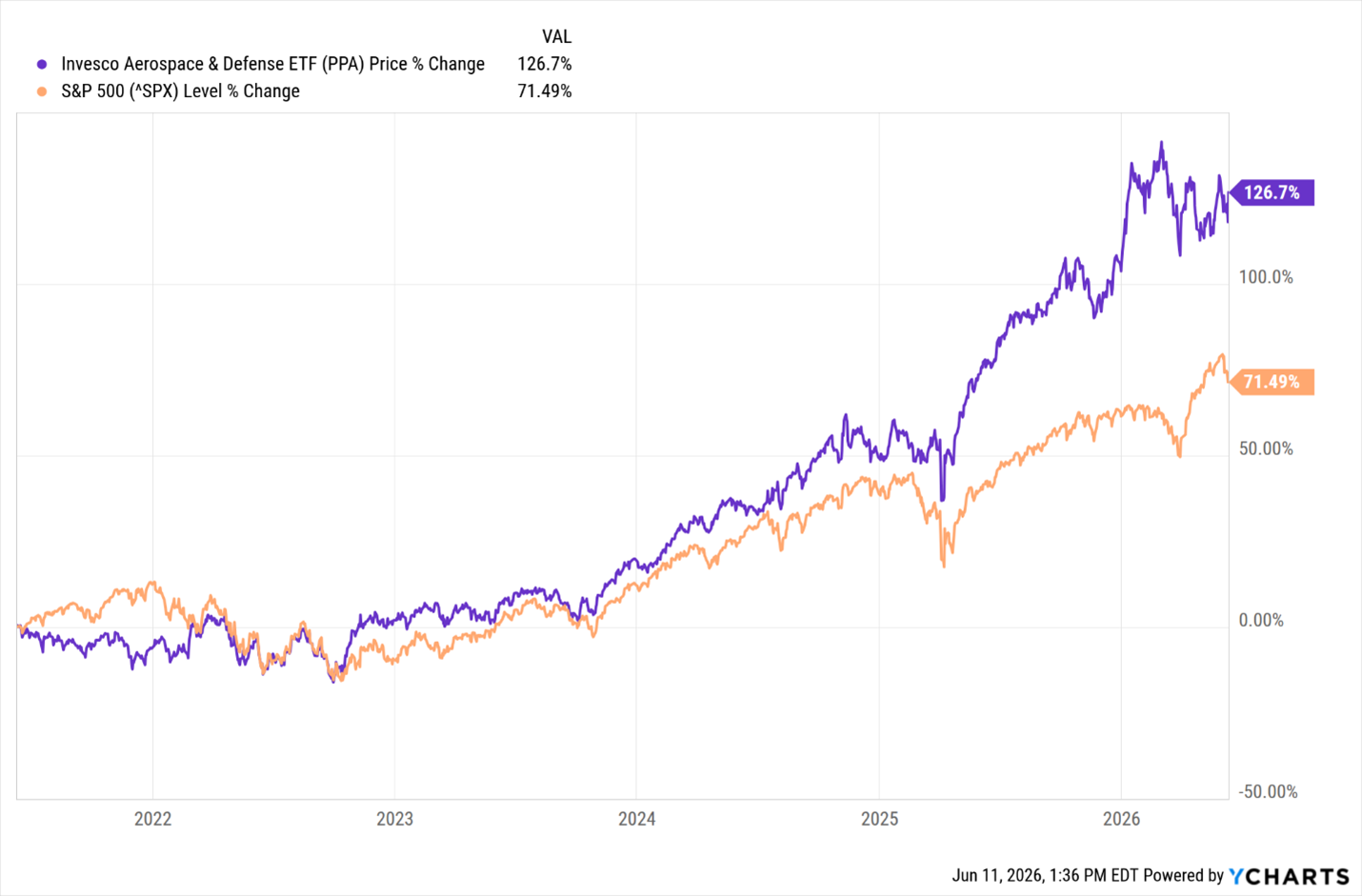
It has beaten the broad market over the past five years by 127% to 71.5%.
Let me show you why there's so much upside ahead.
Cheaper Drones Can Protect Our Troops
Drones really got a boost during the post-Sept. 11 actions in both Afghanistan and Iraq.
Iraq allowed large drones like Global Hawks and Reapers to fly over the country, which didn’t have much ground cover, and assess targets using live video.
Then those same drones were weaponized and able to strike remote areas, controlled by soldiers thousands of miles away.
Smaller drones like Switchblades were in use in Afghanistan and Iraq in cities and towns.
They gave troops a look at what they were walking into around the block.
There were many stories from troops that they loved the Switchblades because they had a unique sound.
When troops sent them ahead of the units, the enemy would hear the drones and leave before the troops got there.
They were also helpful in finding potential IEDs (improvised explosive devices).
Over the years, this gave the U.S. a big advantage in creating specialized drones that could be sent into harm’s way before we sent in troops.
But it was new technology that was being battle tested. It was live R&D.
And drones’ value was proven at every level. But they weren’t cheap.
Ukraine’s ‘Army of Drones’
When Russia invaded Ukraine in 2022, the next big step in combat drone development happened.
Ukraine was fighting a Cold War superpower. And it was a former Soviet state, so most of its weapons were Russian.
It had to become creative using old Russian weapons while bringing in new Western ones. But that takes lots of training and money.
Ukraine didn’t have the time or the money to wait.
Drone technology leveraged Ukraine’s limited troop strength and created a very versatile weapon against Russia’s aging, conventional army.
But it needed to make them cheaply — and quickly.
And if anything shows the power of modern creative capitalism, it was the way Ukraine built its “Army of Drones”.
Ukraine used a novel public-private partnership, combining international grassroots crowdfunding and shifting a domestic manufacturing base to a war footing.
Its agile military restructuring built a drone program that’s the envy of the world.
Now the U.S. is onboard.
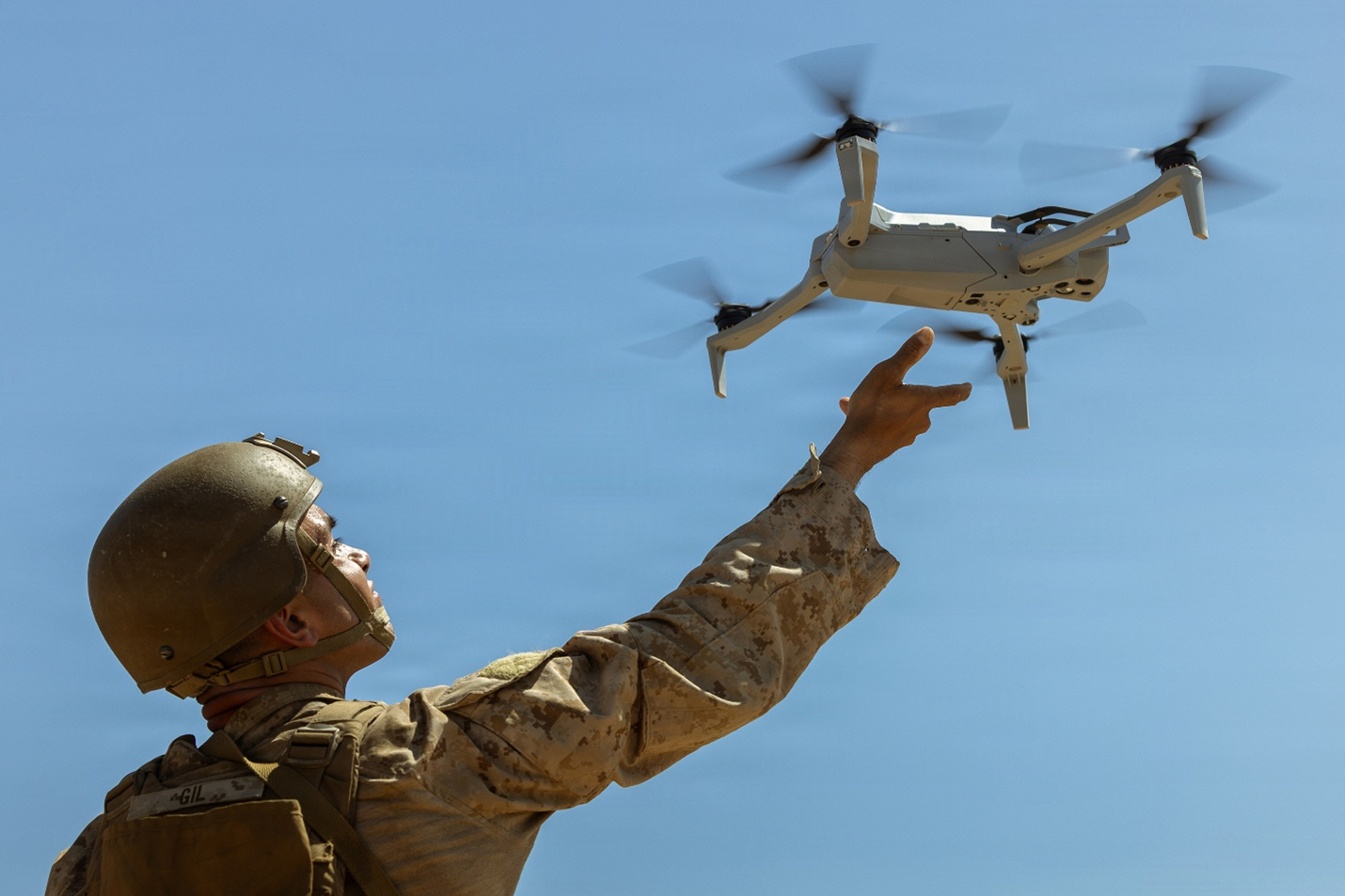
The Pentagon Drone Dominance Program (DDP) is a $1 billion program to start to deliver smart, agile, cheap, single-use drones that can be mass-produced.
The goal is to field 200,000-300,000 of them by next year. And then scale up from there.
A Who’s Who of Defense
And that presents investors with a bit of a challenge. No doubt, the field is fertile and growing.
But for now, we can’t know who will be the ultimate winner.
It could be a large defense contractor or a bunch of smaller, more innovative firms.
That’s why I think it pays to invest in the broad range of this defense tech.
Even better if we gain access to the global defense buildup and the aviation boom.
That’s why I think it pays to take a look at the Invesco Aerospace & Defense ETF (PPA).
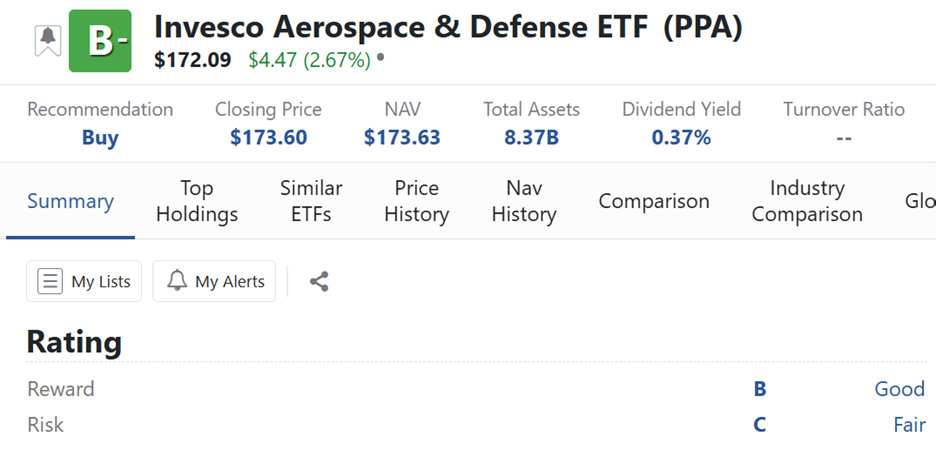
This fund has been a strong performer as the U.S. has expanded its defense and space budgets.
In the past five years, PPA has gained 127%. That’s before the boom in defense spending.
And now, the Pentagon wants to almost double the defense budget for next year.
The top five stocks PPA holds are the legacy players — Boeing (BA), GE Aerospace (GE), RTX (RTX), Lockheed Martin (LMT) and General Dynamics (GD).
But here’s where it gets interesting.
It also holds some under-the-radar picks and smaller companies as well:
- Howmet Aerospace (HWM) is a major player in lightweight metal products for the aerospace and transportation industries. It is a key military and space programs supplier.
- Rocket Lab (RKLB) is a New Zealand-based commercial and military rocket firm that has clients around the world and a growing U.S. presence.
- Amphenol (APH) designs and builds electrical, electronic and fiber-optic connectors, interconnect systems, antennas and sensors for harsh environments.
- Planet Labs (PL) is a satellite company that images all of the Earth’s landmass every day. It then customizes the data and sells it to the Pentagon and clients around the globe.
Aerospace Fund Lifts Off
While the shift to drone-centered tactics is in its early stages, this will be a huge opportunity as AI delivers “smarter” drones. And scale will make them cheaper and better.
It also means the military will also reorganize other aspects of its weapons systems.
Make no mistake, PPA will continue to be a market crusher.
Over the past five years, it has beaten the S&P 500 by 55 percentage points without a famous AI name in its portfolio.
Simply put, it’s a great investment you can count on for years to come.
Best,
Michael A. Robinson
P.S. Many of the companies in PPA operate in both defense and space industries.
But for the largest potential gains in space, you’ll need to turn to pre-IPO companies. No, I’m not talking about the SpaceX IPO today.
Chris Graebe, who is an expert at finding unknown startups before they jump into the public eye, found a different space company that he’s about to reveal to his readers.
To see what this other private space stock is all about, watch this to the end.