
 |
| By Michael A. Robinson |
Don’t worry if you’ve never heard of Insilico Medicine. Most investors haven’t.
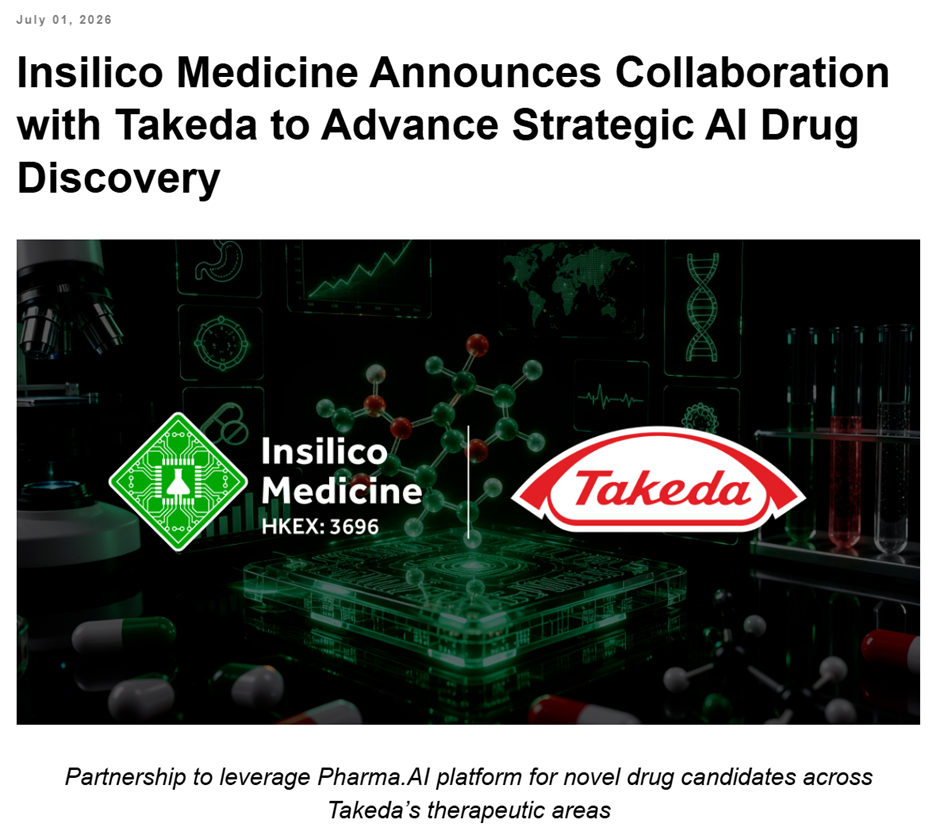
And yet the tiny Boston-based AI-centric startup just made big news at the rapidly growing intersection of AI and drug development.
Pharmaceutical giant Takeda (TAK) just struck a deal with Insilico worth up to $600 million.
I believe this proves just how seriously the world’s largest drug firms are embracing AI in the race to discover tomorrow’s blockbuster medicines.
And for drug firms, the stakes couldn’t be much higher.
Fact is, fewer than 10% of all drugs that enter clinical trials ever make it to market.
But AI is set to change all that.
It could transform the $2 trillion global drug sector with faster product development and government approvals.
Today, I’ll introduce you to a tech leader that stands to profit not only from Takeda’s AI ambitions, but from the sector’s breakout as a whole.
Better still, the firm is on pace to double its earnings in as little as 2.5 years.
The Rising Costs of Drug Development
No doubt, the sector needs help.
Drug development costs have soared — rising more than fivefold since 2000.
Today, bringing a new drug to market can cost anywhere from hundreds of millions to nearly $3 billion.
On average, it takes about 12 years and as much as $2 billion to take a promising compound from discovery through approval.
The time required for FDA clinical trials has also climbed.
Today, they average about 89.3 months — more than seven years.
At the high end, the entire process can stretch to 15 years before a new medicine ever reaches patients.
Enter AI.
A recent McKinsey study suggests generative AI could dramatically accelerate the earliest stages of drug discovery, boosting the speed of identifying promising drug candidates by more than fourfold.
AI Deals Are on Fire
Now you know why Takeda’s new deal with Insilico is no one-off.
Nature Biotechnology tracks AI drug-discovery partnerships and publishes yearly reports on deal values.
It recently found that AI-related biopharma deal values reached nearly $30 billion in 2025, up from about $11.1 billion in 2024.
That’s a nearly 173% increase in just two years.
The goal behind all these deals is simple — bring better medicines to patients faster while reducing the enormous cost and risk of drug development.
If AI can shave even a year or two off the industry’s traditional 12-year development cycle, the financial implications would be enormous.
Every month a successful drug reaches the market sooner can translate into millions of dollars in additional revenue.
Yet after all that time, money and effort, only about 8% of drugs entering clinical trials ever win regulatory approval.
That’s what creates the real dilemma for investors.
A single blockbuster drug can generate billions in sales — but predicting which biotech company will produce the next winner is extraordinarily difficult.
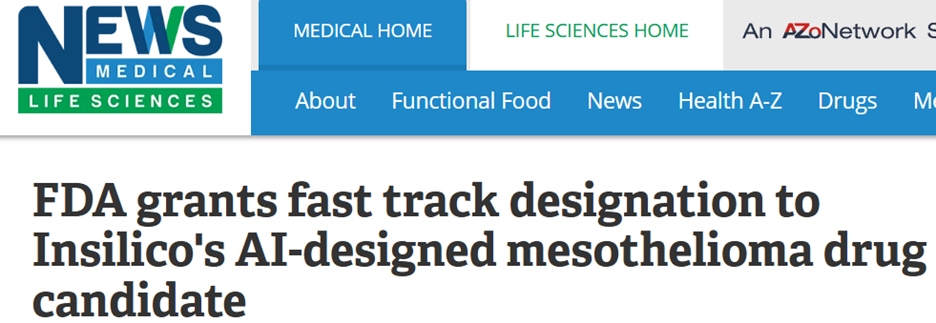
Insilico’s tech is already proving itself.
And that’s just one example.
The ‘Bio Cloud’ Behind the AI Revolution
I prefer investing in a company that stands to profit from AI-driven breakthroughs across the entire life sciences sector — regardless of which drugmaker ultimately develops the next blockbuster.
I’m talking about Veeva Systems (VEEV). It pays to think of it as the operating system for the life sciences industry.
More than 1,200 biotech, pharmaceutical and medical technology companies rely on Veeva’s cloud software to manage everything from clinical trials and regulatory filings to manufacturing, sales and marketing.
That gives the company a tremendous advantage as artificial intelligence moves into healthcare.
After all, AI is only as good as the data behind it. And Veeva already manages some of the industry’s most valuable information.
Better yet, this is a highly predictable business.
More than 80% of revenue comes from recurring subscriptions, giving management the confidence to project annual sales climbing from roughly $2.4 billion today to $6 billion by the end of the decade.
Even more important, Veeva isn’t standing still.
Its flagship Vault platform has become the foundation for the next generation of AI-powered drug development.
The secure cloud platform connects research, clinical operations, regulatory compliance and commercial teams into one system.
The platform allows clients to move information instantly across the organization.
That’s becoming essential as drug companies race to deploy generative AI throughout their businesses.
Building the AI Backbone for Biotech
Veeva designed its Vault platform with AI in mind.
Its application interface processes data up to 100 times faster than conventional systems.
Talk about new efficiencies. Clients can build AI applications, create data pools and analyze enormous amounts of information without rebuilding their existing infrastructure.
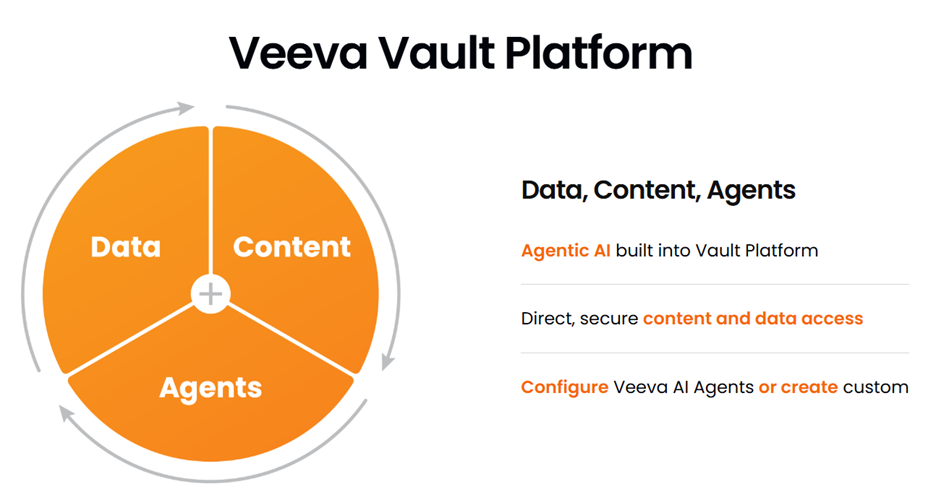
Software developers are already building AI applications on top of Veeva’s platform — from medical writing and regulatory compliance to clinical data analysis and pharmaceutical sales.
AlphaLife Sciences uses Vault to automate medical writing during drug development.
Microsoft is working with Veeva to develop AI tools for clinical workflows, content management and drug sales.
Earlier I noted the big AI news from Takeda. Turns out the firm relies on Veeva’s cloud platform to modernize clinical development and bring new medicines to patients faster.
Meanwhile, Veeva’s Digital Factory extends those advantages even further.
Working with partners like Cognizant, Veeva helps pharmaceutical companies modernize operations, automate repetitive work and bring new software online far more quickly.
Add it all up and you can see that Veeva has a unique and very sticky business.
Its long-term financial results prove just what I’m saying.
Over the past three years, Veeva has grown earnings per share at an average yearly rate of 28%.
At that pace, we’d see earnings double in 3.5 years.
The beauty of Veeva is that we don’t have to pick the winners and losers.
We simply profit from AI’s unstoppable march across the biotech industry for years to come.
Best,
Michael A. Robinson
1https://insilico.com/news/4ifuiaal01-insilico-medicine-announces-collaboratio