 |
| By Michael A. Robinson |
Forget the courtroom brawl between Elon Musk and Sam Altman for a moment.
Yes, watching two billionaire AI kingpins tear into each other became its own form of Silicon Valley reality TV.
One star built Tesla and xAI. The other turned ChatGPT into the fastest-growing consumer tech platform in history.
The headlines practically wrote themselves. And yet they missed the larger story.

OpenAI quietly released something that could prove far more important to investors.
It’s a new browser-based system that will help bring “agentic AI” to the masses.
And if that sounds obscure today, it won’t for long.
In the last year alone, major organizations launched roughly a million AI agents.
Now the technology is escaping the walls of Big Tech and moving into everyday life.
That’s why forecasts say this will be a $52 billion market before the end of the decade.
More to the point, it’s why one little known leader is on pace to double earnings in as little as 18 months …
Why AI Agents Will Go Mainstream
Now then, what Silicon Valley is really building is software counterparts capable of carrying out tasks.
They’re designed to make decisions and eventually manage pieces of our lives without constant supervision.
That’s what makes this moment different from the first wave of AI.
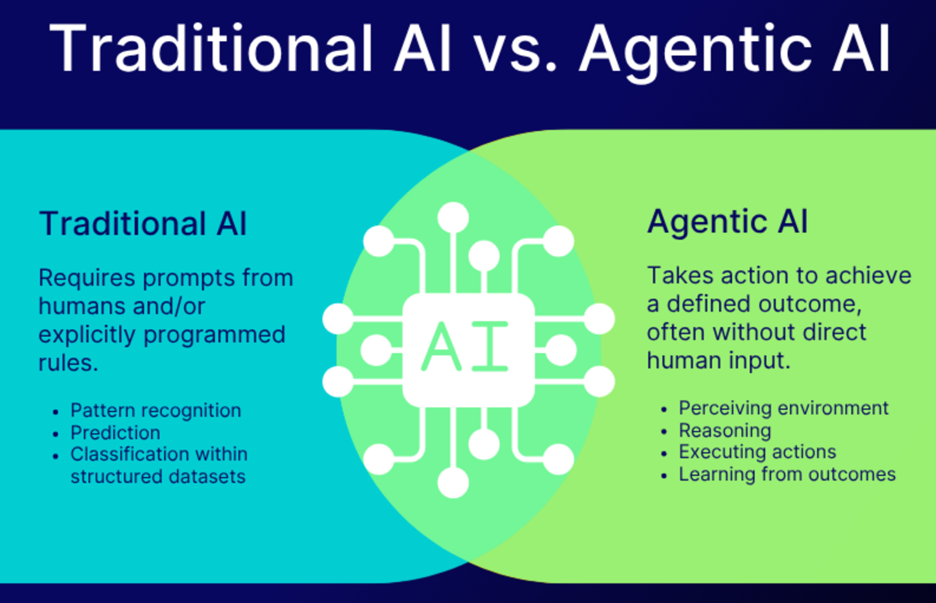
Until recently, AI mostly existed as a reactive tool. You asked a question. It answered.
You requested an image. It generated one.
Impressive, certainly, but you still have to manage it all every step of the way.
Agentic AI turns that on its head.
These systems can operate in the background, getting their work done without the need to check on them.
A travel-oriented digital twin, for instance, could track airline pricing for weeks, shift reservations dynamically, monitor weather disruptions and rebuild itineraries on its own.
Marketing firms are already experimenting with agents capable of adjusting advertising campaigns in real time based on customer behavior and engagement data.
The uses are nearly endless. And I speak from experience here.
Recently, my wife built a custom GPT for her city’s accounting rules using ChatGPT’s new tools.
She didn’t need coders or those pesky guys from IT.
Accounting & Pentagon Agents
She is far from alone.
Just days ago, the Wall Street Journal broke the story about how the global accounting firm KPMG struck a deal with Anthropic, the force behind Claude AI.
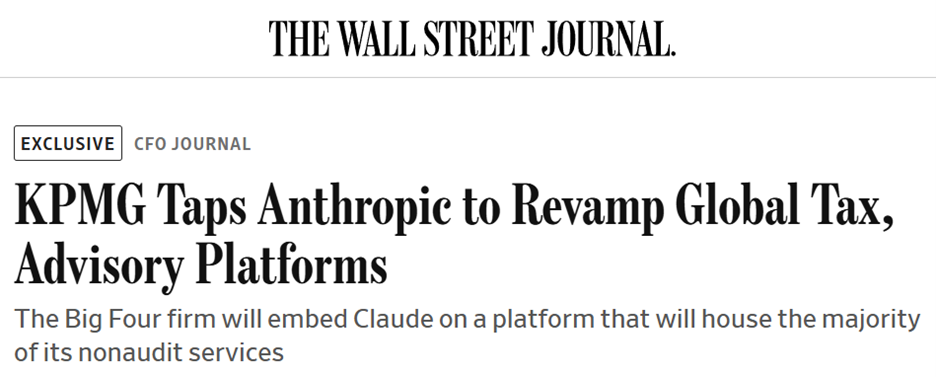
Terms were not disclosed. But under the deal, KPMG will use the agents to make its tax and consulting services faster moving and more efficient.
The platform that houses all tax and legal client data and internal analyses will have Claude embedded in it, the Journal reported.
And when the bean counters are on board, you know the field is about to explode.
The numbers prove just what I’m talking about.
AI agents barely existed in 2023. But the market hit $5.9 billion in 2024. It’s forecast to be worth $52 billion by 2030 — a seven-year increase of a stunning 781%.
Meanwhile, a flurry of other deals shows the field is platform agnostic.
Verizon deployed Google’s Gemini-powered AI agents trained on 15,000 internal documents.
Some 28,000 employees used the system within months, driving a 40% increase in revenue.
Right now, the Pentagon is the most dramatic user by far.
Its GenAI.mil platform has more than 1.2 million discrete users and has deployed 100,000 AI agents — in just five months.
A Great Backend Play
That’s OK, because there is a fast-growing tech leader that stands to gain not just from the rollout of new agents but also from AI across the board.
That company is Broadcom (AVGO).
Based in Silicon Valley, Broadcom quietly powers the physical backbone of the AI economy — from hyperscale data centers to the chips inside next-gen servers.
It operates in more than 30 countries and serves a range of sectors from data centers to wireless to autos.
That gives this savvy leader many shots on goal.
Broadcom has two big hooks:
- On the hardware side, it makes custom AI networking chips that move data between servers, as well as those used in smartphones for factory automation and power systems.
- On the software side, it has an enterprise platform that helps companies manage, secure and optimize their private and hybrid clouds. That’s crucial because AI agents need cloud infrastructure to run on.
And here’s what makes it truly lucrative in the age of AI agents. This isn’t a company betting on one horse.
Broadcom supplies everybody. OpenAI, Google, Apple, Meta — they’re all knocking on the same door.
The good news for us is that no matter which AI platform wins, no matter which agent framework dominates, the data still has to move.
The chips still have to talk to each other. And the software has to deploy agents at scale.
Profiting from the Backbone
That’s the beauty of owning the backbone. The AI agent race is wide open — and Broadcom has a seat at every table.
In other words, the firm plays a key role in the rise of AI.
It’s no wonder earnings are doing so well.
Over the last three years, earnings growth averaged a respectable 23%. But this year marks an inflection point.
One forecast says that per-share profit this year will more than double to 51%.
At that rate, Broadcom would double its earnings in just 18 months.
Even at the lower, more conservative rate of 23%, we’d still see earnings double in just a tad over three years.
And when earnings rise, stock prices often do, too.
Our ratings agree. The company was just upgraded to a “Buy” this week:

Add it all up, and you can see that this is a great way to invest in the new field of AI agents and the broader sector for years to come.
Best,
Michael A. Robinson
P.S. But even Broadcom needs help to make all this happen. That’s why we put together a brand-new report on the stocks providing a crucial new computing element. Grab your copy here.