Editor’s note: Last time, Dallas Brown showed how Argentina voted to take the printing press away from its politicians. A final vote is expected Nov. 12. In Part 2 of this four-part series, he shows why America’s founders would have cheered.
 |
| By Dallas Brown |
We sometimes forget how personal it was for the people who founded this country to own their money and owe no one.
They crossed an ocean for freedom. Freedom to worship. Freedom to work. Freedom to build something and keep what they earned.
Then, a king an ocean away came for their pockets.
The Stamp Act. The Sugar Act. Taxes on paper, tea, glass and paint. Laws that told them who they could trade with, and on what terms.
So, they wrote down their complaints and signed their names, knowing it could cost them their lives. Among the charges they listed against the King:
He “has erected a multitude of New Offices, and sent hither swarms of Officers to harrass [sic] our people, and eat out their substance.”
“For cutting off our Trade with all parts of the world.”
“For imposing Taxes on us without our Consent.”
Too many officials. Eating up what people earned. Taxes nobody agreed to.
Inflation does all three at once.
Our founders knew the pain of printed money firsthand.
To pay for the Revolution, Congress printed paper “Continentals.” By 1780, it took more than 100 of them to buy what a single silver dollar could.
In 1779, George Washington wrote to the president of Congress that “a wagon-load of money will scarcely purchase a wagon-load of provisions.”
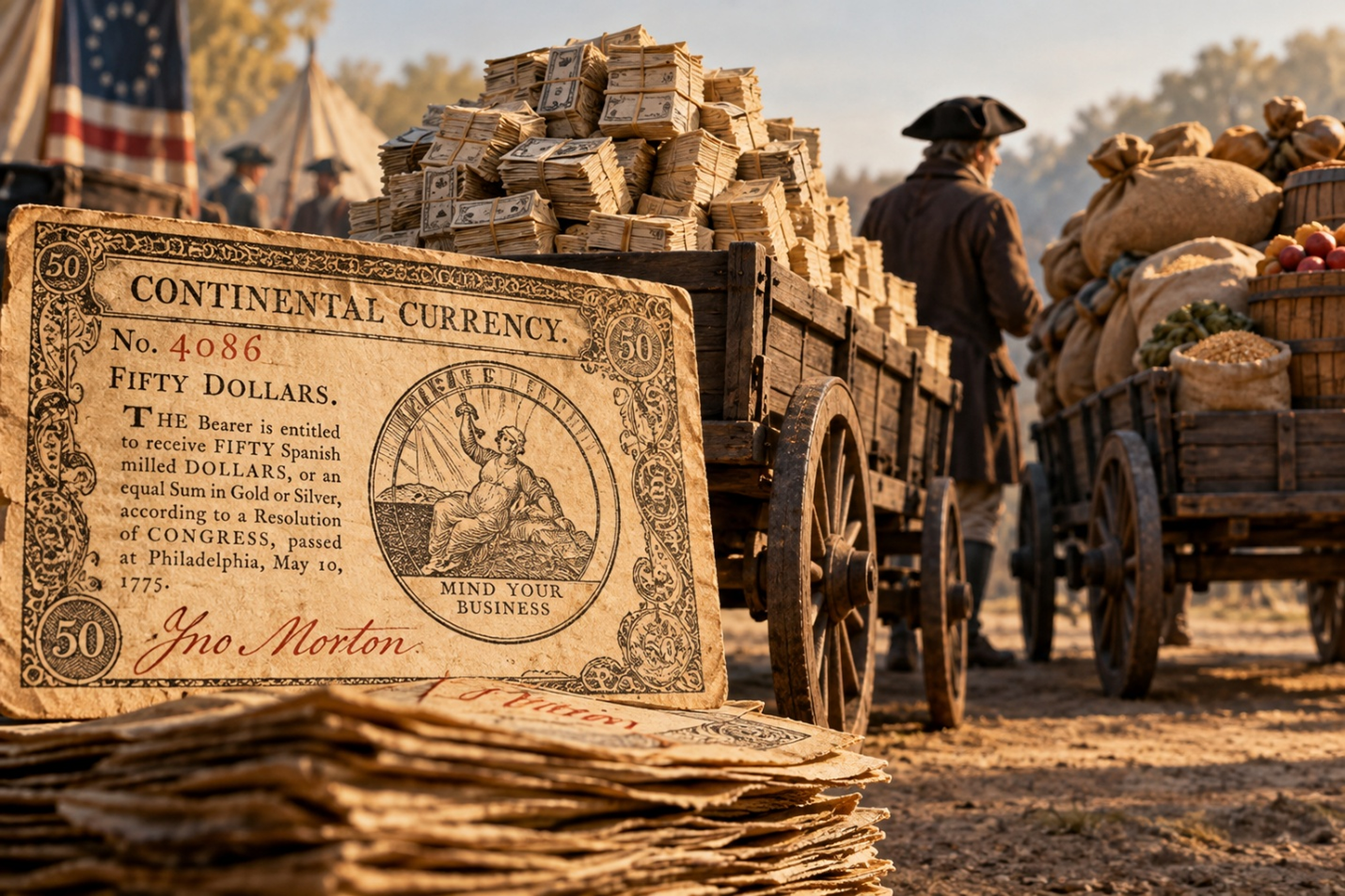
Picture that. A wagon full of money for a wagon full of food.
People never forgot it. They started saying something worthless was “not worth a Continental.”
That collapse is a big reason why the Constitution bans the states from issuing paper money. Article I, Section 10 says no state shall issue “Bills of Credit” or make “any Thing but gold and silver Coin a Tender in Payment of Debts.”
Read that again. Our founders banned the states from printing money, right in our founding document.
That’s the same idea Argentina is fighting for today.
They were just as fierce about debt. In an 1816 letter, Thomas Jefferson wrote:
“I, however, place economy among the first and most important of republican virtues, and public debt as the greatest of the dangers to be feared.”
That same year, he called spending money and sending the bill to future generations “but swindling futurity on a large scale.”
Swindling. Jefferson’s word.
In his Farewell Address, George Washington warned the nation to avoid “the accumulation of debt” and to stop “ungenerously throwing upon posterity the burden which we ourselves ought to bear.”
Washington and Jefferson would not recognize what we’ve done.
Over the next two issues, I’ll show you exactly what we’ve done: how deep Washington has dug us into debt, why it’s about to get worse, and what you can do to protect your savings.
But you don’t have to wait to take a stand.
Our founders signed their names when it could have cost them their lives. Today, signing yours costs you nothing.
Click here to sign the Declaration of Dollar Independence.
Own our money. Owe no one our freedom.
Dallas Brown