These ‘Eyes’ in Space Offer More Upside Than SpaceX

 |
| By Michael A. Robinson |
Thanks primarily to SpaceX’s (SPCX) recent IPO — even with its ups and downs since — the space economy has become one of the hottest investment stories on Wall Street.
Then again, the sector is on pace to be worth more than $2 trillion in the next few years.
But here’s a fact that gets very little attention. SpaceX isn’t just launching satellites. It’s mastered the science of dodging them.
And that’s a crucial feat. After all, space is filled with dangerous junk that could knock out a $3 million satellite.
In fact, more than 10,000 active satellites are already circling the Earth.
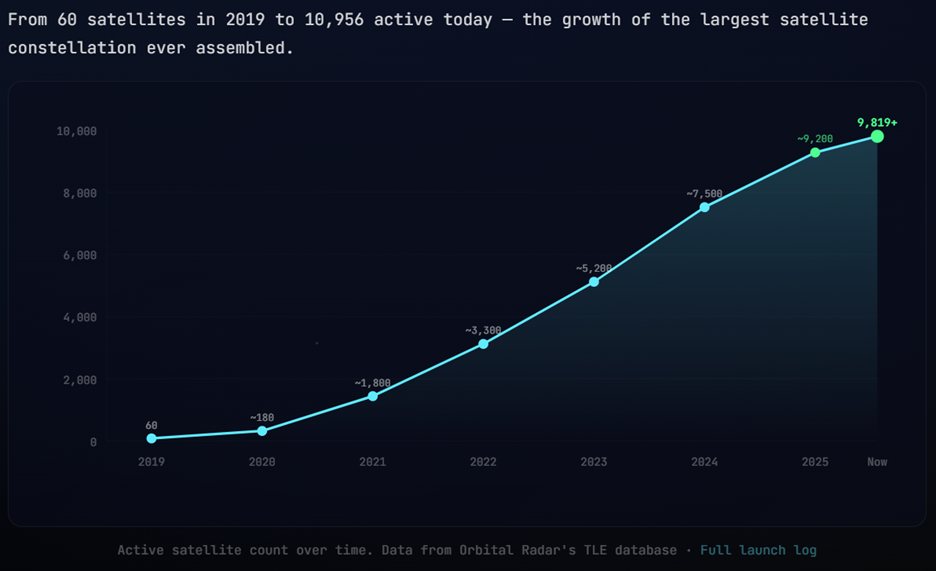
The real threat— space observers say the number of dangerous debris objects is at least triple that figure.
Fortunately, savvy leaders like SpaceX are working on it.
In the last year alone, SpaceX’s Starlink satellites have dodged space debris an average of 40 times an hour.
That’s why I’m excited to tell you about a backdoor way to play not just the growing space debris problem, but the entire space economy.
The firm recently tripled its per-share profit growth, with plenty more upside ahead …
More Than a Space Race
When most people think about the space economy, they picture rockets launching, astronauts floating in orbit or wealthy tourists buying tickets for a few minutes of weightlessness.
Those headlines grab attention. But they’re only a small part of the story.
The real engine of today’s space economy is much more commercial: satellites for imaging, reconnaissance and communications.
Since the Soviet Union launched Sputnik 1 in 1957, satellites have evolved from Cold War experiments into essential infrastructure.
They power GPS navigation, enable weather forecasting, support military operations, connect financial markets and carry everything from television broadcasts to internet traffic.
Today, there are tens of thousands of active satellites orbiting Earth, a number that’s climbing rapidly as governments and private companies race to expand global connectivity.
And that growth is only accelerating.
A Crowded Frontier
No company has done more to reshape satellite communications than SpaceX.
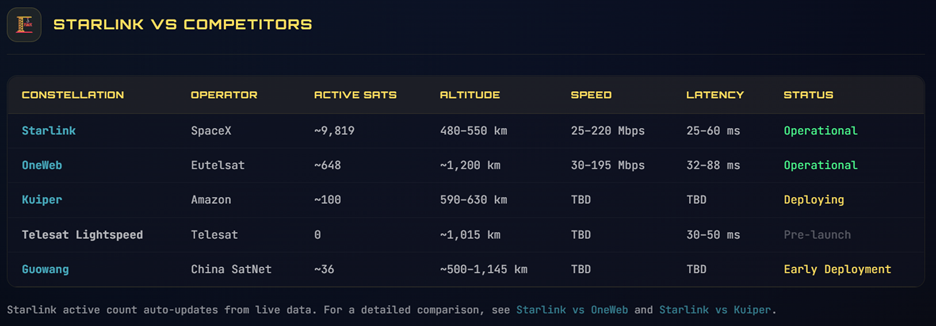
Through its Starlink network, SpaceX has launched thousands of low-Earth-orbit satellites to deliver high-speed broadband almost anywhere on the planet.
Competitors such as Amazon’s (AMZN) Project Kuiper and OneWeb are following the same playbook, helping transform satellite communications into one of the fastest-growing segments of the global space economy.
But this boom comes with a downside.
Every satellite launched adds to an increasingly crowded orbital environment.
Defunct spacecraft, spent rocket stages and fragments from past collisions now circle Earth alongside operational satellites, creating a growing cloud of space debris.
Even tiny pieces of debris can travel at speeds exceeding 17,000 miles per hour — fast enough to cripple a spacecraft or trigger cascading collisions.
As the skies become more crowded, protecting the satellites that modern life depends on has become just as important as launching them in the first place.
That’s where the company we’re about to reveal enters the picture.
A Critical Supplier
The company is Teledyne Technologies (TDY).
At first glance, Teledyne doesn’t look like a typical space investment.
It doesn’t launch rockets, build satellites or promise futuristic space tourism.
Instead, it supplies the sophisticated technology that helps those missions succeed.
Think of Teledyne as a picks-and-shovels provider to the modern space economy.
Through its Teledyne Imaging business, the company has become one of the world’s leading suppliers of space-qualified image sensors, infrared detectors, focal plane arrays and scientific cameras.
These components serve as the “eyes” aboard satellites and spacecraft, capturing the images and data needed to navigate, observe, detect and communicate.
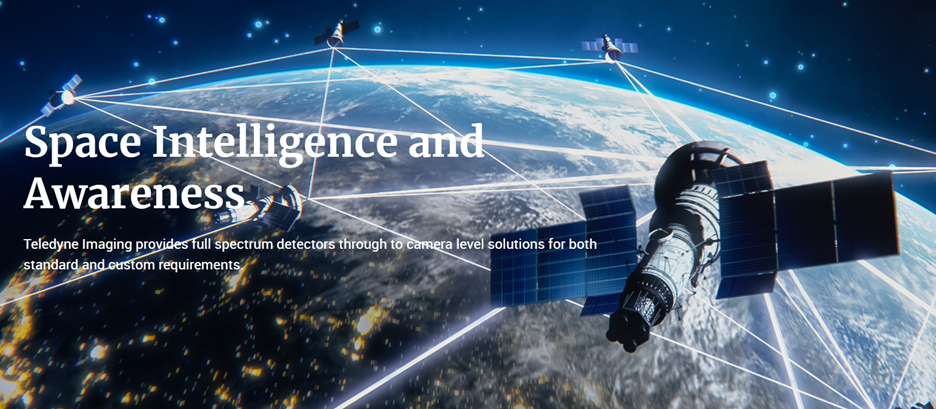
Teledyne’s technology has flown on more than 260 space missions for organizations including NASA, the European Space Agency (ESA), JAXA and other international space agencies.
Its image sensors are specifically engineered to withstand years of radiation exposure, dramatic temperature swings and the unforgiving conditions of space.
Those sensors are used across an impressive range of applications: Earth observation satellites, space surveillance systems, lunar and planetary missions and Space Situational Awareness programs that monitor the increasingly crowded skies above Earth.
Teledyne also supplies imaging technology for the Space Development Agency’s Tracking Layer.
This is a next-generation constellation of missile-warning satellites that forms a key part of the Pentagon’s future missile-defense network.
What makes this investment story particularly compelling is that you’re not betting on the success of a single satellite program or government contract.
You’re investing in a company whose technology is embedded across much of the space ecosystem.
Whether a satellite is monitoring climate change, tracking orbital debris or exploring distant planets, there’s a good chance Teledyne supplied the imaging technology that makes the mission possible.
Even better, space is only one piece of the story.
Teledyne also generates revenue from defense, industrial automation, semiconductor inspection, life sciences, scientific instrumentation and aerospace.
That diversification gives investors exposure to one of the fastest-growing areas of technology while reducing the risk that comes with relying on any single industry or customer.
On Pace for Earnings to Double
Teledyne won’t generate headlines the way rocket launches or space tourism do. But that’s exactly what makes it appealing.
The company recently accelerated its earnings growth, with per-share earnings rising 21% in the most recent quarter.
At that rate, earnings would double in roughly 3.5 years.
Backed by leadership positions across space imaging, defense, industrial technology and scientific instrumentation, Teledyne offers the kind of steady, diversified business investors can own with confidence.
It’s the sort of high-quality company you can count on for the long haul as you steadily build wealth.
Best,
Michael A. Robinson
P.S. SpaceX still gets all the headlines. But backdoor pick-and-shovel space companies like Teledyne are where the real money is made.
I recently put together a short list of the very best to own as the industry marches towards $2 trillion. See which companies made my list here.
1https://orbitalradar.com/starlink-tracker
2https://orbitalradar.com/starlink-tracker
3https://www.teledynespaceimaging.com/en-us/applications/space-intelligence