3 Very Simple Ways to Boost Your Crypto Security Through the PHP Hack

 |
| By Marija Matic |
If you’ve checked Twitter or flipped on the news over the last 24 hours, you probably felt a cold chill run down your spine.
The entire cybersecurity world is currently in a state of absolute, unprecedented panic.
We are living through what historians will likely call "Nightmare Day."
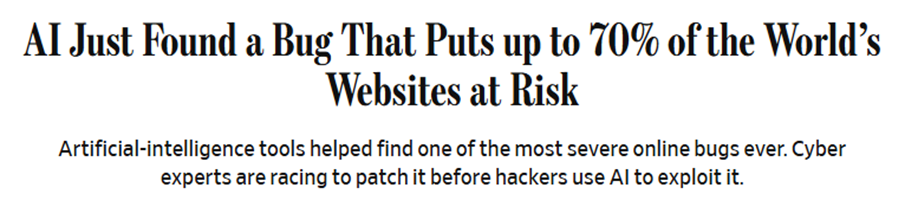
To give you an idea of the scale: Yesterday, the governments of Finland, France and the Netherlands started pulling their official public services and cybersecurity agency websites completely dark.
They weren't hit by a foreign state military force. And it isn't an act of cyberwar. They are frantically trying to protect their networks from a multi-front structural collapse of the internet's core security layers.
If you have capital deployed across the DeFi ecosystem, or sitting anywhere, you are probably asking yourself the ultimate question right now …
Should I move my crypto today, or do I need to sit out?
Let’s unpack exactly what happened, and why your capital is safer than you think.
Then, we’ll cover some simple rules to follow over the next 48 to 72 hours to guarantee your portfolios stay bulletproof.
The Ghost in the Legacy Engine: PHP2Shell
The first match that lit this digital wildfire is an exploit called PHP2Shell.
PHP is the backend programming language that nearly 75% of all websites on earth use to generate (wake up) web pages on a server when you click a link.
Think of it like a Lego piece that’s used in 3 out of 4 Lego sets.
But yesterday, an AI tool just discovered a critical, architectural flaw hiding completely unnoticed deep inside that blueprint.
And it’s been hiding there for nearly two decades.
Security groups tried to coordinate a secret fix, but the technical details leaked publicly ahead of schedule.
Within minutes, automated hacker bots began scanning the entire globe to exploit it.
The flaw allows a hacker to intentionally crash the server task of generating a website from the link. When the server gets confused and tries to clean up the mess, it accidentally runs a piece of hidden malicious code left behind by the hacker and gives them total control of the system.
This results in a Full System Takeover. In one stroke, the hacker becomes the absolute system administrator of the entire host server.
They gain a direct line into the database to steal user passwords, corporate secrets, and more.
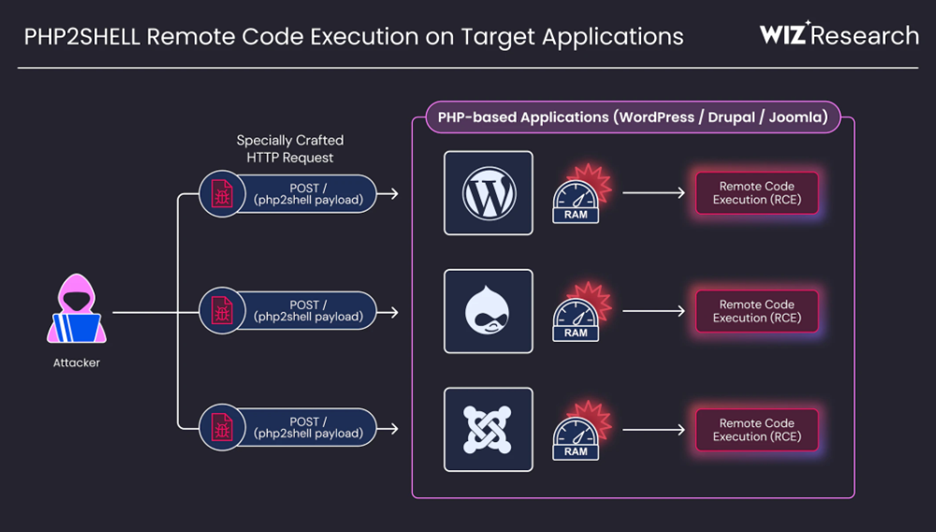
Once inside, they can launch quietly, install spyware, or deface the frontend interface completely.
The official PHP organization rushed out emergency patches, but there is a massive catch: The fix only works for modern, active versions of PHP.
Millions of older, legacy websites are running outdated, end-of-life versions that do not receive automatic updates.
Many websites that use PHP with sensitive information are simply abandoned. There will be no upgrade for them.
That means they’re going to get pawned and leaked.
And they represent a LOT of the internet.
The Second Wave: Node.js, Next.js, and Broken Locks
If this were just a PHP crisis, the crypto industry wouldn’t care.
Blockchains and modern decentralized finance applications entirely skipped legacy web servers in favor of modern, high-performance tech stacks.
But as the day unfolded, the script completely flipped.
Security groups dropped an absolute bombshell: Node.js, React, and Next.js — the exact programming frameworks used to build modern web pages, including Web3 ones — are facing their own active remote code execution exploits today.
And these are completely independent of the PHP vulnerability.
Finally, the last piece of this puzzle. As the saying goes, bad news comes in threes.
And the third incident was revealed in a parallel crisis that several international web certificate authorities (like eMudhra) used weak encryption.
What that means is hackers can, in less than a second, crack the code and create fake security certificates. Rendering the secure "HTTPS" green padlock icon on your web browser useless.
3 Ways the Blockchain Keeps Your Crypto Safe
None of this affects blockchain itself.
This is a systemic failure of the traditional web. That means you can expect potential issues with websites, apps, even Internet-of-Things devices like your smart robot-vacuum cleaner.
But this contagion hasn’t touched the blockchain.
In fact, right now, the blockchain is the safest place on earth where you can keep your money.
It’s the websites and user interfaces you use to access the blockchain that could be vulnerable.
So, let's cut straight to the bottom line …
If you do not use crypto websites over the next 48-72 hours, your liquidity positions should be safe.
As should the crypto in your wallet.
Every non-custodial pool — liquidity positions, stajed assets and coins you’ve left on centralized exchanges — are safe because the underlying blockchain is entirely unaffected.
A hacker causing a crash on a web application server thousands of miles away cannot rewrite a smart contract.
It can’t alter blockchain logic.
And it can’t forcefully extract capital from a blockchain.
Furthermore, core crypto tools and platforms are built like fortresses. That includes …
- The Installed Wallets (MetaMask, Phantom, Avocado): These are native software applications or secure browser extensions running directly on your local device.
They do not run PHP or backend Node.js servers, and they do not rely on standard web browser certificate lookups to function or to protect your seed phrases.
A broken certificate authority cannot reach inside your phone's secure hardware enclave to manipulate your wallet files.
- The Major Centralized Exchanges (Coinbase, Binance): Major exchanges maintain 24/7 internal Security Operations Centers that deploy patches immediately when advisories drop.
Even better, Coinbase keeps 98% of customer crypto assets in completely offline cold storage. And the database containing the keys to the funds is physically disconnected from the internet.
Probably, the worst that bad actors can do to the U.S.’s No. 1 centralized exchange is hack the frontend website and try to phish the users who come to trade that day.
- The Infrastructure Giants: Global web guards like Cloudflare — which handles traffic shields for a massive percentage of crypto sites — and leading blockchain security firms like SlowMist have successfully rolled out global firewall protections. These will block the exploit payloads before they can ever reach major crypto network gateways.
The Real Crypto Risk: You
Because your funds are safe on the blockchain, a hacker's best option is to try to trick you into handing them over.
If a project's frontend — that is, the website or app you use to interact with the platform — is compromised, a hacker will modify the website's screen to do one of two things:
- Show a fake pop-up banner saying something like: "WARNING: MetaMask security emergency, click here to migrate your wallet!" If you click that link, you walk straight into a phishing trap designed to steal your seed phrase.
- If you use DEX, they may alter a "Withdraw LP" or "Harvest" button so that when you click it, your wallet app pops up asking you to sign an Approve All Assets transaction to a hacker's address instead of the official pool.
The first example is generally known in crypto, and many of you are already perfectly aware of how these frontend traps work. And how to keep yourself safe.
The twist today is that this caution needs to extend to everything you do online.
Your Low-Stress Action Plan
Of course, constant vigilance is exhausting.
Which is why I have an alternative safety plan: Take a break from the internet for a few days.
In crypto, if you do not have an urgent reason to swap, claim rewards, or move capital, sitting out the next 48 to 72 hours removes your exposure to frontend attacks completely.
It is the easiest way to stay completely stress-free while developer teams finish updating their websites and apps.
Here is what you can do while you are chilling and sitting on your hands:
- Limit Web Browsing This Week: Stay within trusted walled gardens (like Facebook, YouTube, etc.). The bigger the better. Your local restaurant’s website or app is probably more at risk than a major bank’s.
And don't click random links this week. Just wait until the global server patches go through across the world and business.
- Update Your Tools Offline: Use this downtime to update your apps, web browsers, and operating systems on your local devices.
Mainstream browsers like Chrome, Firefox, and Safari have already updated their internal code to block those bad eMudhra certificates completely.
- Run a Second Wave Check: Update everything again after a week. This step is to catch some of those apps, browsers, or operating systems that release secondary patches to fully clean up the code.
The underlying blockchain is holding your positions exactly where you left them — out of reach of the internet's web traffic.
Let the web hosting teams handle the heavy lifting this week.
In the meantime, you can protect your capital with simple, disciplined, everyday operational security.
Best,
Marija Matić