 |
| By Bob Czeschin |
Multiple real-life, cloak-and-dagger stories are now emerging from the Iran War. Like America’s dramatic rescue of a downed U.S. aviator in Iran’s Zagros mountains — as local militia closed in for the kill.
However, another less famous but no less riveting narrative unfolded in the early hours of the conflict.
In the heart of Tehran, in broad daylight, with a single strike that seemed to come reaming out-of-the-blue. Israeli Defense Forces decapitated the entire upper echelon of Iran’s political and military leadership in one move.
The Israelis suffered exactly zero causalities in that attack. And the Ayatollah and his top generals … never knew what hit ’em.
Normally, such precise excision of an enemy’s top command only occurs in Mission Impossible or Jason Bourne techno-thrillers.
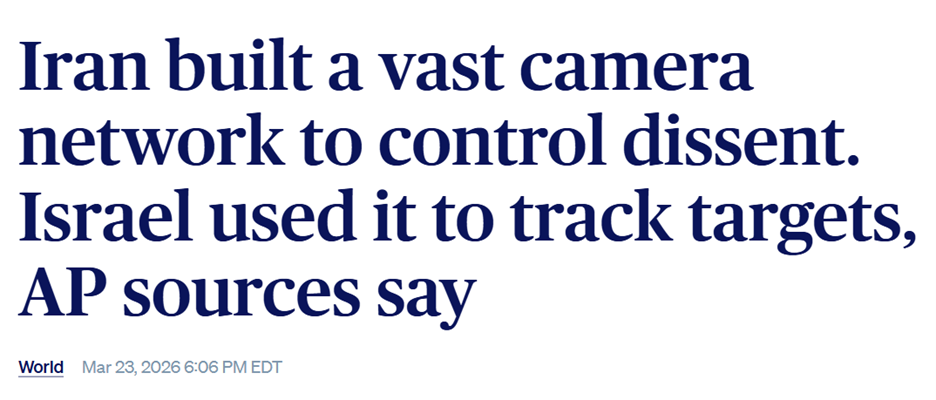
What made this one possible in real life, in the middle of a shooting war, no less ... was Tehran’s estimated 8,000 to 12,000 CCTV traffic cams.
You find them installed above shops, street corners, bus stops and subway stations. At the entrances to public and residential buildings, stadiums and sports fields.
But they are hardly there just to manage and prevent traffic jams. They also have darker, more regime-essential purposes. Among them,
- To help break-up anti-government demonstrations.
- Identify (via face-recognition software) street protestors for incarceration (or worse).
- Arrest young women for pulling off their mandatory hijabs — when they thought no one was looking.
Virtually all Tehran’s traffic cams connect via the internet. And produce a vast torrent of video. So vast, it took teams of analysts months to plow through.
Thus, the sheer volume of data sharply limited the usefulness of the system.
But that started to be less important in 2025, when we began to see frenetic advances in AI. Which made it possible to quickly sift through vast amounts of surveillance footage to find and track vehicles and faces.
To pull off its initial attack, the IDF signals intelligence unit hacked Iran’s traffic cams. And used AI to track key regime figures in real time.
Re-invigorating Crypto’s Privacy Narrative
The U.S. has far more traffic cams than Iran.
At the time of writing, there are roughly 500,000 (or more) traffic cams, law enforcement cams, CCTV surveillance cams, ATM machine user cams, etc. in use.
Plus, American AI and face-recognition technology is a couple development cycles ahead of what’s available in the Mideast.
Think about what this means for U.S. residents: Unless you live off-the-grid in some remote cabin, your whole life may be even more of an open book (to AI surveillance bots) than the Ayatollah and his generals’ movements.
Already …
- Immigration and Customers Enforcement (ICE) routinely uses traffic cams data to track the location and movement of persons of interest.
- Flock Group — a private surveillance technology company — offers solar powered face recognition technology and license plate reader technology to track people and vehicles. Customers include more than 12,000 government and private clients.
In other words, the potential loss of personal privacy is near total.
Concern for personal privacy has been a hot-button issue since the early days of crypto.
But the alarming spread of video surveillance and the juggernaut growth of AI have combined to give it fresh urgency and a new lease on life.
A New Breed of Privacy Cryptos
The first privacy coins like Monero (XMR, “C”) encrypted everything. They copied a proof-of-work crypto like (Bitcoin). And taking a brute force approach to privacy, simply encrypted the entire blockchain.
That’s great for users looking for maximum anonymity.
But governments have largely banned XMR from regulated platforms because it might be used to conceal financial crimes. And because of this, it has limited utility.
Zcash (ZEC, “C+”) replaced always-on privacy with an “on/off switch.” That made it easier for regulatory compliance while still offering privacy on-chain.
But encryption requires extra computational overhead. So, turning it on increases processing charges.
In short, you have to pay extra to use Zcash’s privacy feature. And after the recent race to the bottom on gas fees, few crypto market participants are in a mood to countenance extra transaction fees.
But Midnight (NIGHT, “D”) is something genuinely new under the sun.
Ethereum (ETH, “B+”) was crypto’s first smart-contract blockchain. But the first smart-contract platform to make privacy a fully programmable, selective feature … is Midnight.
As such, it has potential to influence, shake-up and determine the future course of crypto — much like the creation of Ethereum itself.
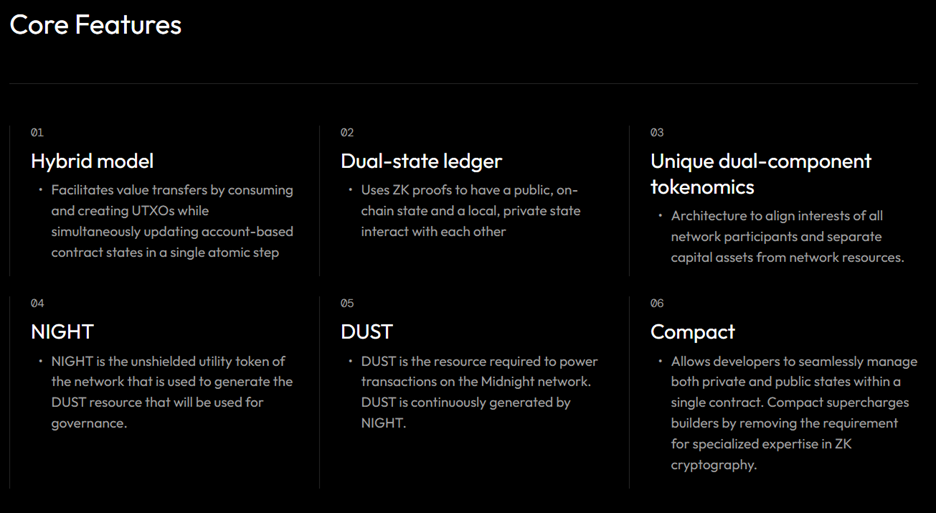
On top of that, its clever dual-token system overcomes the problems that limit XMR and ZEC.
- Midnight Network provides privacy for users’ actions — without also providing a coin for illicit value transfer. This puts it on far safer ground than XMR with government regulators trying to trace proceeds of criminal activities.
-
here is zero extra cost for privacy. Every NIGHT token-holder automatically accrues DUST tokens — like interest on a saving account. Unlike NIGHT, DUST cannot be transferred, sold or exchanged.
This secondary token’s sole purpose is to pay network charges — after which they’re burned. This means NIGHT holders always have access to the network, no matter what its price is. And nobody pays extra for privacy.
XMR and ZEC may still have their devoted user bases. And both are more established projects with some institutional interest.
But growth investors or those looking for the next big thing in on-chain privacy should keep NIGHT on their radar.
An Unexpected Tailwind
The advent of world’s first smart-contract programmable privacy blockchain opens up a whole new universe of never-before imagined applications.
And one of the most exciting is real-world asset tokenization, or RWA plays.
Tokenizing real-world assets like real estate, art or financial instruments is already a crypto megatrend.
But one big challenge is privacy.
Traditional asset managers may want to benefit from the 24/7 access and instant settlement of the blockchain. But a lot of clients prefer the details of their asset holdings and transactions to not be visible to the entire world.
At least, before the moves are made.
Midnight Network’s programmable privacy can allow on-chain representation of assets with these details shielded.
For example, a property deed could take the form of a non-fungible token (NFT) on the Midnight network.
Potential buyers could verify the deed is legitimate and also certain attributes of the property …
All while the present owner’s identity and transaction history — protected by zero-knowledge proofs (ZKP) — remain confidential, disclosed only to authorized parties.
Few classes of tokenized RWAs are growing faster than stablecoins (cryptos pegged to U.S. dollars). The total market cap of which has gone from $5 billion in 2020 to more than $317 billion today.
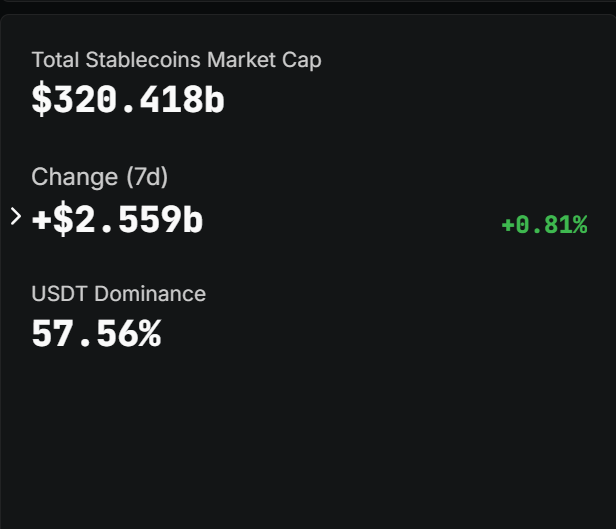
That’s a 63x increase in less than six years!
Despite this explosive growth, stablecopins are a poor substitute for physical cash in several key respects. And a big one is the fact that transactions are not anonymous.
Think about it: What massive conglomerate wants their spending broadcast on the blockchain in real time?
What asset manager wants to let the competition know what moves they plan to make … as they’re being made?
With the right software, anyone can track how many stablecoins you hold, and what vendors you buy stuff from and how much you spend.
Midnight enables developers to create privacy stablecoins, which makes it possible for users to send money anonymously while the transaction itself is still recorded for transparency.
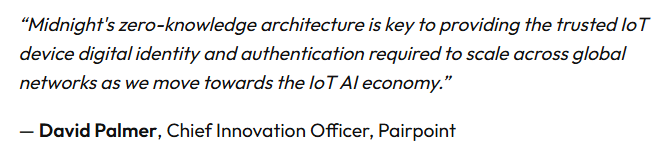
And being tethered to the meteoric growth of stablecoins in this way … could easily pile up large long-term gains for early investors in NIGHT tokens.
Which, as I write, still cost only about 4 cents each.
That’s not a guarantee, of course. Midnight is still the new privacy network on the blockchain. And it’ll need to prove its security and efficiency before it can sit next to XMR and ZEC as narrative leaders.
But the potential is there.
Best,
Bob Czeschin
P.S. There’s another sector boosted by AI and war: metals.
A weakening dollar and geopolitical uncertainty has gold up 50% from last year. Silver has seen a whopping 127% gain in the past 12 months. And copper — a key ingredient in powering AI data centers — is still waiting for its big run.
Demand is building. Which is why resource expert Sean Brodrick has found seven picks-and-shovels plays to benefit from that demand.
He calls them the Magnificent 7 Miners. And he’ll reveal them in his briefing on Tuesday, April 21 at 2 p.m. Eastern.