 |
| By Juan Villaverde |
Timing is everything in finance.
I don’t just believe that because I am, at my core, a cycles analyst. But because it’s just plain true. A company can spend a year chasing a prize, finally win it, and discover the ground has shifted beneath it the very same month.
That is roughly where Circle (CRCL) sits this week.
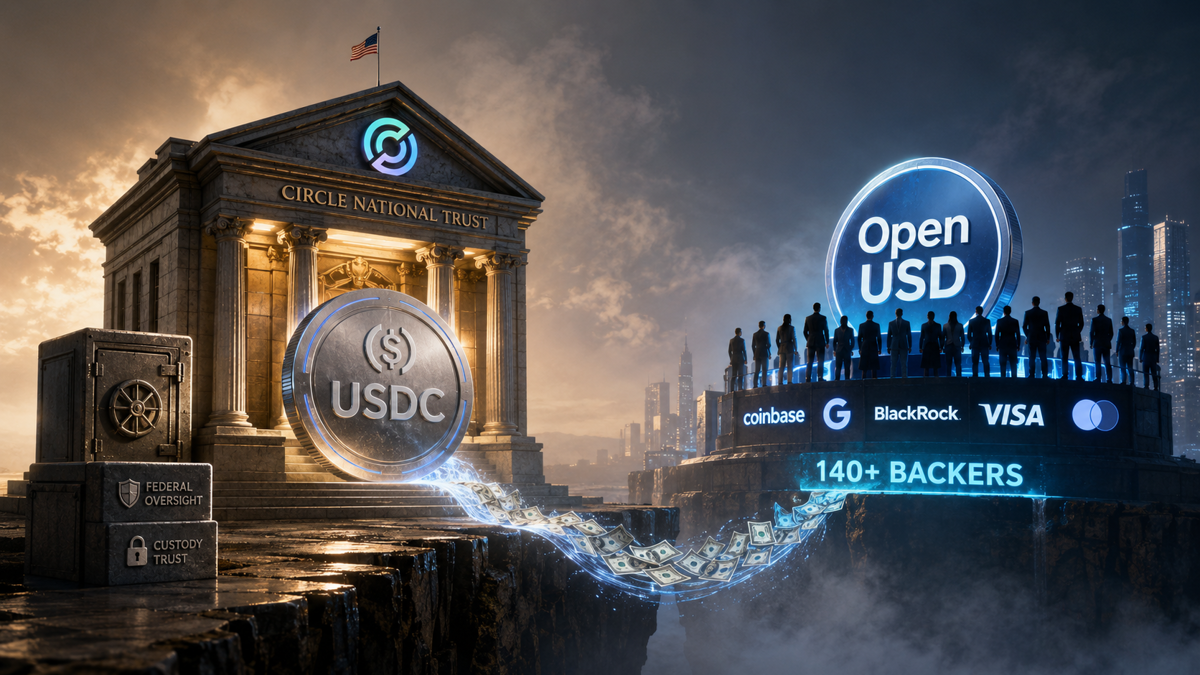
Circle is the entity behind the second largest stablecoin in the world, USD Coin (USDC). (A stablecoin is a digital dollar that moves on a blockchain, crypto’s fundamental infrastructure.) And on Friday, it received final approval from a top U.S. banking regulator to open a federally regulated bank.
Its stock jumped double digits on the news.
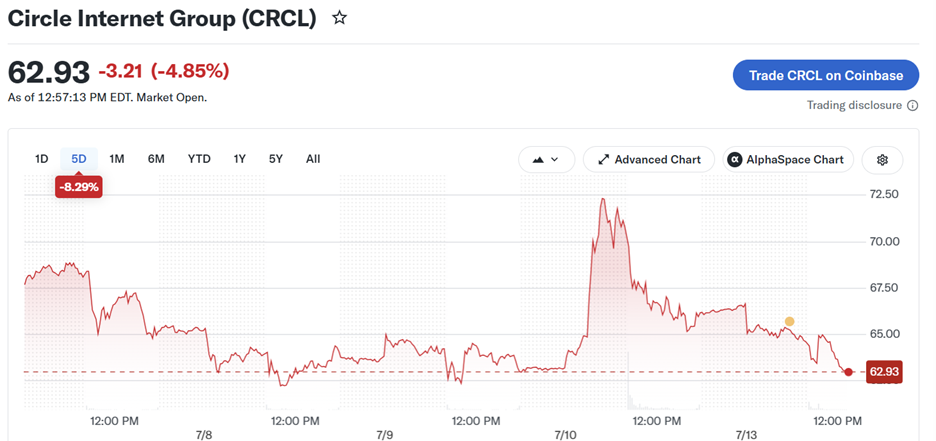
But two weeks earlier, the same corner of Wall Street that just blessed it had started building the one thing that could hurt it most.
The tension between these two developments is turning into a juicy story.
What Circle Actually Won
The regulator is the Office of the Comptroller of the Currency, the federal body that oversees national banks. It cleared Circle to run First National Digital Currency Bank, operating as Circle National Trust.
Here is the part the headlines blur.
This is a national trust bank, not a normal bank. It is the digital-asset version of what BNY Mellon (BNY) or State Street (STT) do for stocks and bonds: safeguard client assets under strict fiduciary rules.
In plain English, Circle National Trust cannot take deposits, offer checking accounts or make loans.
Initially, it will only hold assets for Circle itself. That means management of the reserves behind USDC under federal oversight is described as a future capability, not a day-one function.
Circle is not alone. Federally regulated crypto custody is becoming normal. The same regulator has cleared Ripple, Paxos, BitGo and Fidelity for similar charters.
It also means Circle can no longer count on exclusivity as an advantage. And that matters considering the second chapter of this story, and the upcoming cliffhanger.
How Circle Makes Money
To see why the next part stings, you simply need to follow the money.
Circle earns almost nothing from fees: Roughly 94% of its revenue comes from the interest on the reserves that back the USDC coin, which sit in cash and short-term U.S. Treasurys.
When you hold a digital dollar, Circle holds a real one to back it. And it keeps the yield.
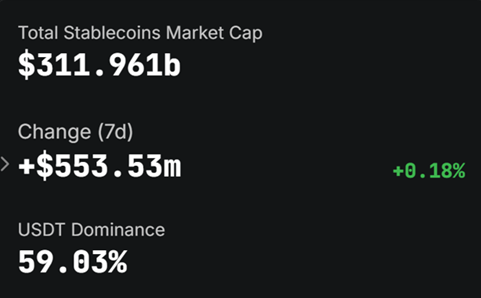
That model works beautifully with about $77 billion of USDC in circulation, second only to Tether's roughly $184 billion.
But there are two key weaknesses with this approach.
- Because Circle’s income is mainly interest, it rises and falls with the Federal Reserve. Circle booked about $694 million in revenue last quarter, but every rate cut chips away at the core of it.
- Anyone who offers the same digital dollar and gives that interest away can undercut it.
And on June 30, a new group did exactly that.
The Rival Built to Undercut It
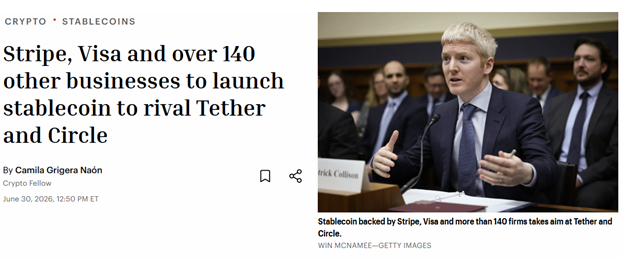
A consortium of more than 140 companies — including Coinbase (COIN), Alphabet (GOOGL), BlackRock (BLK), Visa (V) and Mastercard (MA) — launched a stablecoin called Open USD. It charges no fees and hands most of the reserve income back to its partners.
That is a direct strike at Circle's only real source of income. CRCL fell about 15% the day it was announced.
The sharpest edge is one name on that list: Coinbase.
Coinbase is Circle's most important distributor. Under a deal struck in 2023, it collects all the reserve income on USDC held on its platform, and half of it everywhere else. In 2024 alone, Circle paid Coinbase roughly $900 million.
That agreement comes up for renegotiation in August 2026, just weeks from now. Coinbase is now helping build a competing token it can promote instead. Which means it’ll now be able to walk into that room holding most of the cards.
The Bottom Line
The charter is real, and it matters.
It gives Circle a level of federal legitimacy most of crypto still lacks, and a custody business it can grow.
But it may not be able to grow as much as it would like as the solution has introduced an even bigger problem. Circle won Washington's approval in the same month Wall Street started arming a rival, led by the partner it can least afford to lose.
CRCL went public just over a year ago and briefly traded near $263. It changes hands closer to $70 today, lifted by the charter but still down about 74% from that peak.
For an investor, the stock now sits between those two facts. The stamp of approval is genuine. So is the threat to the business it is meant to protect.
Best,
Juan Villaverde
P.S. While Circle now has to figure out how to maintain its advantage, this development is shaping up to be rather bullish for Coinbase.
That’s good news for my Weiss Crypto Investor members, as we hold Coinbase in our model portfolio dedicated to long-term crypto and crypto adjacent investments.
To learn about the rest of our picks, and how my Crypto Timing Model helps us pin down the best times to buy and sell, click here.