 |
| By Dawn Pennington |
Between the rise of crypto ETFs and digital asset treasury companies …
The dominance of stablecoins in cross-border payments, and …
Real regulatory clarity making its way through Congress …
It’s official: Crypto is here to stay.
But most regular folks still don’t know much about crypto other than Bitcoin (BTC, “B+”) and maybe a few memecoins.

Or worse, they still think the crypto market is a fad that traders will eventually outgrow.
Well, the crypto market will turn 18 years old in January. That’s the anniversary of the first Bitcoin being mined.
So, Bitcoin is entering adulthood, at least in human terms.
And it appears to have a long, healthy lifespan in store.
One with many possibilities in store.
It’s already minted some 250,000 crypto millionaires and some 50 crypto billionaires (that we know of).

Including the Trump family, which reportedly earned some $2.3 billion in pretax crypto income between November 2024 and April 2026 via the World Liberty Financial (WLFI, “D+”) and TRUMP memecoins.
But the wealth the crypto market has created, and continues to promise, is half the story. The other half is the cutting-edge technology that underpins the cryptoverse.
Crypto tech is changing the game for the traditional markets, too.
So, if you’ve been waiting to open a crypto wallet and trade some tokens, this is your sign to do that today.
Why? Because crypto will be required learning for traditional stock investors in the not-far-off future.
To help you navigate this increasingly important financial sector, let’s talk about what you’re investing in.
What Is a Blockchain?
A tech breakthrough called the blockchain underpins the entire crypto ecosystem. And there are thousands of them.
Blockchains are shared public databases.
In those databases, new entries can be added. But existing entries can’t be altered like Wikipedia, for example.
The blockchain securely records information on a peer-to-peer network.
Blockchain entries are called blocks. These blocks record the details of every transaction that’s posted to it.
Each block contains encoded data about the previous block. This reinforces the order and structure of the blockchain as it grows.
But, before a block can be added to the chain, it must be verified.
So no random individual or entity — however well-meaning — can alter it. Which means bad actors can’t, either.
How verification gets done is specific to each blockchain.
For example, Bitcoin uses a Proof-of-Work mechanism.
That means, for every transaction, a block gets made. Then, a miner completes a complex math puzzle to verify the block.
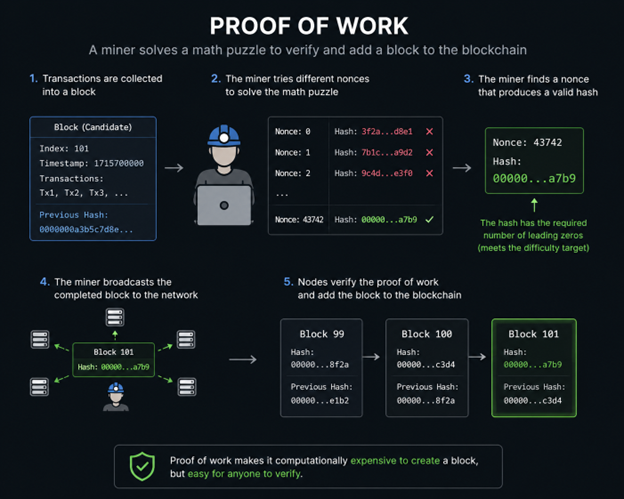
That block is then added to the chain, visible for everyone to see.
And as a reward for supporting the ecosystem, the miner gets a reward in BTC.
Then there’s Ethereum (ETH, “B+”), the second largest crypto by market cap, right after Bitcoin.

It has a different way to verify transactions called the Proof-of-Stake method.
This approach — instead of requiring energy-heavy computers to solve complex math puzzles —relies on "validators."
These validators lock up their own cryptocurrency as collateral (a "stake").
Why? For the chance to validate blocks and earn rewards.
Those rewards are typically paid in the native token of the blockchain.
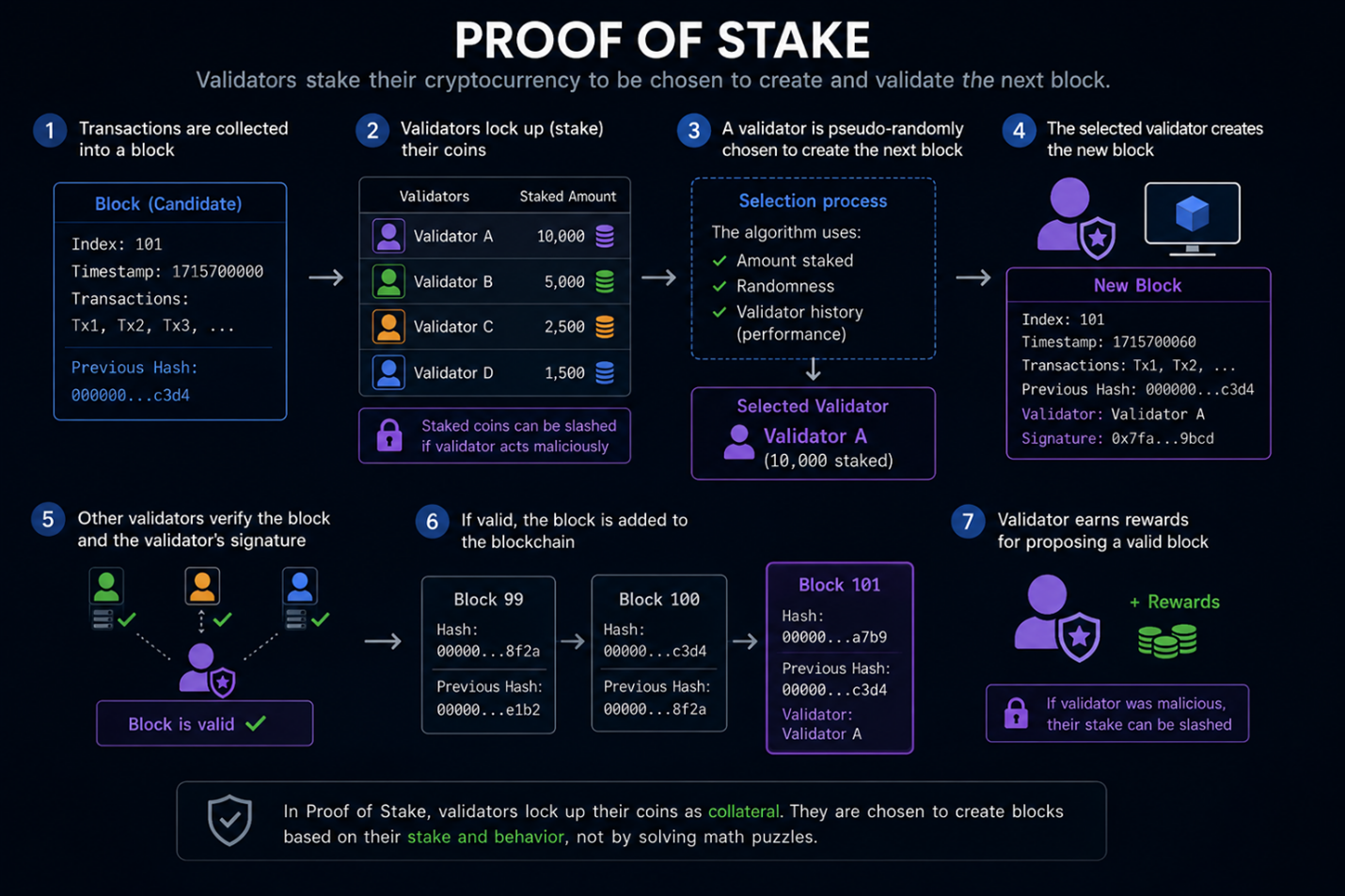
In the example of Ethereum, it would be the token ETH.
In short, think of a blockchain as a railway.
It’s the infrastructure that is used to verify transactions without a middleman obscuring the process or details of that transaction.
Again, there are many blockchains. Some are exclusive to a particular product or platform, like Hyperliquid (HYPE, “D+”).

Others are large ecosystems that anyone can build on, like Ethereum.
How to Store & Send Crypto
Crypto was meant to be a separate financial system. One insolated from the manipulation that TradFi markets saw in the lead-up to the Great Recession.
But that meant everything had to be new. Including how you can store and send your crypto.
That’s where crypto wallets come in.
Crypto wallets create a public and private key for you.
- The private ID is what you use to approve a transaction.
- The public ID is how others can identify that you approved a transaction.
By using both, crypto wallets allow every action taken on the blockchain to stay transparent.
At the same time, they help ensure that no one else can use your private keys to initiate a transaction without your say so.
That’s where the tried-and-true crypto saying comes from: Not your keys, not your crypto.
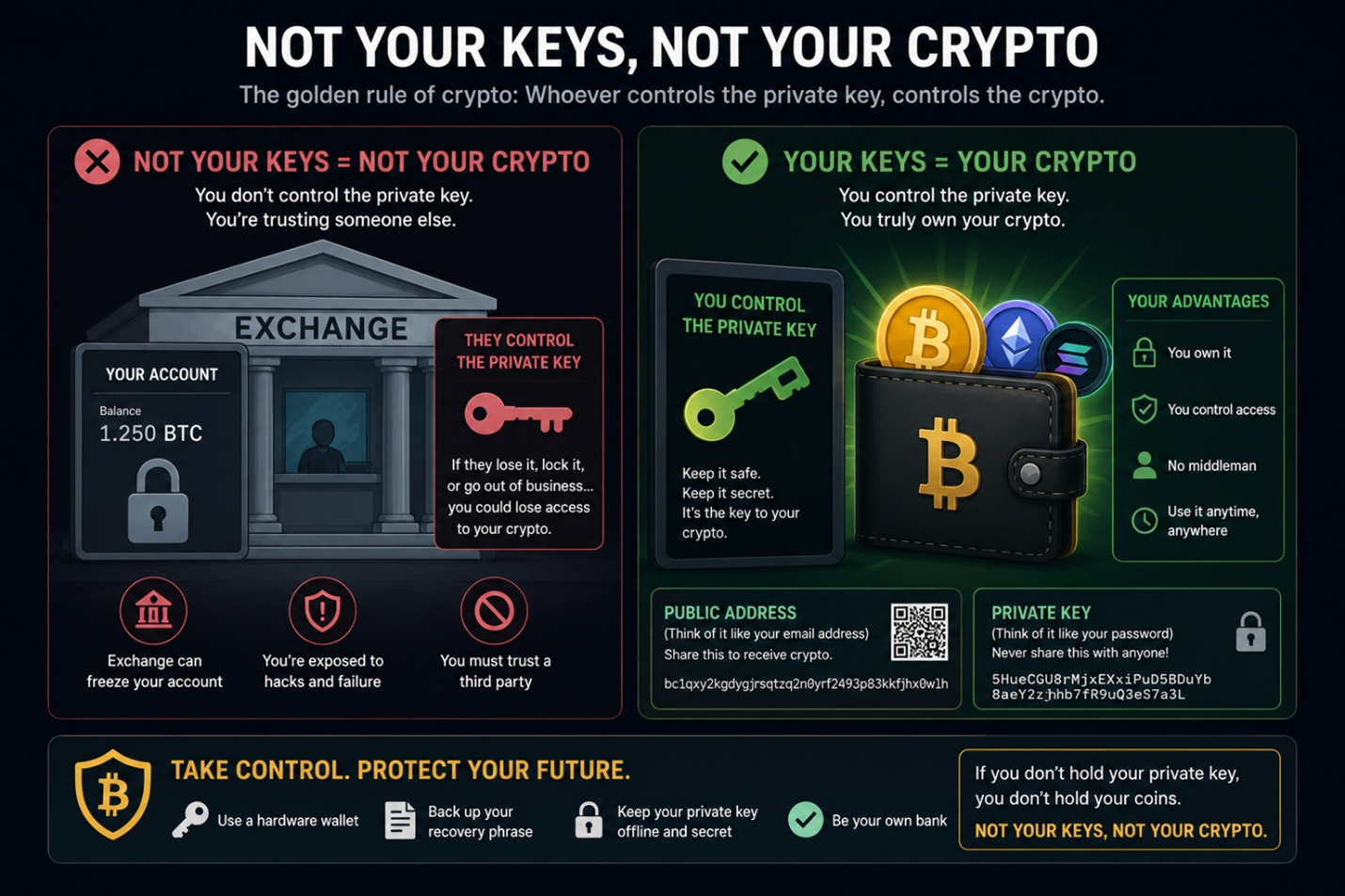
To be clear, you don’t technically store your crypto in your crypto wallet. All cryptos are stored on the blockchain ledger.
Your wallet lets you see your holdings on that blockchain in a single place.
And it stores the keys that give you access to the blockchain ledger.
Since a crypto wallet generates your keys for a specific blockchain ledger, not every wallet can be used for every blockchain.
Hyperliquid, for example, doesn’t use its own proprietary wallet system.
But it works with software wallets like MetaMask, Rabby Wallet and Coinbase Wallet. And hardware wallets like Ledger and Trezor.
Connecting wallets is a valuable lesson on its own. One that we’ll explore in depth together in the near future.
For now,
Dawn Pennington
Editorial Director