VVV, HYPE Rise on Revenue; DOT, WLFI Face the Fallout
 |
| By Marija Matic |
The past week in crypto reads like a market caught between two instincts …
Caution at the top, chaos at the edges.
Let me explain …
On the surface, not much has changed.
Bitcoin (BTC, “B+”) continues to trade well above the $70,000 level, absorbing macro pressure without losing structure.
Meanwhile, headlines have leaned risk-off with renewed U.S.–Iran tensions pushing oil higher, yields staying sticky and ETF flows cooling from their earlier pace.
In another cycle, that mix would have cracked momentum.
But not in this one.
Instead, capital has rotated: sideways, downward and occasionally into the absurd.
Majors are consolidating while altcoin narratives compete for attention. A handful of tokens are pulling disproportionate flows, each for very different reasons.
So, here are the biggest winners, losers and one impressive wildcard on the blockchain over the past week …
Speculation’s New Center: RAVE
No token captured that dynamic better this week than RaveDAO (RAVE, Not Yet Rated).
It’s where the speculators have migrated. Its coin pulled a staggering 3,900% gain in seven days, with daily candles hitting +200%.

Between new exchange listings and a narrative that's spreading like wildfire on Telegram, RAVE has become the ultimate momentum play.
The project is basically a bet on the "RWA Entertainment" sector, with a unique mix of real-world festival profits (RWA) and AI hype.
Unlike your average memecoin, RaveDAO has a functional business model that actually brings in cash:
- Real-World Utility: It runs sold-out music events (like the recent Hong Kong shows) and use 20%–30% of profits to buy back and burn the token.
- The "Festival Trade": The timing is perfect. With festival season kicking off and the Lisbon Dance Summit (April 29) on the horizon, it’s a classic "buy the rumor" setup.
- The AI Pivot: To avoid being a seasonal fad, RaveDAO is rebranding as a "cultural engine" where AI agents handle event logistics and community storylines.
But while this foundation is better than what see in a standard memecoin, the tokenomics are a minefield.
The circulating supply is very low, tokens are concentrated among the few and the recent pump seems to be driven by coordinated on-chain flows.
This creates a "trap" where there isn't enough room for everyone to exit orderly if the mood of those few shifts.
With a massive 76% supply unlock looming in the future, and the high probability of a "sell the news" dump once the Lisbon event starts on April 29, the price action looks dangerously overheated.
Don’t get me wrong, it’s a legitimate new narrative for 2026.
But the next week or two will be a high-stakes game of musical chairs for RAVE.
Savvy investors know to stay away. Because no one wants to fall to the floor when the music stops.
Quality Positionings: VVV and HYPE
Away from the noise, a quieter rotation has been building into assets that sit above speculation.
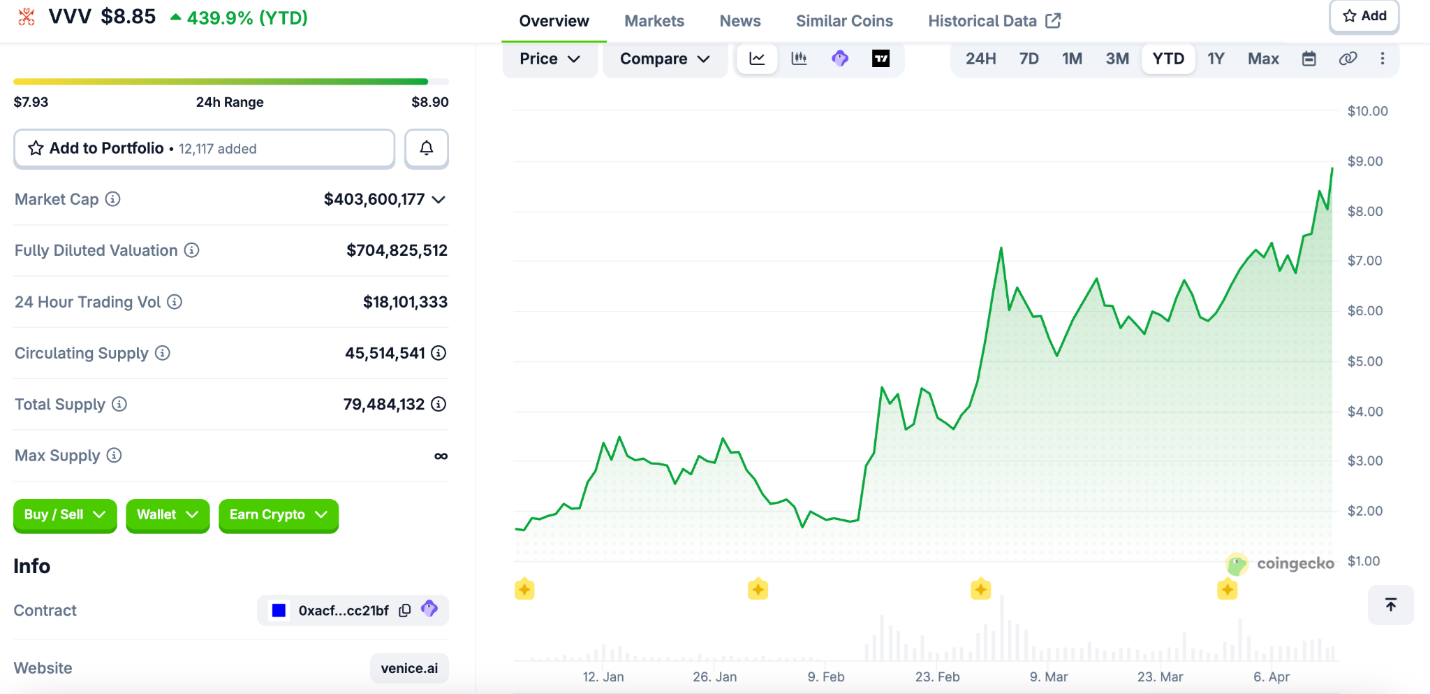
Venice AI (VVV, “B”) has emerged as one of the few tokens that consistently attracts capital during every AI expansion.
Venice has positioned itself as the world's leading platform for private, uncensored intelligence.
While it matches the usability of ChatGPT, it is built on a fundamentally different ethos: Privacy by default and a decentralized monetization model.
Long-term holders can stake VVV on Base for an 18% yield. Or, they can convert them into DIEM tokens, which provide $1 in daily credits for Venice's suite of AI tools, effectively turning the token into a productive utility asset.
This has led to a massive display of conviction, with 86.37% of the circulating supply now staked or locked:
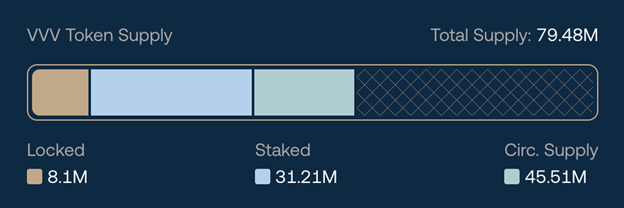
This supply sink is supported by a growth story: Venice recently surpassed 2 million users. And it utilizes its monthly revenue for a programmatic buy-and-burn.
The growth is accelerating. Despite being less than halfway through April, the month’s revenue has already eclipsed the previous record set in March.
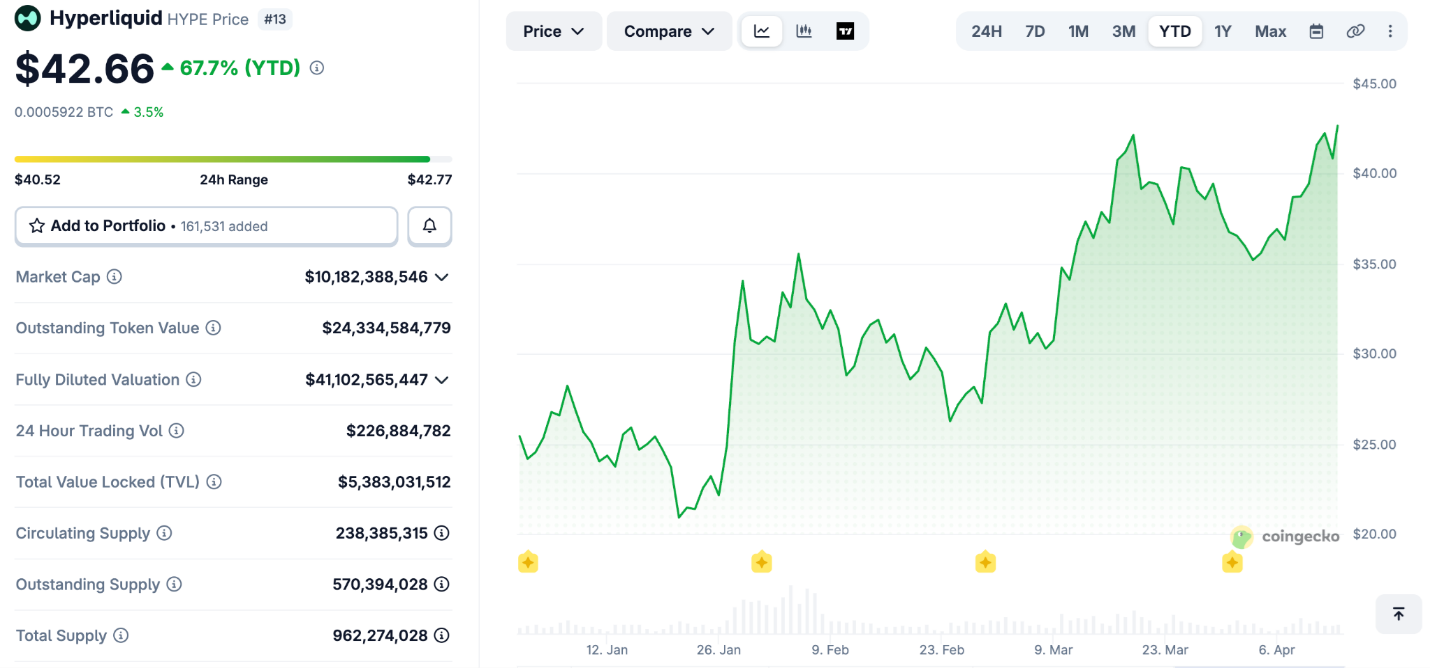
Meanwhile, Hyperliquid (HYPE, “D”) accumulation is being driven by raw usage that now rivals traditional finance.
As a reminder, Hyperliquid is the leading decentralized perpetuals exchange. It captured roughly 73% of all decentralized derivatives trading volume last year.
Now, the platform has evolved into a "permissionless CME." This means users can trade everything from crypto to tokenized oil, gold and tech stocks.
Making it a natural hedge for macro uncertainty. Whenever oil prices shift or rates stay elevated, exchange volumes hit record highs.
The real significance lies in two structural upgrades that turn its token, HYPE, into a revenue-generating machine:
-
HIP-3 (The Franchise Model): Anyone can now launch a new trading market on the exchange. But they must stake 500,000 HYPE to do it.
In return, the deployer keeps 50% of that market's trading fees. This creates a massive supply sink where millions of tokens are locked away just to keep the "digital storefronts" open.
- HIP-4 (The Prediction Pivot): Launching just in time for the World Cup, this allows "cross-margining." One can use their Bitcoin or gold positions as collateral to bet on match results in one single account. By cannibalizing platforms like Polymarket, Hyperliquid is capturing the higher fee revenue that comes with event betting.
With Bitwise and Grayscale already deep in SEC iterations for a HYPE ETF, the project is being revalued from a "DeFi app" to a global financial institution.
There is a permanent structural bid under the token fueled by over $800 million in revenue, with nearly all of it flowing back into buybacks.
As long as this feedback loop stays intact and new code additions are carefully implemented, HYPE will remain the primary destination for capital that wants exposure to real-world volume.
These two coins are not moving like speculative RAVE. So don’t expect to see 3,900% moves in a week.
Their climbs are more measured and sustainable.
VVV is up 440% year to date. HYPE has risen 68% in that time. Both are absorbing long-term capital that wants exposure where activity is actually happening.
Losers of the Week: DOT and WFLI
On the other side of the spectrum are the assets that took a massive hit to their reputation this week.
First up is Polkadot (DOT, “C-”), which hit a new fundamental low after the Hyperbridge exploit allowed a hacker to mint $1 billion in fake DOT.
The fallout was instant. “Caution” flags — usually the “kiss of death” before a delisting — and deposit freezes were triggered on Upbit and Bithumb — Korean exchanges that drive a huge chunk of DOT’s global volume.
To be fair, the market won't be flooded with $1 billion in DOT because the hacker minted "fake" bridged tokens, not the real underlying asset. Besides, the hacker only managed to walk away with about $237,000 before the exits were slammed shut.
But in all honesty, DOT has been a slow-motion car crash for years.
Between the awkward co-founder breakup, that infamous $87 million marketing spend that blew the entire treasury and a "parachain" model that basically priced out its own developers, the project was already on thin ice.
Now, it’s fallen roughly 98% from its peak to hit a fundamental low now.
The event effectively nuked the reputation of bridged DOT. With trust shaken, once liquidity dries up and those "Caution" labels appear, the road to recovery becomes increasingly steep.
While Polkadot is dealing with a hack, World Liberty Financial (WLFI, Not Yet Rated) is battling a self-inflicted liquidity crisis.
The project hit an all-time low on Saturday as the market realized just how "circular" its finances have become.
-
The Dolomite: It was revealed that World Liberty used 5 billion of its WLFI tokens — worth between roughly $400-$450 million — as collateral to borrow $75 million in stablecoins from a small protocol called Dolomite.
Since an advisor to World Liberty actually co-founded Dolomite, the move looks like insiders using the protocol as a personal piggy bank.
-
The Exit Blockade: The loan was so massive that it effectively drained Dolomite’s liquidity pools. Ordinary users who had lent their own funds were suddenly "trapped," unable to withdraw their stablecoins.
Because World Liberty borrowed it all.
And while World Liberty’s 18% loan-to-value ratio looks healthy on paper, it’s a liquidity trap in practice. The project’s $60 million daily trading volume lacks real depth. Which means any attempt to liquidate that $75 million loan would instantly vaporize the order book and crash the price by 90% before the sale even finished.
-
The Justin Sun Feud: To make matters worse, former ally Justin Sun has gone nuclear. The SEC began a fraud investigation against him, which was dropped roughly a month ago … following his massive $75 million investment into WLFI.
Now, the relationship between Sun and World Liberty has soured.
Sun is publicly accusing the project of building a "backdoor locking function" into its smart contracts. He says the project is completely centralized and treats the crypto community “as a personal ATM”.
The World Liberty team answered with, “see you in court pal”.
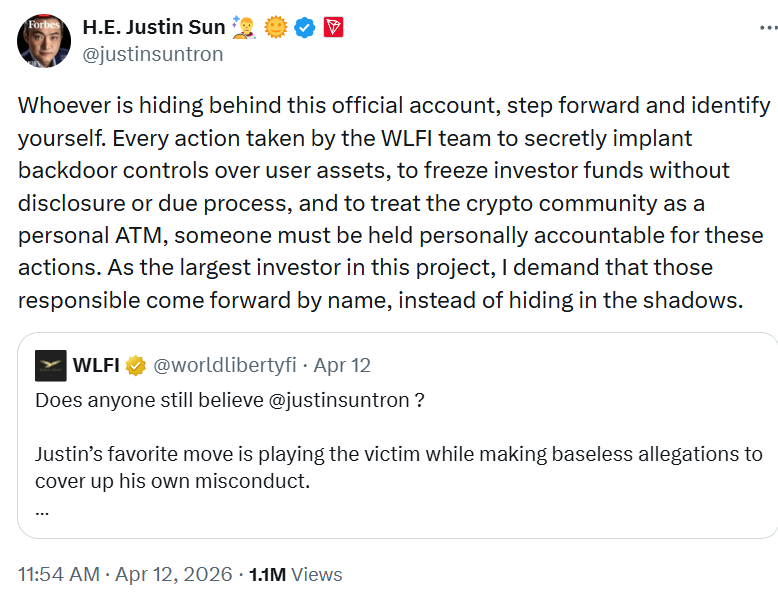
Between the accusations, the "incestuous" lending on Dolomite and a looming token unlock that could flood the market with 16 billion more tokens, WLFI is currently a masterclass in governance red flags.
What started as a project with massive potential to legitimize crypto has become a high-stakes liquidity drama.
That type of excitement is best left to reality TV.
Not in your crypto strategy.
Bottom Line
Despite a backdrop of geopolitical tension and "sticky" macro pressure, Bitcoin’s refusal to break is key.
It proves that the digital asset class has moved past the era of fragile sentiment.
The hunger for upside is back, evidenced by the frantic, 3,900% moonshot of RAVE. But the smarter money is clearly drifting toward the "Revenue Renaissance."
While we should expect the standard crypto drama to continue — and musical chairs to keep spinning — for those positioned in real utility, the music is just getting started.
Best,
Marija Matić