 |
| By Marija Matic |
For years, DeFi felt like "Hard-Fi" — manual and prone to user error.
But in 2026, we are entering the era of Invisible DeFi.
Thanks to AI agents and "intent-based" technology, it is becoming much easier to grow your savings or trade.
How?
By abstracting away the complicated steps into the background.
Some platforms even let you simply set a goal, and the platform will do all the work.
Simply type "Earn 7% on my stablecoins with low risk," and the protocol handles the complicated steps of moving your crypto and finding the best rates for you.
This new era is designed to take the "work" out of self-directed finance. Instead of actively managing your money every day, you’ll soon use professional-grade automation that acts like a pilot for your portfolio.
By early 2026, we are already seeing the first platforms lead this charge.
To be clear, these protocols are still very new. Some are still in beta testing. Which adds to their risk profile.
But their potential cannot be ignored.
Here are three that stood out to me …
1. Bankr (BNKR, Not Yet Rated) — AI trading companion
Bankr is built for the way we actually live online.
It’s not about staring at complicated charts. It’s about telling an assistant what you want to achieve.
Simply type your goals through social networks like X or Telegram, as if you’re texting a friend. Instead of opening a separate financial app and connecting a wallet, you just tell the bot what to do in plain English.
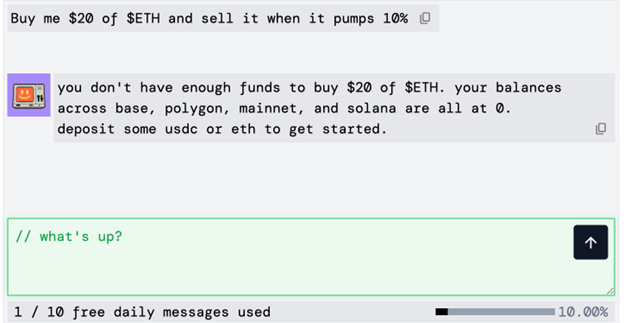
When you start, Bankr automatically creates a secure wallet for you in the background. Then, you fund the wallet and can use it right away.
If you are technically skilled, you can even create an advanced AI "expert" and earn from it by letting others pay to use it.
For investors who want exposure without using the platform, the BNKR token has solid tokenomics with no inflation and real utility.
Meaning when the "AI narrative" pumps, it can move 5x or 10x quickly.
That said, as a high-volatility small-cap token, corrections are equally brutal.
2. Enso Finance (ENSO, Not Yet Rated) — The "Shortcut" King
If Bankr is the assistant you talk to, Enso is the high-speed engine running in the background of some of the great DeFi apps.
It is currently the gold standard for AI yield infrastructure, and more and more DeFi platforms are using it to do the heavy lifting.

This protocol is mainly for builders. So regular users like us most likely won’t interact with Enzo directly.
Instead, we’ll use a wallet or a yield app that has Enso inside … without even realizing it.
That’s where a feature called "Shortcuts" bundles complex strategy into one single click. It automatically handles the confusing parts, like paying gas fees, moving money between different blockchains (bridging) and picking the best protocols.
All so you don’t have to.
From an investor standpoint, though, its tokenomics have a red flag: The ENSO token has a low float with only about 20% in circulation.
This creates potential selling pressure, especially with a major team unlock scheduled for October 2026. To counter this, they offer aggressive staking yields of over 400% to ENSO holders.
Here’s what that means: The long-term value depends on "Shortcut" utility growing faster than token inflation.
This isn’t an unreasonable bet. The project and underlying utility of the token are strong. Every time an AI agent or vault uses a Shortcut, they must pay a fee in ENSO, and validators must stake the token to secure the network.
With a current fully-diluted valuation of $115 million, the project has a clear path toward a multibillion-dollar valuation if it successfully leverages its first-mover advantage as the primary infrastructure layer for the sector.
3. Wayfinder (PROMPT, Not Yet Rated) — The "Self-Driving" Portfolio
If Enso is the engine and the map, Wayfinder is the driver. It is built directly on top of Enso's infrastructure, but it adds a layer of intelligence that makes DeFi feel less like a spreadsheet and more like a conversation.
Think of it like giving Claude or ChatGPT access to your wallet. Instead of figuring the process out on your own, you can just tell your AI agent what you want in plain English.
You can literally "vibe trade" by describing a goal — like "Set up a profitable Basis trading strategy for my SOL" — and the agent handles the technical execution across different platforms for you.
This keeps you active 24/7 without the oversight.
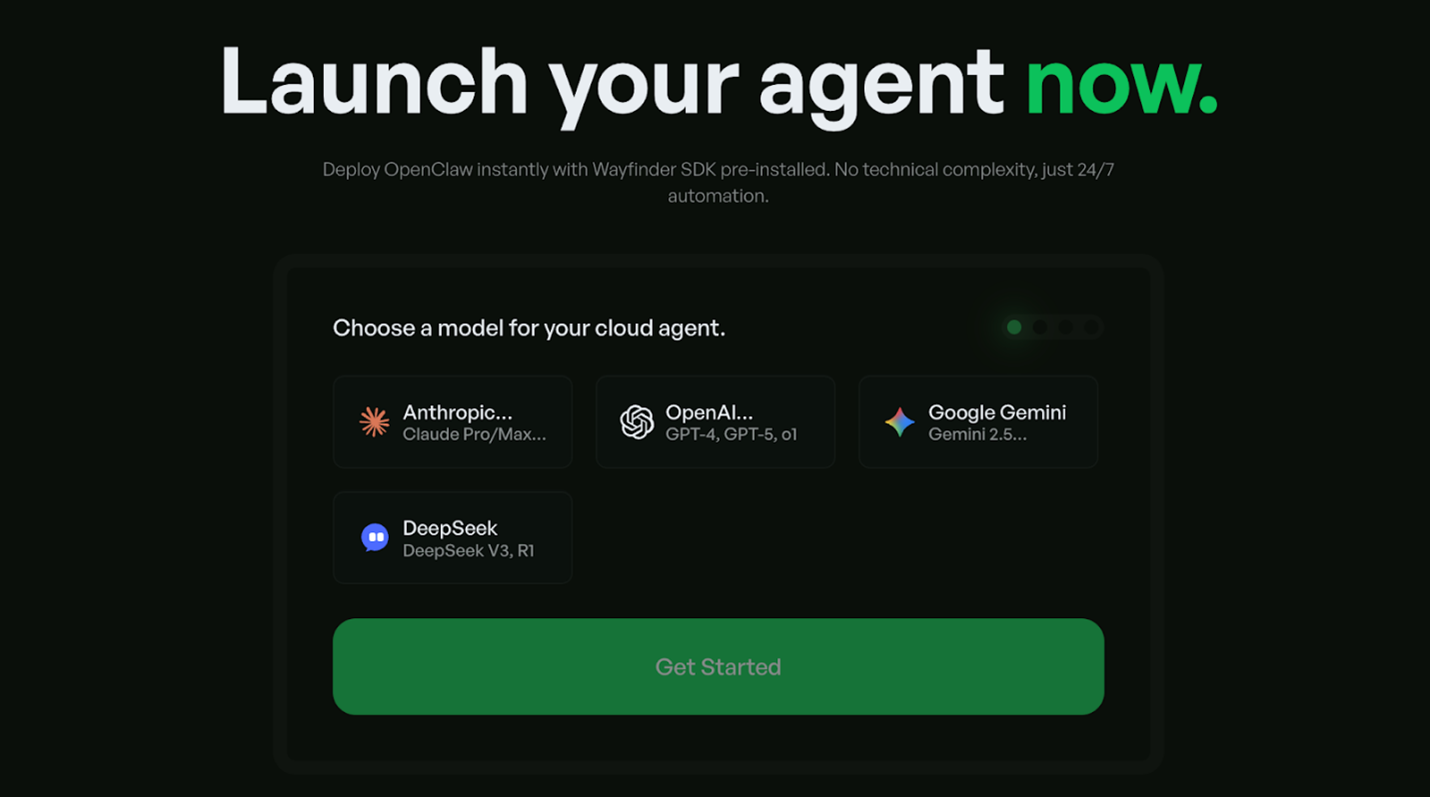
And because it's built on Enso, it doesn't just "guess." Wayfinder uses pre-verified paths to move your money safely.
And if one user's agent discovers a new, more efficient way to earn yield, every other agent on the network instantly learns that "path."
This way, the whole system benefits.
Its token, PROMPT, is the fuel for these agents. It has faced heavier price action than ENSO, largely because Wayfinder is a B2C product that scales as individual users join, whereas Enso collects "toll fees" from every project built on it.
Even if the token is currently a "laggard," the app itself is a high-quality tool for a self-driving experience.
The Big Picture: From "Users" to "Owners"
The above projects enable everyday people to participate in complex finance without needing to be a "crypto native."
But the shift we're about to see goes deeper than just convenience. We are moving toward a world where financial literacy matters less than "intent" literacy.
In the old world, the person who knew how to navigate the most complex menus won.
In this new era, the person who can clearly define their goals wins. As these AI agents become more autonomous, the "Invisible DeFi" stack will likely become the standard back end for every fintech app on your phone.
Even the traditional ones.
For now, these platforms are still new. They’re untested in tough times. So, if you want to try it out, just be mindful not to deposit anything you aren’t willing to lose.
But no matter what, I encourage you to keep them on the radar. Because once the bugs are resolved, invisible DeFi functionality will give users the means to keep up in this always-on market.
Best,
Marija Matic