 |
| By Sean Brodrick |
I’m going to tell you how going against the Wall Street consensus on gold can make you rich.
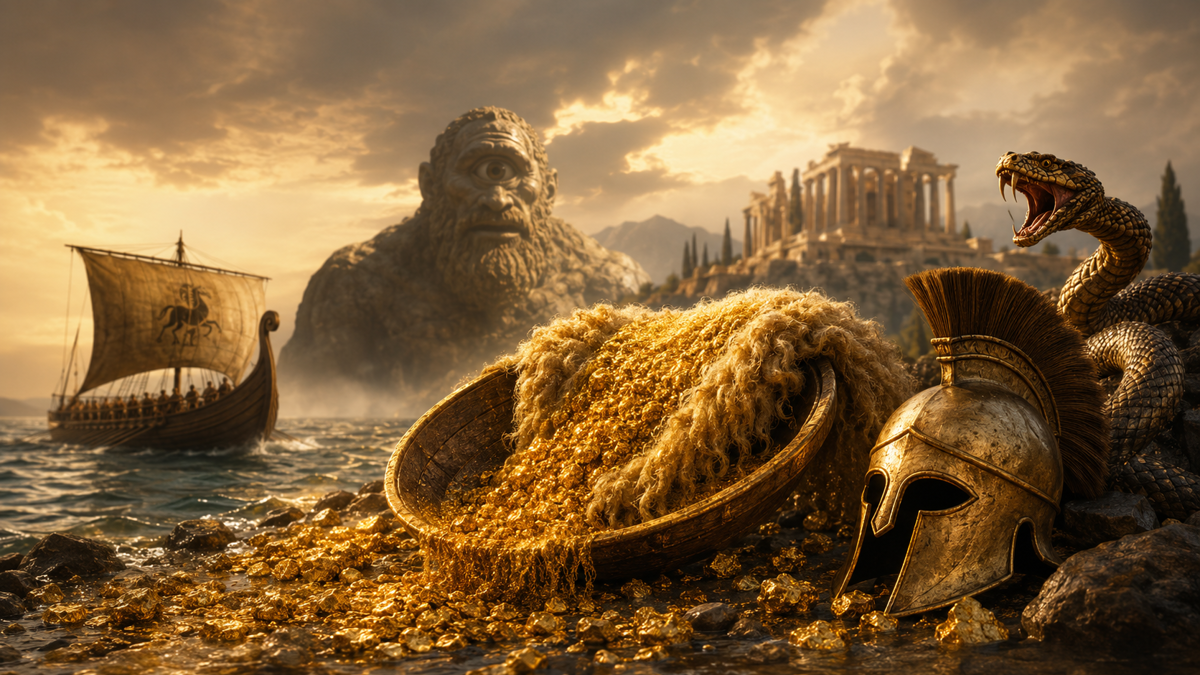
But to get there, I need to go through Troy, Odysseus, Jason and a dragon.
Odysseus is king of the box office nowadays — the tale of a man trying to make his way home after he and his friends won the Trojan War.
It took him 10 years because, like most men, he refused to ask for directions.
For centuries, scholars thought the whole story about Troy and its heroes — Odysseus, Achilles, etc. — was a myth.
Until a determined explorer proved that Troy did exist, right where it was supposed to be. It was destroyed in Greece’s Bronze Age.
As for Odysseus meeting a giant cyclops, sure … that’s a tall tale.
Funny thing is, right where the myth says that happened in Sicily, in prehistoric times, there were elephants.
And if you look at an elephant skull, the hole where its trunk is looks like a giant eye socket.
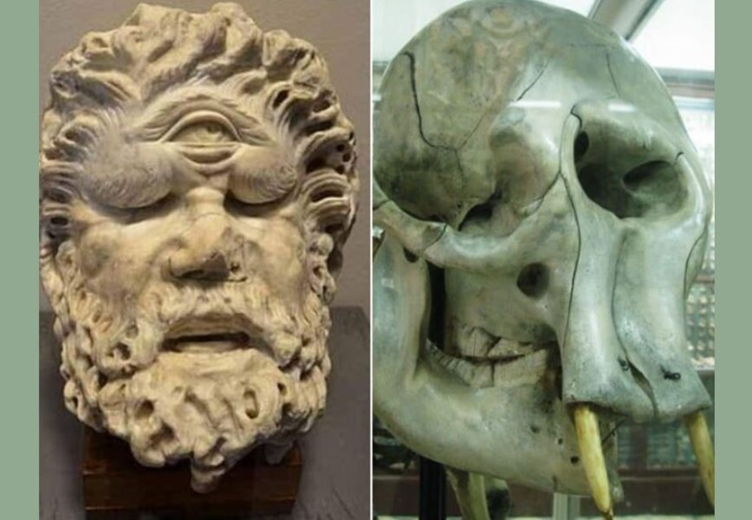
So, you can see how the ancient storytellers came up with that one.
As for Jason and the Golden Fleece: In Greek myth, he’s a hero who must sail to a far-off land to retrieve a golden sheepskin, or fleece.
To do that, he defeats a dragon. None of that can be true, right?
Hold on to your bronze helmets.
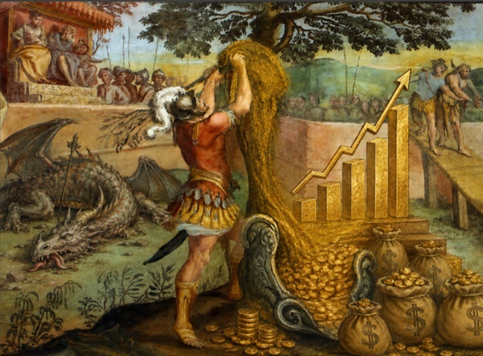
It turns out that in the nation of Georgia on the Black Sea — which to ancient Greeks would be a far-off land — there is a gold-rich, mountainous area where gold flakes are carried along in streams. And locals harvest that gold by putting weighted sheepskins in the water.
As the gold-bearing water rushes over the fleece, the lightweight sand and gravel wash away.
However, the heavy, dense gold flakes sink into the thick wool, getting tangled and trapped deep within the fibers.
After a while, the locals pull out the fleece, dry it out on a tree, then shake out gold flakes that gathered in the wool. To this day, the locals still harvest gold this way.
When a fleece was pulled from the river, it was sparkling and caked with fine gold dust — a literal “golden fleece.”
As for the dragon, well, that’s another story.
The word the ancient Greeks used for the monster is drakōn (from which we get "dragon").
In early Greek, drakōn didn’t mean a winged, fire-breathing monster. It simply meant “large serpent.”
The region of Georgia where gold is harvested is home to the Caucasian Viper.
These snakes are aggressive, camouflaged and deadly poisonous.
They live in the dense vegetation of the river valleys right where ancient gold panners worked.
The ancient Greeks had a habit of running off with anything that wasn’t nailed down (if you don’t believe me, I point you to the entirety of Greek mythology).
I can imagine some Greek adventurers making off with a golden fleece only to suffer the bite of a hidden viper.
All this is just to illustrate that there are myths that turn out to be true.
Now, let’s talk about what Wall Street believes are gold “myths” that will come back to bite them. Including …
Myth #1: Paper Currencies Are Eventually Worth Just Paper
Wall Street loves to chuckle about how gold bugs worry about this one.
Meanwhile, in the time that it took Odysseus to sail home — 10 years — the value of the U.S. dollar has dropped a whopping 39%!
In fact, over the course of monetary history, every paper currency has eventually succumbed to the same terminal diagnosis: inflated to near zero compared to its starting value.
Myth #2: Sovereign Debt Limits Don’t Matter
For years, mainstream economic models asserted that sovereign nations printing their own fiat currency faced no absolute debt constraints. Wrong!
Turns out, the gold bugs — who said that debt limits matter — were right again.
Right now, net interest outlays swallow 22.1% of all federal tax collections.
By 2036 — again, the length of Odysseus’ voyage — the Congressional Budget Office forecasts that net interest is projected to double to $2.1 trillion.
At that point, it will consume more than one-quarter of all federal revenue.
If you need more reason to worry, the CBO is notoriously conservative in its forecasts.
We are rushing toward that debt whirlpool faster and faster!
Myth #3: Gold Can Move Like a Coiled-Up Spring
Wall Street has long held that gold is just a shiny rock, and gold bugs were fools to think it could outperform stocks.
Well, gold hit a major cyclical low of $1,818.96 per ounce in October 2023.
Over the next 27 months — until January of this year — the yellow metal gained an astonishing $3,789.39 per ounce.
That was a massive 208.3% surge.
That means gold more than tripled from its low to its peak in a little over two years. At the same time, the S&P 500 gained just 63%.
Looks like another gold bug “myth” was proven correct.
How You Can Play It
Nothing moves in a straight line, so gold is correcting a bit.
The next move higher could be a face-ripper!
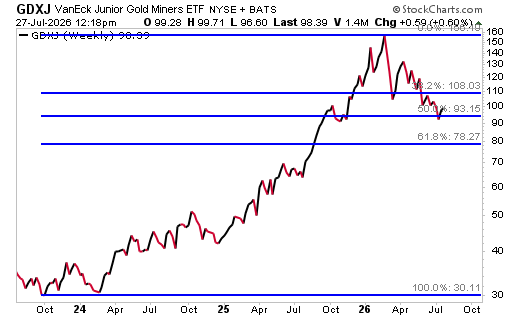
The VanEck Junior Gold Miners ETF (GDXJ), which is a basket of miners, is a great way to play gold’s next bull run.
From the bottom in October 2023 to its recent peak, it gained more than 415%!
Since its peak earlier this year, the GDXJ is down 37.6%.
That’s a decent-sized pullback that brings it right down to support.
Meanwhile, the sentiment on Wall Street is that gold’s big bull run is done.
I can’t wait to see the yellow metal prove them wrong on this one, too!
And you won’t have to wait 10 years to see it happen.
Get long gold and miners now — the next heroic voyage is going to be epic!
The even better way to do that is to check out my recent presentation, where I give readers the specific stocks most leveraged to this next rally.
All the best,
Sean Brodrick
1https://greekcitytimes.com/2023/01/28/cyclops-ancient-greeks-myth/