
 |
| By Nilus Mattive |
Dr. Martin Weiss and I have been tracking the government’s inflation lies for many years now.
And back in May, I told you about the latest example …
A supposedly harmless “one off” change at the Bureau of Economic Analysis (BEA).
Which led to an artificially-lowered version of the Personal Consumption Expenditures (PCE) inflation gauge. The same one favored by the Federal Reserve to make its policy decisions.
The BEA folks basically said they did this because data from the Consumer Price Index was too volatile (i.e., too high).
Of course, as I said back then, it was just the most recent in a long line of tweaks that the government has made to its official inflation gauges … and it wouldn’t be the last.
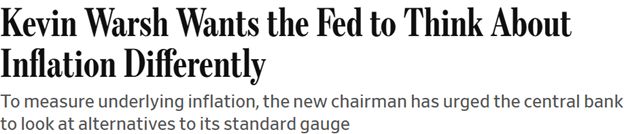
Well, here we are, just a few months later, and now there’s word of even more revisions.
As MarketWatch2 explains it:
“The inflation tracker that exerts the biggest influence on the actions of the Federal Reserve is getting a makeover just as a divided central bank weighs whether to raise U.S. interest rates this fall.
“The upshot: The redo to the Fed’s favorite price gauge, the so-called core PCE index, is likely to show inflation rising a little more slowly this year than previously reported.
“The estimated reduction could range from 0.2 to 0.3 percentage points. So the current 3.4% yearly increase in the core PCE index for the 12 months that ended in May could be reduced to 3.2% or even 3.1%.”
How convenient!
This has been the playbook for decades now.
For example, back in 1983 Washington statisticians replaced home prices and mortgage costs with something they call “Owners’ Equivalent Rent” (OER).
Instead of just tracking actual prices, they pretend that homeowners rent their homes from themselves.
How significant was this change? Huge!
Housing represents about a third of the CPI, making it the single largest component of the entire index.
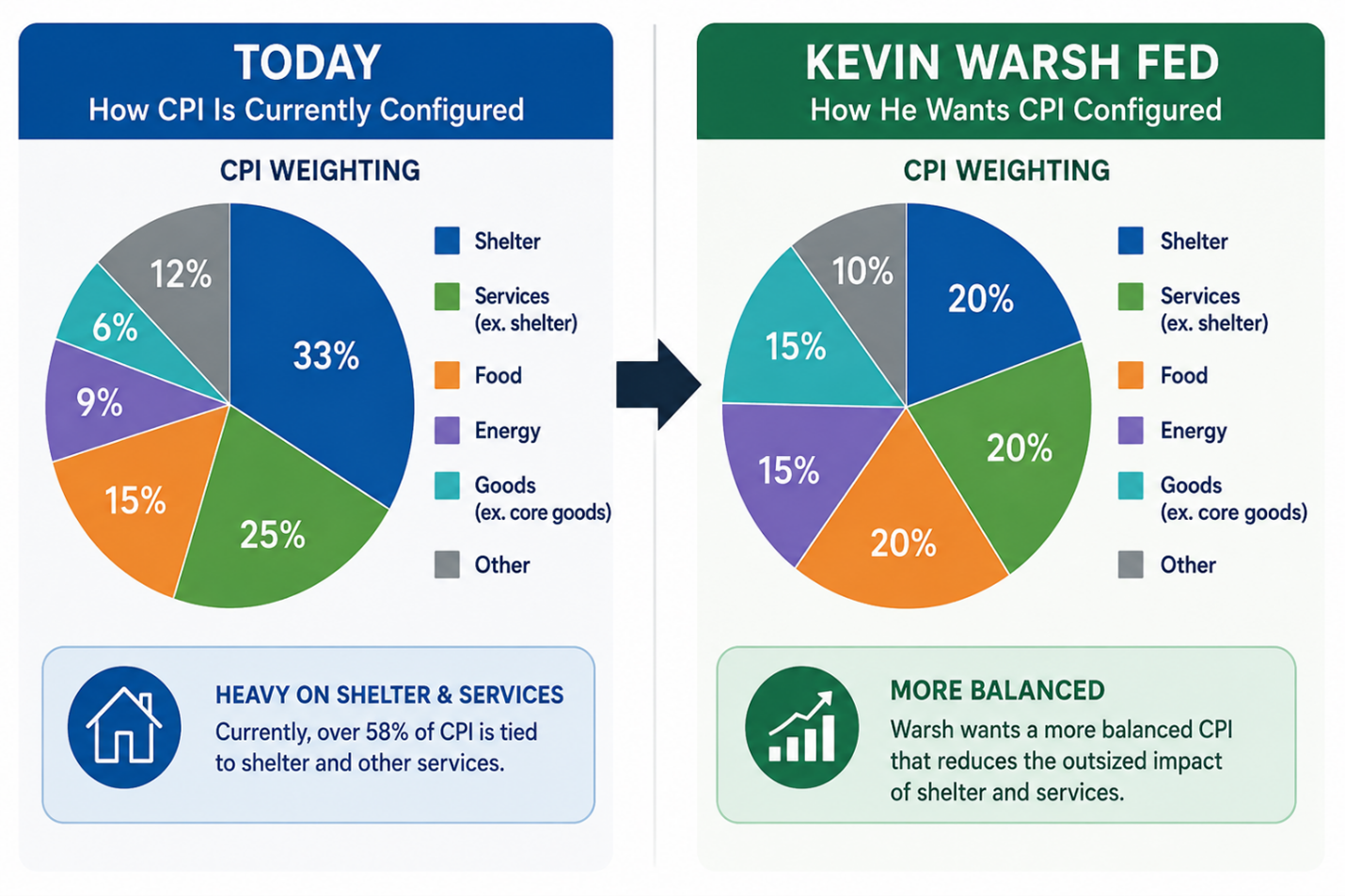
Result: Actual inflation can often be significantly underestimated, especially during housing booms or housing shortages — when the cost of buying or owning a home goes up sharply.
Consider the years 2000 through 2006, for example …
Based on the widely respected Case-Shiller Index, U.S. home prices rose approximately 90% during that period.
But the Owners’ Equivalent Rent used to measure consumer price inflation rose by less than 30%.
Or what about the fact that the CPI now uses “geometric mean weighting” to account for “substitution bias?”
Without getting into all the details, the basic idea is that CPI doesn’t just track a fixed basket of goods to show us how prices are changing over time. (Which is what any normal person would assume it does.)
Instead, it relies on the assumption that when prices go up on goods and services, consumers replace them with cheaper goods and services.
For example, if the price of steak goes up sharply, statisticians assume consumers might buy hamburger instead.
So, to calculate the inflation rate, they start shifting to hamburger, which naturally reduces their measure of inflation.
But when a family has to downshift to a lower standard to adjust to rising costs, does that mean those costs are no longer rising as much?
Or does it simply mean inflation is forcing them to make unwanted adjustments in their lifestyle?
The answer is obvious.
Perhaps my favorite trick is the one where government officials simply switch between measures — sometimes citing “headline inflation” and other times talking about “core inflation,” which strips out food and energy costs.
Now might be a great time to do so.
After all, here’s a chart of crude oil over the last year …
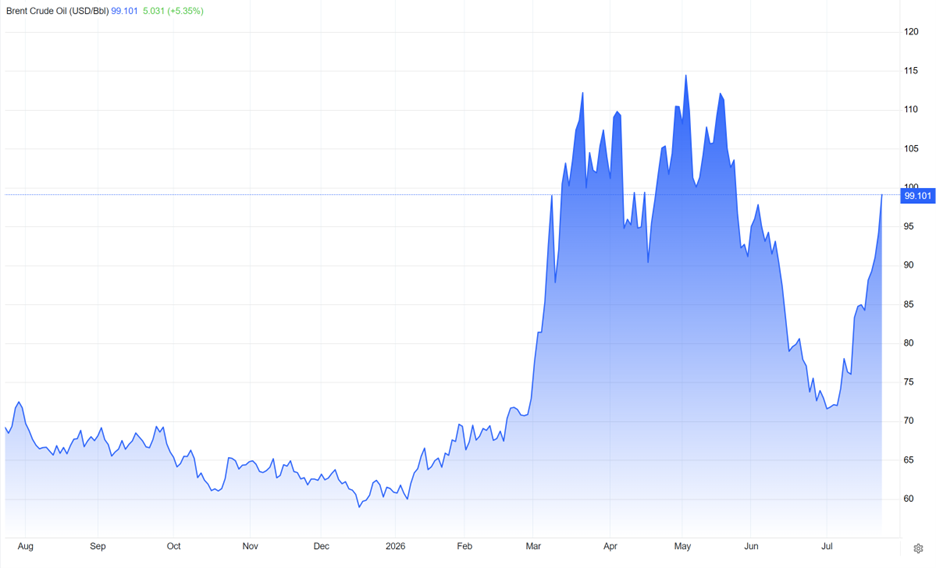
As you can see, it has quickly moved back up to $100 a barrel.
And since energy prices impact everything from gasoline to fertilizers, you can be sure we will see this renewed jump affect our daily lives in the near future.
Government officials might try to obfuscate that through more data manipulation or dismiss what we’re experiencing as “temporary” and “transitory.”
But at this point inflation — even as measured by manipulated official gauges — has been running above the Fed’s target for more than five years now!
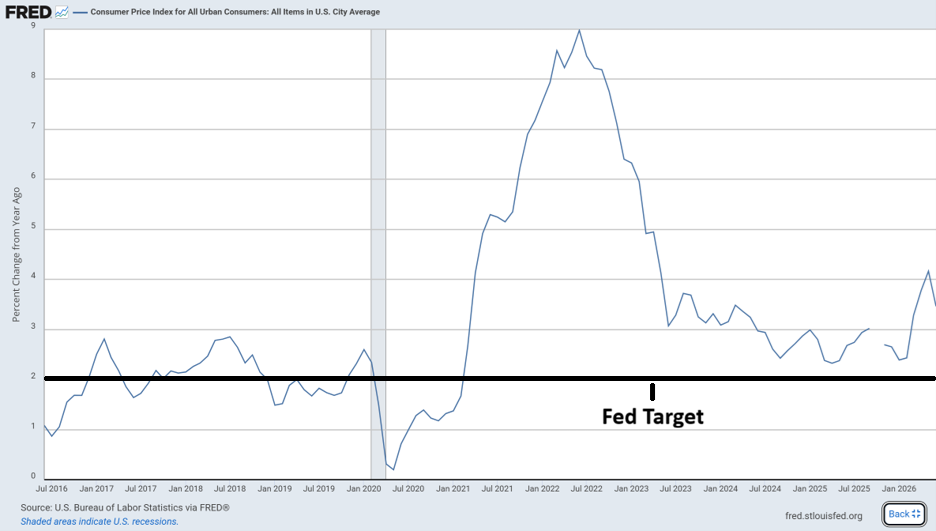
Also remember that these price increases compound on top of each other so the effects get more devastating over time.
So what can you do to protect yourself?
First, listen to your own common sense and experience rather than trusting any of the figures central bankers, government officials and mainstream publications are trying to push on us.
Second, make sure you own a wide range of assets that can stay ahead of REAL inflation.
Those assets include high-quality stocks that pay solid dividends, precious metals and related investments and real estate.
Third, strongly consider layering in additional strategies that can further boost the income you receive from your portfolio — especially the unique approach I’ve been recommending to a small group of Weiss Ratings readers.
We’ve been having tremendous success with it, using volatile moves in things like energy, metals and fertilizer prices over the last few months to rack up one payday after another.
If you want to learn exactly how the strategy works, and see a few demonstrations of it in action, then simply click here to reserve your spot for the special online event happening tomorrow.
As you’ll see, we’ve been using this approach to pull in roughly $1,000 almost every Friday with a win-rate of 93.8%. (And that’s based on our real, actual published trades NOT backtesting.)
Best wishes,
Nilus Mattive
P.S. Seriously, I really do hope you take a little time to learn about the strategy we’ll be talking about tomorrow.
It’s something that just about anyone can start using. In fact, I taught my own Dad how to do it more than a decade ago and he had almost zero investing experience.
Click here to reserve your spot to get the whole story tomorrow.