 |
| By Sean Brodrick |
The surge in artificial intelligence spending is an unprecedented scale of investment, particularly in infrastructure.
So much so, it already exceeds previous technological megatrends.
The raw numbers are staggering.
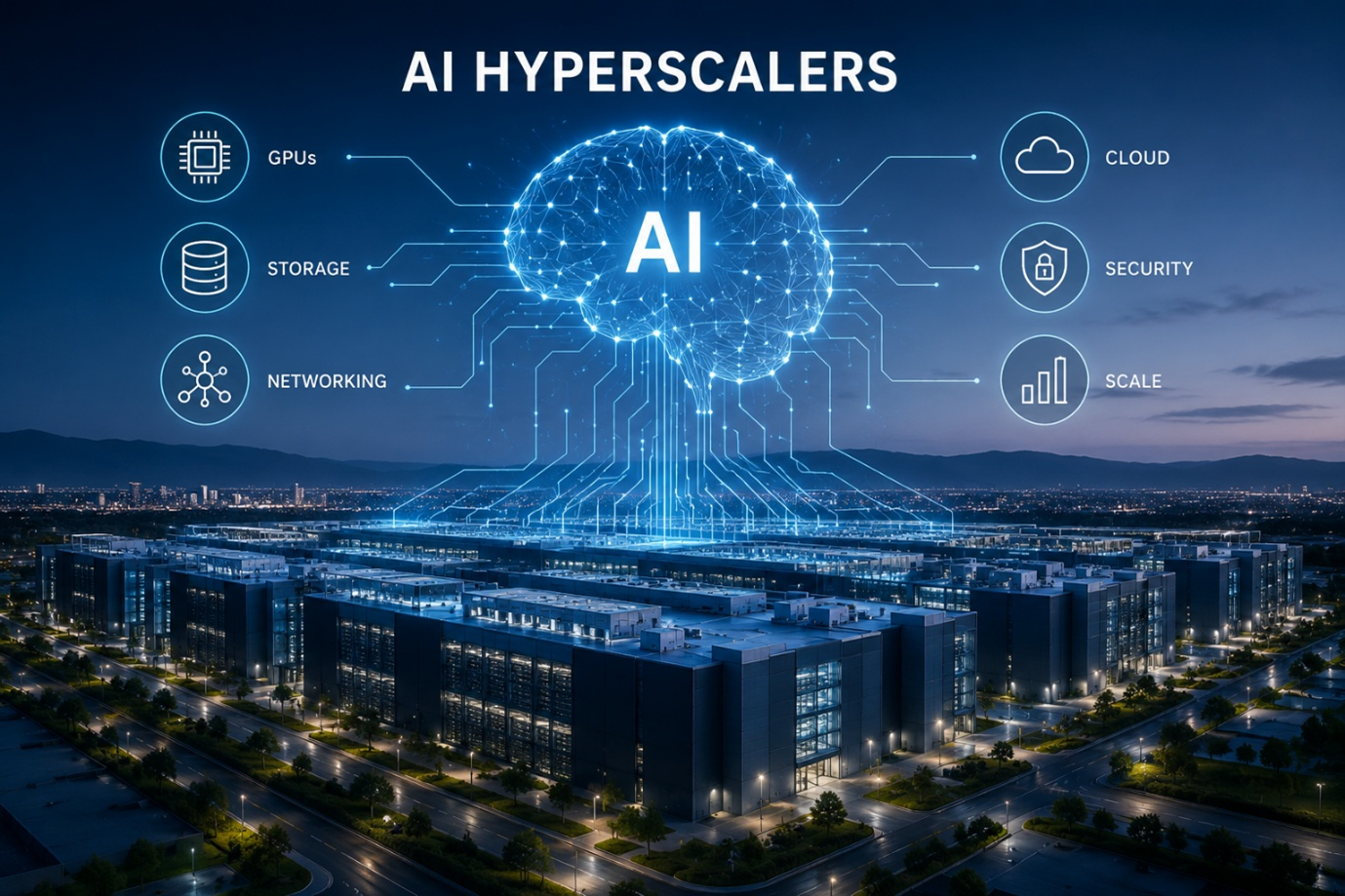
AI hyperscalers like Amazon (AMZN), Alphabet (GOOGL), Meta (META) and Microsoft (MSFT) spent about $400 billion on capital expenditures in 2025.
That figure should rise to between $725 billion and $750 billion this year.
That’s a year-over-year increase of at least 81%!
And roughly 75% of that massive total is directly earmarked for AI-specific infrastructure: GPUs, custom silicon and data centers.
But it’s not just raw numbers.
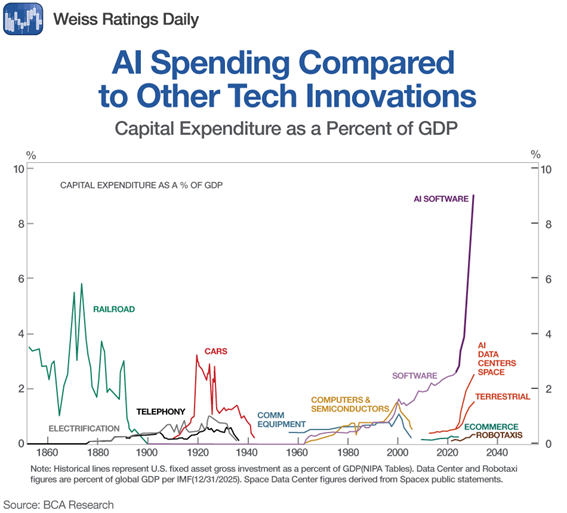
Here’s a chart using data from BCA Research showing spending on tech megatrends through the decades as a percentage of GDP.
Some fun facts:
- Railroads in the late 1800s peaked at around 3.5%–4% of GDP.
- Electrification in the early 1900s sits roughly in the 2%–3% range.
- Cars in the 1910s–1920s spike to about 2%–2.5%.
- Computers & semiconductors from about 1970–2000 stayed mostly below 1%, creeping up toward that level in the late 1990s.
More recently, we’ve seen AI software ramp sharply from near 0% around 2015 to roughly 8%–9% of GDP by ~2035 on the projection line.
Spending on AI data centers is still low compared to AI software. But it’s ramping up fast.
Capex spending by the big AI platforms now represents about 30% of all S&P 500 capital spending.
And roughly 70% of hyperscaler revenue is being plowed back into AI infrastructure.
How You Can Ride This Massive Money Trend
Multiple ETFs track the AI space.
One example would be the Global X Artificial Intelligence & Technology ETF (AIQ). Its top five holdings are prominent sector leaders:
- Nvidia (NVDA)
- Microsoft (MSFT)
- Meta Platforms (META)
- Amazon (AMZN)
- Alphabet (GOOGL)
Here’s a weekly chart of the AIQ …
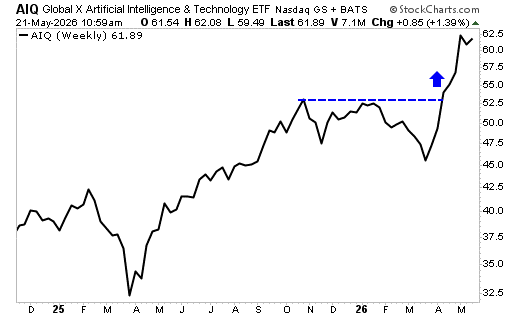
You can see the AIQ is already running, but it has plenty of room to run higher.
This kind of breakout gives us a target of $99 a share.
That’s a rise of about 60% from its current price near $62.61.
And as AI hyperscalers expand their business models, AIQ could run a lot higher in the longer term.

If you are more long-term-oriented, AIQ pays a small dividend of 9 cents per share.
That’s annual. But it’s also a welcome bonus for an asset that is more growth- than income-oriented.
That said, this ETF charges a total expense ratio of 0.68%.
That’s higher than your average S&P 500 fund, but you’re paying up for a ticket on the biggest profit rocket around.
All the best,
Sean Brodrick