Fed Holds Rates: Why the 2-Year Treasury Note Still Beats Your Savings Account

 |
| By Gavin Magor |
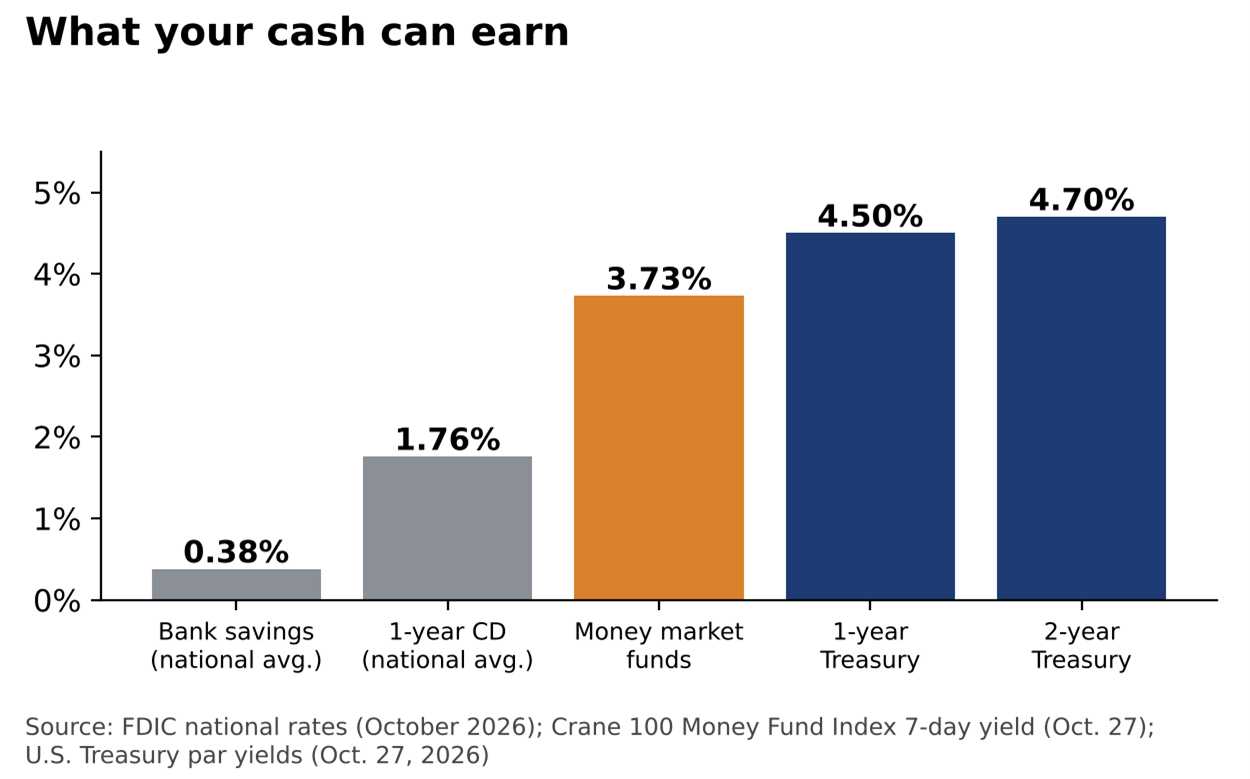
If your emergency fund sits in a bank savings account, it's probably earning about 0.4%.
That's the national average, and it barely registers against inflation.
A 2-year Treasury note yielded 4.7% at Tuesday's close.
The Federal Open Market Committee held rates steady during its October policy meeting. And that keeps the gap open for now.
Here’s where your cash stands, what the Fed signaled and where to put it now.
What Your Cash Is Earning Right Now
The average one-year bank certificate of deposit (CD) pays about 1.76%.
Money-market funds pay more, with the largest funds averaging a seven-day yield near 3.7%.
A one-year Treasury bill yielded 4.5% at Tuesday's close.
The 2-year note paid a bit more than that.
Some large brokers pay just 0.01% on smaller cash sweep balances.
If you haven't checked where your idle cash sits, now is the time.
The Fed Pressed Pause, Not Rewind
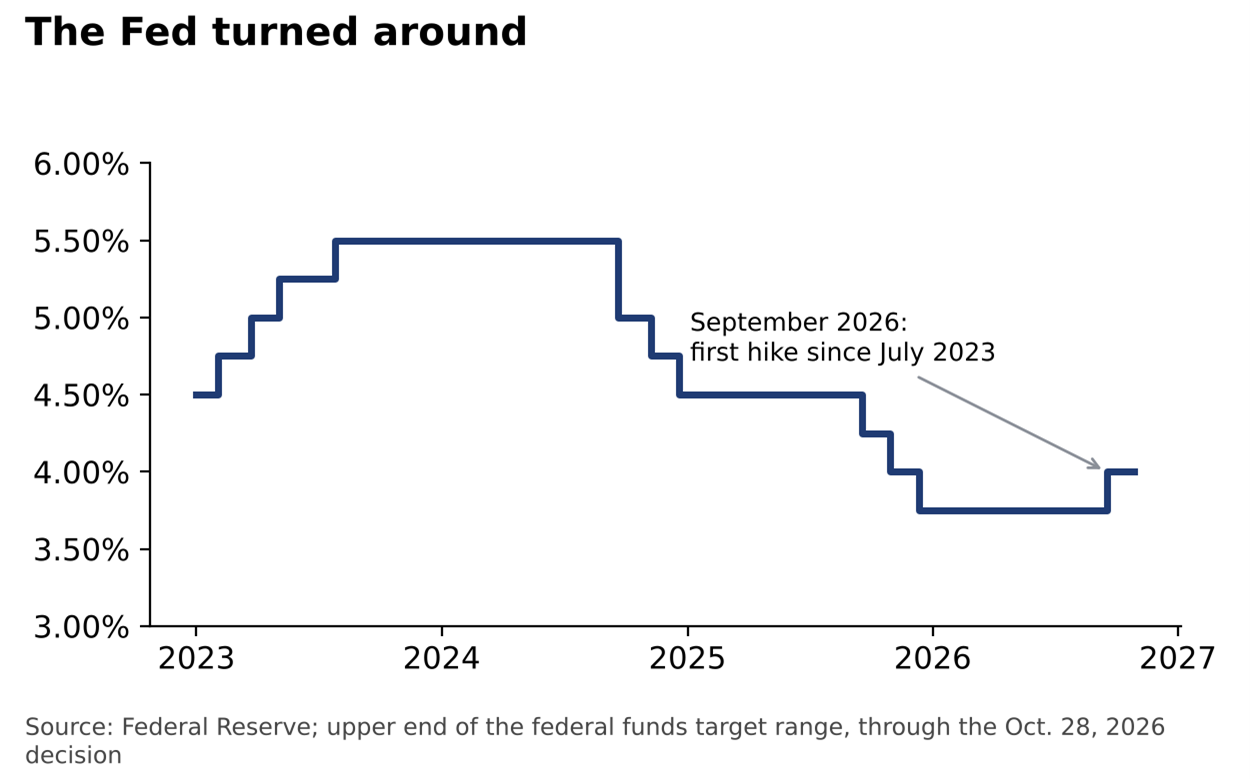
The Fed held its target range at 3.75% to 4% on Wednesday.
That follows September's quarter-point hike, the Fed's first increase since July 2023.
The FOMC, which sets rates, was blunt in its statement: "Inflation remains elevated."
It also promised, "The Committee will deliver price stability."
Two officials, Lisa Cook and Beth Hammack, dissented because they wanted another hike.
Read the Split, Not Just the Hold
The vote was 10-to-2.
That split is the bigger signal for your money.
Only two officials wanted to keep hiking, and nobody voted for a cut. That makes the hawks outliers, not the leading edge of the FOMC.
Going into Wednesday's decision, futures markets priced about an 84% chance of a December hike.
I think that's too high.
Barring a significant change in the data, I don't expect a rate increase at the December meeting.
In plain terms, rates are on hold, with no cuts in sight. (Its next policy meeting is Dec. 8–9.)
That pause matters for every dollar you hold in cash or bonds.
A Rock and a Hard Place
Make no mistake: Holding carries a cost, too.
With inflation at 3.7%, a hold lets rising prices keep eating into your savings and your paycheck.
But the Fed's other two choices came with costs of their own.
A hike would raise rates on mortgages, car loans and credit cards just as households are cutting big-ticket plans.
A cut would signal the Fed is going soft on inflation while energy prices are still pushing it higher.
That could drive long-term borrowing costs up, not down.
There was no painless option, only a least-bad one.
For your cash, the result is simple: Short-term yields stay high for now.
Why the Fed Can't Cut Yet
Gas Did the Damage
Consumer prices rose 3.7% in the year through September.
Gasoline prices alone jumped 9.1% that month.
Core prices, which strip out food and energy, rose more slowly.
Energy is driving headline inflation, and the risk is that it spreads into everything else.
Short-Term Yields Caught Up
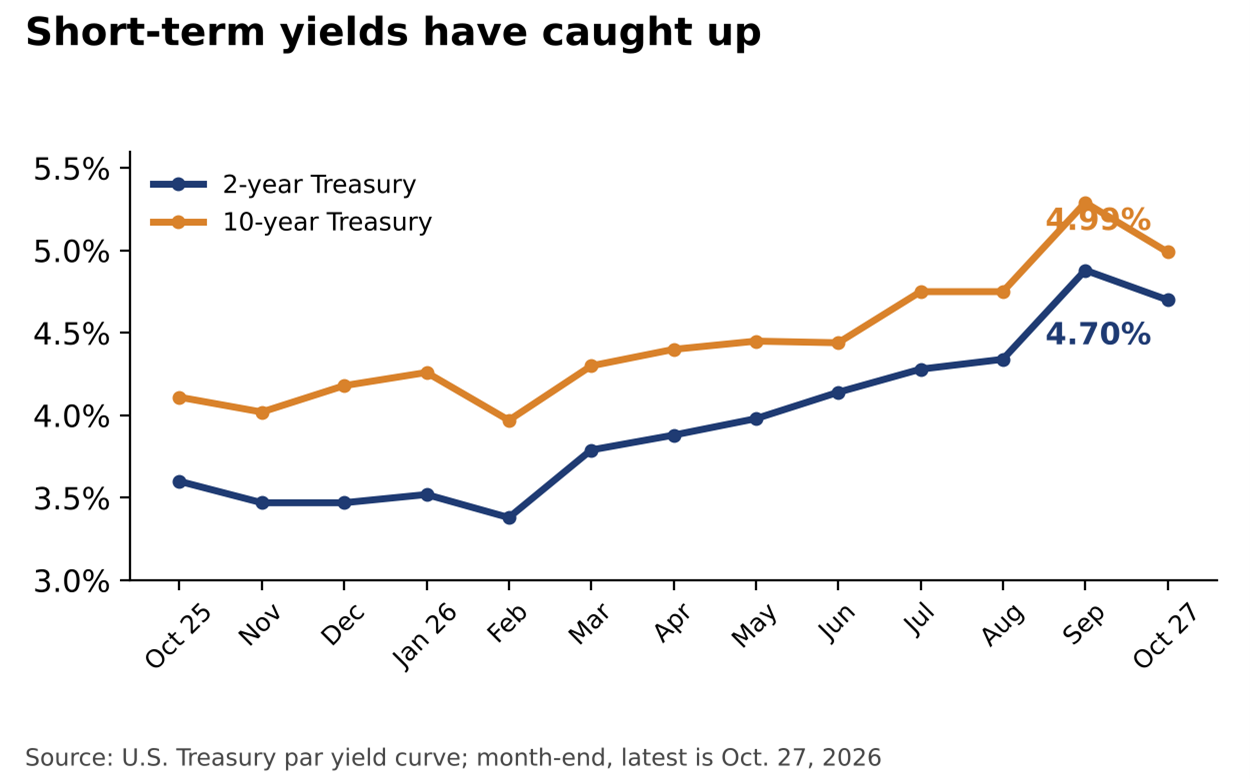
The 2-year yield was 3.48% a year ago.
It has climbed more than a full percentage point since then.
The 10-year yield climbed above 5.3% earlier this month and has eased since. It closed Tuesday just under 5%.
So, the 10-year pays only a little more than the 2-year, for a much longer commitment.
That's a poor trade for anyone who may need the money back.
Who Else Wins When Rates Stay High
Charles Schwab
Charles Schwab (SCHW) has a Weiss rating of B, a BUY.
Its net interest revenue rose 14% in the third quarter from a year earlier.
Higher rates on the cash its clients hold help drive that line.
Total client assets reached $13.33 trillion.
A T-Bill Fund
The SPDR Bloomberg 1-3 Month T-Bill ETF (BIL) has a Weiss rating of C, a HOLD.
It's a simple parking spot for cash, but our rating doesn't make it a buy.
A Short-Term Treasury Fund
The iShares 1-3 Year Treasury Bond ETF (SHY) has a Weiss rating of C-, a HOLD.
If you want short-term Treasurys, owning the note directly beats paying a fund to hold them.
In Our Own Portfolio
In the Weiss Ultimate Portfolio, which I edit, we hold a money-market fund manager that earns more when savers keep cash parked.
It’s a new addition to the portfolio. But it’s already off to a promising start.

Click here to see how you can get the name of it.
I will give you one hint: It’s one of 20 stocks in the Weiss Ultimate Portfolio, which is backed by Dr. Martin Weiss’ own money. Learn more here.
Know When a Stock’s Rating Changes
A Fed on hold can shift the outlook for banks, brokers and bond funds quickly.
With Weiss Ratings Plus, you get an instant alert when a stock you follow is upgraded or downgraded.
You can screen with our Risk, Reward, Growth and Solvency indexes, among others.
You can compare any stock with its sector and the broad market.
And you can build a watchlist of the names in this report, from Schwab to the short-term Treasury funds.
Click here to see everything Weiss Ratings Plus includes.
Where to Put Your Cash Now
Where to put it comes down to one choice: the 2-year Treasury note.
At Tuesday's close, it yielded 4.7%.
Hold it to maturity and you collect that yield, whatever the Fed does next.
Money-market yields can drop quickly once the Fed starts cutting.
A note you may already own keeps paying its rate.
The next 2-year auction is Monday, Nov. 23.
You don't have to wait for it, since most brokerage accounts sell existing notes every trading day.
Wall Street is betting on a December rate hike. The vote says otherwise, and that's an argument to lock in current short-term yields before they can slip again.
What I'm Watching
- Nov. 6: The October jobs report, the first big data point after this meeting.
- Nov. 10: The October Consumer Price Index (CPI), the kind of data that could change the December call.
- Nov. 23: Demand at the 2-year note auction.
- Dec. 8 to 9: The Fed's next meeting, and whether the two dissenters win any new support.
Bottom Line
Your emergency fund shouldn't earn 0.4% when a Treasury note pays far more.
The Fed's pause gives you time to fix that.
Consider moving idle cash into the 2-year Treasury note this week.
Cheers!
Gavin