Oil Plunges on Iran Talk Hopes: Why XLE Is Still a BUY

|
Key Takeaways
|
 |
| By Gavin Magor Reviewed by: Leo Tavolaro |
If you filled your tank this week, the price on the pump probably didn't feel like a market crash.
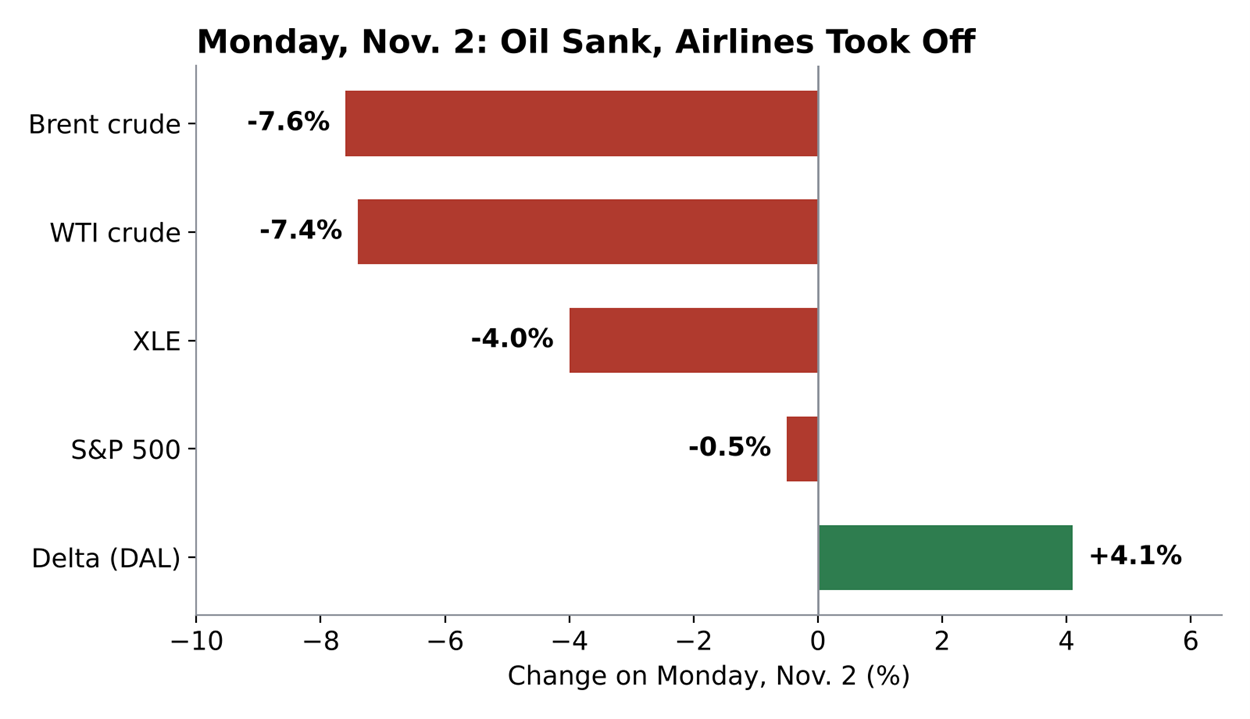
Yet oil fell more than 7% on Monday, on hopes for U.S.-Iran peace talks.
Energy stocks slid, airline stocks jumped and plenty of investors decided the oil trade was over.
I think that reading is backwards.
Your gas tank, your grocery bill and your energy stocks all have a stake in what comes next.
Your Tank Hasn't Heard the News
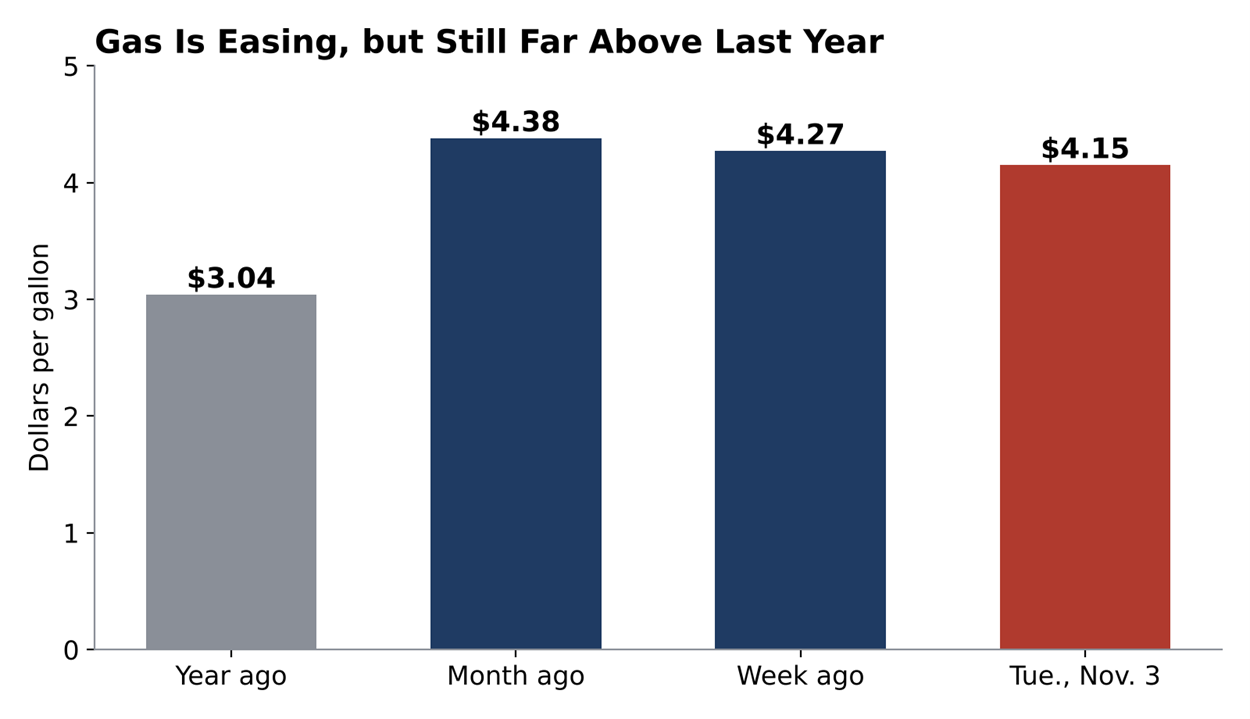
The national average for regular gasoline was $4.15 a gallon on Tuesday, according to AAA.
A year ago, the same gallon cost $3.04.
That's roughly 37% more for every fill-up.
Prices are easing, just slowly.
A month ago, the average stood at $4.38.
Pump prices tend to follow crude down far more slowly than they followed it up.
Diesel matters more to your budget than you might think.
It hit a record $6.53 a gallon on Sept. 22.
It was still $6.29 on Tuesday.
Diesel moves the trucks that stock your grocery store, so its cost works its way into almost everything you buy.
If you heat your home with oil, the pain is sharper still.
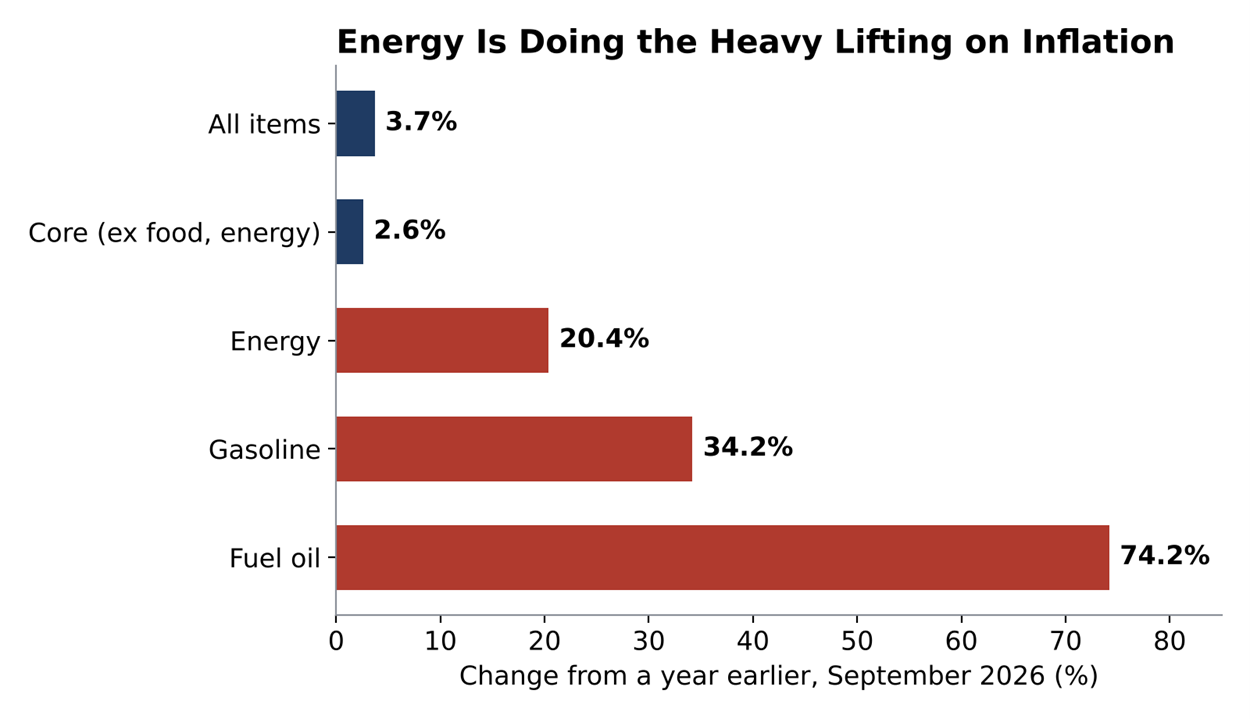
Fuel oil prices were up 74% from a year earlier in the September Consumer Price Index (CPI).
For your household budget, one good day for crude won't show up for weeks.
What Moved on Monday
Iranian officials said a deal remained within reach after talks mediated by Qatar.
Iran's foreign minister said a proposal under discussion could reopen the Strait of Hormuz in as little as two days, if Washington met Tehran's conditions.
Those conditions include an end to the U.S. naval blockade of Iran's ports and the lifting of oil sanctions.
Secretary of State Marco Rubio said President Trump prefers a diplomatic resolution.
The Election-Day Wild Card
Not everyone is pushing for talks.
Israeli Prime Minister Benjamin Netanyahu urged President Trump to resume strikes right after Tuesday's midterm elections.
The president said he wants to give talks more time.
Late Monday, a Wall Street Journal report of a U.S. strike on Iran's Qeshm Island pushed oil back up.
Energy Secretary Chris Wright said the attacks had not affected oil flows.
For your money, that means hope moved the price, but nothing has been signed.
Headlines priced in peace in a single session, and headlines can take it back just as fast.
The Numbers Behind the Nerves
Brent crude, the global benchmark, settled Monday at $104.77 a barrel.
That was a drop of 7.6% in a single session.
U.S. crude, known as West Texas Intermediate (WTI), settled Monday at $96.46 a barrel.
Even after the drop, Brent sits about 60% above where it traded a year ago.
It briefly reached $118 in October.
Monday was a relief day for the barrel, not a reset.
Why the Federal Reserve Cares
Energy is the main reason inflation has climbed back.
Headline consumer prices rose 3.7% in the year to September.
Energy prices rose 20.4% over the same period.
Strip out food and energy, and core inflation was a far tamer 2.6%.
The Fed raised its target range for short-term rates in September, to a ceiling of 4%.
It held steady in late October, but two officials voted for another hike.
Traders still expect at least two more quarter-point hikes by the end of next year.
Lower oil is the best inflation news the Fed could get.
But the Fed needs months of it, not one dramatic Monday.
That's why your borrowing costs are unlikely to fall quickly, whatever crude does this week.
Airlines Took Off. Should You Board?
Airlines were Monday's obvious winners.
Delta Air Lines (DAL) rose 4.1% on Monday.
It closed at $83.42.
Delta holds a Weiss rating of C+, a HOLD.
The U.S. Global Jets ETF (JETS) carries a Weiss rating of C, a HOLD.
Its risk grade is a weak D+.
Jet fuel is a major cost for airlines, so these stocks swing on every oil headline.
If talks stall, Monday's gains could vanish just as fast.
That's a speculator's trade, not an investor's.
The Majors Keep Their Grades
Big integrated oil companies tell a different story.
Exxon Mobil (XOM) holds a Weiss rating of B, a BUY.
Chevron (CVX) also earns a B, a BUY.
ConocoPhillips (COP) is rated B-, also a BUY.
Our ratings and sub-grades weigh reward, risk, solvency and growth, not one day's price action.
Each still carried that grade after Monday's sell-off.
In the Weiss Ultimate Portfolio, which I edit, we also hold an energy producer.
Nothing in Monday's headlines changes my view of it.
Let the Ratings Do the Sorting
Every fund rating in this report came straight from the live Weiss Ratings pages.
Weiss Ratings Plus puts that same work in front of you, with real-time ratings, instant alerts on upgrades and downgrades, and exclusive analysis.
It's how you'll know the day a long Treasury fund earns a better grade.
And it's how you'll see our next move on U.S. debt as soon as we make it.
Click here to see what Weiss Ratings Plus can do for you.
Why I'm Not Selling Energy on a Headline
Remember those investors who decided the oil trade was over on Monday?
I think they sold the wrong thing.
The Energy Select Sector SPDR ETF (XLE) fell 4% on Monday.
It closed at $67.25.
Yet the fund still carries a Weiss rating of B, a BUY.
That's the gap between our ratings and the market's knee-jerk reaction.
If talks collapse, oil likely jumps, and energy stocks help offset the damage elsewhere in your portfolio.
If a deal holds, gasoline gets cheaper and your household budget wins.
Either way, one side of your financial life is covered.
The fund pays a dividend yield of about 2.5%.
Its annual expense ratio is just 0.08%.
That's a low-cost way to own large U.S. energy companies in a single trade.
How much you allocate, if anything, is up to you, based on your risk tolerance and time horizon.
For my part, I expect oil to stay volatile until a signed agreement actually reopens Hormuz to tankers.
I don't expect last year's prices to return any time soon.
What I'm Watching
- A signed agreement from the Qatar talks that reopens the Strait of Hormuz to tankers.
- The October jobs report on Friday, Nov. 6, showing whether high fuel costs are slowing hiring.
- October consumer prices on Tuesday, Nov. 10, with energy finally cooling.
- The national average for regular gasoline dropping below $4 a gallon.
- The Fed meeting on Dec. 8 and 9, where another hike is still on the table.
Bottom Line
Your tank hasn't heard the news yet, and your portfolio shouldn't panic on it either.
Monday's plunge priced in a peace deal that hasn't been signed.
Consider buying the energy fund at market, rated B, a BUY, while the headlines have it on sale.
Let the speculators chase the airline rally.
Cheers!
Gavin