Tesla’s Flying Car Stunt Is What’s Wrong with the Market

|
Key Takeaways
|
 |
| By Nilus Mattive Reviewed by: Jim Nelson |
I’ve been warning you about the growing AI bubble for a long time now.
That’s because, when it comes to avoiding major market meltdowns, I’d rather be two years early than two days late.
Of course, what we’ve seen so far is just the beginning of what Martin and I have been saying could be even worse than the Subprime Crisis and ensuing Great Recession.
Why?
Because this entire AI bubble has been built on pipe dreams and piles of obscure debt.
The signs have been all over the place, even if people have chosen to ignore them.
Take Elon Musk’s recent demonstration of Tesla’s (TSLA) second-generation Roadster prototype — a car it initially announced back in 2017 with promises to start delivering in 2020.
It’s really interesting to compare the company’s first Roadster, which also happened to be its very first car, against this new one.
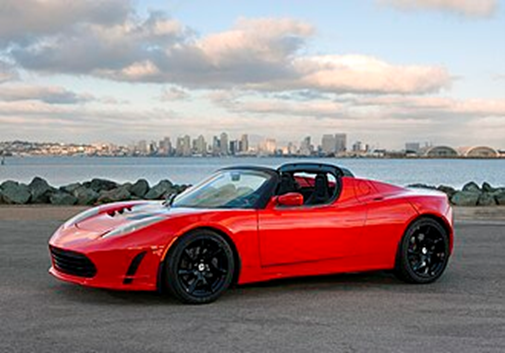
You can essentially see just how far off the plot the whole technology world has gotten.
Indeed, the new Roadster perfectly sums up the world we’re living in … a time of social media stunts, hollow promises and scary-yet-also-unnecessary technological pursuits.
The original Tesla Roadster was based off the Lotus Elise … an amazing sports car that I owned at the time.
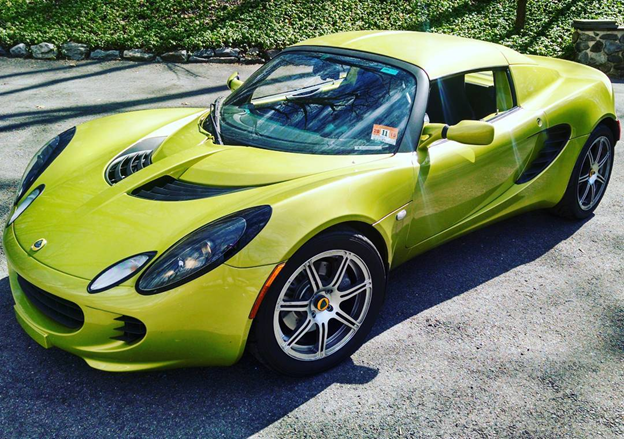
The Elise was everything a sports car should be.
- Extremely lightweight.
- No frills except for a radio and sometimes a rudimentary A/C system.
- Manual transmission only.
- Amazing handling.
- A mid-mounted engine paired with rear wheel drive.
- Plus, two firm bucket seats and a removable top.
In short, the Lotus Elise is completely dedicated to delivering a pure, unassisted driving experience.
It was what many of us like to call a true “analog” experience.
Elon’s original Roadster took the Elise’s chassis … stretched it … and plunked in a battery and an electric motor.
That was a big step into a more digital world.
No more engine revving. No more stick shifter. And half a ton more weight, which is exactly the opposite “add lightness” mantra preached by Colin Chapman, Lotus’ founder.
Was it worth it?
In a straight line, an Elise with the optional turbocharger did 0–60 in about 4.4 seconds.
Elon’s Roadster could do it in about 3.7.
But the Elise still consistently beat the Tesla in head-to-head tests on racetracks.
So Elon’s car gained some weight, lost some handling, accelerated a little quicker, went around a track a little slower and was — at least supposedly — more environmentally friendly overall.
Not what I would choose but fair enough.
The new Tesla Roadster?
It shows just how far off the rails things have gone.
For starters, it’s a wedge-shaped abomination with absolutely zero style.
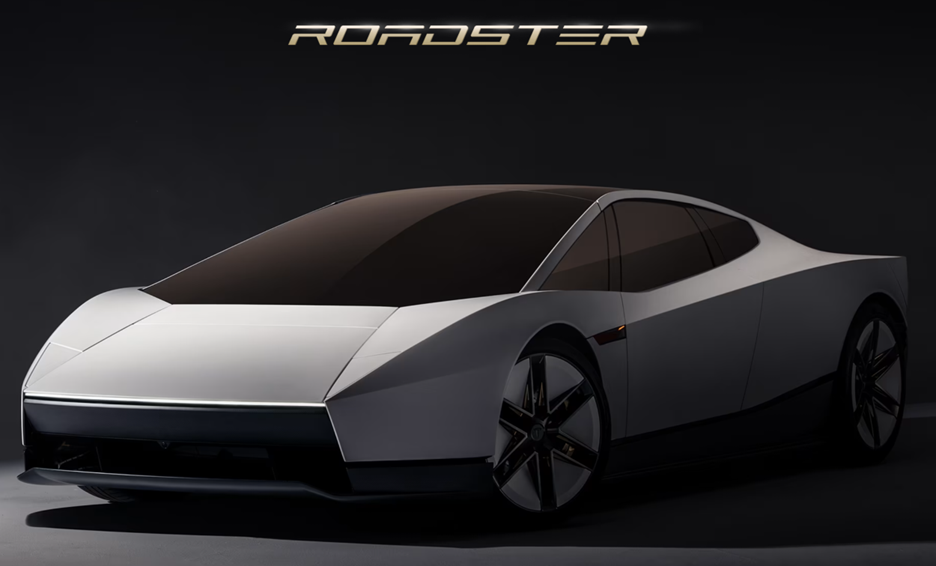
Ferrari 250 it is not.
What about substance?
The car is fully electric, sports about 1,300 horsepower and can go from 0–60 miles an hour in less than a second.
That is truly insane acceleration.
But unless you’re drag racing, it’s a relatively pointless headline number.
Of course, that’s just the beginning of the pointlessness.
Futurism explained it thusly:
“The new Roadster can indeed fly — briefly, at least — thanks to a ‘SpaceX package’ made up of cold-gas thrusters.
“The company showed the car flipping around on stage, rotating on its own axis mid-air, leaping over the company’s entire EV lineup and sticking to a vertical ramp thanks to a fan system that generates up to two Gs of downward force.”
“Good luck doing any of that on a public road or even surviving on private property.”
There have also been plenty of allegations that none of this was even real.
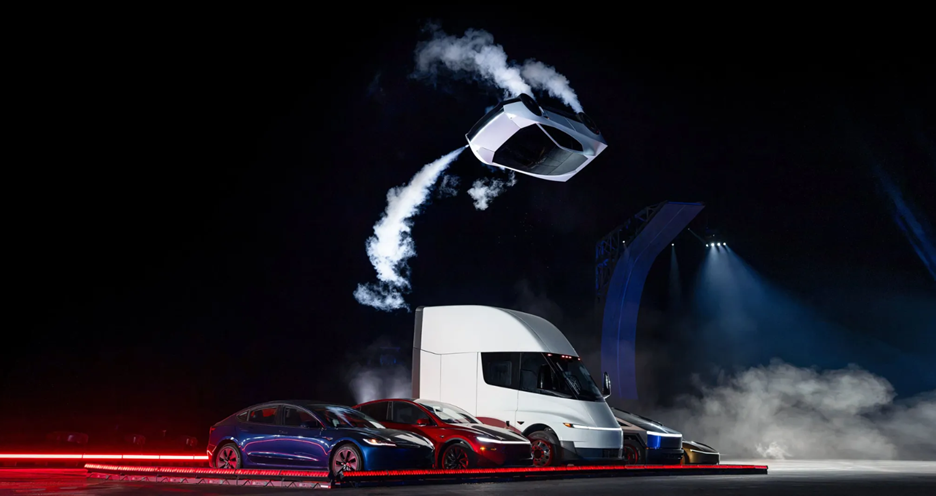
Again, from a different Futurism article:
“Tesla says the ‘Rocket’ version of its Roadster is loaded with 600 liters of compressed air, 10 directional cold-gas thruster nozzles and a huge suction-fan system on the bottom.
“To make room for it all, Tesla says it removed the passenger seat.
“But some observers are wondering if the car is even more stripped down than that, perhaps even lacking a full-sized battery so the engineers could save room and cut down weight.
“Meanwhile, screenshots of the car’s sparse-looking underside taken while it was midair seemed to show it lacking a suction fan, fueling further speculation that Tesla hasn’t figured out how to fully combine its capabilities as they’re being presented.
“The car that stuck upside down to the top of the ramp and then cushioned its landing was, some skeptics allege, equipped with different hardware from the one that leaped into the air to leapfrog the other cars.”
Perhaps you think these allegations are just from the usual nobodies kibbitzing in an online peanut gallery.
Wrong.
One of the most vocal detractors was computer scientist Yann LeCun, widely considered the “godfather” of artificial intelligence.
Oh, the sweet irony!
When LeCun posted his critique to X, Musk came back with the following scientific rebuttal:
“I fart in your general direction.”
By the way, if true, this wouldn’t be the first time Tesla faked a demo.
Back in 2016 it showed off a video of its self-driving technology. An engineer later testified the whole thing was staged.
Same thing with the Optimus robots it displayed two years ago. Turns out they were actually being helped by human puppeteers.
Bulls will say this is just what it takes to help people envision what’s possible from technology that is advancing at such a blistering pace.
I say it’s a perfect example of the smoke and mirrors that’s been driving the last two years of market mania.
And everyone else is finally starting to see it, too … which is precisely why Teslaand SpaceX (SPCX) lost a combined $420 billion in just two days last week.
Best wishes,
Nilus Mattive
P.S. Seriously. Fake car demos are nothing compared to what’s really lurking under the surface of the AI boom.
And the losses we’ve seen so far are nothing compared to how bad things could get.
Martin and I explain it all in this video warning we’ve been circulating for the last couple weeks, along with the protective steps you should consider taking immediately.