 |
| By Gavin Magor |
Diesel is the fuel most of us never buy, yet all of us pay for.
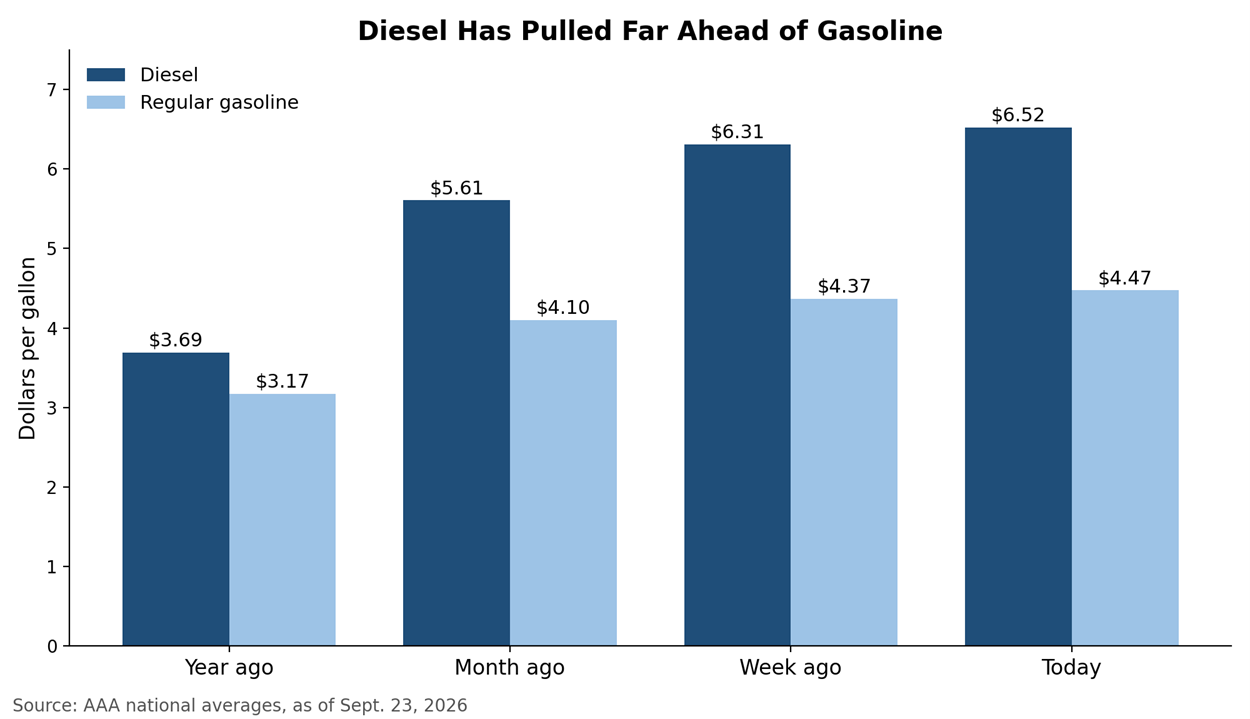
The national average for a gallon of diesel hit $6.53 this week, the highest AAA has ever recorded.
A year ago, the same gallon cost $3.69.
That's a jump of about 77%, nearly double the 41% rise in regular gasoline over the same stretch.
So, Washington is reaching for a fix.
President Trump floated the idea of a 90-day diesel export ban this week.
Treasury Secretary Scott Bessent said the administration is studying whether a full or partial ban of U.S. diesel exports is workable.
With less than two months before the midterms, a growing number of Republican lawmakers back the idea of at least a partial ban.
On paper, keeping more diesel at home should mean cheaper diesel at home.
In practice, however, I'm not convinced it works that way.
And individual investors are exposed on two fronts: in their portfolios and at the checkout line.
Why Diesel Reaches Your Grocery Bill
Diesel is the economy's workhorse fuel.
It powers the trucks, trains and farm equipment that move almost everything you buy.
So, when diesel costs more, nearly everything costs more to deliver.
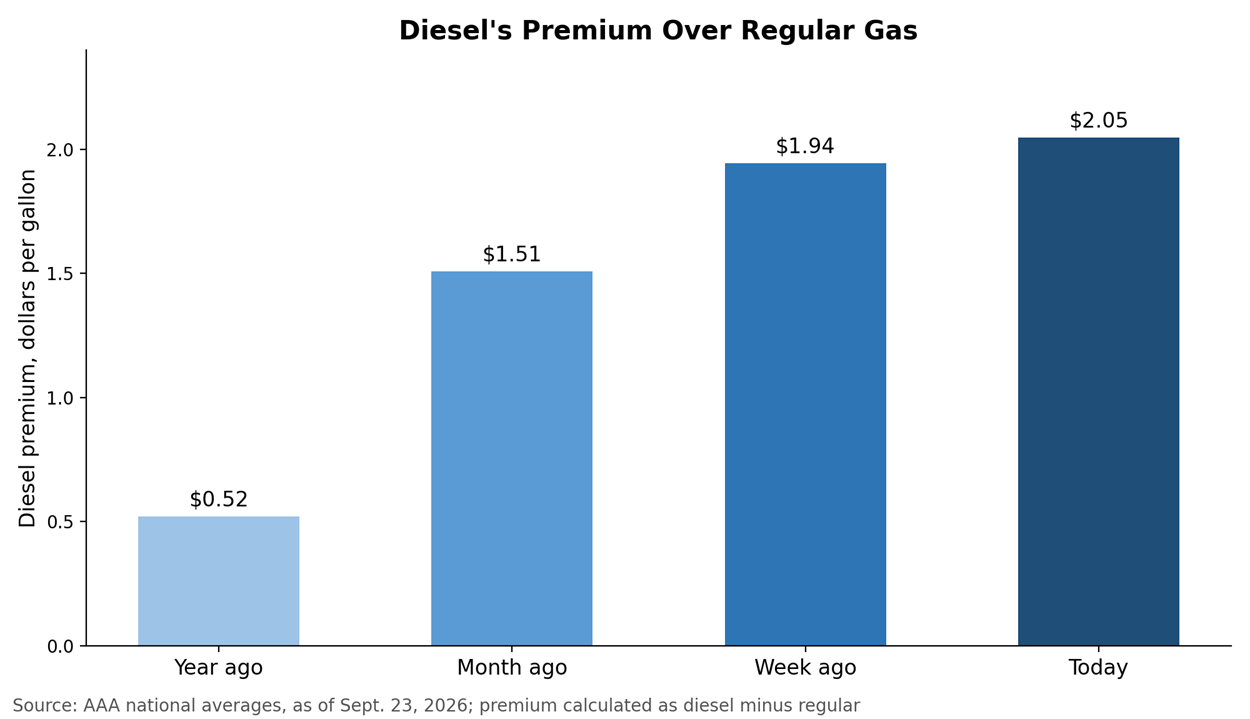
And the gap between diesel and gasoline has widened sharply.
A year ago, diesel cost about 52 cents more per gallon than regular gas.
Today, that premium is just over $2.
That cost doesn't stay at the pump.
It works its way into the price of goods on the shelf.
And it lands hardest on farmers heading into harvest and on truckers across the country.
Why a Ban May Not Deliver
Here's the problem: Diesel is priced globally, not locally.
GasBuddy's Patrick De Haan made that point, noting that U.S. diesel prices follow the world market, not a domestic one.
And the U.S. is a major supplier to that world market.
According to the American Petroleum Institute, the U.S. supplies roughly 20% of the diesel traded by sea each day.
Pull those barrels off the market, and world prices likely rise, not fall.
Then there's the refinery math.
About 54% of U.S. refining capacity sits on the Gulf Coast, which already makes more diesel than it uses.
Pipelines and geography make it hard to move that surplus to the East Coast.
Block exports, and Gulf Coast storage tanks start to fill.
But refiners can't make only diesel.
Crude goes in, and gasoline, jet fuel and diesel come out together.
So, if refiners slow down to keep their tanks from overflowing, the country could end up with less of all three.
Energy economist Philip Verleger compared a ban to President Nixon's 1973 soybean export restriction. That had encouraged major customers, such as Japan, to diversify toward suppliers, such as Brazil.
Customers who find a new supplier don't always come back.
What It Means for Refiner Shareholders
If you own refiners, this has been a banner year.
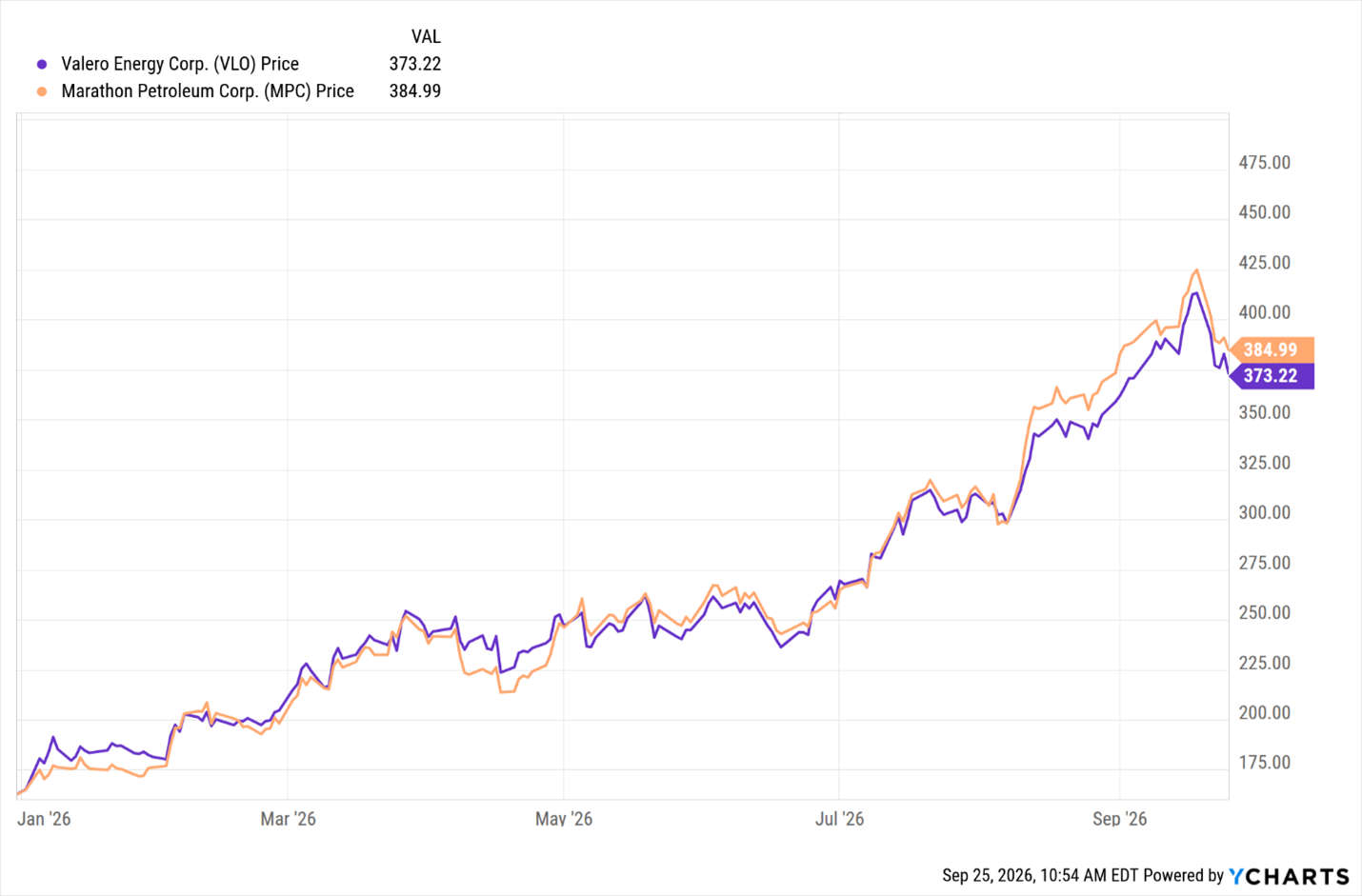
Valero Energy (VLO) is up 130% year to date.
Marathon Petroleum (MPC) is up 136% this year.
Jefferies downgraded both to Hold from “Buy” on Tuesday, saying the risk-reward setup now favors holding rather than adding.
Which coincides with the pullback you see on the chart below.
But there’s plenty of reason to believe that setback is temporary.
After all, the earnings behind these stocks’ 2026 gains are real.
Valero earned an adjusted $12.54 per share in its second quarter, up from $2.28 a year earlier.
And Marathon posted a big second-quarter earnings beat. It trounced Wall Street’s EPS estimates by some 44%.
A potential 90-day diesel export ban goes straight at what made those earnings possible …
These companies sell diesel into a hungry world market at a wide margin.
Whilst a ban is still only a proposal, the policy risk is now part of the price.
For individual investors, my concern isn't whether refiners are good businesses.
It's whether a sector that has more than doubled now takes up a bigger slice of your portfolio than you intended.
In my view, if it does, this is a reasonable moment to rebalance back to your target, rather than let Washington decide for you.
What I'm Watching From Here
First, whether this proposed 90-day diesel ban is full or partial.
Treasury Secretary Bessent says the administration is weighing both options.
Second, whether it comes with an end date.
Sen. Dan Sullivan of Alaska has backed a temporary ban lasting only until the Iran War ends. Senate Majority Leader John Thune has said he's open to exploring the idea.
Third, what refiners say on their own earnings calls.
Valero reports on Oct. 22, and Marathon on Nov. 3.
Those calls will be the first chance to hear how management plans to run their plants if export markets narrow.
Bottom Line
A diesel export ban sounds like a quick fix for a record price.
But a globally priced fuel doesn't respect borders, and refineries don't make diesel alone.
For those of you who own shares in refiners, the policy risk is now real. And rebalancing a big winner — taking some gains and reducing exposure to new risks — is never a bad habit.
For everyone else, lasting relief on diesel is more likely to come from calmer world markets than from Washington.
Because diesel is still the fuel most of us never buy, yet all of us pay for.
Cheers!
Gavin