The ‘SaaSpocalypse’ Is Over — And Software Came Out Stronger

 |
| By Michael A. Robinson |
Earlier this year, Wall Street was convinced that one of technology’s most profitable industries was headed for trouble.
The culprit was artificial intelligence.
New AI coding tools had become so good that virtually anyone could create software simply by describing what they wanted. The trend even got a catchy name: “vibe coding.”
Investors started asking an uncomfortable question: If AI can create software in minutes, why would companies continue paying billions of dollars for it?
The fear hammered software stocks. Investors began dumping companies they thought could eventually be replaced by AI.
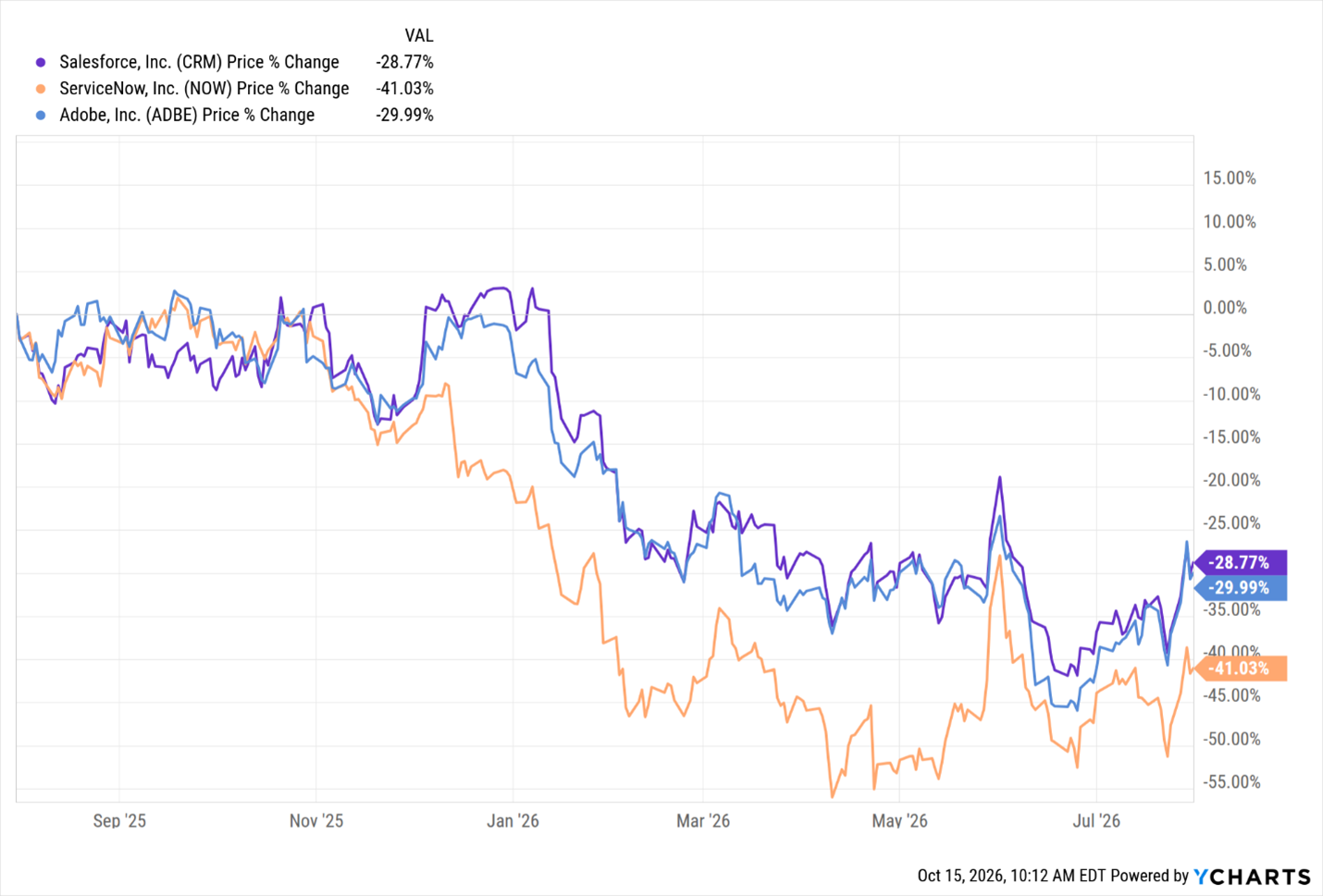
But there was one problem with this theory …
It isn’t playing out. In fact, recent earnings reports suggest almost the exact opposite is happening.
Software companies aren’t being destroyed by AI. They’re using it to grow faster.
Today, I’ll show you a simple way to profit as Wall Street wakes up to its mistake.
The ‘SaaSpocalypse’
To understand the opportunity, we need to rewind a bit.
For years, software had been one of the technology sector’s greatest businesses.
Companies like Salesforce (CRM), ServiceNow (NOW) and Adobe (ADBE) sold software that businesses depended on every day.
Much of it was sold through subscriptions — called Software as a Service, or SaaS.
Customers paid month after month, creating highly predictable recurring revenue.
Then AI came along. Suddenly, tools from companies like OpenAI and Anthropic could generate computer code from ordinary English.
Someone who wanted an app or website no longer needed years of programming experience. They could simply tell an AI what they wanted and let it write much of the code.
That sparked fears of a “SaaSpocalypse.”
If companies could create their own software cheaply and quickly, perhaps they wouldn’t need traditional software companies anymore.
Investors took the threat seriously.
Software stocks plunged, and some of the industry’s best-known names lost billions in market value.
But as I often remind you, narratives are one thing. Numbers are another.
And the latest numbers are telling us something very different.
Software Is Bouncing Back
Consider Snowflake (SNOW), which helps companies store and analyze enormous amounts of data.
It recently reported quarterly revenue of $1.55 billion, up 35% from a year earlier. Product revenue surged 37%.
Both figures beat Wall Street’s expectations, and Snowflake raised its full-year outlook. The stock subsequently jumped roughly 17%.
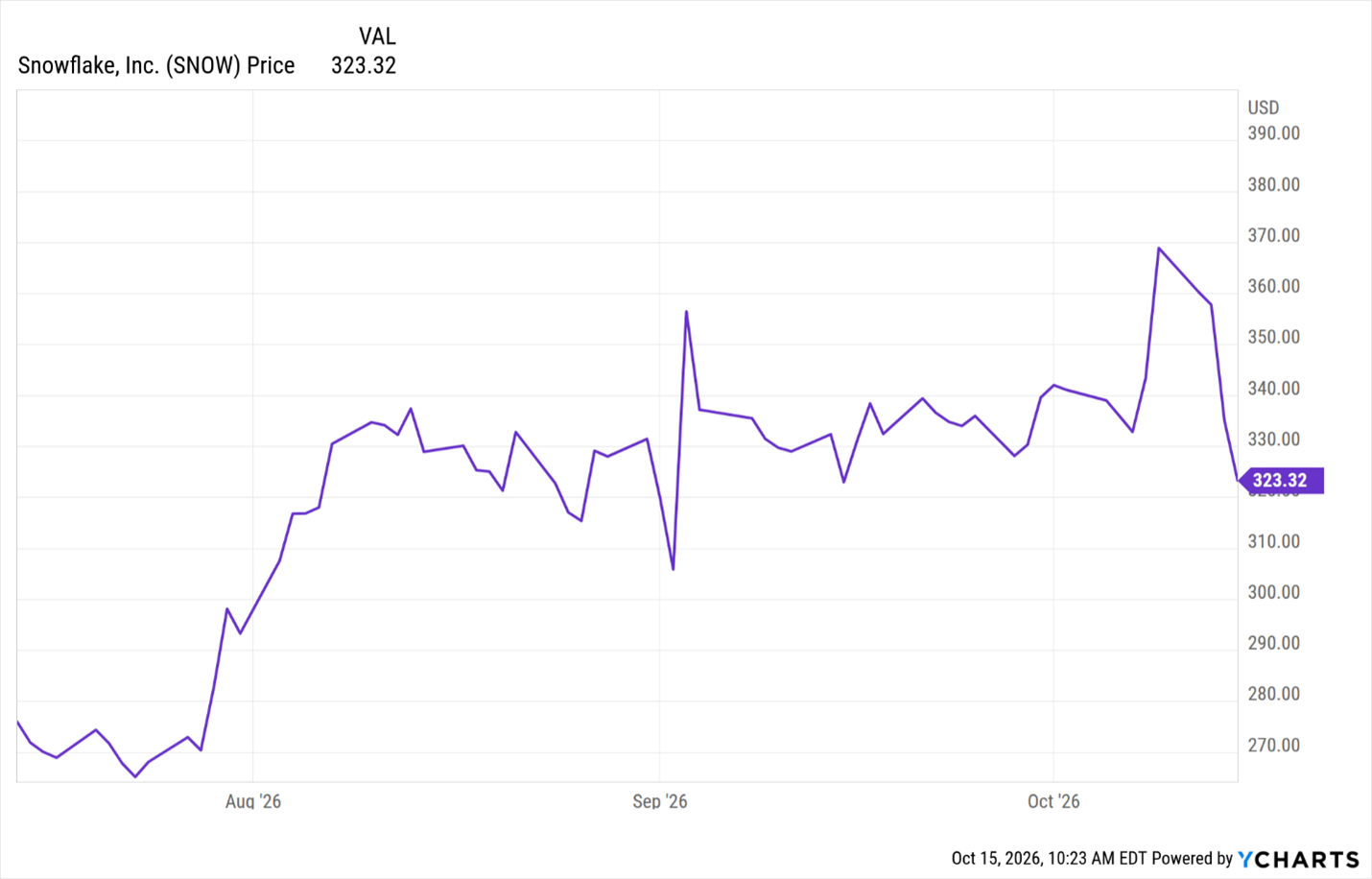
And here’s the most important part: AI is helping drive the growth.
Snowflake CEO Sridhar Ramaswamy estimates AI is responsible for roughly half of the company’s recent growth acceleration.
Its AI coding assistant alone has already attracted more than 9,000 accounts.
Snowflake isn’t alone.
ServiceNow recently reported quarterly revenue of nearly $4 billion, up 24%.
Subscription revenue jumped 24.5%, and the company raised its full-year subscription-revenue outlook.
Meanwhile, its AI business crossed $1 billion in annual contract value.
Then there’s Atlassian (TEAM), maker of popular workplace software Jira.
Its latest quarterly revenue jumped 28% to nearly $1.8 billion.
Cloud revenue surged 31%, while its remaining contracted business — revenue essentially waiting to be recognized — soared 44%.
Even software giant Salesforce recently reported record quarterly results.
Revenue reached $11.3 billion, up 11%.
Earnings per share more than doubled.
And annual recurring revenue from its Agentforce and Data 360 businesses reached nearly $3.9 billion — up more than 210%.
These aren’t the numbers of an industry being wiped out. They’re the numbers of an industry adapting.
AI Needs Software
This brings us to the mistake Wall Street made.
AI can certainly write code. But writing code and running the technology operations of a global corporation are very different.
Think about a company with tens of thousands of employees, millions of customers and dozens of interconnected systems.
It can’t simply ask an AI chatbot to rebuild everything over the weekend.
Its software needs to be secure. It needs to work with existing systems. It needs to comply with regulations. And it needs to reliably handle critical business functions every day.
That’s why established software companies still matter.
And rather than standing still while AI advances, many are embedding AI directly into the products their customers already use.
Salesforce is adding AI agents.
ServiceNow is automating business workflows.
Snowflake is helping companies put their data to work with AI.
In other words, AI isn’t simply competing with software. It’s making software more powerful.
And that brings us to our investment.
A Simple Way to Play the Comeback
I’m referring to the iShares Expanded Tech-Software Sector ETF (IGV).
I’ve recommended this fund before because it offers a simple way to invest across the software industry without having to predict individual winners.
Today, the roughly $14 billion fund owns more than 100 stocks and provides focused exposure to software, cloud computing and digital-media companies.
Its expense ratio is just 0.38%.
More than 95% of its portfolio is concentrated in application and systems software.
That makes IGV a straightforward way to invest in the exact sector Wall Street recently left for dead.
Importantly, that pessimism could create our opportunity.
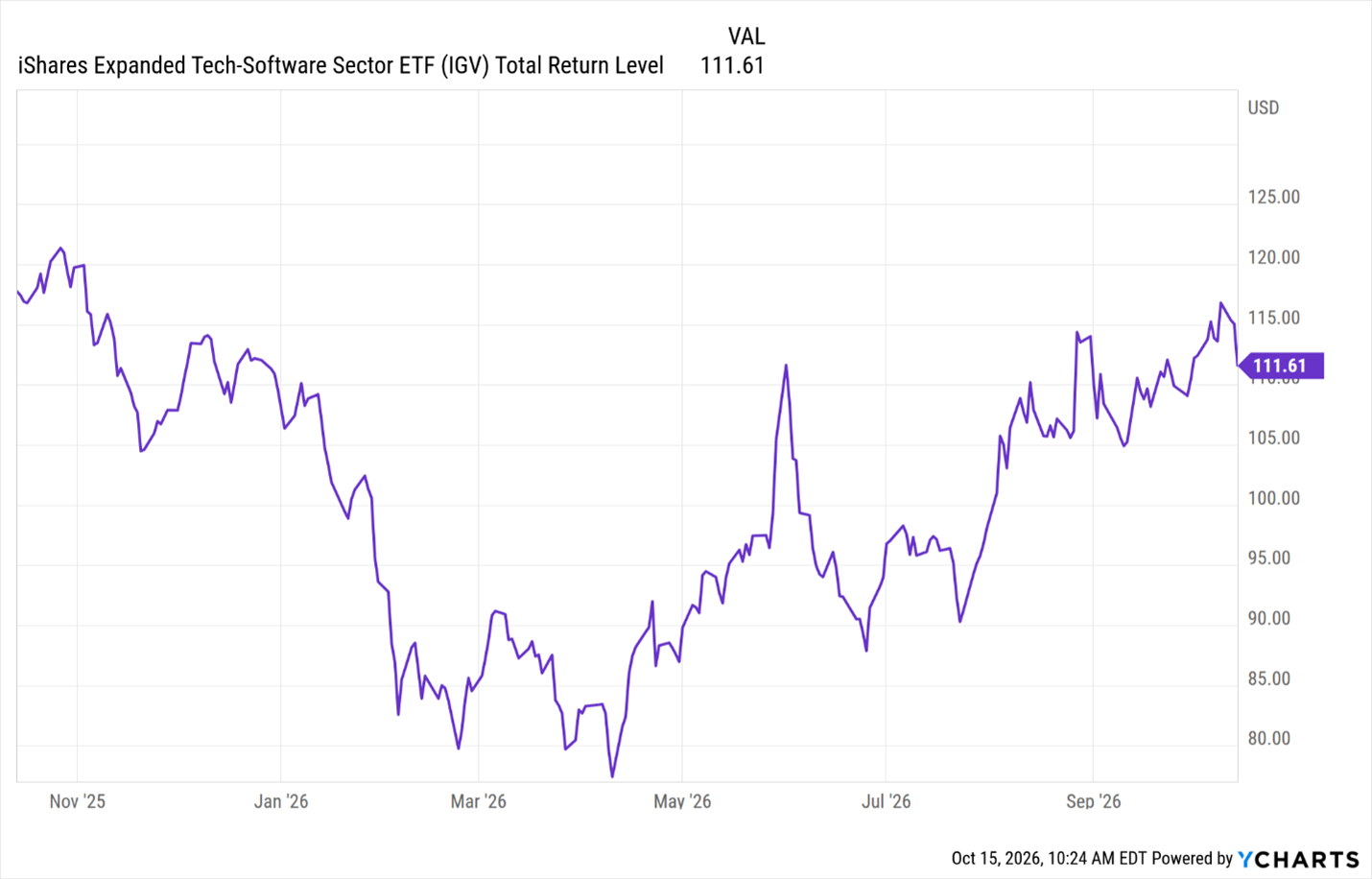
The market spent months pricing software companies as potential AI victims. Now the earnings are arriving.
And instead of showing an industry in decline, they’re showing strong revenue growth, growing AI businesses and customers spending even more money.
To be clear, AI will disrupt software.
Some companies will adapt better than others, and there will undoubtedly be losers.
That’s precisely why I prefer the diversified approach of IGV.
We don’t need to correctly predict every winner.
We simply need the software sector to keep doing what its latest earnings suggest it’s doing …
Adapt, grow and turn AI from a supposed existential threat into another source of revenue.
Wall Street thought AI might kill software.
Instead, it could help launch the industry’s next great growth cycle.
And with IGV, we have a simple way to profit for years to come no matter which software players come out on top.
Best,
Michael A. Robinson
P.S. AI is being used for more than just coding. We use it in our “U-AI System.” And on Tuesday, you can see how it has identified a high-profit window for select stocks between now and the midterm election next month. Grab your spot here.