The Sound of Government Spending Highlights the Problem

 |
| By Nilus Mattive |
Look, up in the sky!
It’s a bird …
It’s a plane …
It’s a full year of someone’s taxes burning up in half an hour.
This is what I’m thinking as I sit here in a Virginia Beach hotel room, the windows shaking as an F/A-18F Super Hornet flew overhead toward the open Atlantic.
It happens many times a day here, as pilots take practice runs from nearby Naval Air Station Oceana.
It’s an eye-opening (and ear-splitting) experience.
They’re amazing machines, no doubt about it. And I certainly wouldn’t want to be on their wrong side as an enemy combatant.
But, man, these things aren’t cheap!
The Navy pays Boeing (BA) about $55.7 million to make a single F/A-18. Sometimes the number goes as high as $67.4 million.
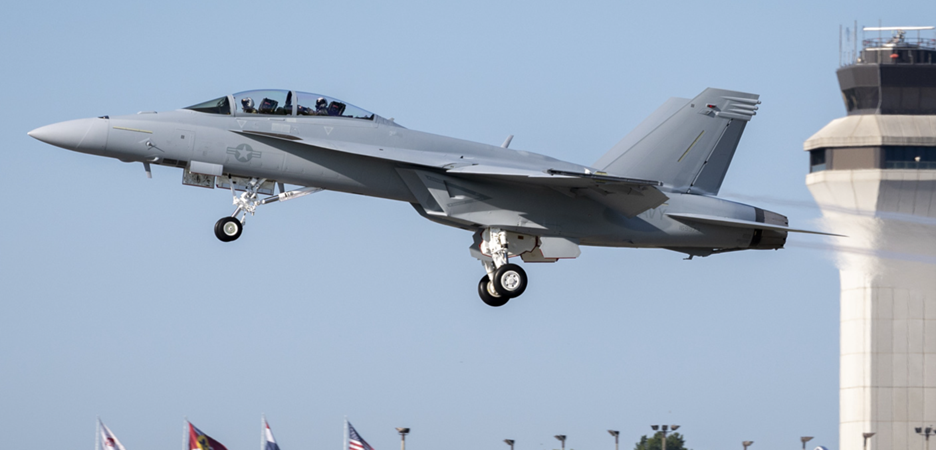
The company is actually fulfilling a U.S. Navy contract right now worth about $1.2 billion to make 17 Block III Super Hornets and provide technical data packages.
The spending doesn’t stop there, either.
Each plane burns about 1,100 gallons of jet fuel every hour during normal flight operations.
At current wholesale spot prices, that’s about $4,400.
If we go with the national average price at an airport, it’s $8,800 an hour in gas.
There’s also maintenance and other related operational costs.
According to Military Machines2:
“The Department of Defense's published reimbursable rate for an F/A-18E/F Super Hornet is about $10,500 per flight hour, covering fuel and direct costs.“Fold in maintenance manpower, spare parts and depot repair and the full operating cost climbs to roughly $22,000 to $30,000 per hour, two to three times the published figure.”
Now, let’s put all that into perspective …
The average American federal income tax bill was $13,890 in 2022, the latest year for which we have that level of data.3
So it takes about two American taxpayers to fly a single F-18 for one hour.
And as I wrote the paragraphs you just read, at least a dozen F-18s have flown over my head.
As the kids say, “You do the math.”
Yet this is still just a tiny slice of the overall military spending happening each and every year here in the United States.
We could sit here and debate the wisdom, necessity or focus of all those outlays forever.
However, I’d rather just make two points that are indisputable …
First, for investors, massive military spending is a boon.
Just as an example:
I originally recommended General Dynamics (GD) to Safe Money Report readers back in March 2023, and it remains in our model portfolio today.
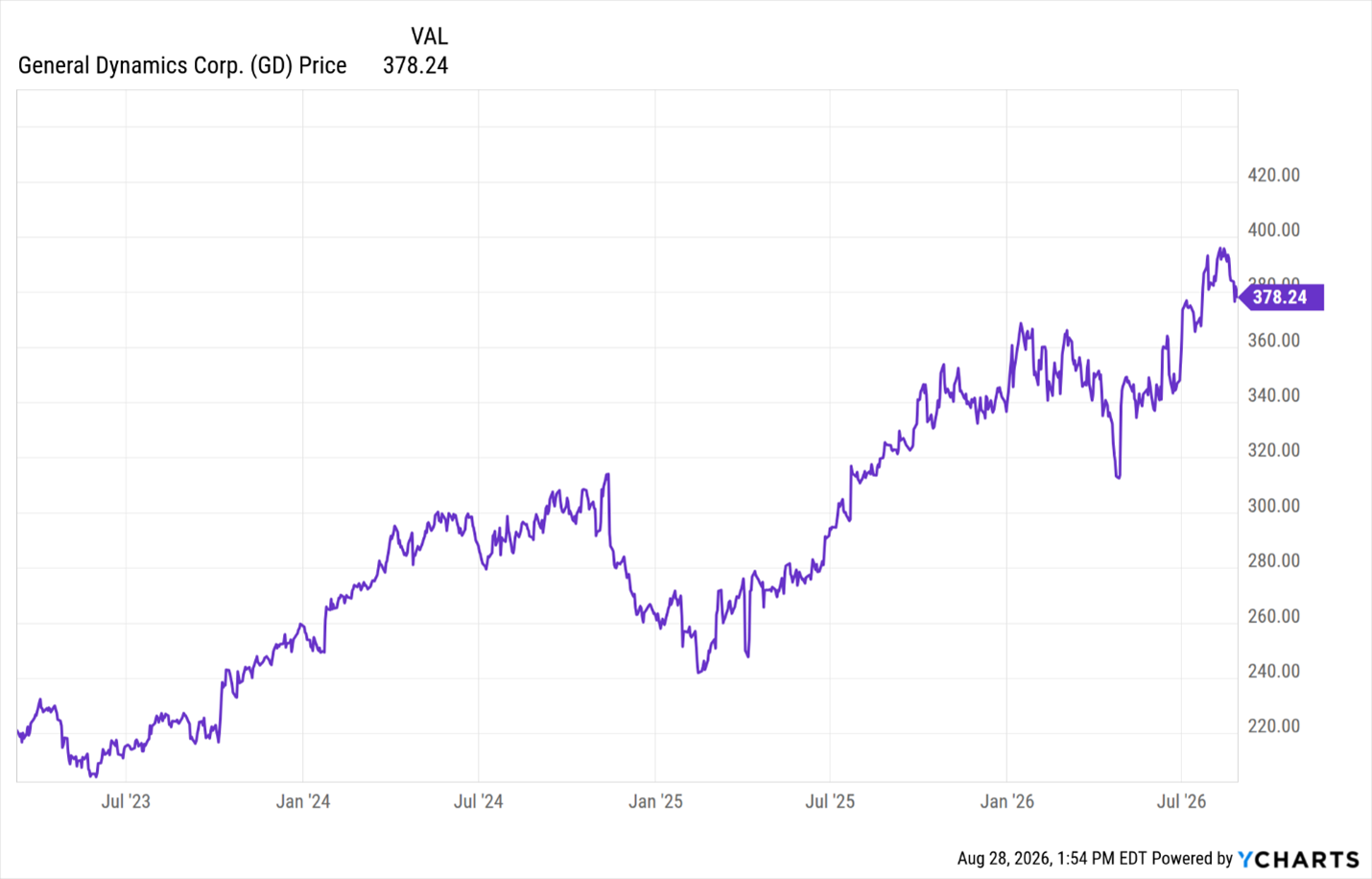
We’re already tracking an 83.6% gain, and I expect more upside from here.
Second, while defense spending always accounts for a large amount of the federal budget, it is no longer even our country’s biggest annual expense!
In 2025, Social Security was the largest part of the federal budget at 22%. Medicare was No. 2 at 15%.
However, those programs are funded — or underfunded, as I reminded you three weeks ago — by their own separate taxes.
Defense spending came in at 13%.
The only thing now taking up more of the federal budget?
The interest payments on all our country’s existing debt!
Think about that …
All the $60-million planes flying over my head at twenty-some-thousand dollars an hour …
Plus, all the new tanks and submarines and missiles we’re buying …
Plus, all the pay that goes to soldiers and other military personnel …
Plus, a thousand other items …
As much as all that costs, it’s LESS than what the U.S. Treasury now pays each year to the people holding debt we’ve already accumulated.
Essentially, our country has a no-limit credit card.
Twenty-five years ago, our outstanding balance was $5.8 trillion.
Every year since then, we’ve spent more on the card than we make.
Last year alone, the difference was $1.78 trillion.
This year we’ve already surpassed that number … with two months left in the fiscal year.
And the interest?
Last year we paid more than a trillion dollars of it for the first time. We’ll do the same again this year.
So, the problem is getting bigger and bigger with no end in sight.
Some people in Washington say the country can grow its way out of this situation.
The math says that’s wishful thinking.
Our national debt is now bigger than the current combined market caps of Nvidia (NVDA), Alphabet (GOOGL), Apple (AAPL), Microsoft (MSFT) and Amazon (AMZN) … TIMES TWO!
So over time, you should expect to continue losing more and more purchasing power with every passing year.
Investing in solid companies, including blue-chip defense contractors, is certainly one way to try and keep pace.
But I also continue to recommend allocations to other time-tested “debasement trade” assets like gold as well.
For a new and unique way to do that, I recommend you see what my colleague Sean Brodrick just found.
Best wishes,
Nilus Mattive
1https://www.boeing.com/defense/fighters-and-bombers/fa-18-super-hornet-and-ea-18-growler
2https://militarymachine.com/f-18-super-hornet-cost-per-hour
3https://taxfoundation.org/data/all/federal/latest-federal-income-tax-data-2025/