 |
| By Gavin Magor |
Warren Buffett stepped down as CEO of Berkshire Hathaway (BRKB) at the end of last year.
Berkshire board member Greg Abel stepped up as his successor on Jan. 1.
The question everyone has asked since this decision was announced last May: What will change?
Others can speculate. We analyze.
We have terabytes of data on tens of thousands of assets — stocks, ETFs, mutual funds, cryptos, banks, insurers and more.
And yes, we also have data on Berkshire Hathaway.
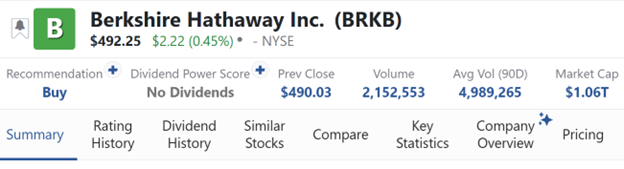
So, now that we have a few months of data since the post-Buffett era began …
Let’s change the question to, “What’s actually changed?”
To kick off our answer, let’s look at Berkshire’s stock chart since Buffett announced his retirement:
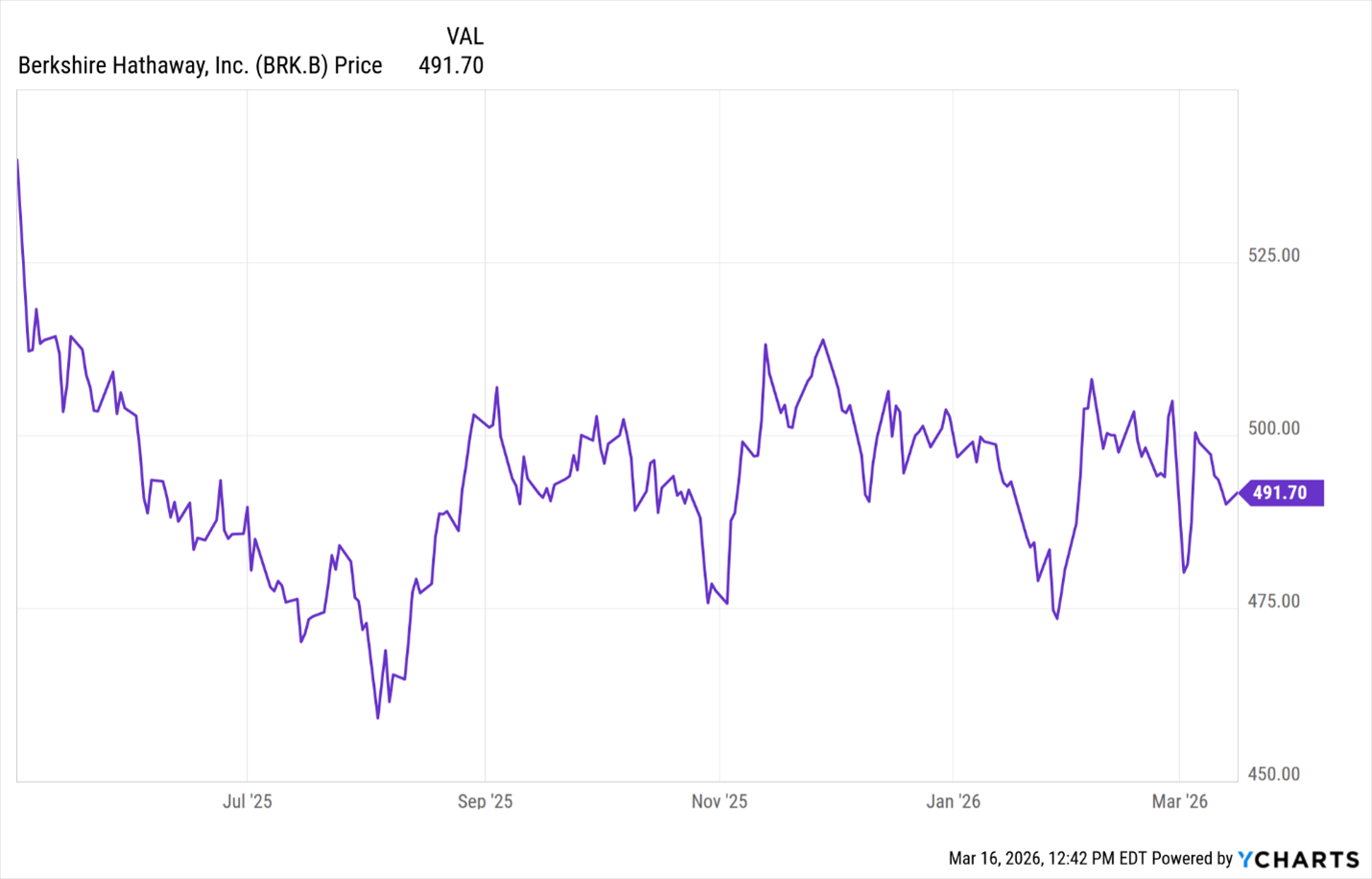
After the initial wave of sellers were flushed out of its stock, investors sent Berkshire sideways since September.
But here, we should note what Abel had to say in his first-ever Berkshire shareholder letter:
Berkshire’s capital allocation principles and strategy guide us in identifying opportunities:
- Invest in businesses that we thoroughly understand, with durable advantages and long-term economic prospects;
- Partner with high-integrity leaders who understand their customers and act like owners;
- Avoid businesses that undermine the fabric of society or could jeopardize Berkshire’s reputation;
- Act quickly and concentrate our capital in a few high conviction ideas; and
- Maintain discipline and let compounding unfold.
This last point is important.
Berkshire wasn’t built in a day.
So, looking at a 10-month chart really doesn’t tell us anything.
Here’s what it’s done over the past 10 years:
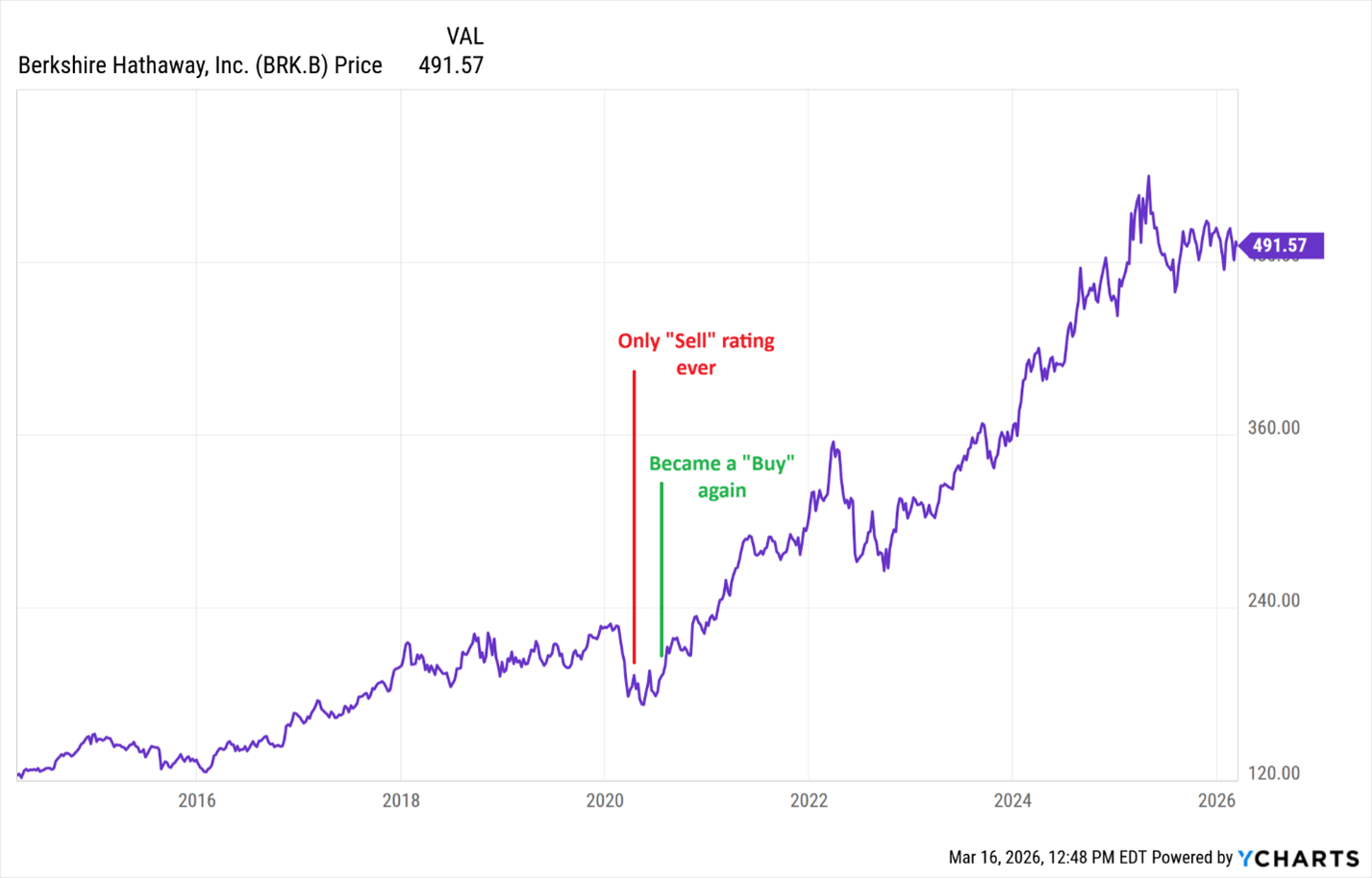
With that perspective, you can see that the sideways action over the past several months is just a blip.
More importantly, you can see that we have followed the idea of letting an investment compound over the years.
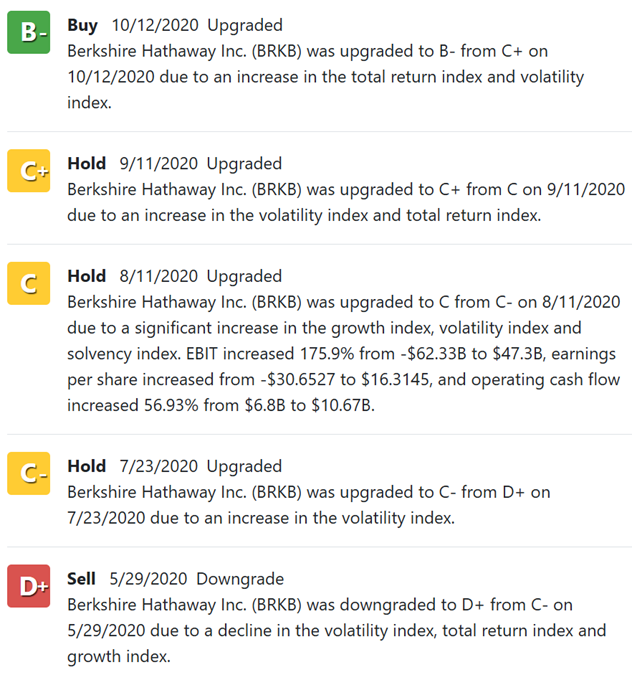
Only once did Weiss rate BRKB a “Sell.” It was a very short period in a very chaotic market — from May 2020 to July 2020.
Not only did it move out of “Sell” territory quickly …
Shares got upgraded all the way back to a “Buy” within just five months.
So, now in another chaotic market — one where the company is no longer led by the Oracle of Omaha — what does our stock-rating system have to say about Berkshire now?
On March 3, post-Buffett BRKB just got a Weiss stock rating downgrade.
But it was a small one, from “Strong Buy” to “Buy.”
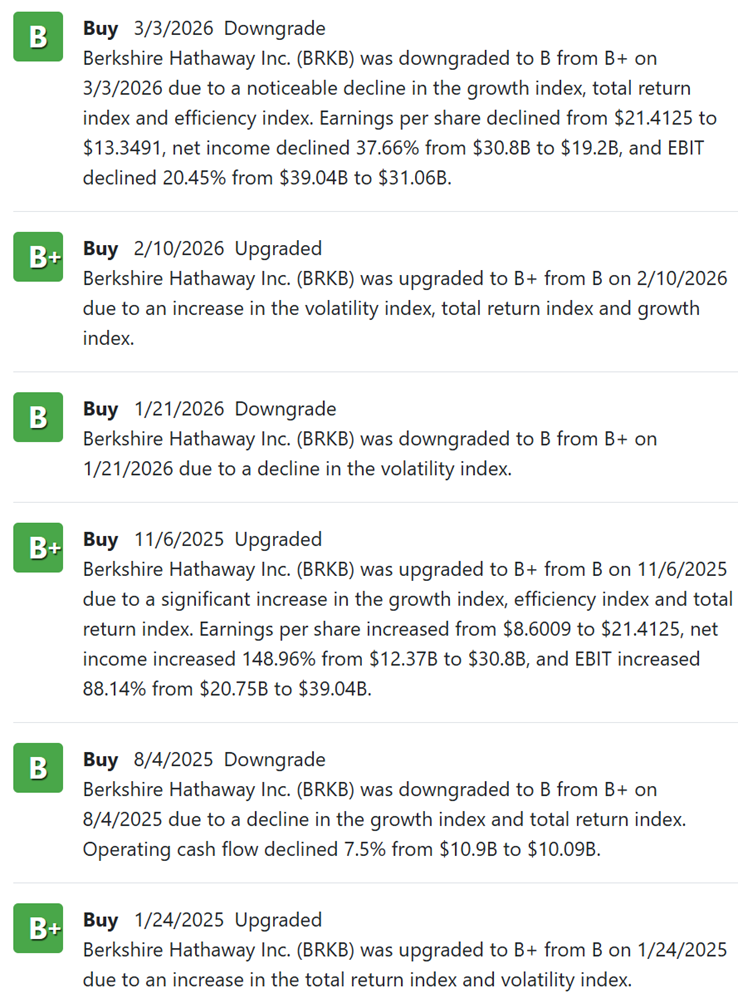
As you can see, there’s nothing in the data to suggest that Buffett’s company has fallen into the wrong hands.
It continues to move between a “B” and “B+” rating. That’s solidly in “Buy” territory.
And the downgrade was largely due to a decline in growth and total return.
Which makes sense in the context of a declining market.
So, if you look back to that 10-year performance chart, you might even consider this a new opportunity to get in.
No one can replace Warren Buffett. But the data shows us that they don’t need to.
Berkshire is just as much a “Buy” as it was when Mr. Buffett was buying Cherry Cokes for his employees.
For more detail on how we came to this rating — and to see the six proprietary rating factors that influence all our other stock grades — I recommend you watch this to the end.
Only Weiss Ratings Plus Members get full access to the rating history, technical data and much more about every single stock we rate.
This data can help you make better decisions about buying, holding or selling.
Plus, we have other bells and whistles that can make it even easier to find opportunities in any kind of market … even a volatile one like this!
My favorite part? All this data updates every single day that the markets are open.
Meaning, you’ll find new data … and new ways to use it … just about every time you log in to Weiss Ratings Plus.
If you’re looking for something to invest in long term, your investing success is a wonderful place to start.
See exactly how Ratings Plus can help you with that.
Cheers!
Gavin