When Technology Puts Your Money and Freedom at Risk
 |
| By Nilus Mattive |
It was a relatively innocuous white envelope.
But as soon as I saw the first line of the return address — LA Metro Transportation Authority C/O Traffic Enforcement Office — I knew there was nothing good inside.
The more curious part was the rest of that address — a Post Office Box in Arizona.
Why would a California traffic ticket come from Arizona?
I was about to find out.
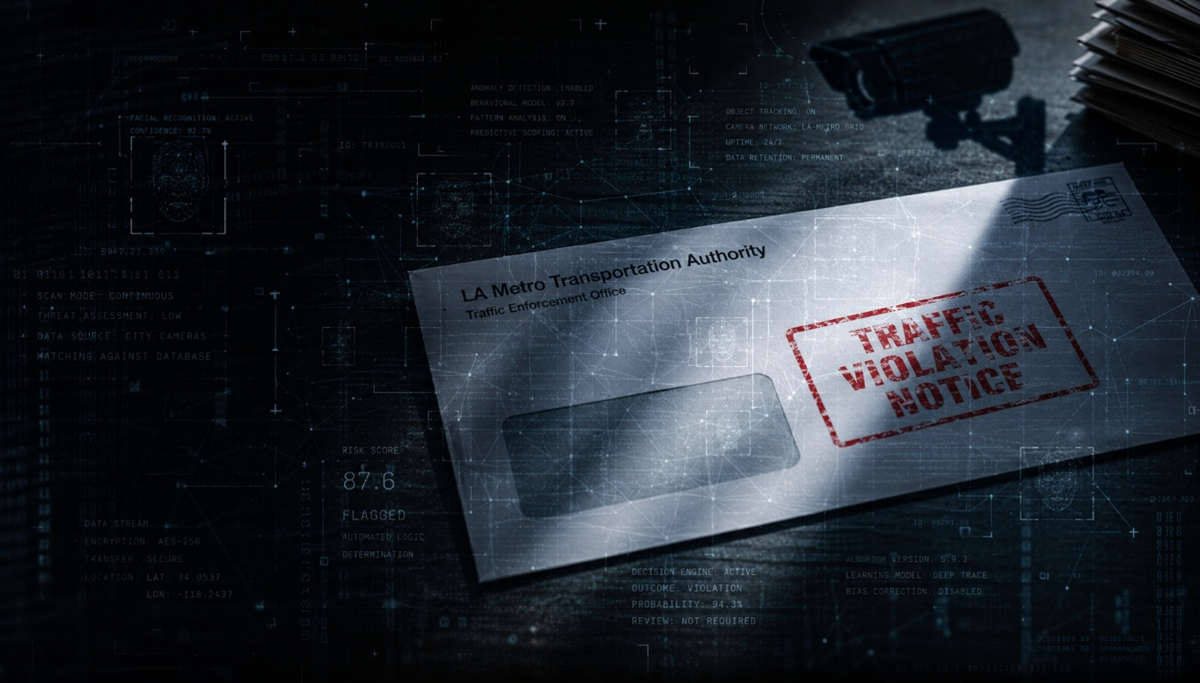
Inside was a traffic violation notice, complete with pictures showing a vehicle registered in my name performing the alleged infraction — failing to come to a complete stop as it made a right turn on red.
It also included a link to a full video of the event, which I clicked on and watched.
Yes, that was my car. And yes, like every other car in the short video, it merely slowed to a crawl as it rounded the corner. Except, I wasn’t the driver pictured.
The accompanying letter said if someone else was driving, I should fill out the accompanying form to identify them and send that information back to the address in Arizona.
The ticket was for a staggering $486!
Now figure the camera can basically catch every single car that doesn’t come to a complete stop rounding the corner … which I assume is most of them.
Then multiply that by the number of cars rounding that corner in Los Angeles on any given day.
And multiply it again by the number of days in the year.
We are talking about a huge amount of money being generated by a camera and a couple of people sitting in an office somewhere in Tempe, Arizona.
What a racket!
Of course, I’m not the kind of person to simply pay and move on … especially if I’m not even the one pictured in the presented evidence.
So I started doing some research and uncovered a bunch of interesting information.
As I expected, these violations are big business. One estimate pegged the value at roughly $1.5 billion a year, just in California alone.
Shockingly, in many cases, these notices aren’t even real tickets. They amount to official police department phishing scams trying to get people to either just pay or identify the people actually committing the violations.
There are also legal opinions, supported by various court cases, that suggest people simply ignore these types of notices … even ones that ARE official tickets. Some say even clicking on the video links, as I did, amounts to confirming receipt of the violation and should be avoided.
Of course, there are also stories of people who ignored the notices and ended up having their licenses suspended or money taken out of their tax returns to pay the outstanding violations.
One thing that was very clear: You are never under any obligation to disclose who IS pictured in the evidence if it isn’t you.
After considering all the different choices, I decided to fight things the old-fashioned way: by going to the actual courthouse in Chatsworth, California and requesting a trial by written declaration.
The woman at the traffic violations counter seemed surprised when I told her my plan. As it turns out, she had never had anyone request such a thing before.
This fact alone should concern us all.
Still, I completed the necessary paperwork and am now awaiting an official verdict, which was promised to arrive in a rather cliché four to six weeks.
I also had to post the entire $486 as bond just for the privilege of proclaiming my innocence.
Why am I telling you this story in a financial column?
Because it paints a picture of where our country could be heading next if we don’t push back now … a picture with huge implications for both our freedom AND our finances.
Indeed, as it turns out, the city of Los Angeles has just rolled out another pilot program involving more than 100 automated traffic cameras run by a private company aimed at catching speeders.1
And similar types of programs are rolling out — or already in place — in other cities and states across the country.
Given the rise of artificial intelligence, and the proliferation of web-enabled cameras everywhere from street corners to the phones we all carry, it’s easy to start extrapolating the answer.
Simply connecting various databases to an AI model could markedly increase the success rate of the traffic camera system already in place.
Rather than send out notices based on who owns the pictured vehicle, authorities could automatically identify exactly who’s actually driving ahead of time.
And if they can generate a couple billion dollars in revenue from a relatively small network of cameras, why wouldn’t they start rolling the same system out across the nation?
The justification would be simple: If you aren’t doing anything wrong, you have nothing to worry about.
But that’s still just an inkling of what’s coming.
Listen to this excerpt from a recent article at The Drive2:
“If data brokers can track the devices you take with you, they know where you live, where you go and what you do.
“And the stakes are only poised to climb higher, now that surveillance companies that sell automatic license plate readers (ALPRs) are getting in on the game3.
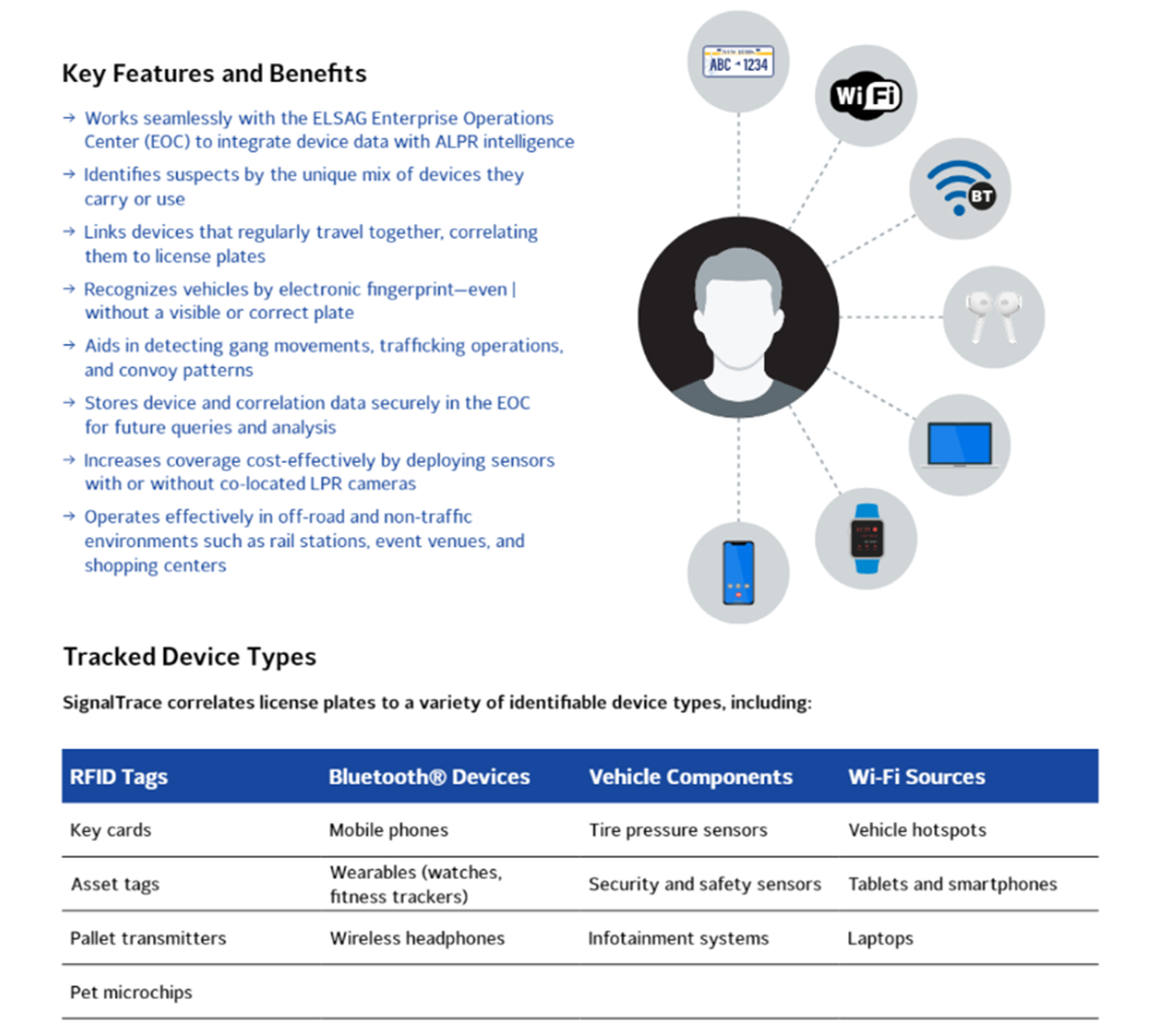
“Defense contractor Leonardo is promoting a new technology called SignalTrace that will package plate cameras with sensors that can scrape unique identifiers tied to your smart devices and make that data available to law enforcement …”
“If SignalTrace can pick up your Bluetooth headphones, you can be damn sure it’ll also be looking out for your vehicle’s 5G hotspot, infotainment system and even its tire pressure monitoring sensors. Hell, the company includes pet microchips as a potential entry point to tracking.
One company received a patent for this technology two years ago. And as the article rightly points out, there is really no way to opt out of it.
That said, you CAN opt out of the built-in tracking that many car companies now bundle into modern-day computer systems.
Just be warned that it isn’t always an easy or straightforward process.
It’s still worth doing.
After all, car companies can sell your driving data to insurance companies, potentially raising your rates if you speed, drive above-average mileage each year or regularly brake too hard.4
We could see the same in the health field now that various smart devices have access to our vital signs and other related data.
And then there’s the mother of it all: The ability for local, state and federal governments to monitor our lives and enact financial penalties however they see fit.
Maybe it isn’t happening in a major way yet.
But the groundwork has already been laid, and the infrastructure continues to improve at a very rapid rate.
Best wishes,
Nilus Mattive
P.S. Technology itself isn’t the problem, of course. It’s how humans choose to use it.
One way is to go to space. There’s a huge boom coming for select space companies. Not just SpaceX.
On Tuesday, Sean will share what he found in the Space Supercycle.
1https://ktla.com/news/local-news/los-angeles-to-install-125-speed-cameras-on-city-streets/
4https://www.bbc.com/future/article/20260513-your-car-is-spying-on-you-its-about-to-get-worse