 |
| By Nilus Mattive |
I’ve been writing about inflation quite a bit lately.
That’s because it’s the biggest threat to your wealth.
It’s also because, based on recent polling, Americans consider it the country’s most important issue right now.
And it’s because I see a lot of misleading headlines on the topic from other sources right now.
Take, for example, these three from last week …
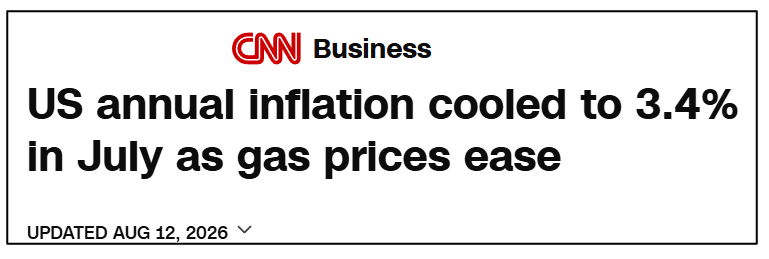
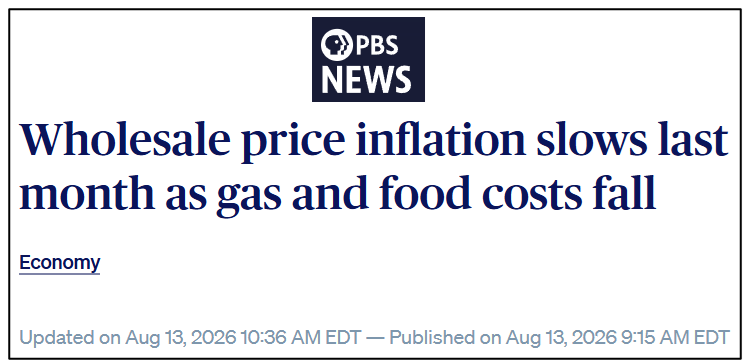
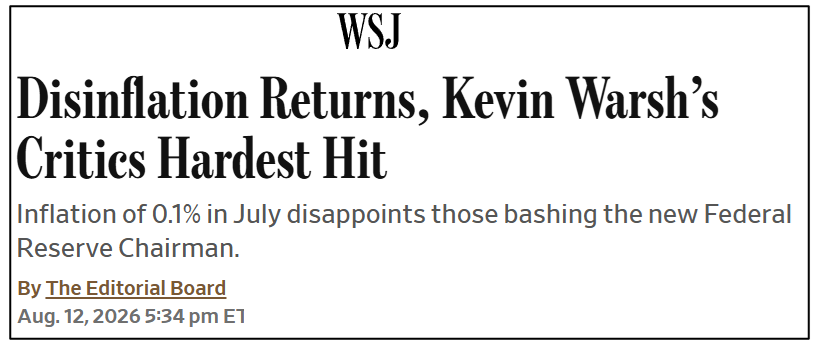
Together, they paint a pretty picture: Inflation is going down and new Fed Chairman Kevin Warsh is already doing a great job.
The truth is a little more complicated than that.
Let’s start with this idea of inflation cooling …
Economic wonks call it “disinflation.”
I call that term disinformation.
Because a layperson might see it and think we’re talking about deflation — a period when prices are actually dropping.
But that’s not what’s happening at all.
It simply means the rate of inflation is slower than it was during some other previous period.
Prices are still going UP.
What’s more, they are going up from whatever previous gains have happened already.
Everyone understands how compounding works when it comes to interest payments.
Far fewer realize that the same thing applies to inflation rates.
Which is why I also take exception to this idea that the current inflation rate isn’t too hot.
The Federal Reserve has an official target of keeping inflation — as measured by the Personal Consumption Expenditures (PCE) index — at 2% a year.
Honestly, inflation running at 2% a year is already quite damaging to someone who simply wants to earn an honest living and save some of that money for the future.
Here’s the math:
At 2% inflation, $100,000 drops to about $67,000 in purchasing power over 20 years.
So the Fed’s stated goal is reducing your wealth by 33% over the next two decades.
Meanwhile, that “cool” inflation report we just got showed inflation running at 3.4% annually.
Hey, it’s only 1.4 percentage points higher than the target. Not too bad, right?
Well, here’s what happens to your $100,000 if inflation stays at 3.4% instead of 2% over the next 20 years …
Instead of having $67,000 in purchasing power, you’ll only have $51,000.
A sustained 1-percentage-point difference (such as 4% inflation instead of 3%) reduces the remaining real value of a fixed sum of money by about 18%.
Think this is just theoretical?
Using the government’s flawed CPI, we have already lost 40% of our purchasing power just over the last 20 years!
It is happening almost continually.
Indeed, something that cost $100 when the Federal Reserve was founded back in 1913 costs $3,373 today!
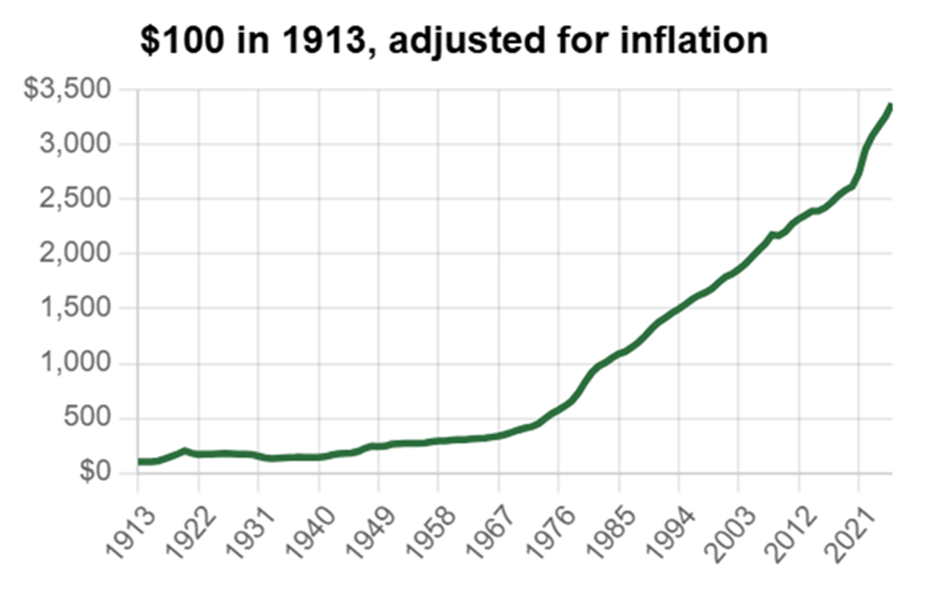
So, are gas and food costs really falling? Is inflation slowing? Has the Fed been vindicated?
Maybe if you pick and choose a particular time period or single data point for your comparison.
But not over the last 100 years (average inflation of 3.2%) …
The last 50 years (average inflation rate of 3.6%) …
The last 20 years (average inflation rate of 2.6%) …
Since the Fed officially stated its 2% target 14 years ago (average inflation rate of 2.71%) …
And certainly not over the last five years (average inflation rate of 4.5%).
Which is why I will continue to criticize the Fed, including new Chair Kevin Warsh.
He can stand up there in a post-meeting press conference and say he’s committed to bringing inflation back down to 2% on a permanent basis.
I’ll give him props when he actually does it … even though that will still be relatively bad news for all of us savers.
Best wishes,
Nilus Mattive
P.S. In the issue of Safe Money Report that just went to press, I showed readers how to stay ahead of inflation by roughly three percentage points guaranteed without risking one penny of their investment dollars.
If you want to get the full story — and my next 12 issues — for just $49, all you have to do is click here. (You’ll also get a full money-back guarantee.)