 |
| By Beth Canova |
If you were exposed to the crypto market last year, Oct. 10, 2025 is a date that likely lives in your memory rent free.
Just four days earlier, Bitcoin (BTC) had hit a new all-time high near $125,000. The markets were flooded with euphoria as talking heads called for the rally to continue.
Our own predictions at the time suggested Bitcoin could see $150,000 by the cycle’s end. Other analysts were far more bullish.
Then, the party came to a screeching halt.
It was a Friday evening. The stock market had closed. Most people were at dinner or on the way home.
Then a headline from Washington hit.
And over the next few hours, the largest wipeout in crypto history played out while much of the country settled in for a relaxing weekend.
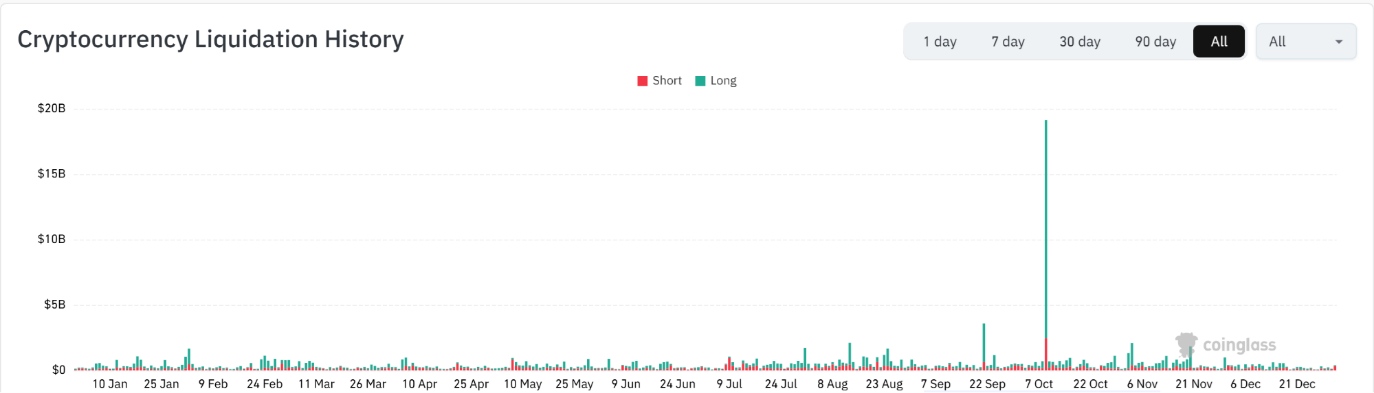
A digital coin built to be worth one dollar sold for 65 cents. And in the aftermath, $19 billion in crypto bets were erased.
That triggered a domino chain that stopped the bull market in its tracks. In the following 30 days, BTC was back under $100,000. In four months, it was just a few thousand dollars away from its bear market low — a 50% crash.
Here's the strange part: Most of the damage was not people deciding to sell.
It was forced selling, run by machines. And with AI agents growing more prominent on the blockchain, that matters.
Because it means this black swan event could happen again.
Which tells you that Oct. 10 should be a lesson.
Once you know how the machine works, you will be able to spot the warning signs ahead of time.
How the Night Unfolded
That afternoon, President Trump posted that the U.S. would add a 100% tariff on Chinese goods, on top of the ones already in place.
Stocks fell. The Dow lost 878 points.
Then, a little after 5 p.m. Eastern, it was crypto’s turn.
The floor gave way. In the worst minute, one BTC sale on Binance — the world's largest centralized crypto exchange — went through at $102,000.
Those were holes in one exchange's order book, not the market price. On Coinbase (COIN), bitcoin's low that night was $107,000.
And it wasn’t just BTC. A stablecoin that everywhere else kept its peg to the U.S. dollar, USDe, was valued only on Binance’s books to be valued at 65 cents.
That machine error was enough to destabilize the entire market.
By the time it was over, CoinGlass — a firm that tracks on-chain data — counted more than 1.6 million traders forced out of their bets thanks to Binance’s error.
About 85% to 90% of the money lost was in bets that prices would rise.
What a Margin Call Looks Like at Machine Speed
If you have ever had a margin account at Charles Schwab (SCHW) or Fidelity, you’ll be familiar with how a margin call works …
You borrow from the broker to buy more stock. If the price drops far enough, the broker asks for more cash. If you can't pay, they sell for you.
Crypto has the same thing. But with two twists.
First, the borrowing is huge. Many traders use futures that never expire and let them bet with a lot of leverage. Many times greater than what they put up.
Second, there is no phone call to confirm a sell. When the price crosses a line, the smart contract sells on the spot.
Each forced sale pushes the price down. That trips the next trader's line. Then the next. And so on.
That is the core of Oct. 10.
The tariff news was the spark. Borrowed money did most of the rest.
3 Things That Broke
1. The buyers left. Sell orders poured in. And the market makers — firms paid to always be buying — pulled back.
With no one stepping in to buy, prices fell through empty space.
2. One exchange's price stopped matching the world. Binance’s order book stopped matching the rest of the market. USDe on Binance alone fell to 65 cents.
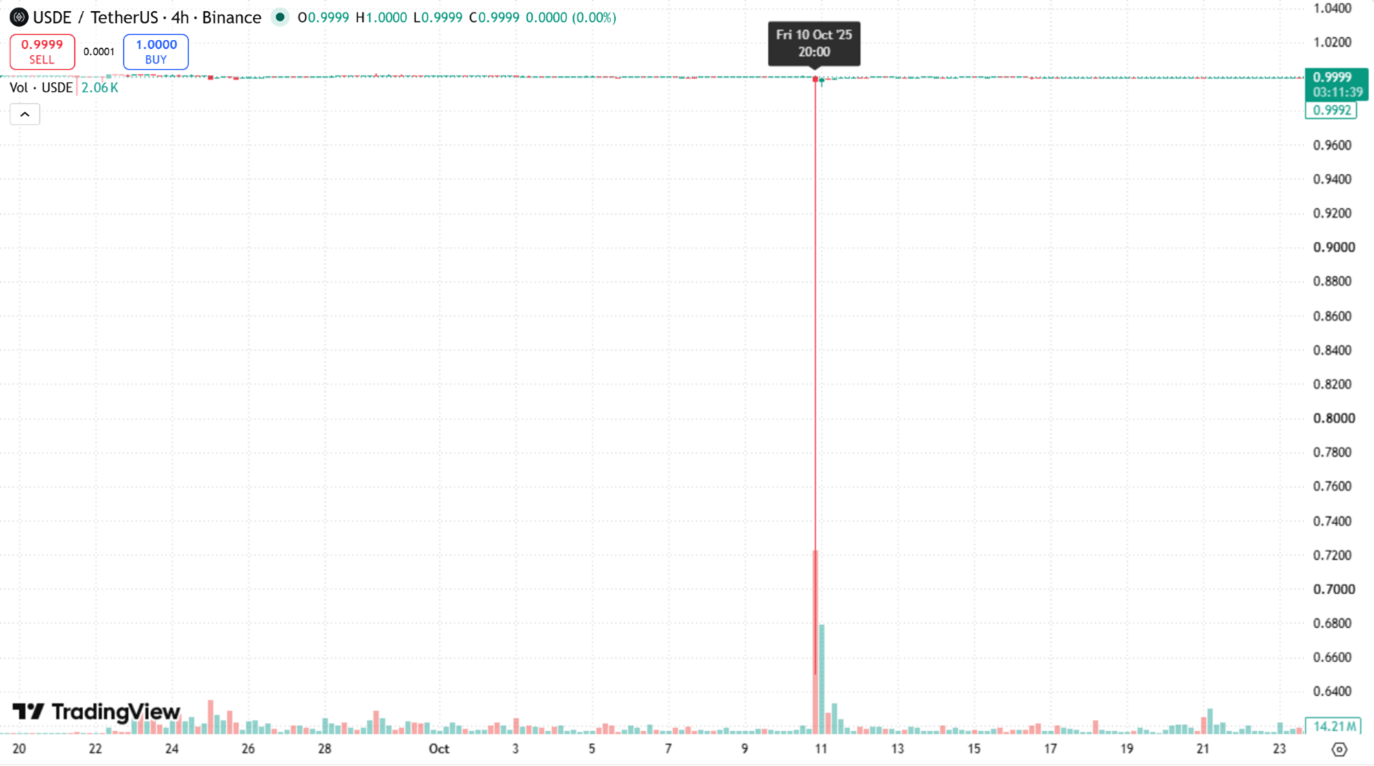
Why does that matter? Binance let traders use USDe as security for their loans. And it priced that security off its own thin market.
So traders whose loans were fine everywhere else … got sold out on Binance. Two days later, Binance said it had paid back about $283 million to users hit by those prices.
To be clear, the bad pricing did not cause the crash. But it added fuel to the fire and made things worse for people on that one exchange.
3. Even bitcoin had no single price. Two big exchanges, the same hour, had a $5,000 gap between their BTC prices.
This is the other edge of a decentralized marketplace. True, there’s more flexibility and access for users. But one exchange is not the market. And discrepancies can have severe ripple effects.
Where the ETFs Fit In
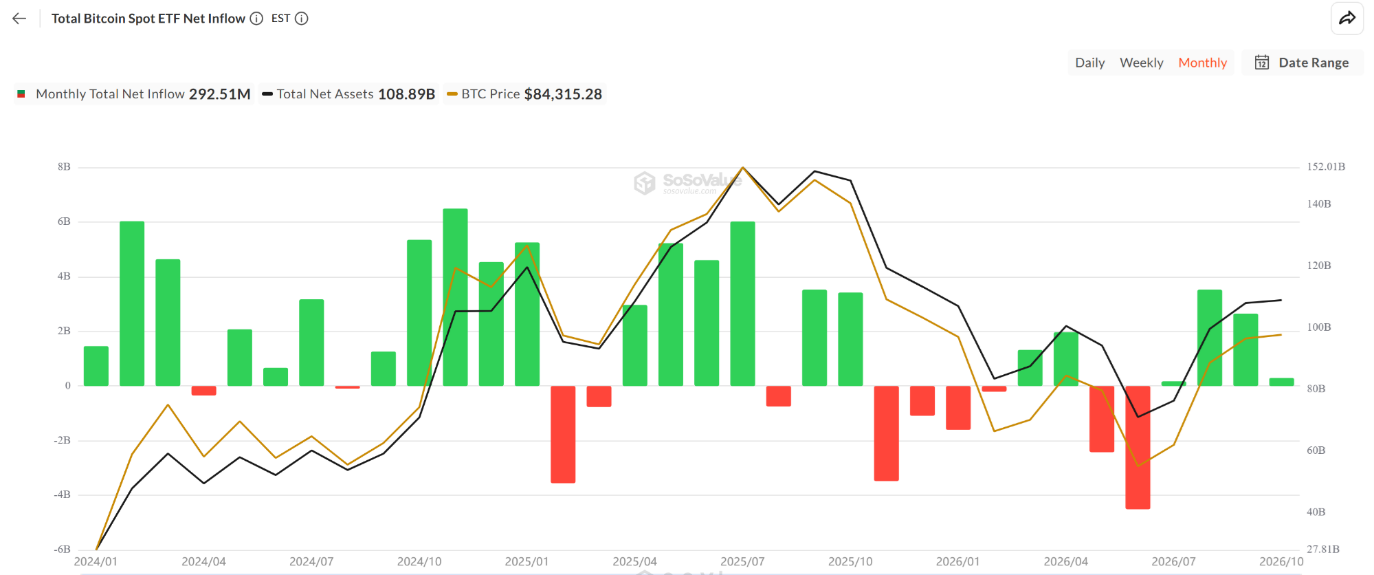
Spot Bitcoin ETFs — like the iShares Bitcoin Trust (IBIT) from BlackRock (BLK) — opened in January 2024. They let you own BTC through a brokerage account or an IRA, like any stock fund.
In the seven trading days before the crash, money poured into these funds: about $5 billion, according to Farside Investors.
Counted from their launch, total net inflows hit a record of about $62.7 billion by Oct. 9.
The day of the crash, the funds saw almost no net selling. Because ETF owners had no loans to call.
Nobody could force them out.
But they didn't stay put for long. Waves of selling followed. Total net inflows since launch bottomed near $50.9 billion in mid-July 2026. Bitcoin hit its low in the same stretch, in late June and early July.
That raised a big question. For years, BTC has moved in a rough four-year cycle, tied to the "halving," a scheduled cut in new supply.
So, did the ETFs break that rhythm?
Many investors thought so. In December 2025, Bitwise's chief investment officer, Matt Hougan, said BTC would likely break the cycle and set new highs in 2026.
But your cycles expert Juan Villaverde dismissed the idea. Yes, ETFs had definitely had an impact on how high BTC rallied and how far corrected. But he saw no reason for them to disrupt the cycles themselves.
And BTC’s price over the past 12 months validated Juan’s outlook.
Bitcoin's past 4-year-cycle peaks came in December 2017 and November 2021. This one came in October 2025, on schedule.
Then, 2026 brought us the next multi-year low near $57,700 over the summer.
Here’s our takeaway on how the ETFs fit into the picture: They change who owns BTC. And added a new crowd that will buy fast and leave fast.
The cycles are still in play. But we’ll likely shift in and out of them faster than before.
What Oct. 10 Taught Us
There are two numbers almost no one outside crypto watches. Oct. 10 showed why we should …
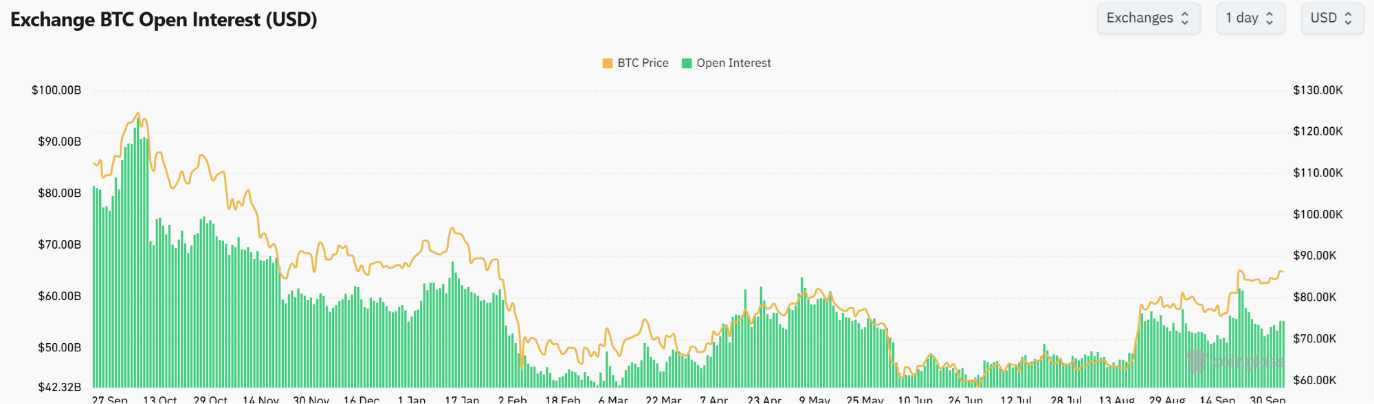
The first is open interest, the total value of open futures bets. Days before the crash, it hit a record of about $236 billion.
In one day, more than $70 billion of it was gone.
The second is the funding rate. It's the fee one side of those bets pays the other every few hours. When it runs high, the crowd is leaning hard on higher prices, with borrowed money.
Neither number tells you which way prices will go. But together they tell you how much fuel is in the room.
And how little a spark is needed to cause an outsized explosion. When the market is overleveraged, it’s not unreasonable to expect a wave of selling, no matter if it’s a headline or a bot that causes it.
CoinGlass publishes both data points for free.
How to Be Ready for the Crash
With the bull market confirmed and new highs ahead, no one is thinking about a crypto crash right now.
But as we approach the anniversary of the worst liquidation event in blockchain history, it’s important to keep the lessons we learned in mind. Especially as hype begins to build.
So, here are three ways to keep yourself safe while going for crypto gains in the coming bull run …
- Skip the leverage. Every one of those 1.6 million traders was using borrowed money. Without it, a bad night is a loss on paper, not a forced sale.
-
Use a stop-limit, not a plain stop. A stop-limit names the lowest price you'll take. That means if prices go lower, you’re not in a race to the bottom.
There is a catch, however: In a fast drop, it may not fill at all.
- Act on confirmation, not speculation. On Coinbase, Bitcoin bounced from $107,000 to about $115,000 within two days of the Oct. 10 crash. But a bounce is not a bottom. That rebound faded within weeks. And anyone who bought out of hope … ended up falling further.
And here’s a bonus step: Use Juan’s Crypto Timing Model to help you target the best opportunities to buy and sell your long-term crypto investments.
His model already analyzes the market for you. The moment a trend is confirmed, it sends an automatic alert so you can act right away.
To learn how it works, I suggest you check out this video.
Best,
Beth Canova