AI Assistants Are Spending Your Money — These Companies Profit From Making It Safe

 |
| By Jurica Dujmovic |
Agentic AI is coming whether we're ready or not. The time for consumers and investors to get ready for it is now.
A recent Gartner survey found just 11% of consumers are comfortable letting AI complete a purchase. Another survey found over a third want a human reviewing the transaction before it goes through.
That hesitation is exactly what banks, card networks and payment processors are racing to solve.
Imagine you ask your AI assistant to find running shoes in your size for less than $150.
It picks a pair priced at $120 and completes the purchase.
The shoes arrive … in the wrong size after the AI agent confused British and American sizing.
The order was fulfilled correctly. The payment went through correctly. You're just stuck with shoes you can't wear — and a charge you can't dispute.
That's agentic AI: artificial intelligence that doesn't just answer questions, it takes action — browsing, comparing and buying on your behalf.
For investors, that shift creates an opportunity: find the companies making those purchases safe enough to trust.
Cornerstones of Trusted AI Commerce
On Sept. 22, six banks — including Bank of America (BAC), Capital One (COF) and NatWest (NWG) — published principles for trusted AI commerce.1 Their concerns included …
- Fraud prevention,
- Payment authorization, and
- A clear responsibility trail for when something goes wrong.
The accompanying paper describes uncertainty over liability and gaps in dispute resolution.2 It calls for outcomes that reflect where errors entered the transaction.
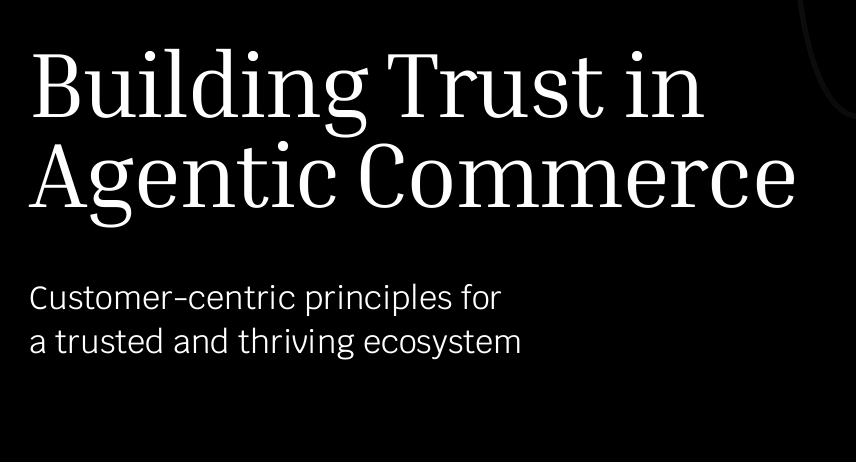
It’s important to note that these are voluntary proposals. Banks say actual implementation details are still to come.
Which means the rules are still catching up with the products.
With so much still up in the air, investors need to be extra careful when it comes to their exposure to agentic AI … and the companies that make it possible.
Consumer Protections vs. Responsibility
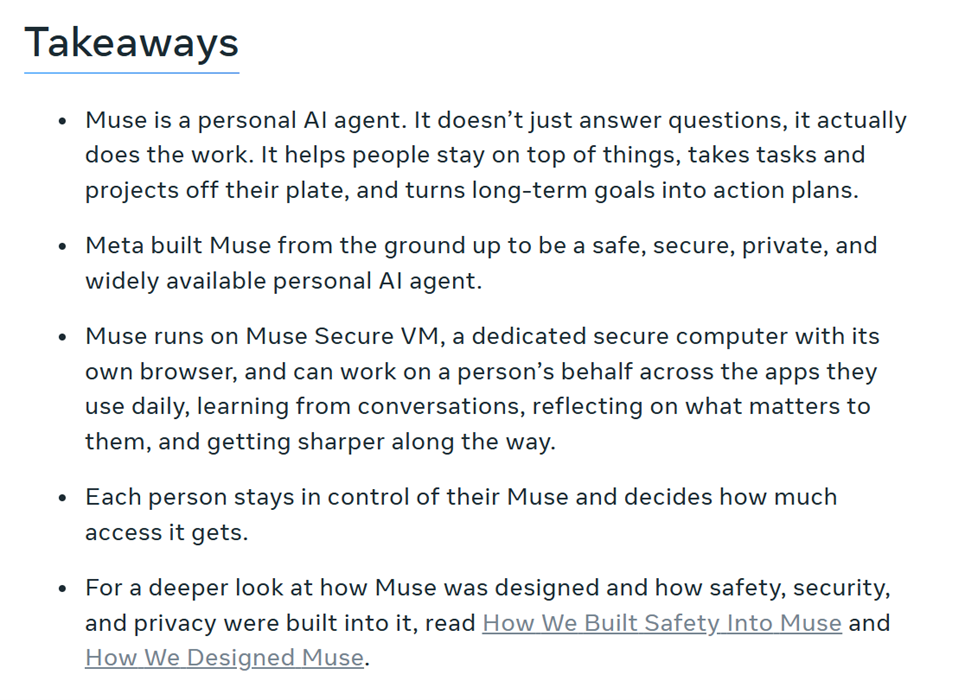
Meta (META) introduced its Muse assistant to the U.S. on Sept. 8.4
According to the company, Muse is meant to ask for permission before purchases and can pay using Link — the wallet built by Stripe.
Its launch announcement also said Shop Pay support was coming.
That approval step matters.
There will come a time when AI assistants can order eggs and cereal for you when you’re about to run out.
For busy people who don’t want to run out of those staples, agentic AI can be a helpful household tool. That is, assuming you still want the same quantity and brands.
So, having the option to approve that purchase is a golden opportunity to catch potential mistakes and make changes before your credit card gets hit.
Under Link's agent terms,5 customers are responsible — between themselves and Stripe — for purchases made by any agents they authorize to connect to their accounts.
The language expressly covers any unintended transactions caused by bugs or misinterpretations.
In other words, errors are excluded from the agreement's category of unauthorized transactions for U.S. consumers.
Even if the error originates from your AI agent, not you.
Put simply, authorizing an agent does not come with an unlimited promise to reimburse its mistakes.
The Customer Is Always Right, Some of the Time
There are, of course, some caveats that can soften the blow when things go wrong.
Link’s purchase protections apply to eligible purchases by U.S. residents.6
And the guide specifically linked for Muse purchases7 includes a refund guarantee when a customer is dissatisfied and a merchant refuses a return within the specified 60-day window.
However …
- Coverage is capped at $1,000 per item.
- You’re only covered for four items per account each year.
- And there are other notable exclusions that include tickets, professional services and used goods.
So yes, there’s an effort to make agentic AI purchases less disappointing or costly.
But the conditions also show why a reassuring protection label isn’t a magical solution.
Seeing one is a step in the right direction. But it still deserves a closer look before you decide to let a robot take control of your online spending.
Or if that processor is worth your investment dollars.
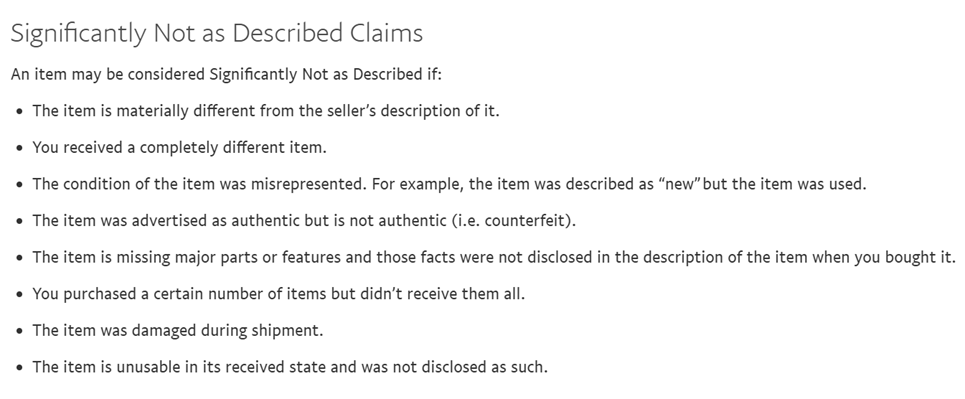
Take PayPal (PYPL)’s U.S. purchase-protection terms,8 for example. It makes another useful distinction …
Its AI protections address eligible purchases that fail to arrive or differ significantly from the seller's description.
For a payment company, this creates work it can potentially charge for before a transaction becomes a dispute.
It can verify the assistant's identity, check spending restrictions, and preserve evidence of the customer's instructions.
Basically, this step seeks to determine whether an AI chose the wrong product … or whether the merchant misrepresented it.
After all, avoiding the wrong purchase is generally a better outcome for everyone involved than arguing about its refund.
That said, a correctly described item that doesn’t meet the buyer's expectations may still fall outside of that protection.
Do the Numbers Actually Add Up?
There’s a chink in the AI chain that no one has addressed yet: cost.
The same day Meta announced Muse, PayPal announced its own partnership with Meta.9
The goal is to let customers shop and pay through Muse across PayPal merchants.
But critically, the announcement doesn’t tell investors how much business the integration will generate.
And the numbers we have already prove that more spending does not automatically mean higher profits.
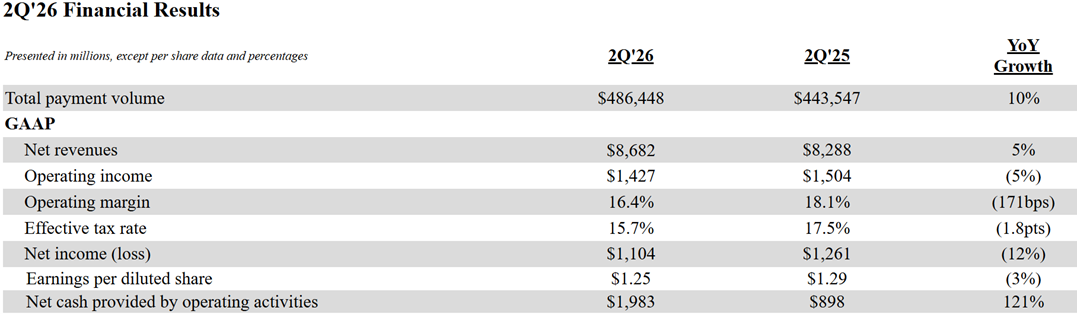
In the second quarter of 2026,10 the value of payments it processed rose 10% to $486.4 billion …
While operating profit fell 5% to $1.4 billion.
Yes, AI agents are expected to contribute to more dollars spent online.
But that comes with a higher cost of operation for payment processors.
New revenue from AI must be greater than the costs of …
- Payment processing,
- Fraud losses,
- Customer support, and
- Other incidentals …
For this endeavor to be profitable.
If AI makes buying easier … but mistakes and disputes more expensive to resolve,
The extra activity could deliver little benefit to shareholders.
Who Decides AI’s Cut?
There is also a negotiation ahead over who receives the fees.
An AI platform that directs substantial shopping traffic could demand a share of the economics.
But who ends up footing that bill gets murky.
Merchants may resist extra charges. And competing payment methods could put pressure on pricing.
The established providers have valuable capabilities. But their role and compensation still have to be earned.
Which leaves room for new competitors.
Potentially even decentralized ones that originate on the blockchain.
What to Watch
So, how do you find the companies likely to be at the forefront of AI agentic payment processing?
For starters, don’t just stop at the headlines.
Remember, a partnership announcement like Meta’s Muse and Stripe’s Link is the beginning of that evidence …
Not proof of eventual earnings.
The same goes for two similar deals that launched earlier in 2026.
Visa (V) is building agentic AI capabilities into its Intelligent Commerce initiative.
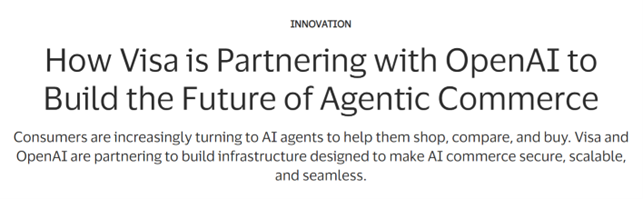
Its June announcement of a collaboration with OpenAI addresses things like:
- Payment credentials tied to agents and uses.
- Fraud monitoring.
- Customer controls like spending limits and approval requirements.
Visa cautions that the broader product is still being deployed. So, the advertised capabilities should not be mistaken for universal availability.
Mastercard (MA) has its Agent Pay program, which includes registering and verifying participating agents.
A related effort developed between Alphabet (GOOGL) and Mastercard is called Verifiable Intent.
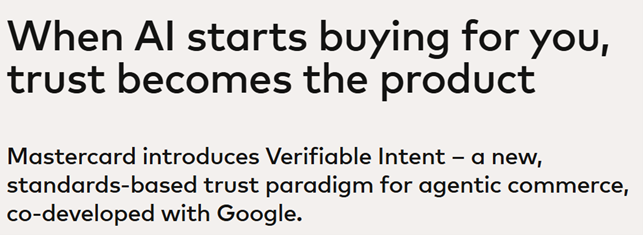
Verifiable Intent is designed to preserve a record of who gave permission, what they authorized and what the agent ultimately purchased.
For Visa and Mastercard shareholders, the opportunity starts with keeping their networks involved as shopping habits change.
Additional security services could give merchants and banks more reasons to use them.
Their prospects depend on whether those services attract paying customers and preserve profitable payment volume.
The Visa-OpenAI and Mastercard-Alphabet partnerships haven’t released any data due to their newness.
Once you see some data, you can make a more informed judgment about the future of agentic AI … and about these companies as potential stewards of it.
That’s why your first step should be to follow the trail of successful completed purchases.
Second, look for the companies that gather repeat customers.
Third, count the money. Success looks like profits that can offset and exceed the additional processing and support costs.
Finally, I would also watch whether providers can document fewer disputed transactions as their controls improve.
The next stage of adoption will likely depend on what happens after an assistant gets an order wrong.
- A customer who receives a fair, prompt resolution has a reason to use it again.
- A merchant who can distinguish an agent's mistake from its own has a reason to keep accepting those purchases.
Payment companies that make both experiences work could earn a lasting place in AI shopping.
One repeat transaction at a time.
Best,
Jurica Dujmovic
2https://newsroom.bankofamerica.com/content/dam/newsroom/docs/2026/Principles Paper - Final.pdf
3https://newsroom.bankofamerica.com/content/dam/newsroom/docs/2026/Principles Paper - Final.pdf
4https://about.fb.com/news/2026/09/introducing-muse-personal-ai-agent/
6https://link.com/terms/purchase-protections
8https://www.paypal.com/us/legalhub/paypal/buyer-protection?locale.x=en
10https://www.sec.gov/Archives/edgar/data/1633917/000163391726000080/pypl2q-26earningsrelease.htm