AI Meets Predictive Markets in Meta’s Futuristic New Tech

 |
| By Mark Gough |
There’s an old saying: “In the land of the blind, the one-eyed man is king.”
Some of you may know the reference from the movie Minority Report. If you haven’t seen it, it’s about a world where a tiny group can see what everyone else cannot.
A world where prediction becomes power.
That might sound like science fiction.
But then again, so did smartphones, facial recognition, algorithmic feeds, AI assistants and cars that drive themselves. All of them showed up in our summer blockbusters long before the real tech filtered into daily life.
Predictive markets are just the latest in this trend.
That’s got me thinking: Once prediction becomes power, who controls the prediction machine?
Because in true tech giant fashion, Meta (META) has made its boldest move to position itself at the center of this emerging market. It recently announced its latest breakthrough, the Brain2Qwerty v2.
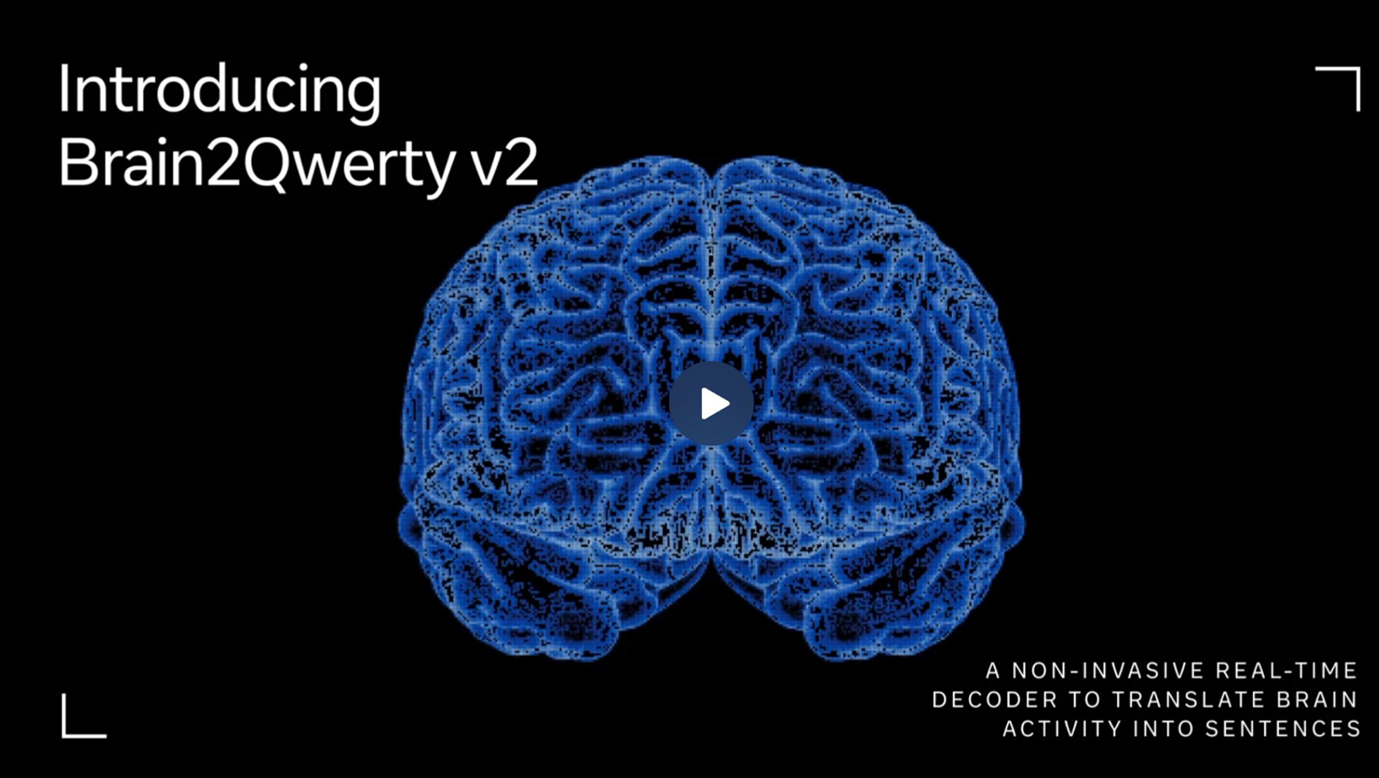
It’s an AI model designed to turn brain activity into text using non-invasive brain recordings. Meta says the system uses magnetoencephalography, or MEG, to decode the production of natural sentences from brain activity.
In plain English, it is trying to translate brain signals into words without requiring surgery or implanted devices.
Meta frames this research around helping people who have lost the ability to communicate due to brain injury or other conditions.
That is a genuinely powerful use case.
If this technology can help people speak again, type again or communicate with loved ones again, then it has enormous human value.
But technology rarely stays inside its original box …
The same camera that lets you take family photos can also power facial recognition. The same phone that helps you navigate a city can also track your location history. The same AI that helps doctors can also be used to target ads, shape opinion, or manipulate behavior.
That is the uncomfortable trade-off with every powerful technology.
There is the good use case. Then, there’s the commercial use case.
And, going back to my original question, do you trust Meta to use it responsibly?
The Cognitive Economy
Now, let’s be very clear before everyone throws the laptop out the window: the Brain2Qwerty v2 is not some magic headset.
It is still lab-based. It uses large brain-scanning equipment. It requires controlled conditions. And the accuracy is not perfect. Average word accuracy sits near 61%, with the best participant reaching 78%.
That is impressive. But it can’t read your mind while you sit on the couch.
That said, the direction this research is going is fascinating. And, if I’m being honest, slightly terrifying.
I’m far from a luddite. As an early crypto adopter, I understand how new technology can revolutionize our lives and societies for the better.
But that doesn’t mean I have to be blind to the negative side effects, either.
Just look at the data economy. The rise of the internet ads meant your data, even the most minute actions, became valuable information.
So, tech tracked what websites we visited, what we searched, what we bought and where we went.
And so it continued until today’s attention economy. Where, thanks to the power of social media, every device we have tracks what we pause on, what we like, what we share, what we watch, what we ignore and how long we hover before we make a decision online.
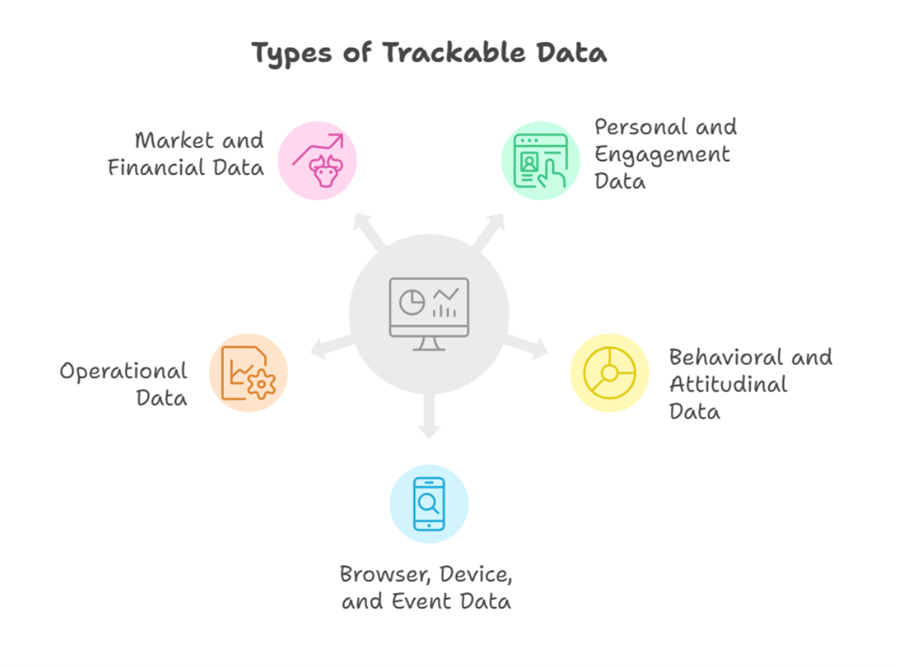
Now, we may be heading toward something far more personal: the cognitive economy.
That means brain data. Intent data. Emotional data. Not just following your behavior after the fact. But the ability to understand what you’re likely to do next.
Put simply, that’s organic predictive data.
And in context, it’s easy to see the concern.
People already worry their digital lives are being tracked, analyzed and monetized. So what happens if the next layer of technology moves from tracking behavior to interpreting thought patterns … to predict behavior?
That is not a small leap if you consider what data is currently being harvested and sold for top dollar.
And I’ll say this clearly: I, for one, will not be signing up for that.
But from an investment perspective, this matters. Because every major technology cycle creates a new battlefield …
- The internet created the battle for information.
- Social media created the battle for attention.
- AI is creating the battle for intelligence.
The next frontier may be the battle for cognitive privacy. And that has big implications for AI, regulation, digital identity and, yes, crypto.
How the Rebel Financial System Fits This Equation
Built into the very foundations of the crypto ecosystem is personal ownership.
You, and you alone, are meant to keep actual custody of your assets, in a wallet only you can access which keeps your personal, private keys secured.
That’s because the entire system was built on the belief that individual investors cannot trust the TradFi system or anyone else, for that matter, with their wealth.
That message still matters.
Especially as the age of AI questions ownership entirely. Not just in regards to money or data. With deepfake videos growing more convincing, ownership of your very identity is in question.
That is why privacy technology may become one of the most important investment themes of the next decade.
Not because everyone suddenly becomes a privacy activist overnight. But because privacy could become an investable real-world problem too big to ignore.
And that’s where crypto can shine. Already, the privacy push in the market is in full swing …
- Zero-knowledge technology allows information to be verified on the blockchain without revealing the underlying data.
- Decentralized identity aims to give users more control over how their identity is used online.
- Privacy-preserving networks aim to create systems where people can interact, transact, and prove things without handing over their entire digital lives to a centralized platform.
For years, these ideas sounded niche. Interesting, yes. Important, maybe. But not urgent.
The rise of AI this year changed that.
AI feeds on data. The better the data, the better the AI models. Which creates more prediction power and more user dependence. And then, inevitably, more data.
Once brain data enters the picture, even at the research stage, the stakes move higher.
Which is why leading privacy-first crypto projects, like ZCash (ZEC, “B-”) have seen such impressive growth over the past year. And why experts expect more ahead for this sector.
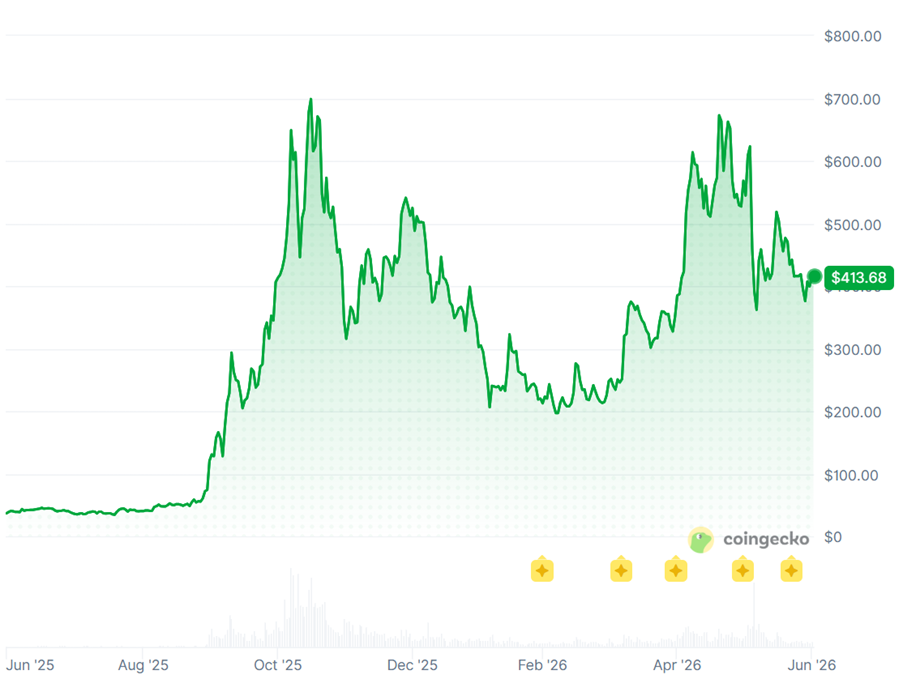
The smart money has already made its move. Now, it’s our turn. That is why investors should pay attention now.
Look Beyond Privacy to Find Ownership
Big Tech is moving beyond screens.
The next interface may be glasses, wearables, voice, gestures, neural signals and eventually direct brain-computer interaction.
And if that is where the world is going, then the investment question becomes very simple: Who owns the infrastructure? The data? The identity layer?
That is where I believe crypto may have a real role to play.
Not the meme version of crypto. Not the casino version.
The infrastructure version.
The version that gives people ownership, verification, privacy and control in a world where AI systems are becoming more powerful by the month.
Because in a world where Big Tech can see more and more, privacy stops being a luxury.
It becomes protection.
And maybe the real question for investors is this: In the land of the blind, who becomes the one-eyed man? Do we trust him to be king?
Or is this a problem that a trustless system without a single king is better suited to fix?
We’ll have to wait to see what solution the market bears out. But savvy investors are already watching the space for clues.
Best,
Mark Gough