Deloitte Got Fooled by a $290,000 AI Fake. You Could Be Next.

 |
| By Juan Villaverde |
For decades, financial trust ran on scarcity.
You paid a premium for a consultant, an analyst or an auditor because they had access to data, research and expertise you didn't.
Artificial intelligence flipped that model overnight.
The bottleneck is no longer access to information. It is the ability to prove that information is real.
Today, you can no longer easily tell a real financial analyst from an AI-generated one. The volume of financial "intelligence" has exploded, but the trustworthiness has not.
This vulnerability exists across the entire spectrum, from the highest end of institutional finance to the everyday retail investor.
The Institutional Failure
At the highest echelon, prestige is no longer a shield.
In late 2025, Deloitte, a Big Four consulting firm, charged the Australian government $290,000 for a 237-page compliance report.1
At first glance, Deloitte’s report looked legitimate.
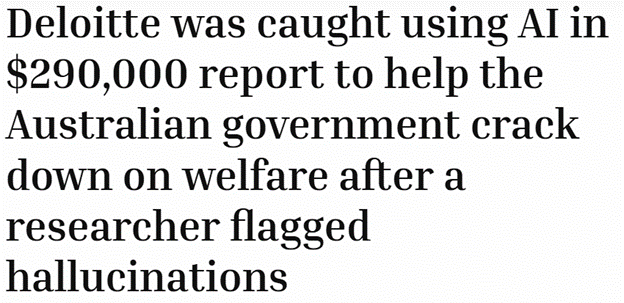
Upon further investigation, it was riddled with Azure OpenAI hallucinations. It included fabricated academic citations and a completely made-up quote from a federal judge.
Deloitte had to refund Australia’s Department of Employment and Workplace Relations, which had commissioned the report.
In other words, Deloitte — a name that’s been around since 1845 — completely failed.
But Deloitte wasn’t the only Big Four member to discover that centuries of trust can get eroded in a split second.

Deloitte, Ernst & Young, KPMG and PricewaterhouseCoopers — the globe’s biggest accounting and auditing firms, which collectively audit most of the rest of world’s biggest companies — have all run into AI-generated problems.
Traditional finance relies on expensive human auditors to catch these lies.
If a government department paying a premium couldn't spot the synthetic fake, the average investor doesn't stand a chance.
Especially since it was a research firm, GPTZero, that discovered the other Big Four members’ AI-generated errors.
What About Companies Whose Intel Isn’t Subject to Such Scrutiny?
It is not just $290,000 government reports getting spoofed.
The cost of fabricating financial intelligence has dropped to zero, and the retail market is drowning in it.
In June 2026, the SEC charged a Texas man with a $12.3 million fraud for pitching non-existent AI trading bots that promised 100% returns.2
Months earlier, they took down a massive $14 million crypto scam where "investment clubs" used synthetic, AI-generated trading tips to lure investors into fake tokens.
When you mix AI's ability to perfectly mimic an expert with the retail hype around crypto, you get an unmanageable flood of synthetic fraud.
Related story: Go Phish: How the ATF and CISA Got Hooked, and How Mark Gough Spotted the Bait
The Takeaway
What do the Deloitte government report and the AI-trading scams have in common?
They both require you to trust the person (or the avatar) making the claim.
The Australian government trusted the Deloitte logo. The retail investors trusted the WhatsApp "experts."
In a post-AI world, trusting the author of the information is a structural vulnerability.
Related story: Trezor Data Breach Raises Serious Security Concerns
The Opportunity
The only defense against zero-cost forgery is a system where the data cannot be faked.
This is the structural advantage of blockchain. It offers something traditional finance simply cannot replicate: public verification.
When a synthetic analyst hallucinates a traditional compliance report, it takes human auditors days to uncover the lie.
But if a fake expert claims a crypto protocol has $500 million in locked funds, you don't need a Big Four firm to verify it.
You don't need to trust the author at all.
You just check the chain.
The Solution
Instead of trusting the person making the claim, we now have the infrastructure to check the network directly.
Remove the avatar from the equation, and you eliminate the fraud.
Related story: AI Assistants Are Spending Your Money — These Companies Profit From Making It Safe
You don't need technical knowledge to parse the blockchain. You just need the right open-source tools:
Token Terminal: Think of this as the Bloomberg Terminal for on-chain reality. It tracks protocol fees, revenue and active users. That way, you can read them like public company financial statements.3 But it doesn't require a corporate accounting department to report them honestly.
DeFiLlama: This is a free, open-source dashboard that tracks the total value locked inside different protocols.4 It aggregates the math, not the marketing.
Block Explorers: These are sites like Etherscan that let you look at the raw ledger itself. This is where you find the mathematical truth that no language model can spoof.
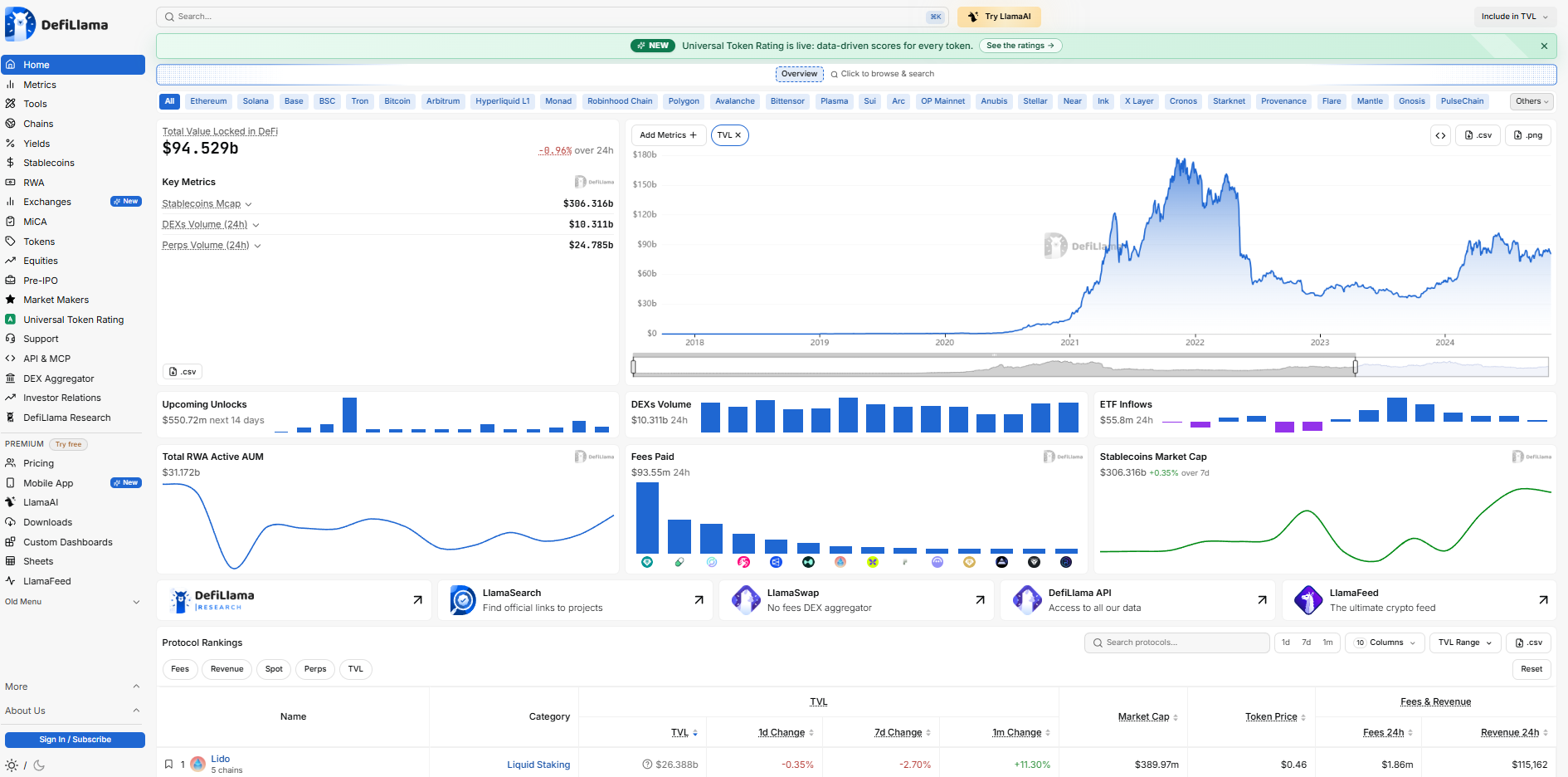
When you invest based on a compelling narrative or a slick growth chart, you are trusting the avatar.
In a market flooded with synthetic expertise, it no longer matters who wrote the report.
It only matters if you can verify it.
Best,
Juan
P.S. If you plan on investing in Anthropic or any of the other big tech IPOs set to hit the market in the coming weeks and months, click here. My colleague Chris Graebe has an urgent message … and unique opportunity … you won’t want to miss this.
1Associated Press. “Deloitte Australia to partially refund $290,000 report filled with suspected AI-generated errors” (Oct 7, 2025).
2SEC Litigation Release No. 26558. SEC v. Nathan Fuller (May 28, 2026).
3Token Terminal standardizes blockchain financial data into metrics comparable to traditional financial reporting.
4DeFiLlama is an open-source TVL and volume tracker across 300+ chains.