Gain Exposure to Tokenization Without Undue Speculation

 |
| By Beth Canova |
Yesterday, I walked you through the new world of tokenized assets — real world assets that trade like cryptos on the blockchain.
And I showed you two “picks-and-shovels” plays you could use to add to your portfolio to ride the trend as a whole.
I also cautioned that both platforms — Ondo and Plume — are still quite new. Which means you can expect a certain volatility in their price action.
And both coins need to prove they directly benefit from their platforms’ revenue.
So, what if you want exposure the tokenization trend without the same speculation? Does that mean you have to give up your chance to get in early?
Not at all.
Because there’s another infrastructure play at work: The Layer-1 networks those tokenization platforms are built on.
The ones that’ll benefit from the increased trading volume and fees when Wall Street begins transacting on the blockchain.
It isn’t as direct, which means it’s unlikely to bring the big wins right off the bat. But that also means corrections are more manageable, as well.
Ethereum: Wall Street's Trusted Choice
Ethereum (ETH) has a big head start.
It's one of the oldest and most widely used networks for building blockchain apps. Which means it has spent years earning the trust of firms that want to put real assets on-chain.
That matters to big banks.
When a firm moves millions of dollars, it needs a network with a strong track record.
That’s where Ethereum stands out from the crowd.
It also has the largest base of developers, tools and financial apps. Which makes it easier for firms to build new products.
And we're already seeing the results.
BlackRock's BUIDL fund is one of the best-known examples of a tokenized money market fund. It launched on Ethereum and has since expanded to other networks.
That shows how major firms are putting blockchain to work.
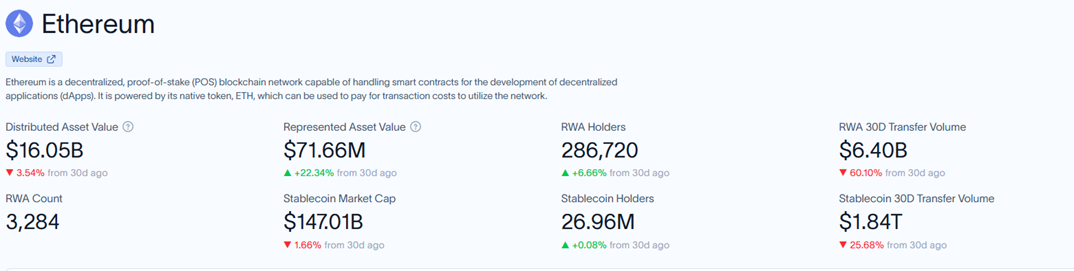
Ethereum also leads when it comes to the value of real-world assets already held on its network. On-chain data from RWA.xyz puts that at about $16 billion.
For investors, that's a strong sign.
More firms using Ethereum could mean more demand for its network.
And ETH plays a key role in that system. It's used to pay fees and help secure the network, driving demand for the token.
But there's a catch …
Ethereum can be costly and slow to use when demand is high. And many firms now use linked networks that help cut those costs.
Still, Ethereum's long lead makes it a strong choice as Wall Street moves on-chain.
Solana: The Fast-Growing Rival
If Ethereum is the trusted leader, Solana (SOL) is the fast-moving challenger.
Its main edge is speed. Solana can handle a large number of trades at low cost. As of writing, the network has handled an output of 1,663 transactions per second.
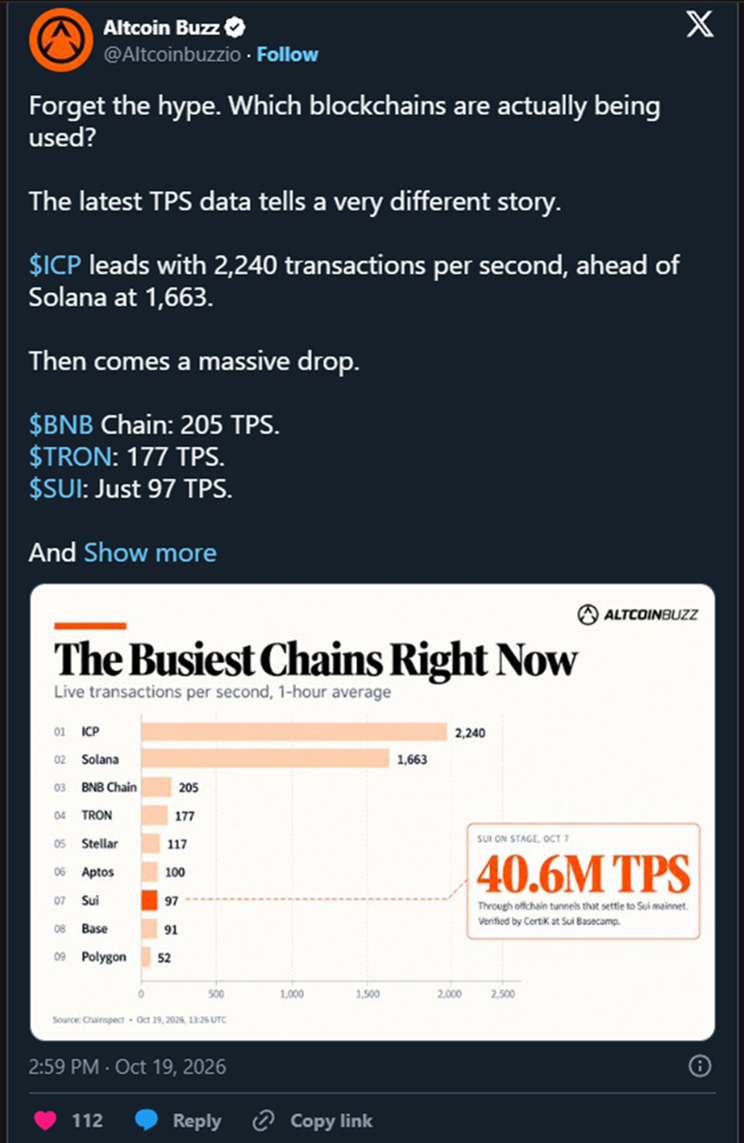
That makes it a good fit for those who want or need to trade all day, every day. Think brokers and asset managers who are constantly making moves for clients.
And the network’s growth has been hard to miss.
According to RWA.xyz, the value of real-world assets on Solana rose from about $700 million to $4.8 billion in just one year.
That's more than six times its old size!
Ethereum still leads by a wide margin. But Solana is gaining ground.
It now hosts tokenized stocks, Treasury products and other real-world assets. That gives it a path to a much larger role in finance.
The appeal is clear …
If banks and brokers want to offer low-cost trades at high speed, Solana has a strong case.
And, like ETH, SOL is used to pay fees and help secure the network. So, as more people use Solana, demand for its services could grow.
But Solana has its own risks. Namely its past network outages, which have raised concerns about how well it can handle heavy use.
Even so, its rapid growth makes it hard to ignore.
How to Invest in Ethereum and Solana
You don't need to be a bank or a tech expert to gain exposure to these two networks.
There are a few ways to do it.
1. Buy ETH and SOL directly.
You can buy either coin through a crypto exchange that serves your area.
In the U.S., that means Coinbase (COIN) or Kraken. If you live outside the States, Binance is also an option.
This approach gives you direct exposure to the price of each asset. And the most control over its storage.
You can hold your coins on the exchange or move them to a private crypto wallet.
In your own wallet, you can even put your coins to use in DeFi. That’s where you can lend or deposit your ETH or SOL to earn yield while still holding the underlying asset.
Talk about compounding your returns!
That said, staking does come with additional risk exposure. Not to mention the responsibility of managing your own positions and holding your own crypto.
2. Buy crypto ETFs or exchange-traded products.
These funds let you invest through a regular brokerage account. That means there’s no need to set up a crypto wallet or manage private keys.
Spot products aim to track the price of the coin they hold, less fees and other costs.
So if you’re looking for a more hands-off approach, this could be an option for you.
There are spot ETFs that track ETH and SOL individually, like the iShares Ethereum Trust (ETHA) and the VanEck Solana ETF (VSOL).
And there are also funds that own a basket of crypto’s top blue-chip assets, including these two.
Some even include staking. Meaning you get access to the benefits of DeFi … without needing to navigate the blockchain for yourself.
Do your own research to find the right vehicle for your goals.
The Risks You Should Know
Tokenization may be a huge trend.
But that doesn't mean ETH and SOL will rise in a straight line.
Crypto prices can fall fast. Even in a bull market, like the one taking shape right now.
And this is a sector all eyes will be on. That includes regulation hawks. Remember, new rules could slow the growth of tokenized assets.
Third, there is the chance for more competition. Other networks — including private chains built for banks, like JPMorgan’s (JPM) Kinexys — could take a share of the market.
There's one more point to keep in mind …
More assets on a blockchain do not always mean a higher coin price.
Network fees can be low. And much of the value may go to the firms that build apps, not to coin holders.
That's why you should watch real use, not just hype.
Look at how much money is moving on each network. Watch which banks launch new products. And track how much activity those products bring.
Bottom Line
Wall Street's move to the blockchain is still in its early days. And no one knows how large this market will get.
But one thing is clear: The early network winners have begun to move to the head of the pack.
Ethereum has the lead. Solana has the speed and growth.
Together, they offer two ways to gain exposure to one of crypto's most promising trends.
My takeaway: Put ETH and SOL on your watchlist.
Study both. Compare your options. And decide how much risk you can take.
Then, choose how you want to hold, and at what price you should enter.
Because as more Wall Street assets move on-chain, the networks carrying that money could become some of the most important assets in crypto.
Best,
Beth Canova