 |
| By Mark Gough |
Galaxy Digital (GLXY) is a technology-driven financial services company. Specifically, it focuses on bridging traditional finance with the digital asset and blockchain ecosystem.
That alone makes it interesting in this environment.
After all, I’ve been very vocal in calling attention to the players building out the infrastructure to connect these two systems.
But this week brought two big milestones that can’t be ignored.
On their own, each one matters.
Together, they tell a much bigger story.
Milestone 1: Fortune 500
Just a few years ago, this would have been unlikely. But this week, Galaxy Digital has officially joined the Fortune 500.
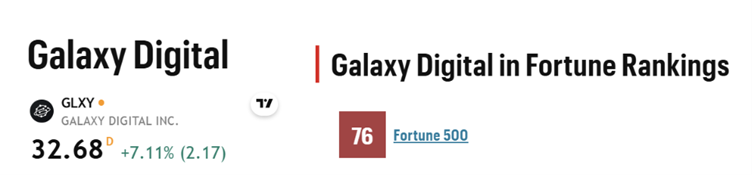
That is, the list of the 500 largest corporations in the United States according to Fortune magazine, based primarily on their total annual revenue.
And Galaxy didn’t just make it by the skin of its teeth: It cracked the top 100 to rank 76.
Previously, most people thought of Galaxy as a crypto trading operation. But anyone operating under that assumption today is missing out on key context.
Since then, it has evolved into a much broader business. Its interests now span …
- Digital assets,
- infrastructure,
- And AI data centers.
That evolution has helped it earn a place alongside some very established companies.
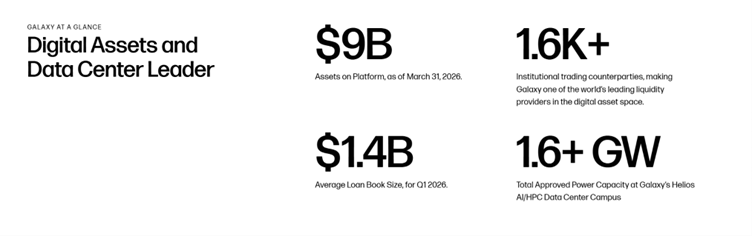
It's another reminder of how much has changed over the past few years. And should serve as a wakeup call to any investor who still believes that crypto is just a passing fad.
But it’s the second milestone that takes things to the next level.
Milestone 2: The Morgan Stanley Deal
On June 5, Morgan Stanley Wealth Management announced a referral arrangement with Galaxy. The setup is aimed at eligible clients who already hold crypto — such as Bitcoin (BTC, “A-”), Ethereum (ETH, “B+”) or Solana (SOL, “B-”) — and want to move that exposure into a more traditional investment structure.
Here's how it’ll work …
A client lends their crypto to Galaxy. Galaxy then works with an authorized participant to create shares of a spot crypto exchange-traded product (ETP). That includes products such as Morgan Stanley's own Bitcoin Trust (MSBT).
Those ETP shares can then be delivered into the client's brokerage account.
That may look like just another financial product. But it’s far more important.
It means clients who already hold crypto don’t need to sell it for cash to shift their exposure onto TradFi rails.
That's more important than it might sound.
Selling can trigger tax consequences, create timing risk and add another layer of friction that many investors would rather avoid. This structure allows investors to move from directly held crypto into regulated investment products without dealing with any of those headaches.
Once those ETP shares are in the account, they look and behave much more like a traditional portfolio holding. They can sit alongside stocks, bonds, funds and other investments.
They can also be used as collateral or folded into a broader wealth management strategy.
Morgan Stanley isn't executing these transactions directly. It's acting as a referral partner, while Galaxy handles onboarding, the lending structure and execution.
That arrangement tells you quite a bit about where the market is today. Large financial institutions increasingly want crypto exposure for clients … but not if they must build the infrastructure to do so themselves.
It’s why many still prefer to work alongside specialists. They are partnering with crypto-native firms that already have the infrastructure in place.
That said, there are some caveats to this tale.
Limits & Risks
Sad to say, these developments don’t mean much for retail investors just yet. A look at two numbers also tell you who this is really built for.
Galaxy lowered its lending minimum for Morgan Stanley referrals from $25 million to $5 million. Onboarding times, which can currently take more than four weeks, may also be reduced by up to 75%.
So no, this is not a mass-market product.
A $5 million minimum still puts it well beyond the reach of most investors. This is built for family offices, high-net-worth clients and institutions that already hold serious crypto positions but want those assets brought into a more familiar framework.
There are risks, too. Namely, …
- The immediate market is still narrow.
- Wealthy crypto holders need to see enough value in moving from direct ownership into ETP exposure.
- Crypto markets remain volatile, and lower friction does not automatically create demand.
But neither the limitations or risk change the big picture story. Because a look at the broader trend shows where things get interesting.
A crypto-native financial company has joined the Fortune 500 and, in the same week, built infrastructure alongside one of the world's largest wealth managers.
That's not something many people would have expected even a few years ago.
For most of the past decade, the focus was on getting traditional investors into crypto.
Increasingly, the conversation is moving in the opposite direction: How do existing crypto holders bring those assets into traditional portfolio structures without unwinding their positions first?
That might sound like a subtle distinction, but it reflects how far the industry has come.
Crypto isn't replacing traditional finance. What we're seeing instead is the gradual integration of the two, one partnership at a time.
Galaxy's latest deal with Morgan Stanley is another example of that trend. It’s still early days, but it’s one that every investor — crypto or otherwise — should watch carefully.
Best,
Mark Gough