Intuitive Surgical: The Real Money Comes After the Sale

 |
| By Jurica Dujmovic |
When a hospital installs a surgical robot, the manufacturer gains something more valuable than a single equipment order.
It creates a machine that can generate business for years as doctors use it.
For investors trying to understand how robotics becomes a durable business, the money that follows installation deserves close attention. That is what interests me about Intuitive Surgical (ISRG).
Intuitive sells the instruments used with its systems and provides ongoing service to create several ways to earn from the same hospital relationship.
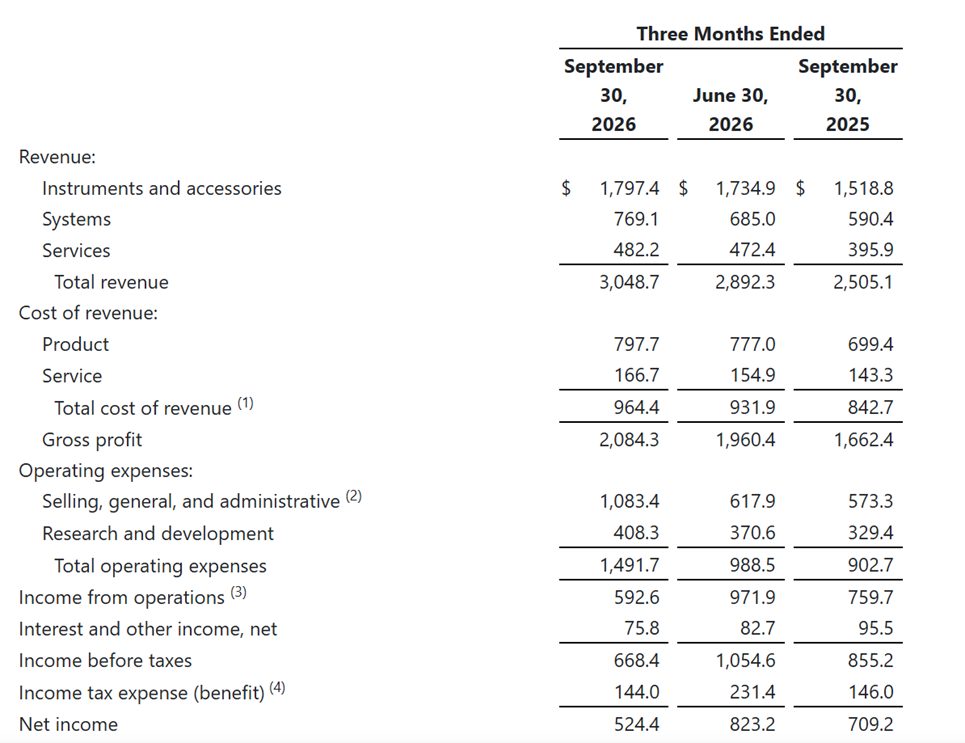
Its third-quarter results, released Oct. 20, show the scale of that follow-on business.
Instruments and accessories produced about $1.80 billion in revenue, compared with $769 million from systems. Service contributed another $482 million.
Together, instruments, accessories and service accounted for roughly three-quarters of the company's $3.05 billion in quarterly revenue, by my calculation.
The financial appeal lies in repeated use.
Investors still need to establish how much of that income the company can retain as hospitals seek lower costs and competitors offer alternatives.
Why More Surgeries Mean More Revenue
Here’s the key argument: The more a hospital uses its surgical robot, the more revenue Intuitive can earn.
That's why the number of surgeries matters as much as the number of robots sold.
The company said it generally earned $900 to $3,700 in instruments and accessories revenue per da Vinci procedure, depending on the operation and equipment used.
Annual service fees typically ranged from $95,000 to $225,000.
Those figures describe company revenue, not the patient's bill or Intuitive's profit. They nevertheless explain why an installed robot matters financially long after delivery.
More procedures can lead to more replacement purchases. Meanwhile, service contracts support another stream of revenue.
Let’s consider the practical implications …
Imagine two hospitals with identical systems. One uses its robot frequently; the other struggles to fill the surgical schedule.
The equipment may look equally impressive on an installation chart. But the busy hospital offers more opportunities for repeat business.
For shareholders, the frequency of use matters alongside the number of machines deployed.
Intuitive's latest quarter offers evidence on both measures.
Its da Vinci installed base reached 12,094 systems, up 12% from a year earlier. And da Vinci procedures grew approximately 14%, while companywide instruments and accessories revenue rose 18%.
That last figure also includes its Ion platform, so it should not be read as a pure measure of da Vinci spending per procedure.
Leasing Creates Another Revenue Stream
Of the 546 da Vinci systems placed during the quarter, 291 were under operating leases. That includes 160 systems that offer payments based on usage.
The systems revenue category therefore includes income earned over time, as well as equipment sales.
For a hospital, leasing can reduce the initial financial hurdle to acquiring equipment.
For Intuitive, it makes an ongoing relationship part of the financing arrangement. Payments tied to usage give the manufacturer a financial reason to keep the equipment working. They also introduce a vulnerability, however. If a hospital performs fewer procedures, Intuitive can feel the impact in both instrument purchases and payments for the system itself.
Hence why this approach reinforces the need to distinguish a placement and an outright sale when the company — or potential investors — analyze potential growth.
Potential Risks to Growth
In May, Intuitive announced that five of its six available Force Feedback instruments — which let surgeons feel how much pressure they apply — could be used 15 times. That’s a big jump from the previous six use max.
It also expects it’ll be able to increase the permitted uses of certain core instruments in 2027 to lower costs per procedure.
Longer instrument life extends the stream of revenue. But it comes with a tradeoff, as it could also mean fewer replacements would be needed. That said, lower hospital costs could help support wider adoption and more procedures.
The test to see which scenario plays out is whether growth in usage and the mix of products sold is enough to outweigh the reduced replacement demand.
Management has now put a number on that test: On the Oct. 20 earnings call, it said it expects instruments and accessories revenue per procedure to fall roughly 3% to 5%, on a constant procedure mix.
Which means usage and products sold needs to compensate for that projected loss.
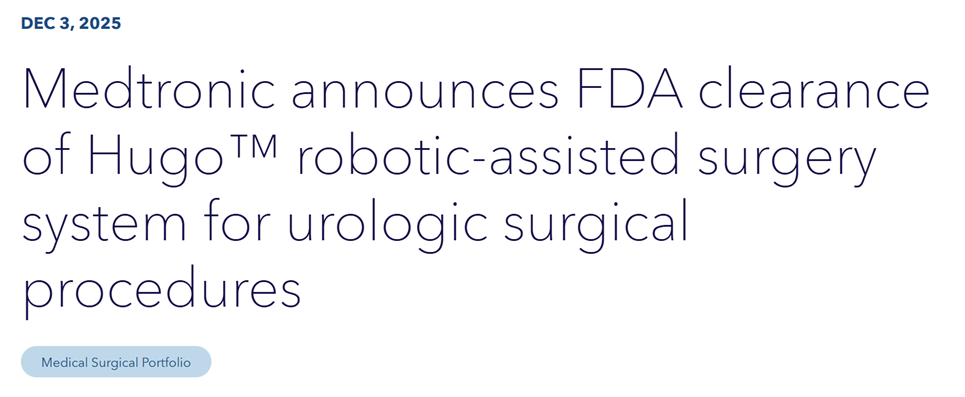
Competition makes that calculation more pressing. Medtronic received FDA clearance in December 2025 for its Hugo system in urologic procedures.
This gives hospitals another supplier to consider within those cleared uses.
Intuitive's installed base provides an advantage.
But investors should expect competitors to challenge both equipment purchases and the recurring business that follows them.
Legal scrutiny reaches directly into that recurring business, too.
Intuitive's latest quarterly filing describes an antitrust class action in which hospitals alleged Intuitive monopolized the servicing and repair of its robots and instruments. In October, the company settled for $450 million, along with injunctive relief, without admitting liability or wrongdoing.
The settlement remained subject to court approval when disclosed.
The company recorded the $450 million charge, about 99 cents a share after tax, in its third-quarter results.
For investors, the financial payment is only part of the issue.
Any required changes to business practices deserve attention because the dispute concerns the activities that help make the installed base valuable.
I would not assume the payment alone removes that uncertainty.
These risks give investors a useful way to assess the stock …
- Procedure growth should support demand for instruments,
- But the revenue earned from that demand must hold up as products last longer and rivals compete for hospital budgets.
I would also examine whether service and leasing income remain profitable after the costs of supporting customers.
Recurring revenue describes how often a company gets paid; it does not guarantee attractive returns.
Bottom Line
Intuitive belongs on a robotics watchlist because its commercial model is already measurable.
Whether its shares deserve a place in your tech portfolio depends two things.
First, on the price paid for future earnings. Second, on the durability of those earnings under competitive pressure.
The strongest investment case will come from keeping hospitals satisfied and systems busy, while earning enough from each relationship to reward shareholders.
That’s what I’ll be watching for next.
Best,
Jurica Dujmovic