Trump’s Call for Hyperliquid May Boost These 2 Crypto Rivals

 |
| By Mark Gough |
Hyperliquid (HYPE, “D+”) may be moving closer to something few decentralized exchanges have managed: a regulated route into the U.S. market.
If you’ve kept up with our Hyperliquid coverage, this is the leading decentralized perpeturals exchange on the blockchain. And perp trading accounted for a majority of on-chain trades in 2025 — over 70%!
That makes Hyperliquid a big deal.
But here’s the catch: Until now, American residents were geo-blocked from accessing the site.
Now, we’re getting our first signs that could be changing. And open Hyperliquid up to an entirely new market.
Hyperliquid’s Hyper-Bullish Tailwind
On Aug. 19, President Donald Trump said CFTC Chair Michael Selig was working to bring Hyperliquid into the U.S. in a “fully compliant and legal fashion.”1
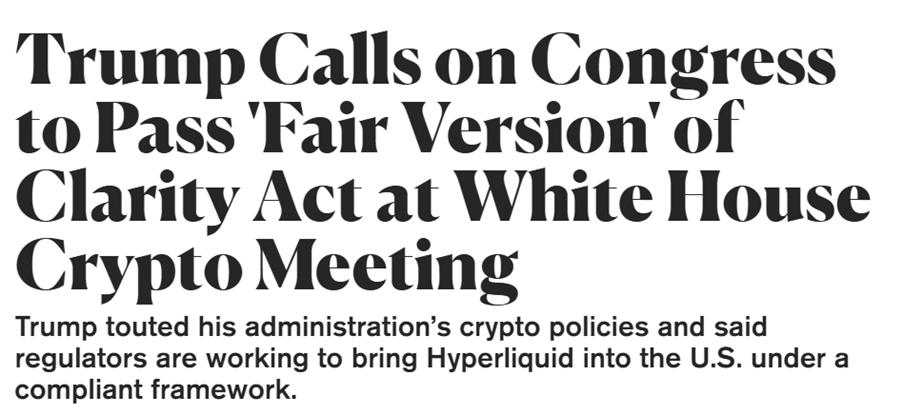
No approval, regulatory structure or launch date has been announced. But it was one of the clearest signals yet that U.S. regulators are looking for a way to bring a major decentralized derivatives platform onshore.
That could be enormous for Hyperliquid.
In fact, a regulated path into the U.S. could become one of its biggest long-term catalysts.
A compliant offering could open the platform to a much larger pool of traders. More importantly, institutional capital that cannot currently use offshore or unregulated perpetual-futures platforms could find its way into the Hyperliquid ecosystem.
That could strengthen Hyperliquid’s already dominant position in decentralized perpetuals.
The market certainly liked Trump’s comments. HYPE surged 20% following the announcement as investors began pricing in the possibility of regulated U.S. access.
But regulation usually comes with trade-offs.
Decentralized exchanges are attractive partly because users don’t need to create a traditional brokerage account. Just connect your wallet, deposit collateral and trade.
That simplicity matters more than it might seem.
To be clear, choosing to use a non-KYC exchange does not automatically mean someone is trying to hide illegal activity.
Crypto grew around self-custody and wallet-based financial markets. Many users don’t want to submit passports, photographs, proof of address and other personal information every time they use another platform.
Some prefer the additional privacy and control offered by decentralized protocols.
And it creates another angle to this story that the market hasn’t fully considered …
Not Every Trader Wants KYC
If Hyperliquid enters the U.S. under a regulated framework, its American product would almost certainly come with additional compliance requirements, like “know-your-customer” (KYC) protocols.
KYC hasn’t been confirmed, so I don’t want to get ahead of myself. But bringing leveraged derivatives trading into the U.S. in a fully compliant way is very different from letting anyone with a wallet connect and start trading.
And that could have consequences for Hyperliquid’s competitors.
Aster (ASTER, “C-”) and Lighter (LIT, “E+”) are not fringe exchanges waiting for traders to arrive. Both already handle billions of dollars in perpetual-futures activity.2
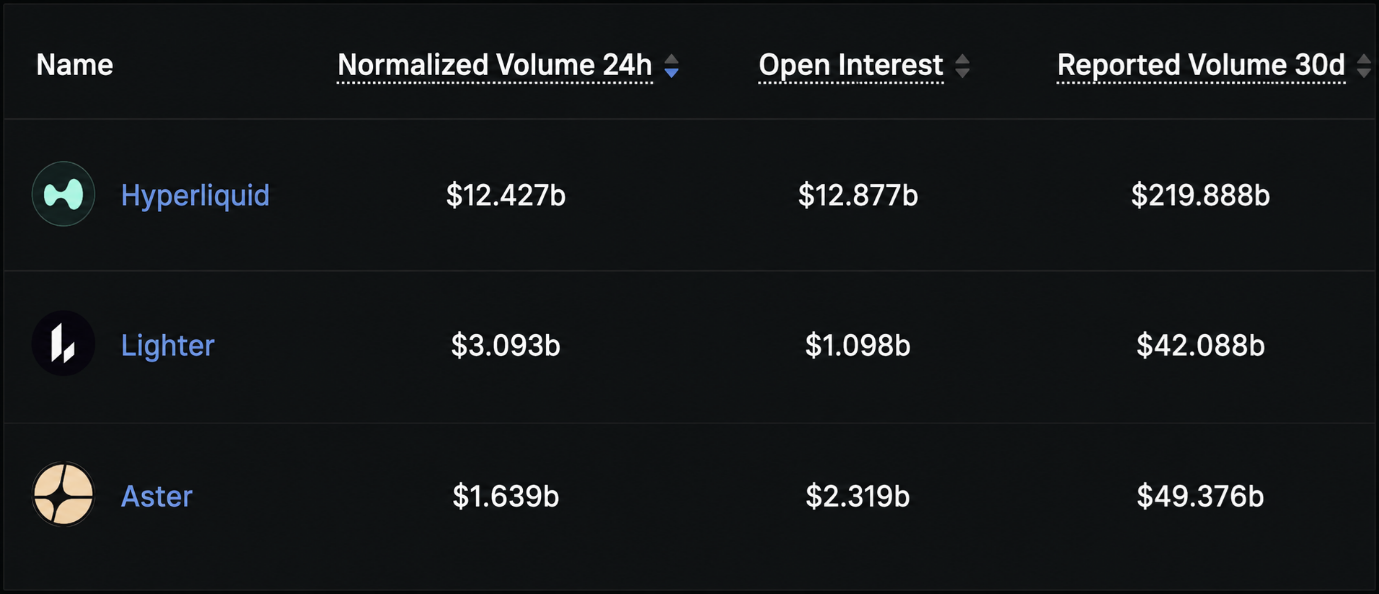
In fact, your crypto team told you about each of these in the past. (You can read about Aster here and Liter here.)
Neither platform currently allows U.S. users to access its official interface.
The opportunity would arise if tighter compliance changed the experience for Hyperliquid’s wider global user base and encouraged eligible traders to look elsewhere.
Neither platform is close to displacing Hyperliquid today. The latter remains comfortably ahead of both.
But both already have enough liquidity and activity to benefit if traders begin looking elsewhere.
Aster Vs. Lighter
Aster is one of Hyperliquid’s more obvious competitors.
It offers decentralized perpetual-futures trading and already competes directly with Hyperliquid for active traders, liquidity and open interest.
If Hyperliquid moves closer to the regulated financial system, Aster could retain a more crypto-native, wallet-based identity. That would leave Hyperliquid as the regulated, institutional-facing leader, while Aster continues to compete for eligible traders who prefer fewer onboarding requirements.
That would give the two platforms increasingly different value propositions.
Even if only a small percentage of Hyperliquid’s global users decided additional compliance requirements weren’t for them, the resulting shift in activity could be meaningful for Aster.
Lighter approaches the market slightly differently.
It operates a non-custodial perpetual-futures exchange built as an Ethereum Layer-2. Its zero-knowledge technology makes its order matching and liquidations verifiable while allowing traders to retain control of their funds.
For crypto natives who wouldn’t touch a KYC policy with a ten-foot pole, that matters.
Not only that but Lighter can offer low-cost trading since it doesn’t take maker or taker fees on standard accounts.
Combined, those benefits make a powerful use case for DeFi users weary of regulatory overreach on the blockchain.
What the Market Is Pricing In
The difference between the three token valuations shows how much of Hyperliquid’s dominance is already reflected in HYPE.
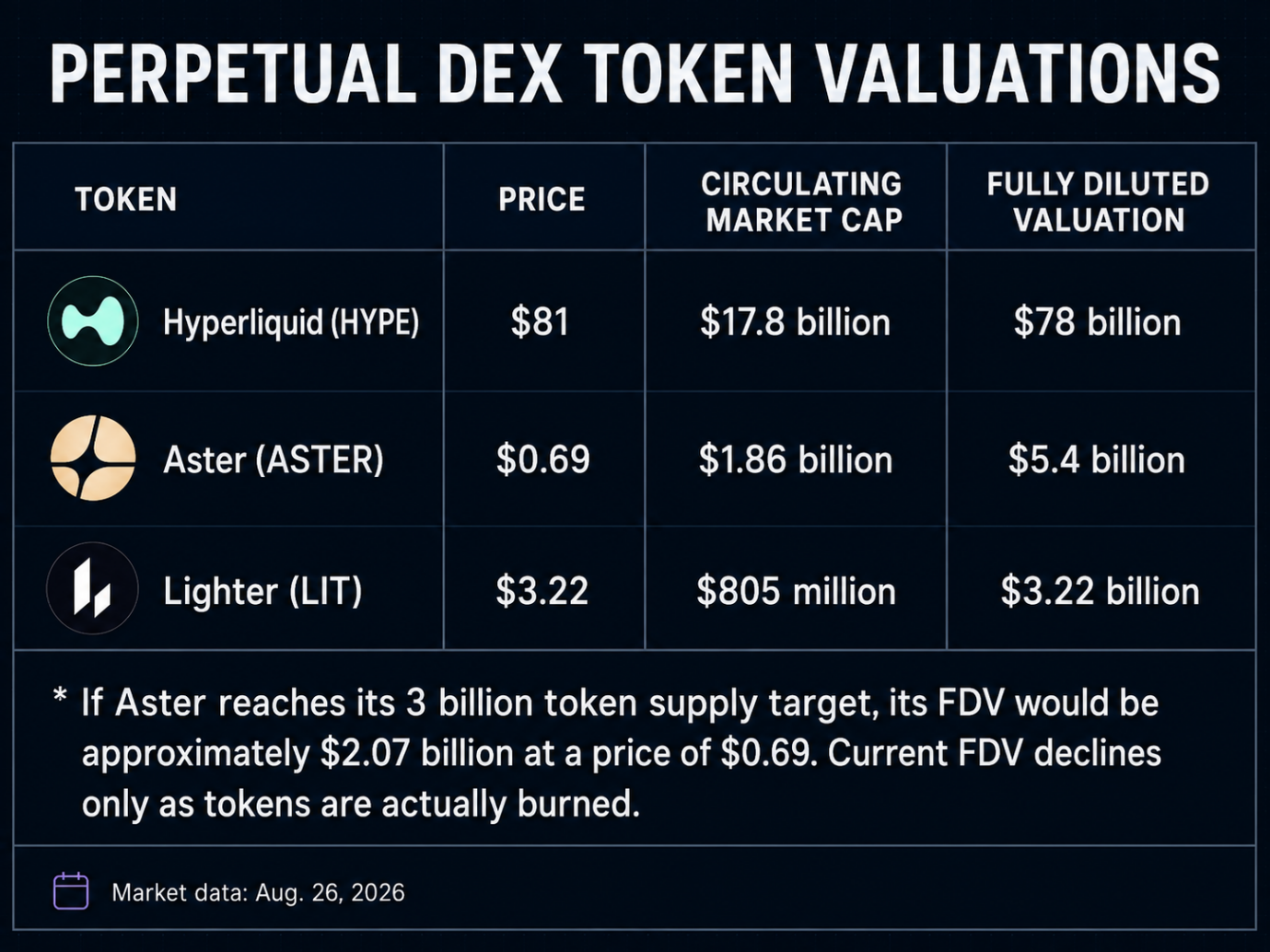
Aster and Lighter currently trade at much smaller valuations than Hyperliquid. But that does not automatically make either token cheap.
For the valuation gap to narrow, both platforms would need to keep growing their share of volume and open interest.
More importantly, that activity must generate fees and ultimately create value for token holders.
For example, Aster’s current fully-diluted value — that is, the value of ALL tokens that will ever exist based on current prices — is approximately $5.4 billion. However, the protocol plans to burn reserve tokens until the total supply falls from roughly 7.8 billion to 3 billion ASTER.
If it reaches that target, its FDV would fall to about $2.1 billion at today’s price.
That reduction will not happen immediately. Aster’s FDV will decline gradually as the reserve tokens are actually burned.
The Market Could Split in Two
Of course, the news of a regulated pathway for Hyperliquid cannot be overstated. If this plays out, there’s a chance Hyperliquid can find a way to operate a compliant U.S. product … while leaving its broader global platform largely unchanged.
If that happens, the opportunity for its competitors would be much smaller.
But as there’s another scenario I find most interesting …
Rather than damaging decentralized perpetual exchanges, regulation could create two separate but strong branches in this market …
- On one side, we could have regulated on-chain platforms. They would serve the institutions and mainstream investors.
- On the other, we could have non-custodial, wallet-based protocols. These would serve eligible crypto-native traders who still value self-custody and fewer onboarding requirements.
Hyperliquid could dominate the first category.
Aster, Lighter and several other protocols could compete for the second.
What I Am Watching
Hyperliquid has the deepest liquidity and strongest network effect.
Aster has built substantial open interest and competes aggressively for active traders.
Lighter’s pitch is verifiable, non-custodial trading combined with extremely low trading costs.
If eligible traders begin looking for alternatives to a more compliance-heavy, Hyperliquid, those differences could suddenly matter much more.
What matters now is whether Hyperliquid’s push into the U.S. starts shifting trading activity toward its competitors.
I’ll be watching Aster and Lighter’s share of volume, open interest and trading activity. One strong day will not tell us much. I’ll need to see whether they begin to gain ground consistently over several weeks.
KYC is the key. If Hyperliquid launches a separate U.S. product without changing much for its existing global users, the impact on Aster and Lighter may be limited.
If tighter compliance begins changing the experience for Hyperliquid’s wider user base, even a small shift in trading activity could benefit its competitors.
For now, that remains a possibility, not a confirmed trend. I want to see it show up consistently in the data before drawing any firm conclusions.
Any investors with exposure to these DeFi perp plays — or those interested in loading up before the next rally — should pay attention as well.
Best,
Mark Gough
1https://decrypt.co/376006/trump-pass-fair-version-clarity-white-house-crypto-meeting