Wall Street Sees Crypto as the Building Blocks of the AI Economy

 |
| By Mark Gough |
For years, crypto has searched for its true “killer app.”
DeFi, NFTs, decentralized gaming, payments and tokenization have all taken turns wearing the crown.
But while some had more success than others, none have truly broken containment to reach mass adoption.
Now, Franklin Templeton believes the answer may actually come from somewhere entirely different: Artificial intelligence.
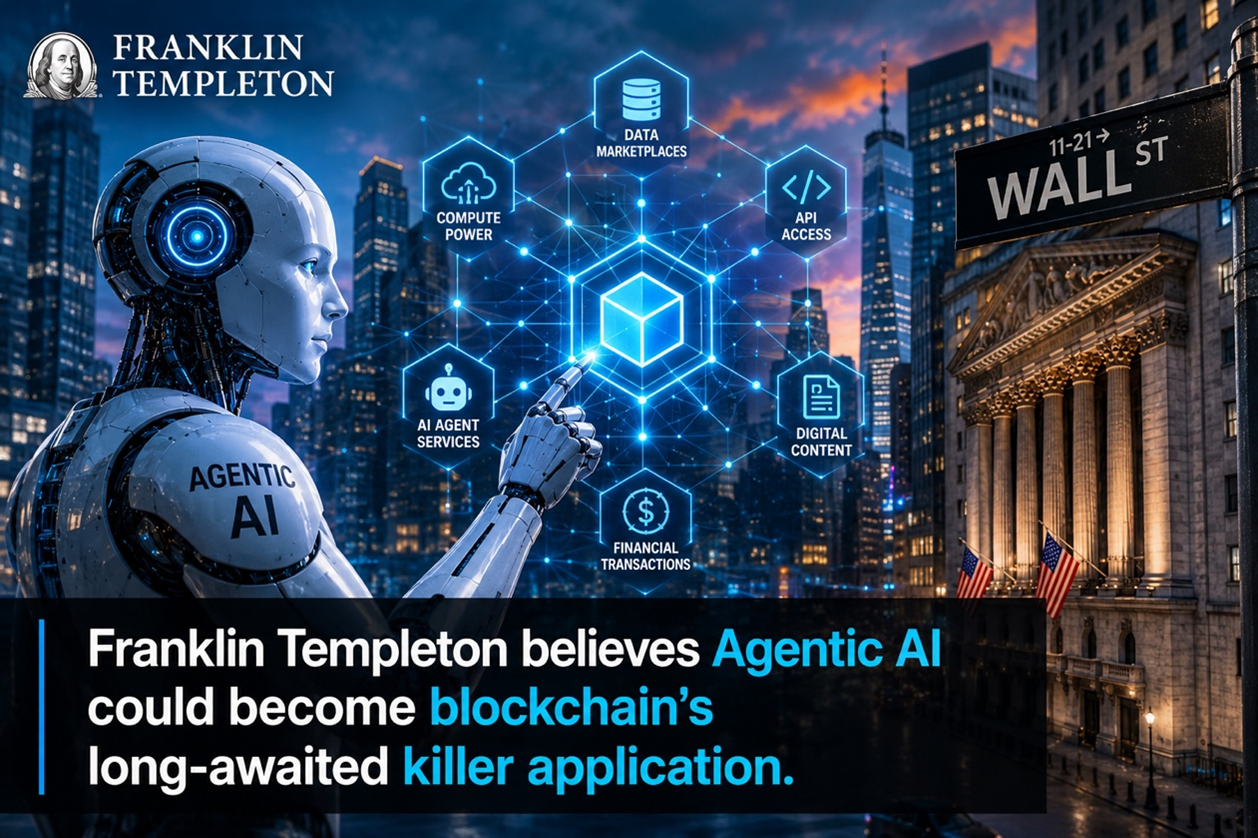
In a recent paper,1 the asset manager argues that Agentic AI could become the “killer use case” that finally drives mass blockchain adoption.
Coming from a firm that manages more than $1.7 trillion in assets, that’s a viewpoint investors shouldn’t ignore.
AI Is About to Stop Asking and Start Doing
Most people have now interacted with ChatGPT, Claude, or Gemini. These are examples of generative AI. They answer questions, summarize information, and create content.
Agentic AI is the next evolution.
Instead of waiting for instructions one prompt at a time, AI agents can plan, make decisions, and complete entire workflows on your behalf with minimal human supervision.
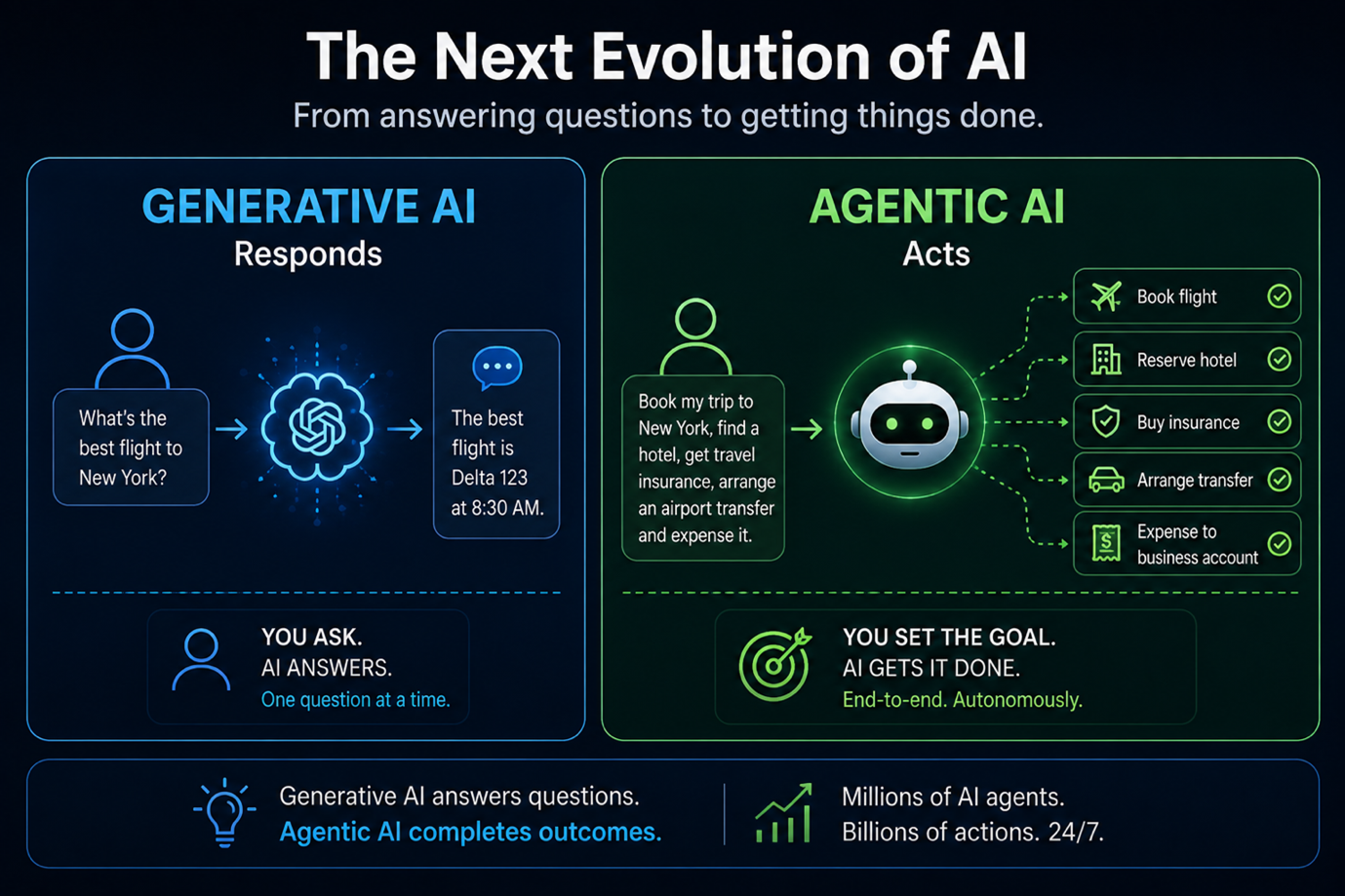
Imagine telling an AI assistant:
“Book my flights to New York, reserve the hotel, compare insurance policies and purchase the cheapest one, arrange airport transfers and expense everything to my business account.”
It simply gets on with the job. Now multiply that by millions or eventually billions of AI agents operating 24 hours a day. Suddenly those agents need something important.
They need an economy.
This is where Franklin Templeton believes blockchain becomes essential: Future AI agents won’t just interact with humans. They’ll increasingly interact with other software.
Today, people make payments. Tomorrow, software may. A single agent may need to:
- Buy data
- Rent computing power
- Pay for API access
- Purchase digital content
- Hire another specialist AI agent
- Execute financial transactions
Many of these payments may only cost fractions of a cent. But traditional payment systems weren’t designed for that.
A credit card payment might cost 2%–3% plus a fixed fee of around 30 cents. That works perfectly when you’re buying dinner. But for small purchases worth fractions of a cent, the math just doesn’t work.
Fortunately, blockchain networks were designed for exactly this kind of programmable, machine-to-machine payment. In fact, Franklin Templeton highlights several reasons why blockchain tech is naturally suited to machine-to-machine commerce.
Programmable Payments: AI doesn’t need to wait for someone to approve every transaction. If it has permission to spend within predefined rules, payments can happen automatically.
Digital Identity: Each AI agent can have a cryptographically verifiable identity, making it easier for other software to know exactly who or what it’s interacting with before completing a transaction.
Auditability: Every payment, decision, and action can be recorded on-chain. That makes it much easier to trace what happened if something goes wrong.
Near-Instant Settlement: Traditional payment networks often take one to three business days to settle transactions. Many blockchains can settle payments within seconds.
As AI becomes increasingly autonomous, these features become much more valuable.
The Rise of Software Paying Software
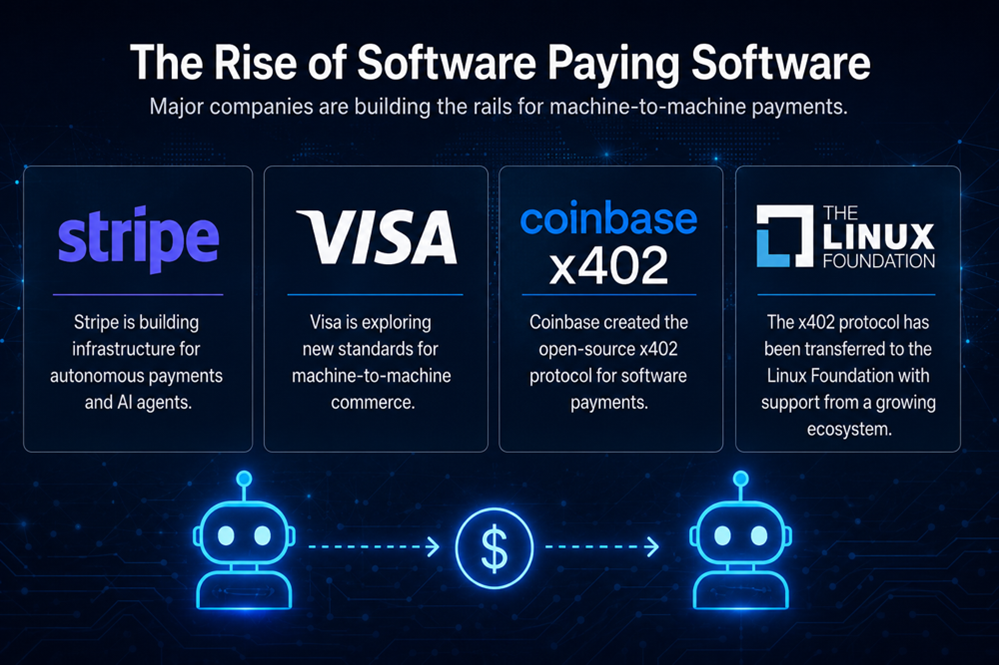
Some of the biggest payment companies are already preparing for this future.
Stripe and Visa (V) have both introduced initiatives supporting machine payments, while Coinbase (COIN) developed the open source x402 protocol, which allows software to pay software automatically. The protocol has since been transferred to the Linux Foundation, with support from a growing number of major technology companies.
If AI becomes embedded across every industry, billions of tiny payments could occur every single day without any human involvement.
Why This Matters for Crypto Investors
Every payment made on-chain uses network resources and generates transaction fees. In many cases, the value being transferred could be a stablecoin — that is, a digital dollar. Meanwhile, the blockchain’s native token is used to secure the network and process those transactions.
Here’s the simple thesis: The more economic activity that moves onto a blockchain, the greater the demand for its infrastructure.
That’s why investors should pay attention.
If autonomous AI systems eventually make millions or even billions of payments every day, the blockchains capable of handling that activity efficiently could see a meaningful increase in network usage.
The opportunity isn’t simply owning companies that build AI. It may also be owning the infrastructure AI depends on.
But It’s Not Guaranteed
Of course, none of this means the thesis is certain to play out.
There are still meaningful hurdles.
Scalability continues to improve, but a world of billions of AI agents could require transaction throughput well beyond today’s blockchain networks.
Security is another challenge. Autonomous AI agents handling money create entirely new attack surfaces. And as we see with the CLARITY Act — which is still stuck in the Senate over ethics concerns2 — that regulators are only beginning to consider how these systems should operate within existing legal and financial frameworks.
So while the direction looks promising, the timeline remains uncertain.
Our Take
The Franklin Templeton report matters. Not because it guarantees AI will drive the next crypto bull market, but because it shows how institutional thinking is evolving.
For years, crypto has searched for a mainstream use case capable of supporting billions of daily transactions. Now, the mainstream is looking to crypto to solve tomorrow’s AI bottlenecks.
All thanks to Agentic AI.
Will every blockchain benefit? Certainly not.
But the networks that can offer fast, low-cost, programmable transactions at scale could become the infrastructure layer for an entirely new digital economy.
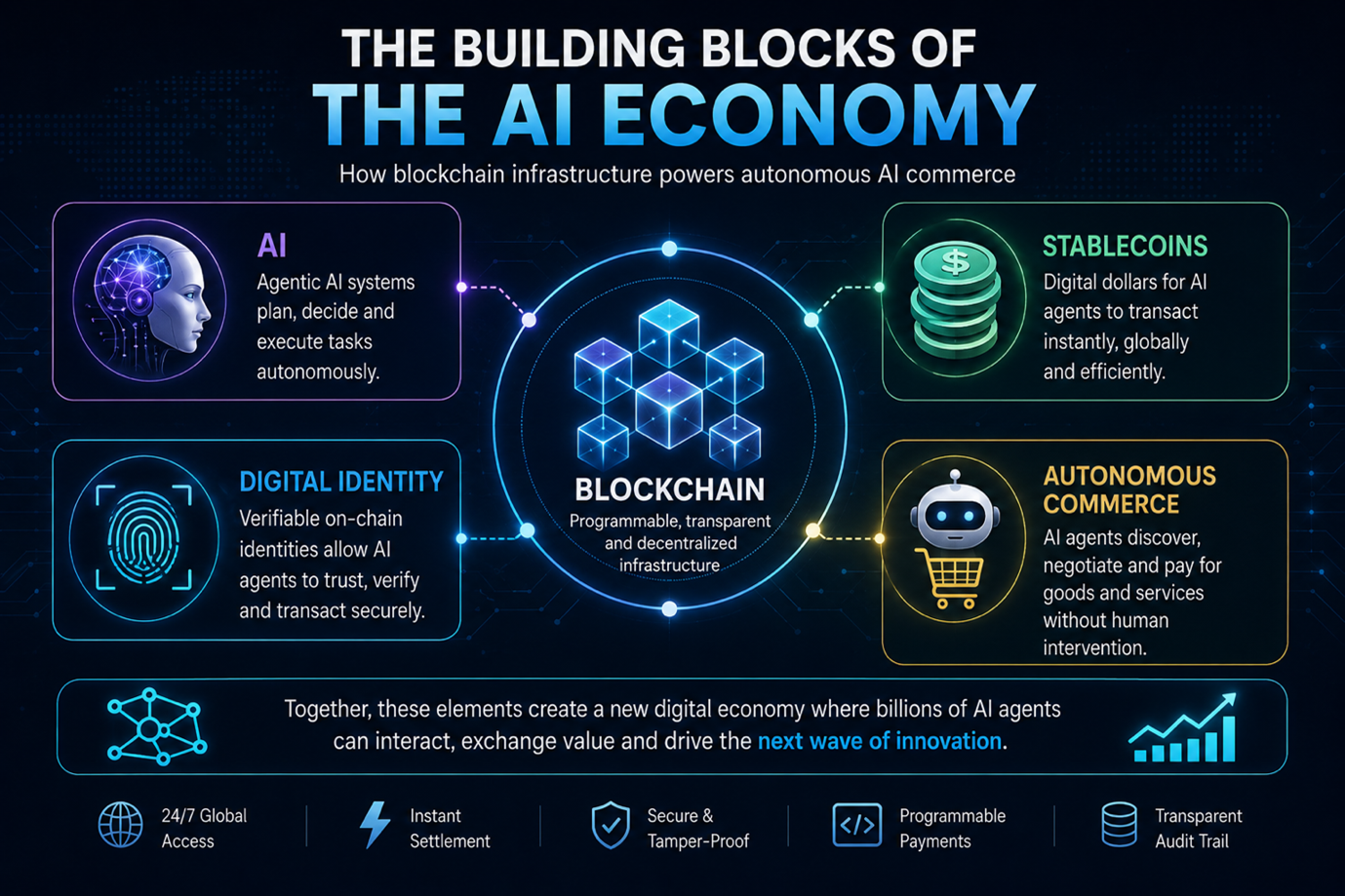
That’s the shift Wall Street is beginning to consider.
The first wave of AI investment focused on the companies building the models and the chips. The next wave may focus on the infrastructure those AI systems rely on to transact with one another.
If that happens, blockchain won’t simply support finance. It could become the payment layer for the AI economy.
And that may prove to be the killer application crypto has been searching for all along.
Best,
Mark Gough
2https://www.investors.com/news/clarity-act-cryptocurrency-market-structure-trump-ethics-senate/