 |
| By Beth Canova |
There’s a lot of research that should go into what cryptos make the cut for your portfolio. Particularly when it comes to a coin’s tokenomics.
That is, the economics of that token.
But here's something most people don't tell you: The majority of crypto tokens are designed, from day one, to let someone else exit before you.
Not because crypto is a scam. Because the economics are broken.
Tokenomics can determine whether a crypto investment appreciates over time or trends slowly toward zero.
Unlike traditional stocks, crypto tokens rarely grant holders partial legal ownership of a business. No claim on assets, no right to dividends.
However, well-designed tokenomics can enable investors to capture value from the actual use of a blockchain or application.
The best examples do exactly that.
The worst give holders little more than a vote on operational details.
There are over 17,000 tokens in the market right now, and that number will only continue to increase. And understanding how they function economically will help you be able to find the few that are worth your consideration.
The Framework: Three Questions
Tokenomics is the economic design of a token. That breaks down into who gets the token, when and why.
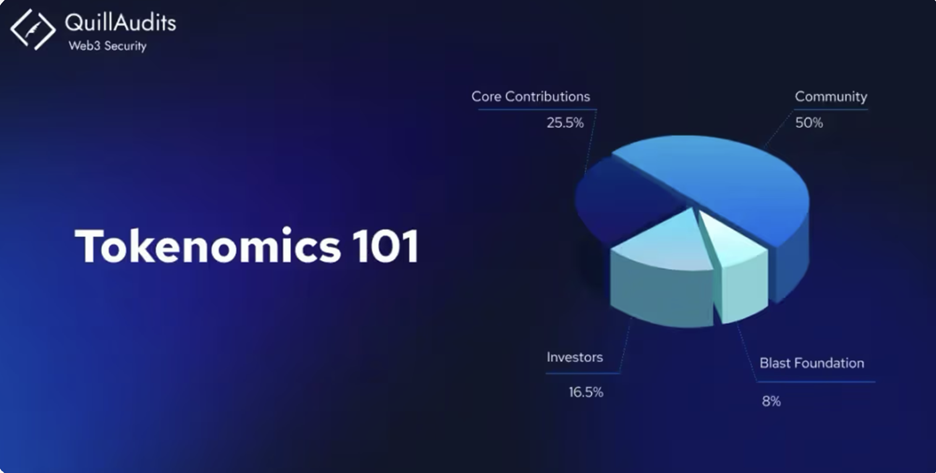
Once you can answer those questions, they form a sort of road map. One that will help you spot the difference between a token built to reward holders and one built to reward the early insiders.
-
Who/what controls the supply?
A coin with strong tokenomics will have inflation safeguards, like automatic burns or a cap on supply. Think Bitcoin’s (BTC, “A-”) 21 million token cap, or Ethereum’s (ETH, “B+”) burn mechanism.You’ll also want to see decentralized ownership. If the majority of large holders are all members of the development team or early insiders, that’s a red flag.
-
Does holding actually benefit you?
A token that does nothing more than represent value on paper isn’t one worth holding. You want to look for an asset that rewards holders — like through revenue/fees sharing or buy/burn programs (similar to stock buybacks).In short, whether a protocol will give you a slice of the pie or hoard the prize could indicate a lot.
-
Who got tokens first, and when can they sell?
Founders, venture capitalists and early investors often receive tokens at steep discounts. Then, there will likely be scheduled unlock periods (the timeline for when insiders can start selling). When those unlocks hit, supply floods the market and can shock the price down.A more decentralized token distribution means less shock to the system when those unlocks hit. No matter what, though, you should check the schedule before the calendar does it for you.
The Good: Three Tokens That Get It Right
Hyperliquid (HYPE, “D”) is a decentralized perpetuals trading exchange. It generates more cash flow back to token holders than nearly any other protocol in crypto.
Simply put, it’s a real product with real users that generates real revenue. And it boasts a design that rewards the people who actually believe in it.
Ether.Fi (ETHFI, “D”) is the first non-custodial, global DeFi-bank. It blends on-chain staking, restaking and yield with credit and real-world payments. In short, it helps you put your Ethereum to work while keeping it accessible.
But here’s what makes EtherFi really stand out: It distributes roughly $1.5 million per month to holders through buybacks, funded by actual protocol revenue.
If you're holding through a down market, you want the crypto that's buying back its own token with real money.
Venice AI (VVV, “B”) is a privacy-focused AI platform. Every subscription and API call generates revenue, and that revenue funds a buyback-and-burn — meaning tokens are permanently removed from circulation. At the time of writing, 43% of the total supply has already been burned.
Demand drives the economics here. Not speculation.
The Bad: Three Tokens That Don't
MANTRA (MANTRA, “D-”) — formerly OM — was marketed as a network for tokenizing real-world assets (RWAs) such as property, bonds, private credit, or startup financing . In April 2025, the token collapsed over 90% when major participants exited simultaneously.
The story was there. The product wasn't.
That narrative-first, economics-last set up isn’t uncommon in crypto. But it’s a combination always catches up.
Sonic (S, “B-”), formerly Fantom, launched in 2018 with a thesis that sounded reasonable: More users means more transactions, more transactions means more gas fees, more fees means more token value.
Five years later, that thesis was disproven. Gas fees alone don't build a sustainable token economy. Without real value flowing to holders on top of that, the token had nowhere to go.
XRP (XRP, “C+”) is the most recognizable name on this list, which makes it worth addressing directly. XRP's genesis blocks, the very first tokens ever created, were pre-mined and centrally allocated. A small group controlled the original supply distribution.
For a technology that promises to remove the middleman, the foundation doesn't quite match the pitch. XRP still trades on institutional liquidity and momentum. But cracks in the foundation don't disappear.
Note: While our Weiss crypto ratings do look at tokenomics, they are just one component of the overall Technology grade. And that is only one of four grades that come together to form the overall rating.
(Read this to learn more about how our crypto ratings work.)
This means a coin with good tokenomics can still have a low rating, and vice versa.
Tokenomics Can Change
One other important factor to note is whether a token grants governance rights.
Because if holders can vote in protocol decisions, then the tokenomics you first analyze may not be permanent.
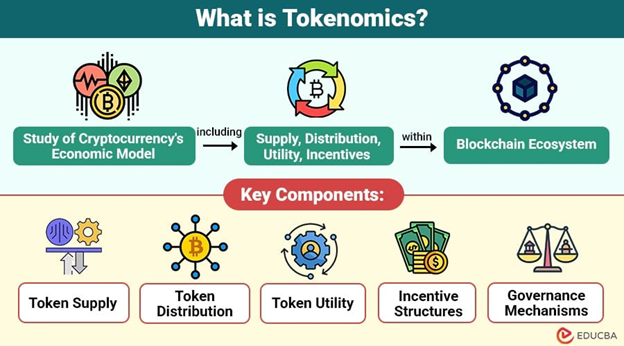
Governance tokens exist precisely so communities comprised of users can vote to make changes in the best interest of the protocol.
This dynamic design potential is both a risk and an opportunity.
A token with weak tokenomics today might become significantly more valuable if its community votes to improve the structure. The reverse is also true.
Which means investors need to keep up with the developments for tokens on both their watchlist and in their existing portfolio.
The gap between good and bad tokenomics often comes down to one question: When the protocol makes money, do token holders benefit?
If the answer is yes, that's a token worth watching.
Crypto is not a monolith. Some tokens are designed to reward the people who hold them. Most are not.
The difference isn't found in the team, the whitepaper or the roadmap.
It's in the design. And, in the case of communal governance, in the community.
Those who can read the economics — or tokenomics — will be able to sort the hopefuls from the hopeless.
Best,
Beth Canova
P.S. Something big is now available from Weiss Ratings.
As you may know, our independent ratings have outperformed Goldman Sachs, JPMorgan and Merrill Lynch — validated by a report published in The Wall Street Journal and confirmed by the U.S. government (GAO).
That same powerful intelligence is available free on your phone.