
 |
| By Nilus Mattive |
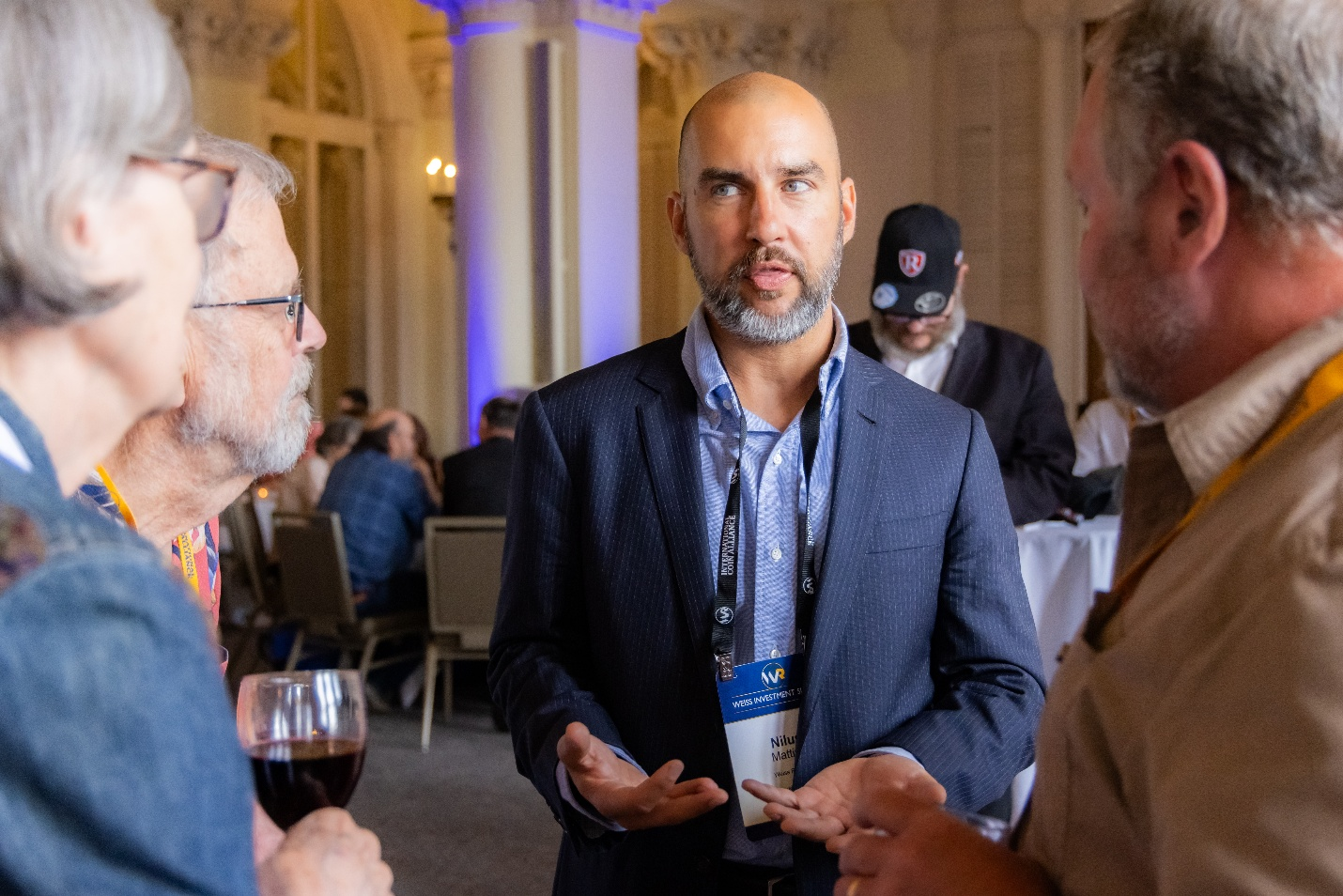
I always try to bring unique ideas to the annual Weiss Investment Summit … especially smaller stocks that I simply can’t recommend in any of my regular publications and services.
For our latest event that took place two months ago, I really leaned into that idea — making my entire presentation about five smaller companies that I have been buying for my own personal retirement account.
It’s no coincidence that three of the five came from the biotech industry.
Smaller, more speculative drug companies have always offered massive upside potential.
But as Michael Robinson pointed out in his article last week, that is especially true right now as technological advancements, particularly in the area of AI, usher in a golden age for drug development.
As I’ll explain in a minute, there’s also now an additional spark to consider — one that I mentioned to our conference attendees as a potential catalyst.
It has quickly gone from a possibility to reality.
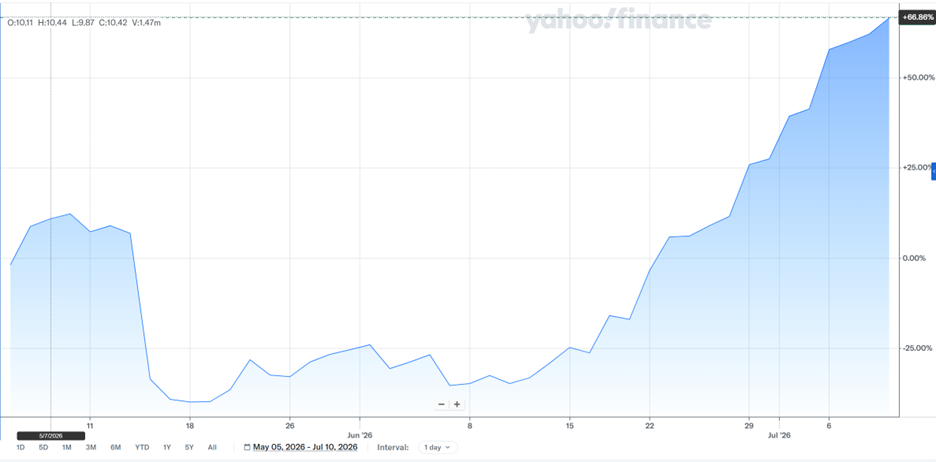
And it sent one of my three recommendations up more than 67% in just the two months since I spoke about it on stage.
That’s about 14 times the performance of the broad S&P 500 over the same time frame!
Before we get to that, however, let’s talk about the big picture …
A Rare AI-Related Silver Lining
From an investment perspective, I think most AI-related stocks are too pricey and investors’ short-term expectations are way too high.
I also think most of our recent economic growth has been fueled by AI-related spending … and a greater proportion of that is now being funded by debt that could blow up in our faces.
Most importantly, I worry about AI’s larger impacts on society — from the near-certainty of massive job losses to the possibility of some dystopian future dominated by a handful of technological overlords.
This is precisely why I decided to go public with a massive video warning about all those dangers.
However, it’s not ALL bad.
There’s one thing that AI is especially good at right now — crunching large amounts of data in a hurry.
Nowhere is that ability more needed than in healthcare — particularly in the area of drug discovery and development.1
Indeed, AI can make light work of tasks that were previously insurmountable for entire teams of human beings.
And the better news is that it isn’t replacing their roles.
It’s simply freeing up more time for scientists and researchers to ask better questions and get faster answers.
Rather than blindly stumbling through a maze of possibilities, hoping for a valid path, scientists can have AI models work out billions of permutations all in one shot.
This automates labor-intensive efforts and saves lots of money in the process. We’re talking months instead of years … worth billions of dollars.
AI can also look at existing drugs and find new applications for them — which is a HUGE boon for pharmaceutical companies and their bottom lines.
AI can help drug companies anticipate a compound’s properties — things like potency, solubility and toxicity — right from the start.
Plus, it can streamline the process of getting drugs through clinical trials. That saves even more time and money.
This is great news for bigger pharmaceutical firms like the ones I recommend for the Safe Money Report model portfolio.
It’s even better news for smaller biotech companies that might only have a couple drugs under development and much tighter budgets to work with.
A few of them are even completely built around AI.
Plus, There’s One Additional Catalyst That Seems to Be Kicking in Right Now
Biotechs are high-risk, high-reward plays.
The difference between going to zero or rising tenfold typically revolves around just a few pivotal decisions by the Food and Drug Administration.
In many cases, simply advancing a compound through an initial clinical trial might trigger hundreds of millions of dollars in milestone payments from a larger partner.
That’s huge for a company that might only be worth a few hundred million itself!
And getting a drug fully approved for use is what creates true home runs in the space.
For a while, the FDA seemed to be less inclined to greenlight novel therapies. That was keeping a lid on the entire biotech space.
But as I told our Summit attendees, the recent departure of Vinay Prasad as the head of the agency looked like it could lead to renewed trials and accelerated approvals of certain compounds.
Now it’s happening.
Indeed, one of my recommendations to attendees recently got word that the FDA will reconsider its application for a Hunter’s syndrome treatment.
That’s the main reason it’s up more than 67% since I talked about it at the conference.
While it wouldn’t be fair to the attendees to give you this stock here, other biotechs have been seeing similar U-turns, too.
This is good news for patients suffering from these diseases and equally good news for investors.
Michael already told you one way to play it is the SPDR S&P Biotech ETF (XBI).
So if you haven’t already been watching smaller biotech companies, now is a great time to start paying attention again.
Best wishes,
Nilus
P.S. The biotech space isn’t the only area seeing red-hot interest right now.
Tomorrow, we’ll be announcing a special event with my colleague Sean Brodrick.
He is always getting ahead of what tomorrow’s hot sector will be. So, keep an eye out for that.