 |
| By Bob Czeschin |
Readers of a certain age may remember “Charlie Wilson’s War.”
This charming biopic starred two of America’s most beloved actors, Tom Hanks and Julia Roberts.
It tells the unlikely story of an obscure Texas Congressman who wound up playing a pivotal role in defeating the Soviet occupation of Afghanistan.

One dark December night in 1979, Soviet special forces operators slipped quietly into the Presidential Palace in Kabul.
They shot the Afghan president. Installed a Kremlin-compliant patsy in his place. And, within hours, legions of Soviet T-62 tanks rumbled across the border.
But not for nothing is Afghanistan called the “graveyard of empires.”
Local resistance fighters — initially armed only with World War I-era Enfield rifles — fought back ferociously. Mostly from mountain redoubts scattered across Afghanistan’s rugged terrain.
But they were no match for Soviet helicopter gunships.
Those poured down torrents of automatic weapons fire from above.
And so, by the mid-1980s, a kind of stalemate prevailed.
The Soviets held major cities, military bases and dominated the air. But soldiers couldn’t go anywhere by road without evoking swarms of hit-and-run guerrilla attacks.
What finally shattered the stalemate was the arrival of shoulder-fired Stinger missiles — supplied by the Pentagon, delivered by the CIA and brokered by the Texas Second District Congressman, Charlie Wilson.
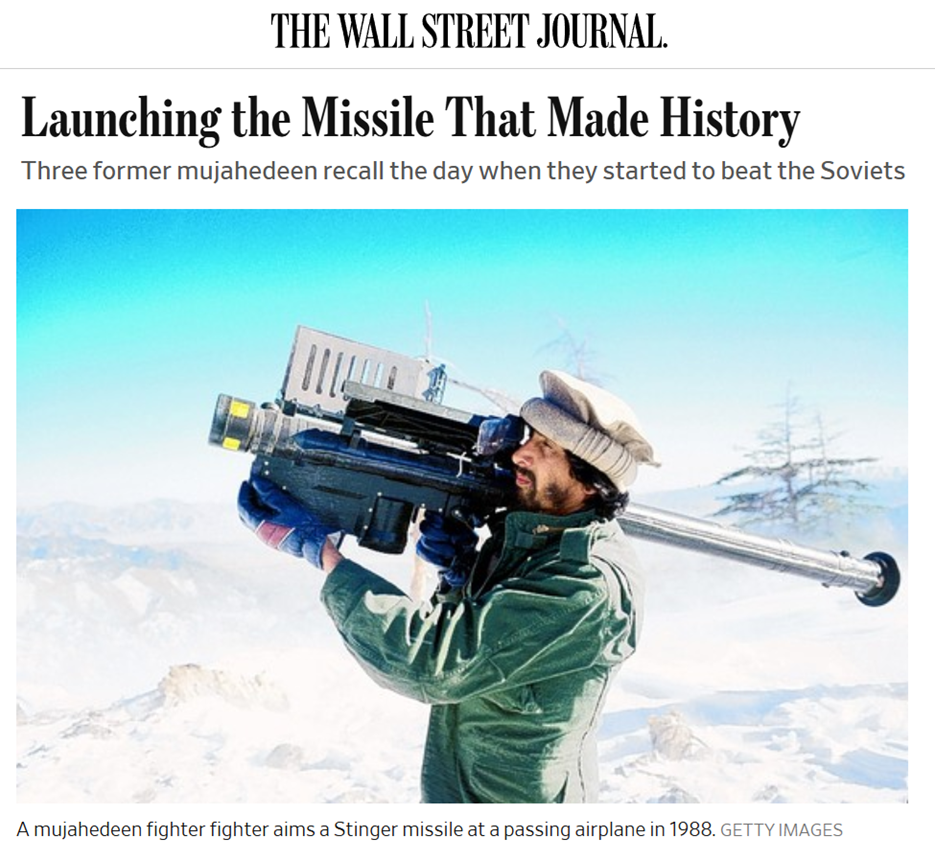
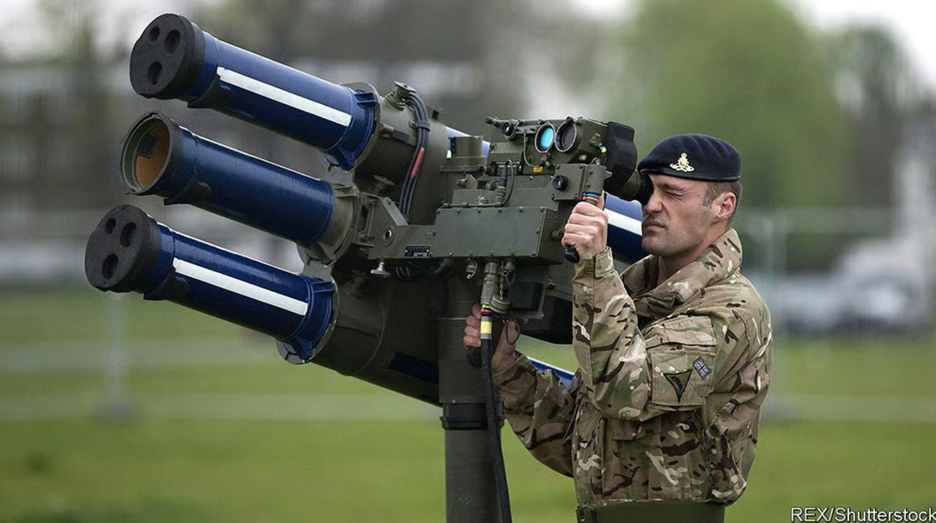
The Stinger is a 40-pound, 7-foot tube (including launcher).3
This missile is good against targets at altitudes up to 15,000 feet. It uses an infrared guidance system to home in on hot aircraft engine exhaust.
A genuinely fire-and-forget weapon, Stingers require little training to use. And gave mujahedeen on horseback power to blast Soviet gunships out of the sky. Which they embraced with wild, unrestrained enthusiasm.
And a few years later, sharply mounting losses of men and materiel convinced the Kremlin’s central planners Afghan operations were not worth their burgeoning cost.
So, Soviet generals declared “victory,” and went home.
Fast forward to Operation Epic Fury
Like the Soviets in Afghanistan, the United States has unrivaled command of the air over Iran. Meanwhile,
Iran’s Revolutionary Guards (IRGC), like the Afghan mujahedeen, have discovered their only real refuge from U.S. airpower is its hidden mountain redoubts and deep tunnels.
In early April, an unknown IRGC soldier stood on a Zagros mountaintop in southwestern Iran. And fired a Stinger — now called a Man-Portable Air Defense System (MANPAD) — at an American F-15 Strike Eagle.
President Trump himself acknowledged this.4 Both airmen bailed out but separated as their chutes opened. The pilot was swiftly retrieved.
But the wounded second officer fled on foot into the rugged Zagros terrain. Where he eluded pursuers for 36 hours. Until rescued by one of the largest flotillas of U.S. special forces ever assembled in a combat zone.
His stirring story of grit and courage was so compelling and so filled the news that few thought to question how he came to be shot down in the first place.
The F-15 Eagle is roughly a $65 million5 airplane, depending on the variant.
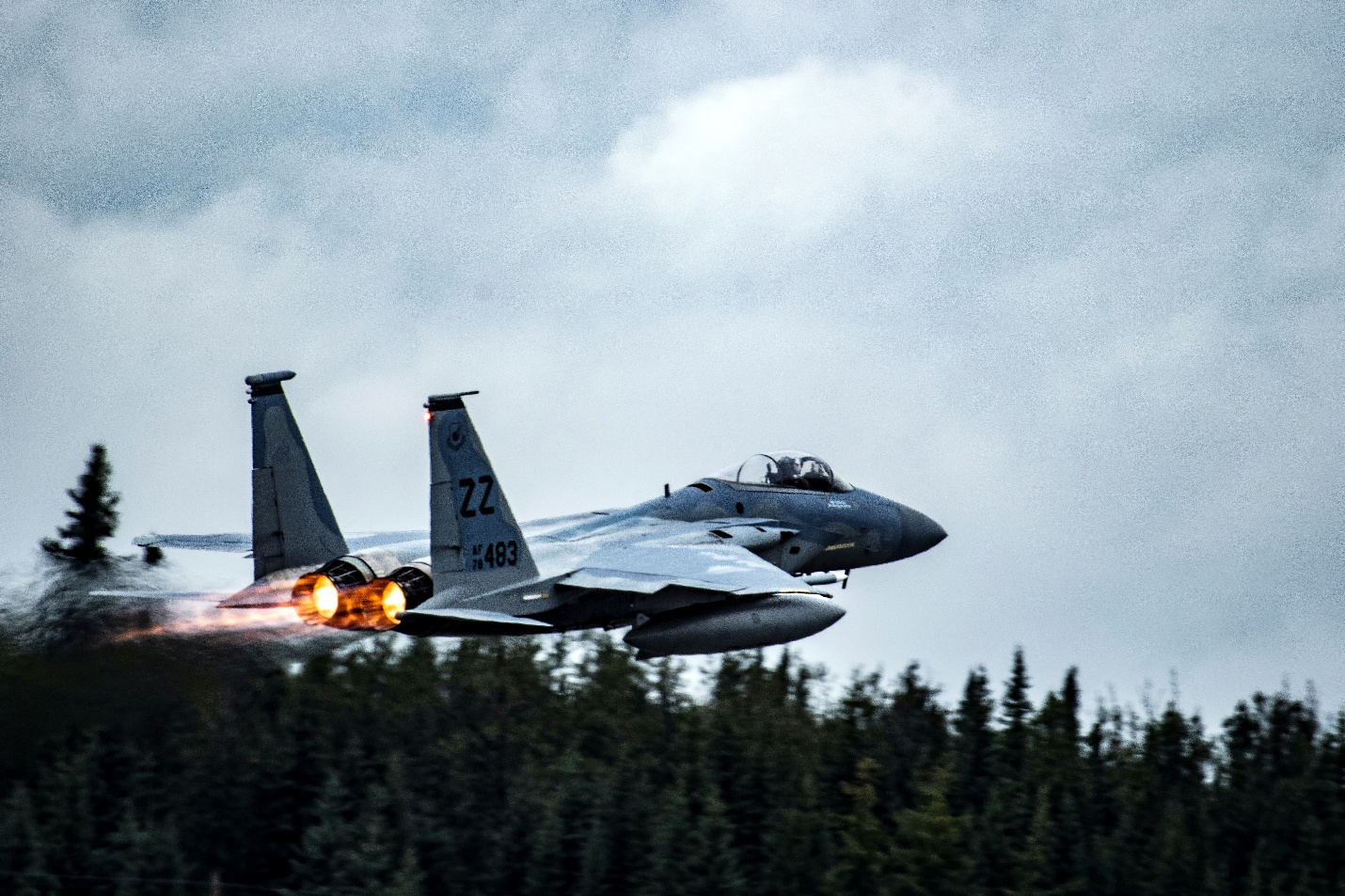
But MANPADs cost just $120 to $150 thousand per shot.7
That’s a massive 433-to-1 cost exchange ratio in favor of the IRGC.
In other words, the IRGC has demonstrated it can cost-effectively pressure U.S. forces. Using the same 50-year-old technology Charlie Wilson’s doughty fighters used. To vanquish the mighty Soviet empire.
Moreover, the IRGC’s Zagros Mountain redoubts were hollowed out under hundreds of feet of solid granite. With entrances and exits concealed in the near-vertical walls of deep canyons and crevices.
That makes them — and the vast ballistic missile factories and transportable launchers they contain — virtually invisible to aerial observation.
Because of all this, the IRGC figures it can probably hunker down here for quite a long time.
Even if a peace deal with Trump forces the IRGC to relinquish its choke hold on the Strait of Hormuz, its Zagros Mountain missiles could still rain down destruction on Saudi, Kuwaiti, Emirates’, Bahraini and Qatari oil infrastructure.
With the world increasingly fixated on a peace deal, one will surely be signed with suitable pomp and ceremony.
But face-saving words on paper are one thing. IRGC threats to Persian Gulf oil are another.
Those threats are likely to persist as long as radical mullahs rule in Tehran.
Because of this, odds are that oil prices will stay higher for longer than most investors anticipate.
Sean Brodrick laid out twice last week why prices, especially in the U.S., will remain elevated:
Related Articles:
This Ticker Is Your Key to Beat Inflation
America Leads the World … in Inflation!
I will give you two more tickers to combat higher-for-longer energy prices …
Investment implications
One easy way to benefit from rising oil prices is with an ETF — such as the SPDR S&P Oil & Gas Exploration & Production ETF (XOP).
XOP buys U.S. stocks in the S&P Oil & Gas Exploration & Production Select Industry Index. (E&P companies maximize your exposure to rising oil prices.)
It has a 0.35% expense ratio and pays a 2% dividend.
The Iran War is also creating new sources of demand for coal — especially in Asia — with potential to keep prices going up for quite a long time.
As I recommended before, one good way to benefit from this trend might be the Range Global Coal Index ETF (COAL).
That’s because it offers the direct and concentrated exposure to global coal stocks, particularly Australian producers.
It has a higher expense ratio of 0.85%. But it also pays a slightly higher dividend — 2.26%.
I would suggest you consider adding one or both of these ETFs to your short list.
Even if we get a peaceful resolution, which seems to be progressing, the threats for higher energy prices will remain.
Best,
Bob Czeschin
1 https://www.imdb.com/title/tt0472062/?ref_=mv_close
2 https://www.wsj.com/articles/SB10001424052970204138204576598851109446780
3 https://theaviationist.com/2026/05/31/chinese-missile-used-to-shoot-down-f-15e/
6 https://www.af.mil/News/Photos/igphoto/2002841251/mediaid/5476315/