 |
| By Nilus Mattive |
I have this vivid memory from my early childhood …
My mom and I were sitting on the couch, and she asked me what I wanted to be when I grew up.
I told her I wanted to work at the place where they made the money so that I could give her as much as she needed.
In my kindergartener brain, that meant the guy who printed the dollar bills themselves.
I now know things are little more complicated than that.
Sure, the U.S. Mint produces our nation’s coins, and the Bureau of Engraving and Printing makes our paper currency.
But neither they, nor any other department at the U.S. Treasury, really “makes” the money.
The Treasury Department just manages our country’s finances — collecting taxes, borrowing money, making payments and performing other related functions.
The Federal Reserve, which is (supposedly) independent from the U.S. government, actually prints money in the sense most people mean it — i.e., creating more dollars in the U.S. financial system.
While the full explanation of how this works2 is pretty complicated, here’s the gist:
- The Fed sets short-term interest rate targets that affect how much money banks are willing to lend.
- It can also buy U.S. Treasury bonds to add more collateral that banks can lend against.
- And any money it makes above and beyond its costs, it sends back to the Treasury.
So, ultimately, the Fed and the Treasury work together.
Which brings me to last week’s big announcement that the Treasury was going to start buying back more of its own longer-term debt.
Treasury Secretary Scott Bessent surprised investors when he said the agency would double its buyback operations on Treasuries with maturities of 10+ years from $2 billion to $4 billion worth.
You might be wondering how the Treasury can buy back its own debt in the first place, especially if it can’t push a button and create more dollars for the purpose.
Typically, it sells more short-term debt and uses the proceeds to pay off the longer-term loans.
So, the net debt doesn’t change. Just the interest rates and due dates.
Think of it like this …
You currently have a 30-year mortgage on your house with 25 years left on the loan. Your outstanding balance is $200,000. And the interest rate is 4.5%.
You decide to refinance that with a new lender into a 15-year loan at a 4.2% interest rate.
You still owe $200,000. Your interest rate is a little better. But you also have to pay back the loan a lot faster.
Is doing this a good idea?
Well, you’ll save a lot of interest over time.
But you also need to have the ability to pay off the loan more quickly.
Spoiler alert: The U.S. Treasury does not have the ability to pay off its loans more quickly.
Which means it will now have to refinance that debt more frequently and hope interest rates don’t keep going up along the way.
So why would Bessent want to start moving more debt forward then?
To try and lower longer-term interest rates.
Remember, when bond prices go up, their yields go down.
If the Treasury inserts itself into the market and buys more longer-dated bonds, then longer-term interest rates should go down.
This is what Washington wants right now because those rates are what most impact things like mortgages and business loans.
Meanwhile, all other things being equal, selling more short-term bonds on the other end of the spectrum should have the opposite effect — shorter-term rates should go up.
This spectrum of Treasury bond rates is called the “yield curve,” and government manipulation of that spectrum is called “yield curve control.”
There’s just one problem, of course.
The bond market can still push back.
When investors are worried about future inflation rates … government solvency issues … or both … they demand higher interest payments to compensate for greater risks.
These wary buyers have been called “bond vigilantes” ever since the 1980s. And ultimately, they’re the ones who really set interest rates, especially when they’re riding in force as they are today.
This is precisely why rates have been rising in the first place.
And why, within a day of Bessent’s announcement, longer-term bond rates started going right back up to where they were before.
The bond vigilantes were far more focused on a different government announcement that came out a day before Bessent’s — the one that said total U.S. debt had just surpassed $40 trillion.
They know that the Treasury buying back a couple billion here and there is a drop in the bucket compared to that massive pile of IOUs.
They also know the buybacks aren’t paying down a red cent of what’s owed. They’re actually moving the due dates forward.
Here are the practical takeaways …
First, while this move from Bessent was largely symbolic, it shows you what the Treasury is most focused on — trying to keep longer-term rates in check at any cost.
And we should expect more manipulation from the Treasury going forward.
Indeed, as the market started pushing longer-term rates back up, Bessent came out and said the Treasury could actually go above the $4 billion number.
He also said he had “a big toolkit” that included more than just simple bond purchases.
Second, we now need to see what, if anything, Fed Chairman Kevin Warsh says or does in response.
In the strictest sense of the term, only the central bank can truly perform yield curve control.
Yet Warsh has generally said he wants the markets to decide interest rates and that the Fed should actually move away from buying lots of bonds.
And as I explained a few weeks ago, he already has his own credibility problem regarding the Fed’s inflation fight.
Bessent’s bond buying is inflationary and in direct contradiction to the idea of letting markets work things out on their own.
Thus, it further complicates a predicament Warsh was already in.
Third, no matter what happens, Bessent’s intervention is like rearranging the deck chairs on the Titanic — it does nothing to solve the fact that U.S. government debt continues to grow at an alarming rate.
If anything, his heavy hand suggests greater desperation on Uncle Sam’s part.
This is precisely why precious metals rallied on the news.
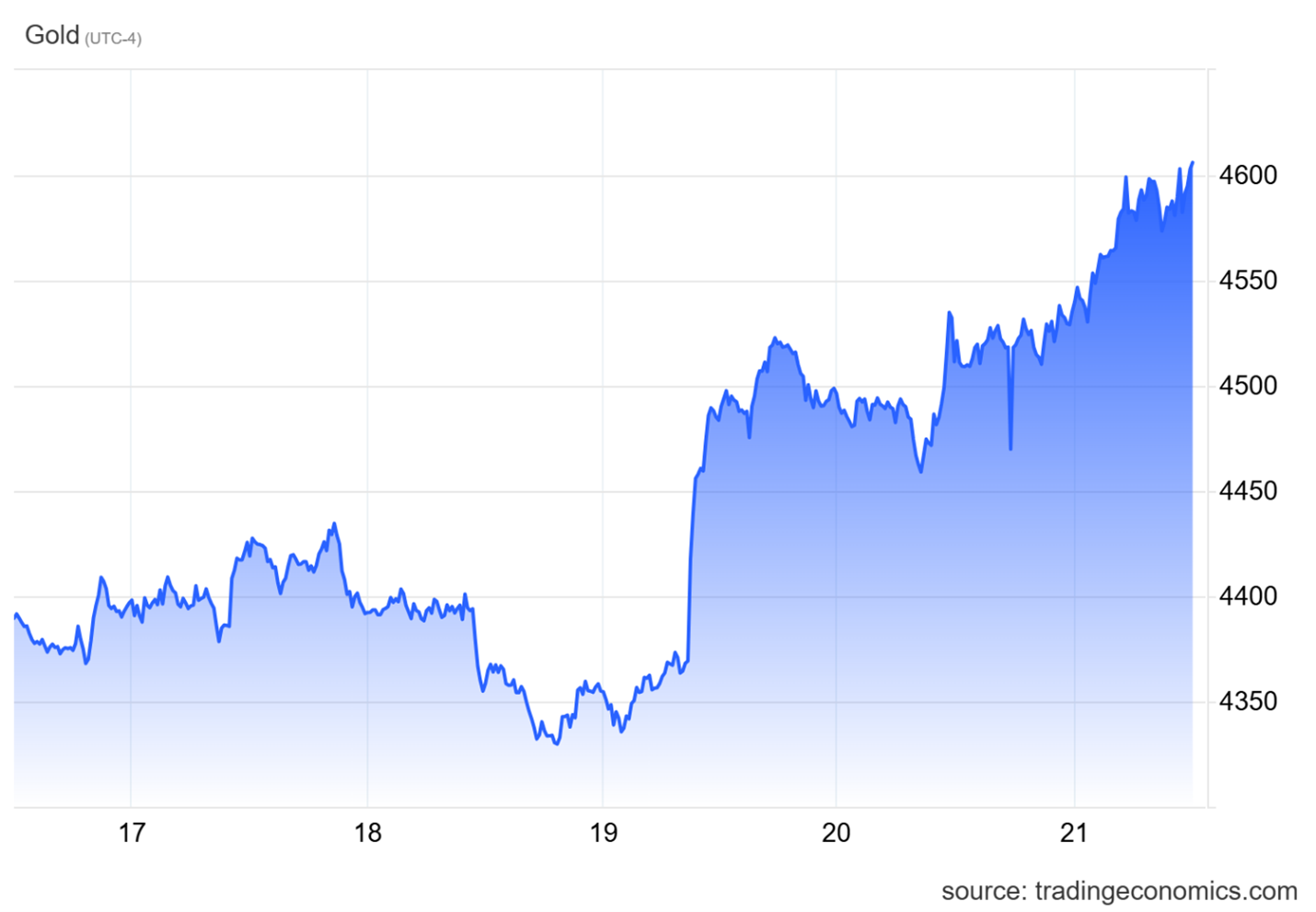
Because at the end of the day, there are no short cuts or cheat codes.
The U.S. government needs to get its financial house in order … inflate away the debt over time … or directly take more money from citizens through taxation.
Based on history, I think it will be a combination of the second and third.
We should all act accordingly.
Best wishes,
Nilus Mattive
1https://www.federalreserve.gov/aboutthefed/files/the-fed-explained.pdf
2https://www.federalreserve.gov/aboutthefed/files/the-fed-explained.pdf