REPORT: Oil Shed Its War Premium, Then Nvidia Lost Its CEO. Here's Why We'd Still Buy Nvidia, and What Could Go Wrong.

|
Key Takeaways
|
 |
| By Al Qureiyeh Reviewed by: Leo Tavolaro |
If you own an S&P 500 index fund, the index of America's largest companies, Nvidia is one of its two biggest holdings.
So, when fear moved through markets in recent weeks, it reached your money twice.
Nvidia (NVDA), the chipmaker behind most artificial intelligence (AI) systems, is worth about $4 trillion.
On Thursday, it said founder Jensen Huang had resigned as chief executive officer (CEO).
Before that, oil shed much of the war premium it had built up, the extra price traders pay for the risk of conflict.
Brent crude, the world's benchmark oil, fell about 18% from Oct. 30 to Wednesday.
One fear drained out of oil, and another just hit Nvidia's price.
We'd buy Nvidia while that fear lasts, and we'll show you the risks.
What Happened
Nvidia named its finance chief, Colette Kress, interim CEO while the board searches for a successor.
The company said it expects its operations, customer commitments and product plans "to continue without interruption."
It still plans to report results on Tuesday, Nov. 17.
Nvidia closed Wednesday at $173.73, the day before the news.
Oil fell hardest after the Nov. 3 midterm elections, when traders bet that new strikes on Iran were unlikely.
Talks between Washington and Tehran have since stalled, so the calm is a hope, not a deal.
At the pump, the national average for regular gasoline fell about 10% in a month, AAA reports.
Why the Worriers Have a Point
The crowd is bearish on Nvidia: most of the commentary we tracked expects more trouble.
First, Fortune reported that Nvidia had no succession plan, and about 60 managers reported directly to Huang.
Second, Washington is circling: the Justice Department is investigating an Nvidia customer accused of smuggling chips to China.
Two senators also urged the Commerce Department to suspend or reconsider Nvidia's licenses to sell chips in China.
We grant both as real risks, and we will watch them closely.
What Weiss Is Saying
Weiss rates Nvidia B, a BUY, with a Reward grade of A-.
Its Risk grade is C, which tells you this stock can swing hard.
The Nov. 10 Weiss piece "Nvidia's CEO Scandal: Why Our Ratings Still Say 'Buy'" said any rating change would come after earnings.
We agree, and Huang's exit makes the Nov. 17 report a bigger test.
Our Nov. 5 report warned that oil had bounced back after every earlier plunge in 2026.
That warning still stands, because a war premium that left on headlines can return on headlines.
Related story: Nvidia's CEO Scandal: Why Our Ratings Still Say 'Buy'
Related story: Our Nov. 5 report on oil's bounce-backs
Nvidia Has Usually Beaten the Market After Oil Drops
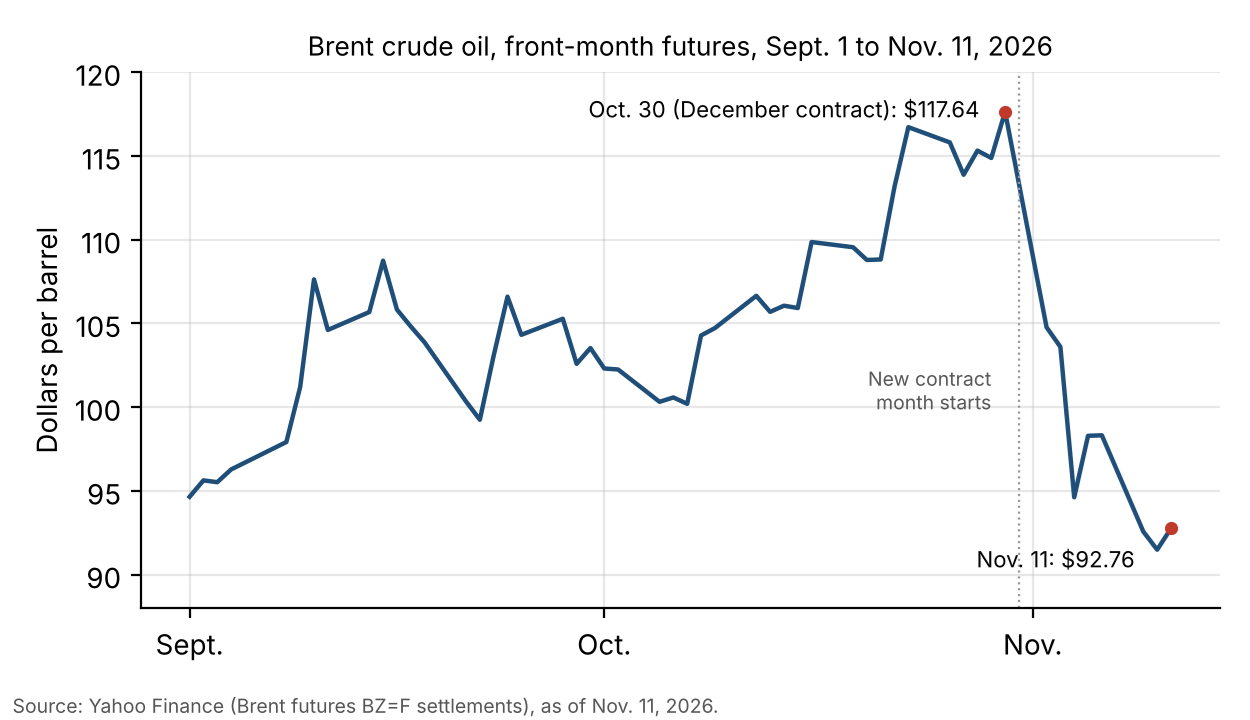
The chart shows Brent's climb into late October and its slide since.
Cheaper oil cools the inflation that bond buyers expect.
The inflation rate built into long-term Treasury yields fell to 2.20%, near its lowest in a year.
We think lower expected inflation supports companies like Nvidia, whose value rests on profits years ahead.
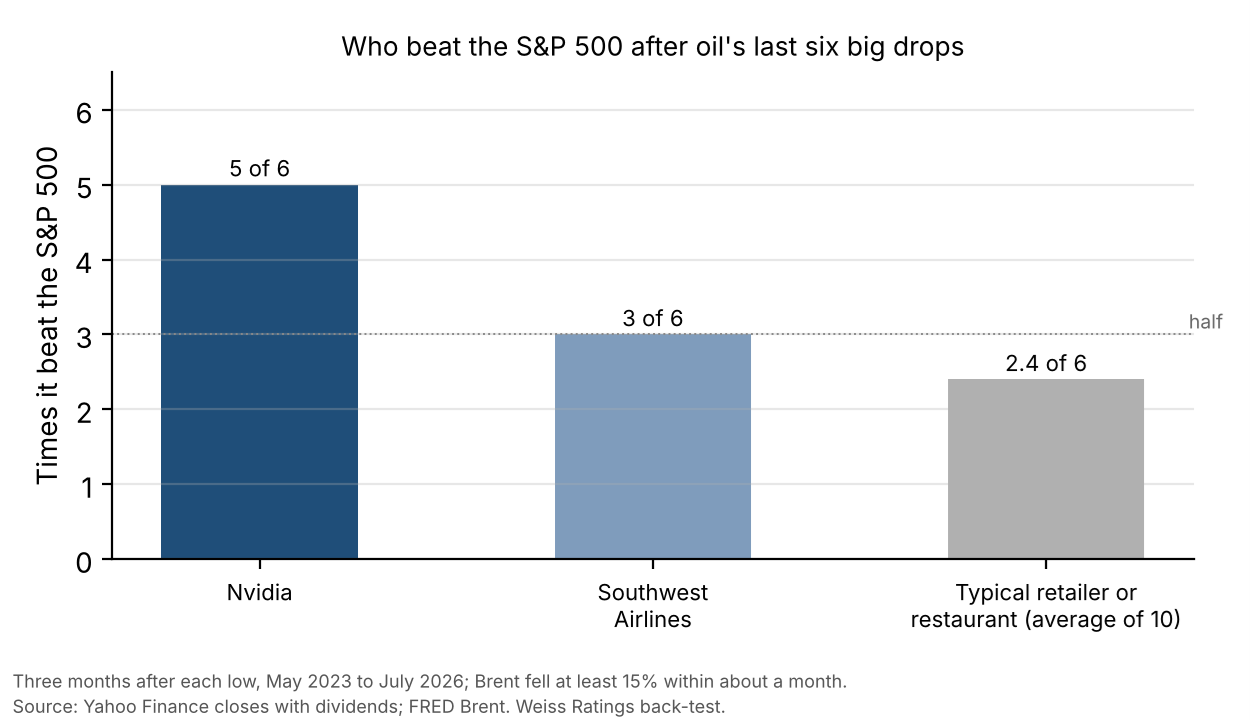
In our own back-tests, we looked at oil's last six big drops.
In each one, Brent fell at least 15% in about a month.
We then measured each stock against the S&P 500 over the following quarter.
Nvidia beat the index after five of the six drops.
Two of those wins came during Nvidia's 2023 boom, so the record is evidence, not proof.
Southwest Airlines (LUV), which should gain from cheaper jet fuel, beat it only three times.
Most stores did not beat the index after most of these drops, including Ross Stores (ROST), TJX (TJX) and Darden Restaurants (DRI).
Weiss still rates all three a BUY, so this says more about oil than about those companies.
Buy Nvidia While Fear Sets the Price
Buy Nvidia (NVDA), rated B, a BUY, at the next close; it closed Wednesday at $173.73.
Nvidia has usually beaten the market after big oil drops.
The CEO exit cut its price, while the company says its business will continue without interruption.
At Wednesday's close, investors paid about 14 times the profits analysts expect over the next year.
What could work against it: Washington could limit its China sales, and the first outlook from an interim team could disappoint.
Nvidia was also sliding with other AI stocks before the exit, and that slide could continue.
Our target is its average price over the past 200 trading days.
Wednesday's close is about $31 below that average. For Nvidia, that is a potential gain of about 18%.
Nvidia pays only a token dividend, a yield of about 0.3%, so this is a bet on price.
Our time frame is within a year, with the first checks at the Nov. 17 report and a House briefing requested for Nov. 18.
What We're Watching
First, Nvidia's Nov. 17 report. If the interim team cuts its outlook, we would review the call and tell you.
Second, Washington. If Commerce suspends Nvidia's China licenses, we would review the call and say so.
Third, oil. If Brent's January contract climbs back above $113.43, where it settled Oct. 30, that would suggest the war premium is back.
Fourth, Southwest Airlines, rated B-, a BUY, which no longer locks in fuel prices ahead of time.
That means it gains the most if fuel stays cheap and loses the most if it rebounds.
If Brent stays down through the Nov. 29 meeting of the big oil producers, we would look at buying Southwest.
Bottom Line
Fear drained out of oil, then hit Nvidia, and in our back-test Nvidia beat the market after most big oil drops.
So, the fear reaching your index fund through Nvidia is where we see the opportunity.
Buy Nvidia (NVDA), rated B, a BUY, which closed Wednesday at $173.73, at the next close.
Take care,
AL Qureiyeh