 |
| By Beth Canova |
Pick any week in this market and you'll see the same thing …
A handful of coins double. Others, with louder stories and bigger followings, quietly bleed out.
It feels random. It isn't.
The coins that ran usually didn't have a better pitch. Some had no pitch at all. What they had was something duller and more reliable.
Which means if you stop at the whitepaper, the founder's podcast tour or the price chart when you research your next crypto investment, you’re missing a key piece of the puzzle.
Because none of those tell you whether the token is built to capture value.
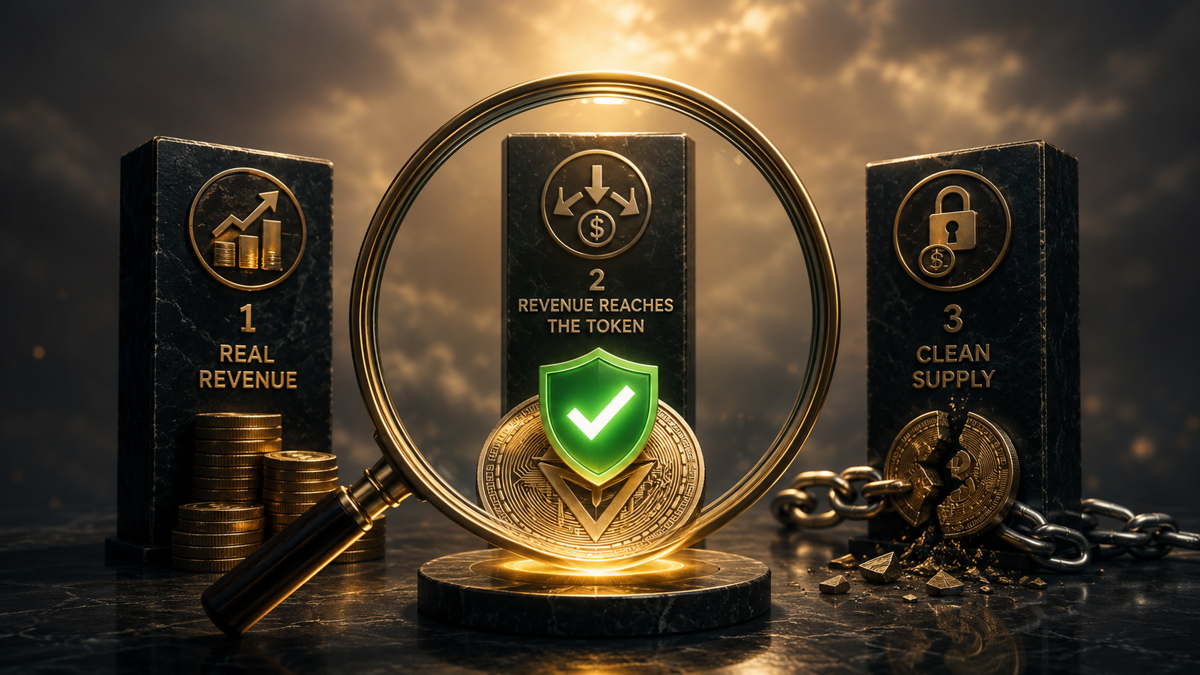
Here is a better tool: three questions you can run against any coin in under five minutes.
- Does the protocol earn real revenue?
- Does that revenue reach the token?
- And is the supply clean, or rigged to dump on you?
Pass all three and you own something with a floor under it. Fail one, and chances are the story is carrying the coin.
And stories don't pay.
Here’s how it all works, using a crypto I told you about a few weeks ago: Hyperliquid (HYPE, “D+”).
Question 1: Does It Earn Real Money?
Start with revenue, the same way you'd start with any stock.
Hyperliquidis the textbook pass. It runs an exchange where trades clear on a public network instead of through a company. It trades perpetual futures, or perps, which are simply futures contracts with no expiration date.
People use it. A lot.
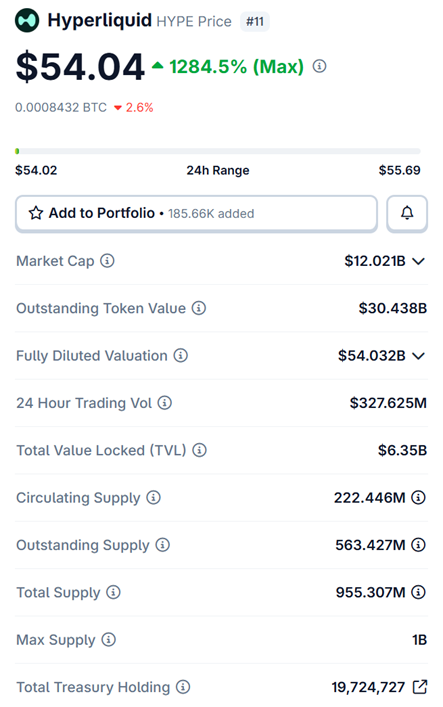
The protocol generates roughly $1.3 billion in annualized fees. With numbers like that, Hyperliquid regularly out-earns Ethereum (ETH, “B+”) and Solana (SOL, “B-”) in a given week.
That's real cash from real activity, not token printing. HYPE now carries a market cap near $12.02 billion.
Plenty of coins clear this bar. Morpho (MORPHO, “D+”) — which runs a decentralized automated lending desk — pulls more than $220 million in annualized fees with $6.7 billion of deposits.
That's a real, working business. But that doesn’t mean you benefit directly as a token holder.
So revenue alone tells you almost nothing. It's the entry fee, not the answer.
Question 2: Does the Money Reach the Token?
This is where most coins quietly fail.
A profitable protocol can route every dollar somewhere other than the token holder. Think of a company that earns a fortune, pays no dividend and runs no buyback.
You own the logo, not the earnings.
Hyperliquid does the opposite: Between 97% and 99% of trading fees flow to its Assistance Fund. That capital is used to buy HYPE on the open market. Those coins are then burned to remove them from circulation.
For all intents and purposes, that's a corporate buyback. The kind that powers the S&P 500, except automated and funded by live fees.
It has already spent over $1 billion repurchasing the token.
Now look at Morpho. The fees are real, but the protocol passes none of them to the token. Revenue to token holders sits at $0.
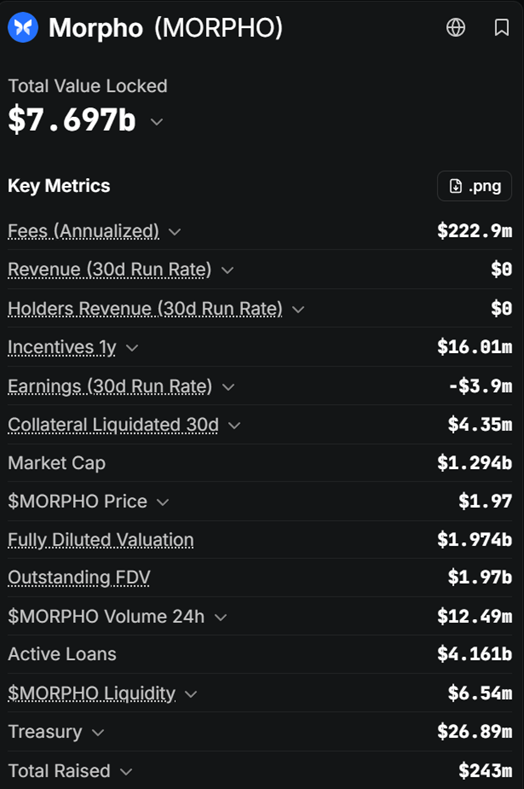
Morpho passes Question 1. But it fails Question 2.
Question 3: Is the Supply Clean?
The last question is the one retail investors skip. Much to their regret.
Because much of a token’s economics is determined by who holds tokens above your purchase price, waiting to sell.
Insider unlocks are that overhang. And they can cap rallies before they start.
Hyperliquid launched with no private sale, no venture-capital allocation, and no tokens handed to exchanges or market makers. The team self-funded.
Future supply still vests. But there’s no insider block that bought in cheap to dump on you. And the buybacks have so far absorbed new supply it as it arrives.
That’s a clean supply. But Arbitrum (ARB, “D+”) is the cautionary tale.
The network has real users and over $1.2 billion of deposits. But fees flow to a community treasury, not to ARB holders. They earn nothing for holding.
Worse, monthly token unlocks add roughly 1.7% to supply. A single month's unlock can exceed a full year of fee revenue.
Which means ARB fails both Questions 2 and 3.
Why the Scoreboard Agrees
Run the three coins against the test and the price tape lines up almost perfectly.
Over the past year …
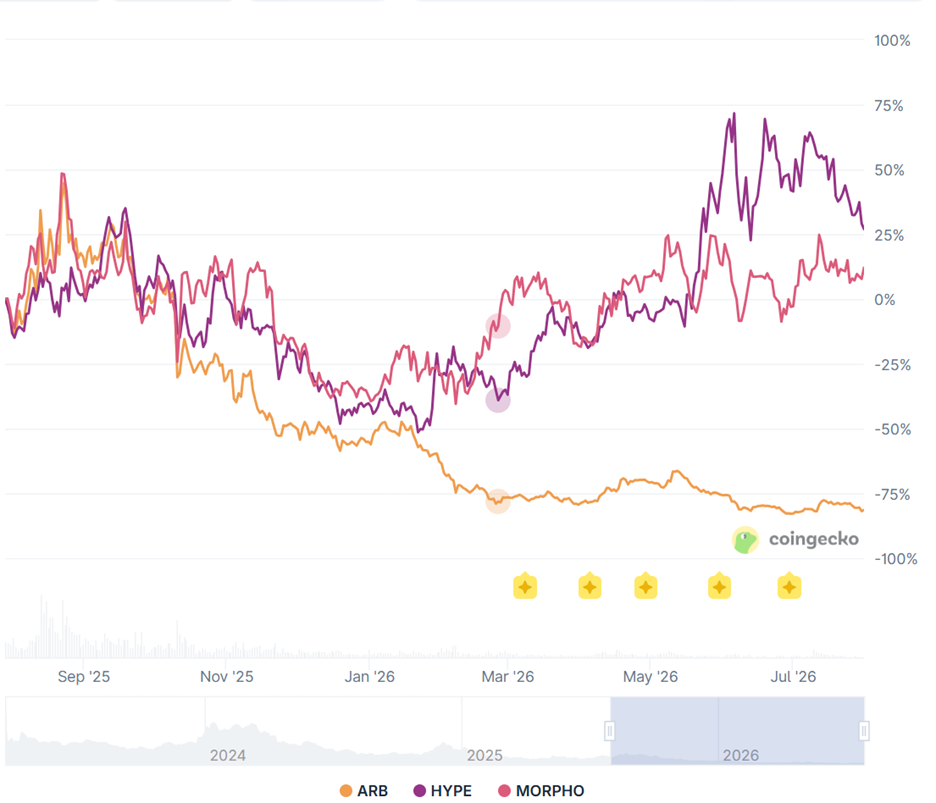
- HYPE is up about 25%.
- MORPHO, with real fees but nothing reaching the token, managed a modest 9%.
- ARB, with no token cash flow and steady dilution, is down roughly 81%.
And there's a fresh data point worth noting: In mid-June, Hyperliquid's operators approved putting the platform's idle dollar reserves to work to earn yield.
Simply put, it’s a second buyback engine set to kick in this fall.
With over $5 billion in digital dollars on the platform, that pool could fund up to $200 million more in annual repurchases starting in Q4 2026.
Which means a protocol that already passed all three questions … is about to widen its lead.
The Bottom Line
No checklist removes risk.
HYPE trades near $54, about 29% below its June all-time high. And price-discovery coins swing hard both ways.
Not only that, but buybacks can slow if fees fall. And Morpho could start paying holders tomorrow and rewrite its score.
But the three questions give you a frame the headlines won't …
Real revenue.
Revenue that reaches the token.
A supply that isn't loaded against you.
That’s why they should be the first questions to come to mind when analyzing a potential new portfolio pick.
Best,
Beth Canova
P.S. Have you seen our Friday Income Machine?
It’s been proven to produce consistent, weekly payout opportunities of up to $1,000 — and potentially more — nearly every Friday morning since 2020.
To learn more, click here.