Bitcoin’s Fear & Greed Index Hits ‘Extreme Fear’ … And That May Be Good News

|
Key Takeaways
|
 |
| By Beth Canova Reviewed By: Dawn Pennington |
Fear currently dominates the crypto market.
And the best move right now — at least based on the cycles and historical precedent — is to ignore it.
Let me explain …
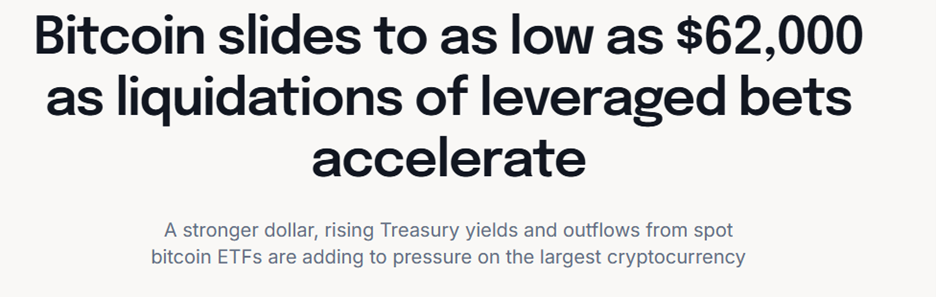
The world's largest crypto plunged near $62,000 over the weekend. That's its lowest price in four months.
And the pain goes well beyond Bitcoin (BTC, "B+"). The crypto market has lost more than $750 billion in value since September.
Meanwhile, one key gauge of market mood has hit a level we rarely see.
The Crypto Fear & Greed Index fell to just 12 out of 100 on Monday. That's deep in the zone known as "extreme fear."
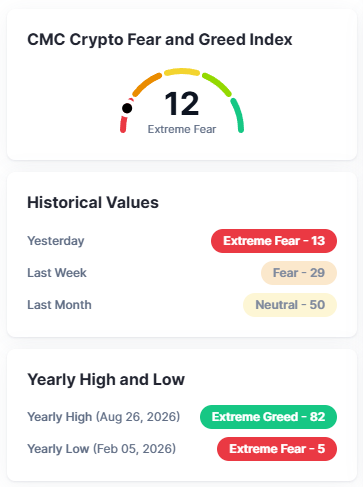
A week ago, it stood at 29, or just plain “Fear.”
But rather than sell your Bitcoin into this environment of extreme fear, remember this ...
Some of Bitcoin's best buying chances have come when fear was at its worst.
That doesn't mean you should rush to buy today. In fact, my colleague and cycles expert, Juan Villaverde, sees a reason to be patient.
And his latest data points to a much bigger chance ahead.
Why Bitcoin Investors Are So Scared
First, let's look at what's driving the selloff.
Bitcoin fell as low as roughly $62,000 on Sunday before climbing back toward $64,000 at the time of writing.
That leaves it down close to 50% from its October 2025 peak.
And the selloff has hit both small traders and Wall Street. U.S. spot Bitcoin ETFs lost about $1.07 billion last week alone.
That's a lot of money leaving the market in a short span.
At the same time, rising Treasury yields and fresh fears of higher interest rates have hurt demand for risk assets. That’s because when investors can earn more from bonds, they often grow less keen to hold assets like Bitcoin.
Indeed, Juan explained on Friday how he’s seeing assets across the board searching for a bottom.
Related story: Bitcoin's 320-Day Cycle Points to a New Buy Window in 2027
And as prices fall, traders who used borrowed money can be forced to sell.
In fact, that’s exactly what happened over the weekend to force BTC down to $62,000 — the latest wave of leveraged positions was liquidated. And the forced selling saw Bitcoin’s price fall even further.
But while these forces help explain the drop, they don't tell us when it will end.
For that, we need to look past the headlines.
What a Fear Reading of 12 Really Means
The Crypto Fear & Greed Index tracks how investors feel about the market right now.
It uses data such as price swings, trading trends and market demand to build a scale that runs from zero to 100.
Low scores mean fear. High scores mean greed.
And a reading of 12 tells us fear has taken hold.
Why does that matter?
Because markets often turn when most people least expect them to.
Think about it.
When prices rise each day, investors feel safe. They buy more, even when prices may be too high.
When prices fall, fear takes over. Some sell just to stop the pain. It’s a natural reaction … one that can push prices below what long-term buyers think they're worth.
And that can create a chance for those who stay calm.
But there's a catch …
Extreme Fear Is Not a Buy Signal on its Own
A market can stay fearful for weeks. And prices can keep falling.
That's why we need more than just near-term price action or sentiment to understand what the market is telling us.
Fortunately, Juan has been tracking several key indicators. According to him, four additional signals all point to the same thing …
The bear market is over. And the next bull market is just around the corner.
This changes how investors should view this correction.
It no longer represents a reason to sell. But as a sign for long-term investors to be on the lookout for their next chance to load up.
Which, according to Juan, may come in late January 2027.
That forecast is not a promise.
Markets can change fast. And no model gets every turn right.
Still, it gives investors a useful plan.
Don't let fear force you to sell. But don't let the hope of a quick rebound force you to buy, either.
Instead, watch for signs that the market is ready to turn. Especially since …
The Long-Term Crypto Story Is Still Growing
While Bitcoin prices have fallen, crypto adoption has kept growing.
About 762 million people now own crypto. That's 9.3% of the world's population.
And it's getting close to 10%.
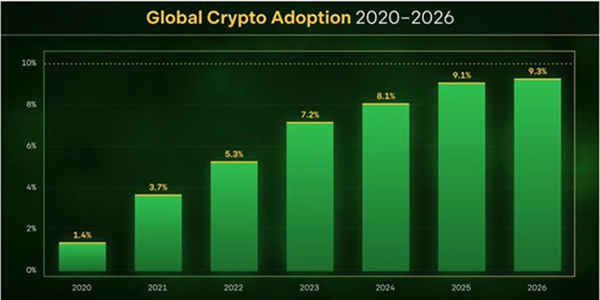
Why is that number so important?
Because new tech often follows a pattern known as an S-curve: Growth starts slow at first. Then, over time, more people see its value. A little more time, and more firms build tools for it. And sparks usage to grow at a much faster rate.
We saw that with personal computers, the internet and smartphones.
Juan believes crypto may be nearing a similar turning point.
Of course, wider adoption doesn't mean prices must rise at once. But it does show why the long-term case for crypto can remain strong even when the market is weak.
What to Do While Bitcoin Fear Runs High
So, what should you do with all this news?
Start by keeping three things in mind …
First, don't trade based on fear.
A Fear and Greed Index reading of 12 tells us how scared investors are right now. It does not tell us where Bitcoin will go tomorrow.
Second, watch the flow of money.
If Bitcoin ETF outflows slow or turn into inflows, that could be an early sign that demand is coming back.
And third, pay close heed to Juan's cycle forecasts.
His latest outlook points to a possible rebound before year-end, followed by a better buying window in early 2027.
That means there may be no need to chase the first bounce. The key is to be ready when the data gives us a clearer signal.
Because the best chances in crypto rarely feel safe when they first appear.
And today's extreme fear may be setting the stage for one of those chances.
The goal isn't to guess the bottom. It's to have a plan before the next big move begins.
For that, I suggest you check out Juan’s recent crypto briefing for long-term investors.
He’s trained his Crypto Timing Model and trading algorithm to help filter out the noise and track exactly what Bitcoin is doing in real time on-chain.
That’s what helps his Weiss Crypto Investor members ignore the fear and act based on real data.
To see how it can benefit your long-term crypto holdings, click here.
Best,
Beth Canova