 |
| By Mark Gough |
Can cryptocurrencies thrive if U.S. interest rates don’t fall?
One of our Weiss Partners Circle members just wrote in with this excellent question.
I believe they can. Bitcoin (BTC, “A-”) has already given us a pretty good test of that argument.
BTC peaked at around $126,000 in October 2025 before eventually falling to $57,800 in July this year.
It was a brutal decline. But these large cyclical retracements are nothing new for Bitcoin after the peak of a four-year cycle.
The real evidence lies in what happened next.
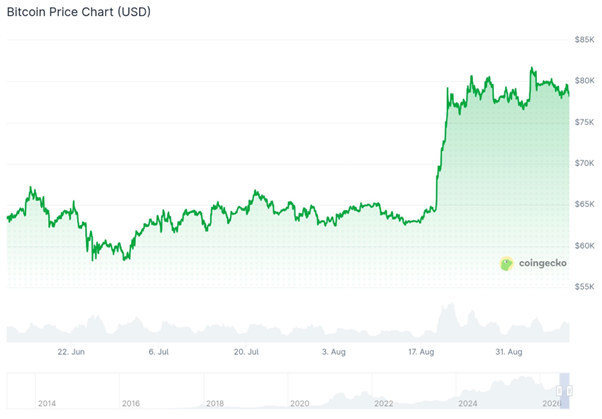
Bitcoin rallied from $57,800 to $81,000, a gain of around 40% from its summer low.
That was despite the Federal Open Market Committee not cutting interest rates a single time this year.
The Fed has kept its target range at 3.5%–3.75% throughout 2026. So, we’ve already seen Bitcoin stage a substantial recovery without any help from lower rates. Besides …
There’s Much More Driving Crypto Than the Fed
Interest rates do matter, yes. But they are only one part of what is happening in crypto right now.
We are seeing serious institutional interest in the sector as the dividing line between crypto and traditional finance becomes increasingly blurred.
Tokenized stocks and real-world assets are moving on-chain.
Perpetual markets are expanding into traditional assets.
Stablecoins are becoming an increasingly important part of the financial system.
All the while, DeFi infrastructure continues to improve.
Then We Have the Regulatory Side
The “Digital Asset Market Clarity Act” is moving through the U.S. Senate as we speak.
A cloture vote on the motion to proceed is currently scheduled for this coming Tuesday, Sept. 15.
At the same time, the SEC recently proposed Regulation Crypto Assets, which could create a much clearer framework for crypto projects to raise capital in the United States.

The proposal isn’t final; comments are due by Oct. 20.
But here again, look at the direction where things are moving.
We have institutional adoption, tokenization, DeFi, stablecoin growth, and potentially the biggest improvement in U.S. crypto regulation we have seen.
And all of this is arriving around what I believe is an important cyclical bottoming period for Bitcoin and the wider crypto market.
What Happens If Rates Do Fall?
They would certainly help.
Lower interest rates reduce the return available from cash and other safe assets.
That encourages investors to move further out along the risk curve in search of better returns.
Some of that capital moves into equities. Some moves into growth and technology stocks.
And when investors become sufficiently comfortable taking risk, some inevitably finds its way into crypto.
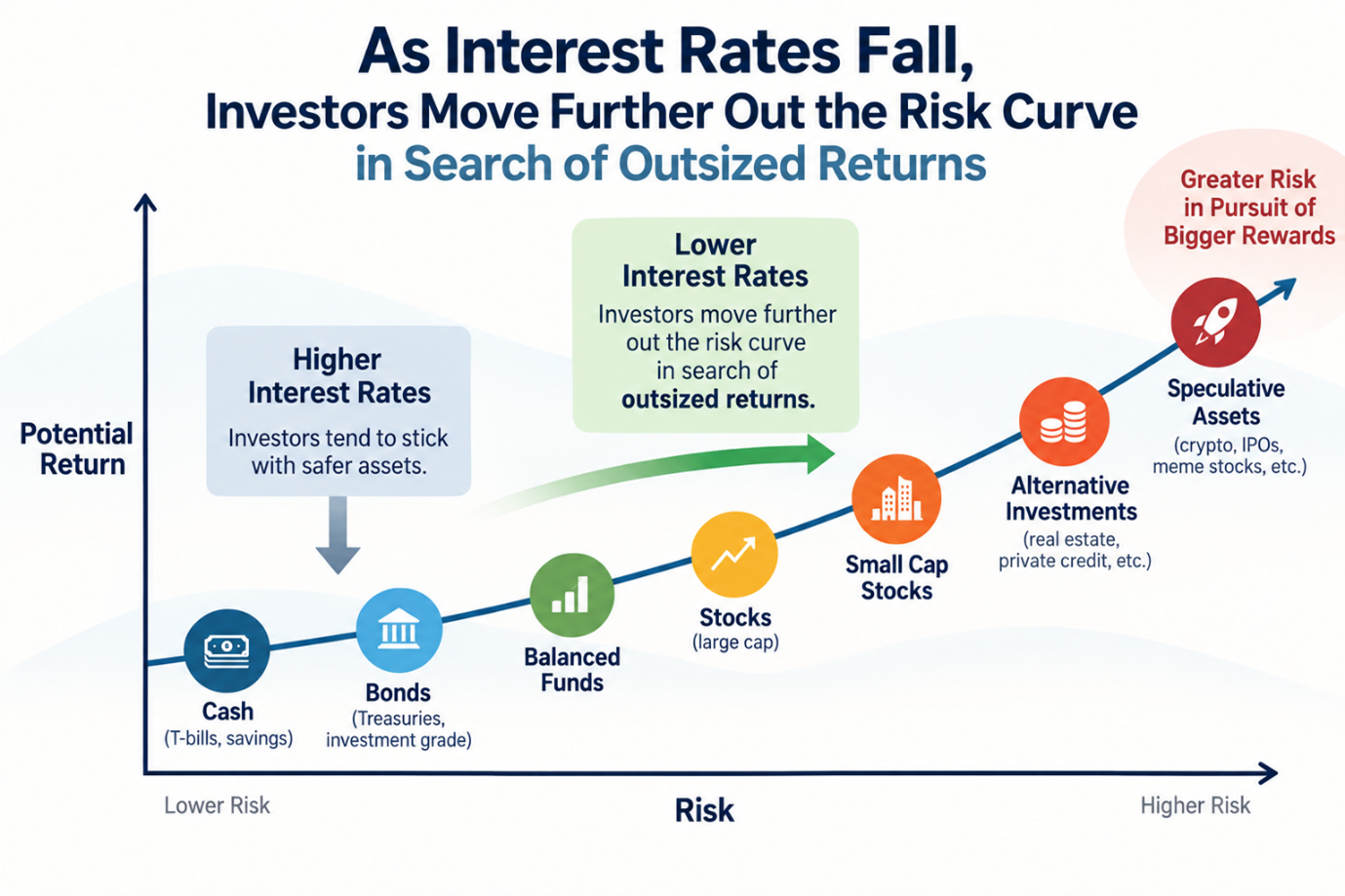
Crypto sits right up at the aggressive end of that risk curve.
So if the Fed eventually cuts while these other structural crypto catalysts develop, look for that to bring additional liquidity into the market.
In the meantime, we should treat rate cuts as an extra tailwind, rather than something our bull case depends upon.
What If Warsh & Co. Do Hike Rates?
This is where I would become more cautious.
At the time of writing, markets are pricing in a 60% chance of a September rate increase following Kevin Warsh’s Jackson Hole comments.

But Warsh did not actually say, “I am raising rates in September.”
He said the Fed would have more work to do, if policymakers were not confident inflation was returning toward 2%.
That’s hawkish, certainly, and markets reacted accordingly.
But it’s not the same thing as committing to an increase at the next meeting.
On the off-chance we get a single 25-basis-point hike, I would expect a bout of volatility across both equities and crypto.
But a single quarter-point hike would not automatically tell me the entire market has turned bearish.
A further 50—100 basis points of tightening would be a different situation. Particularly if long-term bond yields were rising alongside it.
Then I would become significantly more defensive.
Remember, crypto doesn’t trade in isolation from everything else.
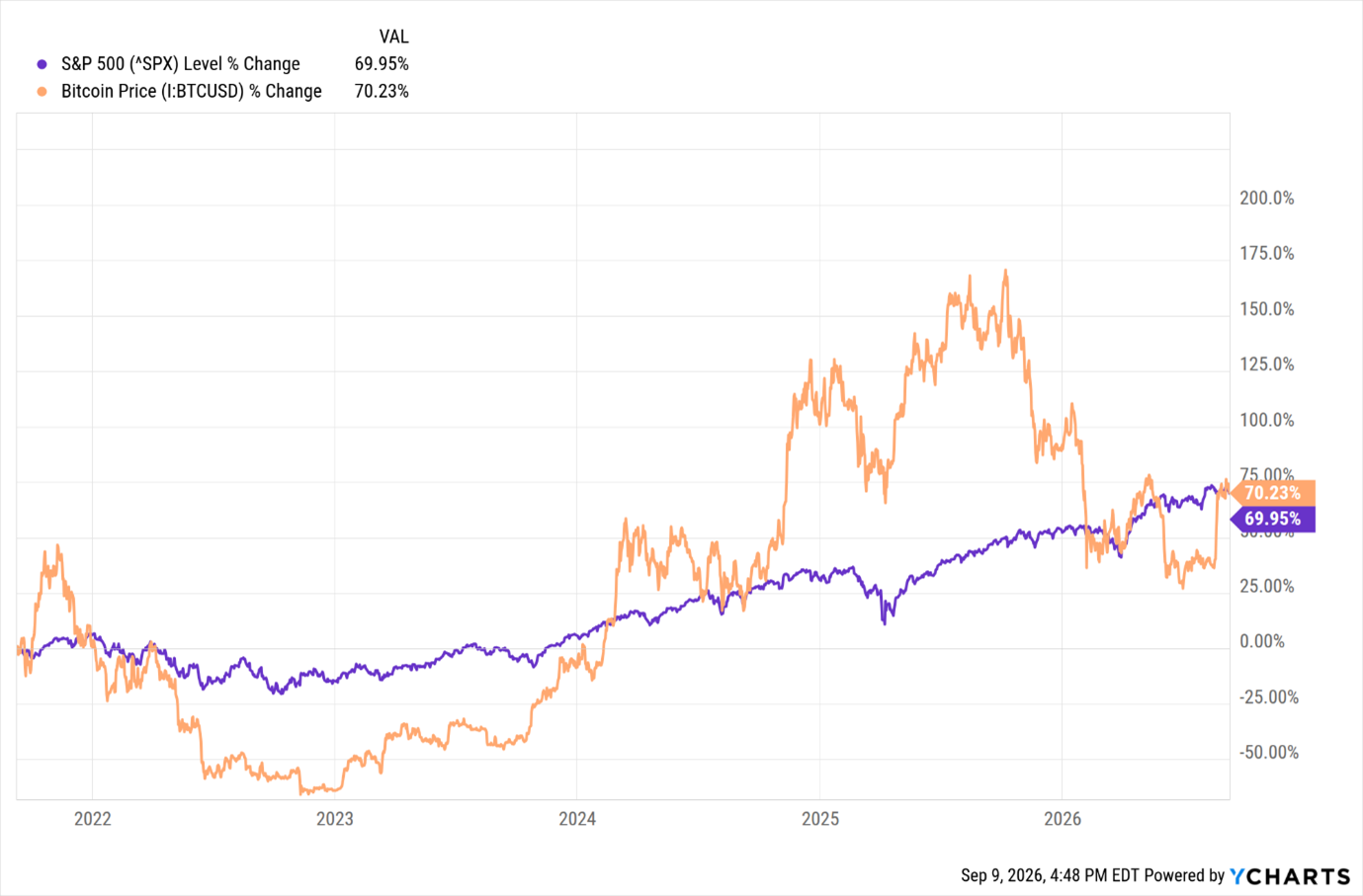
If traditional markets experience a serious deleveraging event, crypto will no doubt follow. It is still one of the highest-beta areas of the financial markets.
On the S&P 500, I’m watching 7,200 particularly closely.
A sustained break below there would tell me the technical picture is deteriorating considerably and could lead to forced selling and a much larger risk-off move.
Why I Don’t Think Warsh Should Raise Rates Yet
This is where the latest inflation data comes in.
Look at the chart below.
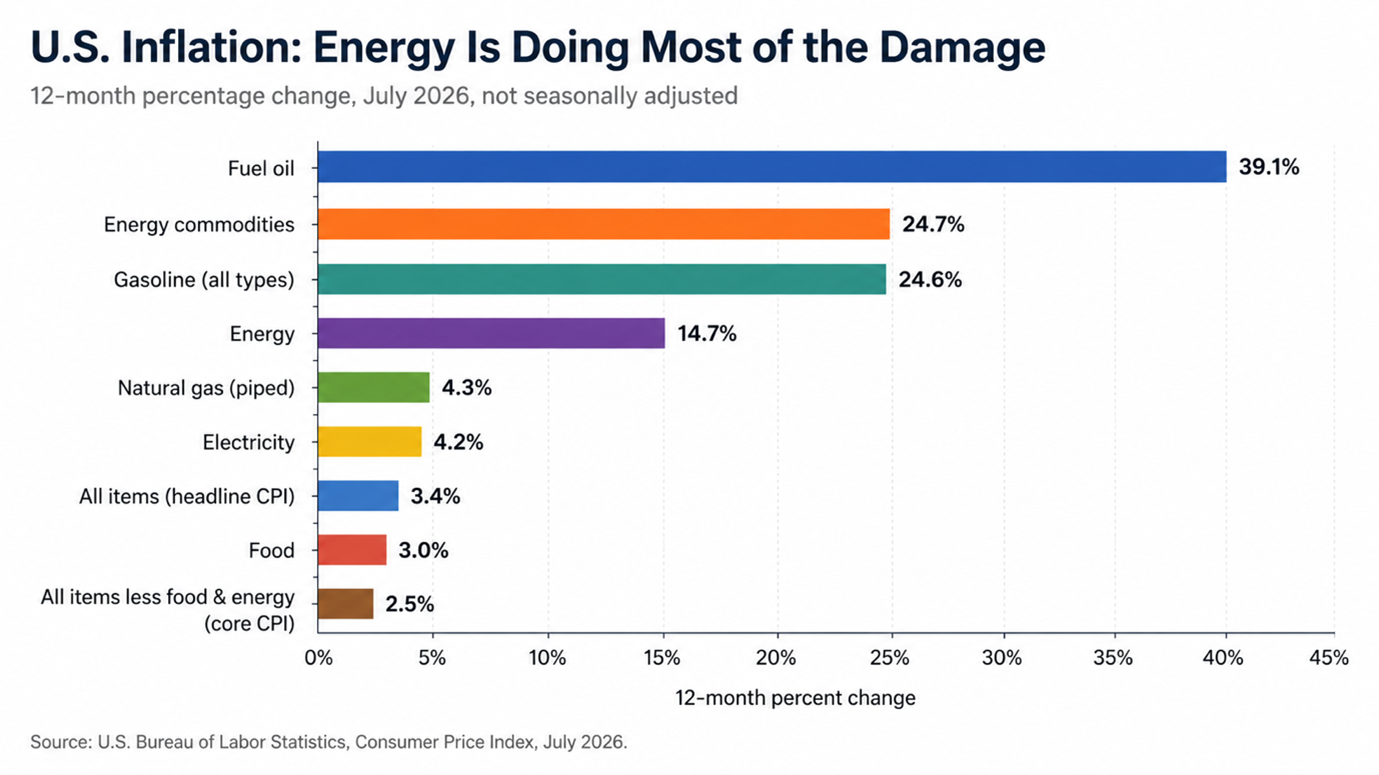
In July, headline CPI was running at 3.4% year over year.
Food inflation was 3%.
Core CPI, which removes food and energy, was 2.5%.
Now compare that with energy. Overall energy prices were up 14.7% over the previous 12 months.
- Gasoline was up 24.6%.
- Energy commodities were up 24.7%.
- And fuel oil was up an extraordinary 39.1%.
You can see where some of the most extreme inflation pressure is coming from.
That’s why I don’t think Warsh should touch rates yet.
The Fed can raise interest rates to suppress demand. It cannot:
- Produce another barrel of oil.
- Reopen shipping routes.
- Use monetary policy to end a war.
The renewed U.S.-Iran conflict has pushed Brent crude back toward $97 per barrel. Concerns around shipping through the Strait of Hormuz continue to add a geopolitical premium to energy prices.
If higher oil prices begin feeding into wages and the wider economy … and we start to see underlying inflation reaccelerate … then the Fed may eventually have to respond.
But I don’t think you pre-emptively tighten monetary policy to fight what is, at least partly, a geopolitical supply shock.
You risk slowing housing, investment, employment and consumer demand. While doing nothing about the reason inflation is rising in the first place.
For me, the better approach would be to leave rates where they are. Then see what happens with Iran and energy prices over the next few months.
If the conflict begins to de-escalate, oil could fall. And some of that inflation pressure could unwind without the Fed having to damage the wider economy.
The Trump administration has an increasingly strong economic incentive to find a way to de-escalate the situation.
High oil prices hurt consumers, push inflation higher, raise bond yields and increase the pressure on the Federal Reserve to tighten.
None of those outcomes are particularly attractive heading into the U.S. midterm elections.

Reuters reports that the administration is trying to limit the latest escalation while officials pursue de-escalation.
That is reason I think markets may be overestimating the chances of a September hike.
We will know more once we get the next employment and inflation readings.
Crypto Doesn’t Need the Fed to Save It
So, crypto can indeed thrive without rate cuts.
In many ways, it already is.
Bitcoin has rallied around 40%, Ethereum (ETH, “B+”) 60%, and Solana (SOL, “B”) over 70% from their respective lows without a single Fed cut.
Even with any inevitable pullbacks, for example if the Clarity Act’s future remains cloudy after Sept. 15 …
- Institutional participation continues to grow.
- Crypto and traditional finance are increasingly merging.
- The regulatory backdrop in the United States is improving.
We are also seeing developments in tokenization, stablecoins, DeFi, and on-chain financial markets.
Would rate cuts help? Absolutely.
They could bring another wave of liquidity into risk assets and potentially accelerate the recovery.
But I don’t believe they are needed for any of that to happen.
The scenario that would concern me much more is a prolonged new Fed tightening cycle, combined with a serious breakdown in traditional equity markets.
Right now, that is not my base case.
Unless the underlying inflation picture deteriorates materially, Warsh would be better served waiting to see whether the Iran situation and the resulting energy shock begin to abate before deciding direction.
Best,
Mark
P.S. My colleague Chris Graebe is getting ready to unveil a unique investment opportunity.
One that not only sits outside the U.S. markets, but it’s also insulated from whatever market shenanigans may result from Fed (in)actions.
Get all the details in front of the big reveal … because the deals Chris shares tend to fill up very quickly!