 |
| By Beth Canova |
Imagine waking up one morning to find that someone has cracked the lock on your crypto wallet.
Your Bitcoin (BTC) is gone. Your Ethereum (ETH) is gone. And the thief never even needed your password.
Sounds like science fiction, right?
Right now, it is. The only way someone can access your wallet is if they get access to your keys. Which is why we recommend you never store them online. Or give them out to anyone.
That said, the day is coming when a computer may be able to break your crypto lock. And that day could come sooner than you’d think.
That's because a new type of computer is on the rise. And it may one day crack the math that keeps much of today's crypto safe.
These machines are called quantum computers.
And one day, they may be able to solve certain problems that would take today's best computers an absurd amount of time.
That could be great news for science and medicine. But for crypto? It's a risk worth taking seriously.
The good news is that crypto developers already are. They’re hard at work on new ways to keep your coins safe.
First, What Is the Quantum Threat?
Every crypto wallet relies on a pair of digital keys.
One is public. The other is private.
Think of your public key as part of your wallet's security system. Your private key is the secret signal that lets you spend and use your coins.
Today, the math that links these keys is hard to crack. So much so that even the fastest normal computers can't do it in any useful amount of time.
But a powerful quantum computer could change that.
It could use a public key to work out the private key. And that could let a thief move coins they don't own.
The industry calls the day this becomes possible Q-Day.
No one knows when it will arrive. Some experts warn it could happen around 2030. Others think it may take much longer.
Still, there's a good reason to act now.
Because changing the locks on a global financial network — even one as young and as adaptive as crypto — takes time.
Altcoins: Building New Locks Now
Some altcoin networks are taking an active approach.
Rather than wait for Q-Day, their developers are looking at ways to replace the math that keeps transactions safe.
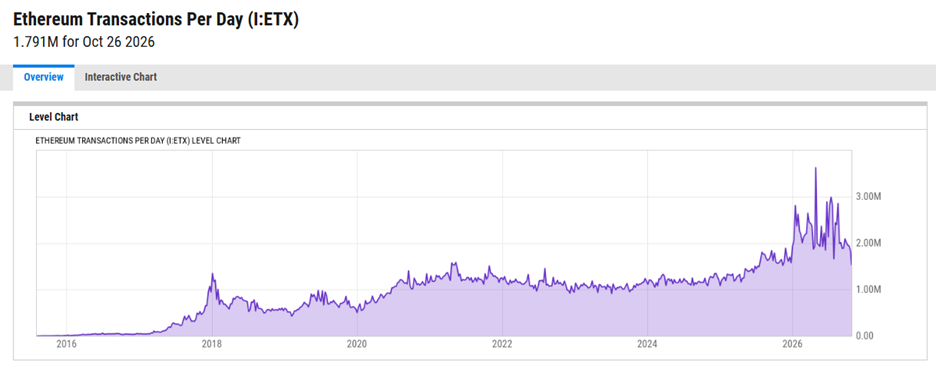
Take Ethereum. It’s the largest crypto by market cap after only Bitcoin. And when it comes to network utility, the Ethereum network boasts almost 1.8 million daily transactions — a 41% jump year over year.
Now, its developers are exploring new ways to approve transactions and protect the computers that help run the network.
They're also looking at ways to update the tools that let users move coins and interact with apps.
That's a big task.
Ethereum is more than a place to send money. It home to the largest number of dApps — decentralized platforms that allow for lending, trading, staking and other financial tools.
Each part may need its own security upgrade.
And Ethereum isn't alone.
Most networks that touch the DeFi ecosystem use digital signatures that would be at risk from a powerful quantum computer.
So they, too, will need ways to protect transactions.
The issue is that, as of writing, there’s no industry consensus of what the solution should look like. And developers have several ideas of how to move forward.
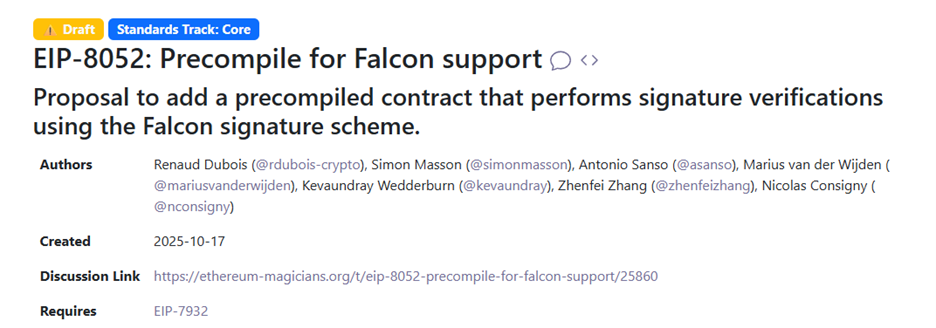
Ethereum, for example, is looking to increase its short, 65-byte transaction signatures to the 666-byte Falcon.
That’s an improvement. But it’s also notably shorter than other quantum solutions.
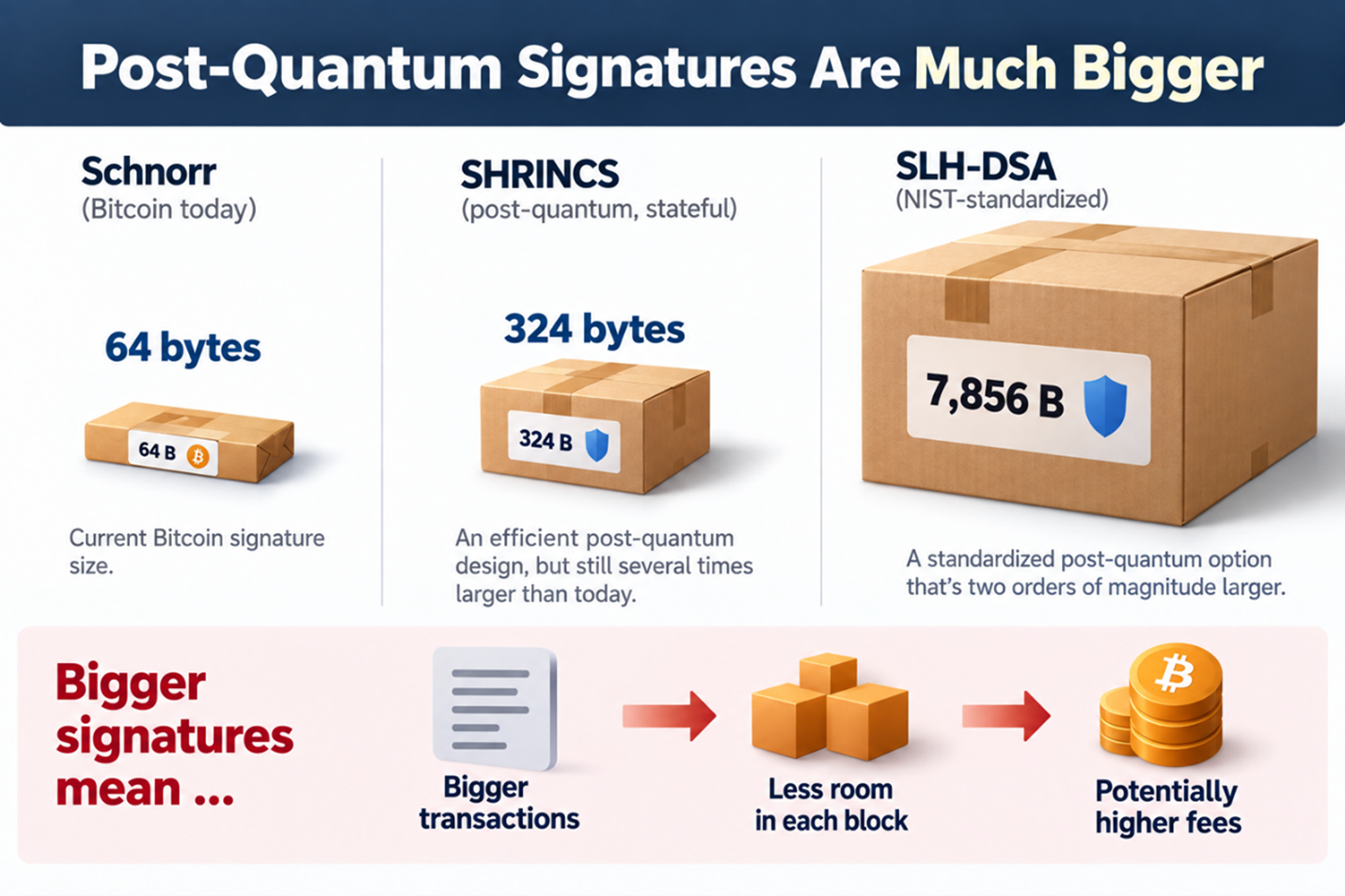
Aptos (APT), for example, has proposed a 7,856-byte solution for transaction signatures. This approach — with a much larger transaction signature — prioritizes security over what was once the make-or-break network metric, transaction speed.
That’s because these new locks take up far more space than the old ones. Which in turn can create larger transactions, more data and, in some cases, higher costs.
To be clear, none of the above are finished upgrades. Some are still research projects or proposals.
But they show that developers are taking the risk seriously.
Forward-looking investors should consider whether it’s time their portfolios did the same.
The Altcoin Advantage
As my colleague Mark Gough explained last month, developers are already testing ways to protect Bitcoin from quantum attacks.
One idea, known as BIP 360, aims to reduce how often certain public keys are exposed.
That's important because a quantum thief would need to see a public key before trying to work out its private key.
Another line of research focuses on replacing Bitcoin's current digital signatures with new ones that are harder for quantum machines to crack.
Blockstream has even tested such transactions on a live Bitcoin-based network.
That's real progress.
But there's a big challenge: Bitcoin takes a more cautious path. Its developers tend to favor small, well-tested changes over large upgrades.
And there's a good reason for that.
Bitcoin secures an enormous amount of wealth. A bad update could put that trust at risk.
The downside of that caution is that updates can take forever to get communal approval. And application can take even longer.
That potential headwind has a silver lining, however: It means Bitcoin gives its developers the time needed to fully test new tech … before your crypto becomes dependent on it.
What This Means for Your Crypto
Here's the key point.
Quantum computing is a real long-term risk. But it is not a reason to panic or sell your crypto today.
Bitcoin and altcoins both have ways to fight back.
Altcoins may be able to move faster and try more new ideas. Bitcoin may move more slowly, but gives its developers time to test each change.
Neither path comes with a guarantee.
And no major network should be called fully quantum-safe just because it has announced a plan.
For investors, the smart move is to watch what developers actually deliver.
Are they testing new security tools? Do they have a clear plan to protect old wallets? Can their network handle the added costs?
Those questions will matter more in the near-term as quantum computers improve.
For a deeper look at Bitcoin's plans, I suggest you read our earlier updates on the work developers are doing today and how Bitcoin could evolve.
Because the next big test for crypto may not be how high the price of individual coins can climb.
It may be how well the networks they transact on can protect the wealth people have already built.
Best,
Beth Canova