Jupiter Just Made It Easier to Invest in Crypto’s Biggest Names

 |
| By Marija Matic Reviewed by: Beth Canova |
Say you have $500 to put into crypto.
You know Bitcoin (BTC, “B+”) is the big play, the one already adopted by most of Wall Street. You also see real promise in Solana (SOL, “B-”). And you've heard that some AI coins could be big winners in the years ahead.
But how much should you put into each one? And how do you keep track of them all once you do?
These are two of the biggest hurdles for new crypto investors.
Even those of us who have been in this market for years know how much work it takes to build and manage a portfolio.
That's why a new tool that hit the market this month caught my eye.
Jupiter (JUP, “D”) — a leading decentralized finance (DeFi) platform on the Solana network — has rolled out a new feature called Baskets.
And with as little as $20 in some cases — and a self-custody wallet called Phantom, which supports Solana-based tokens — you can gain exposure to a whole group of assets in one fell swoop.

The timing is worth noting, too.
Crypto prices have taken a hit in recent weeks. But just yesterday, Bitcoin began showing signs of strength.
Right when my colleague and cycles expert Juan Villaverde has called for a 320-day-cycle low.
That means there may be some good deals out there for those with a long-term view. And Jupiter just made it easier to cast a wide net … without increasing your investment capital.
A New Way to Buy Crypto
If you've ever bought an exchange-traded fund, you know the appeal of this approach.
Say you think tech stocks are set to do well. But you're not sure which ones will lead the pack. You could buy a tech ETF. With one trade, you'd gain a stake in a group of stocks.
Jupiter Baskets brings a similar idea to DeFi.
Related Story: This Crypto Project Makes Millions. So Why Is Its Token Down 85%?
Here's how it works …
You pick a basket of assets that appeals to you. You make a deposit in SOL or USD Coin (USDC, Stablecoin), which is pegged 1-to-1 to the U.S. dollar. Jupiter then handles the trades needed to build your basket.
But there's one key twist: With an ETF, you buy shares in a fund that owns a pool of assets.
With Jupiter Baskets, your tokens go into a vault set up just for you. Your assets aren't mixed in with those of other users.
And Jupiter helps keep your mix of assets in line with the rules of the basket.
That means you don't have to make each trade yourself when the mix needs to change. You can also request to cash out at any time.
So, what can you invest in?
5 Ways to Put Your Money to Work
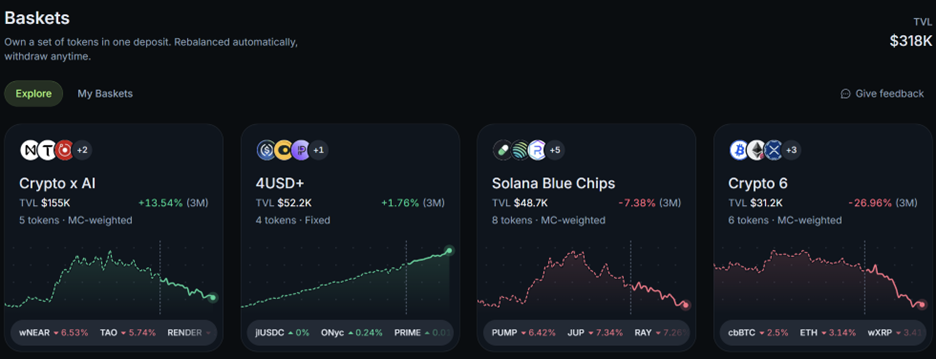
As I write, Jupiter offers five baskets.
They each cater to a distinct theme or goal:
- Crypto 6: Get exposure to six major coins, such as Bitcoin, Ethereum, XRP and Solana.
- Solana Blue Chips: Bet on the growth of eight projects in the Solana ecosystem, such as Jupiter and Raydium (RAY, “D”).
- MAG7: Gain exposure to the seven Big Tech stocks known as the Magnificent Seven through tokenized shares.
- 4USD+: Gain exposure to four dollar-focused, yield-bearing assets. Think of this like a dividend-paying fund.
Of these, Crypto x AI has drawn the most funds so far. In fact, it holds close to half of the $325,000 parked in Jupiter Baskets at the time of writing.
That's still a small sum in the grand scheme of things. But it gives us an early glimpse of what some DeFi users want to own.
And I suspect we'll see more themes emerge as the platform grows.
Read the Fine Print Before You Buy
As with ETFs, not all baskets are built the same way.
Some give more weight to assets with a large market cap. Others aim to keep each asset at a set share of the basket.
That may sound like a small detail. But it can have a big impact on your gains.
Take Crypto 6, for example. When Solana Compass looked at the basket on Nov. 10, its Bitcoin exposure made up about 79% of the mix.
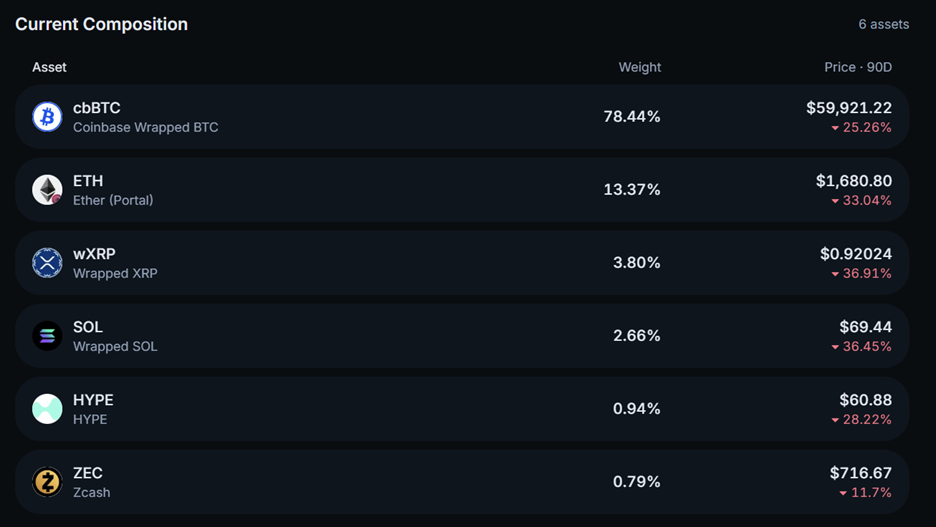
In other words, you can own six coins and still have most of your funds tied to the fate of just one.
You should also check what it costs to get in and out. A basket fee of zero does not mean every trade comes at no cost.
And keep in mind that you take on new risks when you move your coins from your wallet into a vault. A bug in the code could put your funds at risk. So could a flaw in the tokens that give you access to assets from other chains.
The tool may be simple. But you still need to know what you own.
A Big Step for DeFi
What excites me most about Baskets isn't the chance to buy a group of coins at once.
It's what this launch says about where DeFi is headed.
For years, DeFi tools have been built with traders in mind. But most people don't want to trade all day. They want to build wealth over time.
And Jupiter seems to have caught on.
Along with Baskets, it has rolled out new tools to help users track their wealth, find new assets and earn yield.
It's taking steps to become a one-stop shop for crypto investors. And to make starting your crypto investing easier.
And that could be good news for Solana, too. The more useful apps built on its network, the more reasons people have to use it.
What You Can Do Now
Head over to Jupiter's Baskets page and take a look at what's on offer.
You don't need to link your wallet or spend a dime to see which assets are in each basket.
Compare those assets with the coins you already own or have on your watchlist. Check whether a basket would spread out your risk or just add more of the same.
And check the Weiss Crypto Ratings for the coins you'd like to own. See what our ratings have to say about those tokens. And what developments or insights we’ve written about in our Weiss Crypto Daily updates.
If you do decide to try a basket, start small. Check the fees, the rules and whether it's available where you live.
Tools like Baskets won't take the risk out of crypto. Nor will they make a bad coin a good buy.
But they can help take some of the hard work out of building wealth in this space.
And that's a win for us all.
Best,
Marija Matić
P.S. As I mentioned, the 4USD+ basket on Jupiter gives you exposure to some of DeFi’s steadiest yield opportunities. At the time of writing, it currently yields about 8% APY.
That’s decidedly more than what you’d get in your average money market account. But it’s far from the best income strategy out there.
There are three in particular that Weiss Ratings’ income specialist Nilus Mattive recommends. You can hear him explain them and how you can get started with them here.