Kraken's IPO Is on Hold. Its Next Big Move Is Not

 |
| By Beth Canova |
Kraken has spent more than a decade in the depths of the crypto market.
Now, the centralized exchange is preparing to surface on Wall Street via an initial public offering.
Or at least, that was the plan …
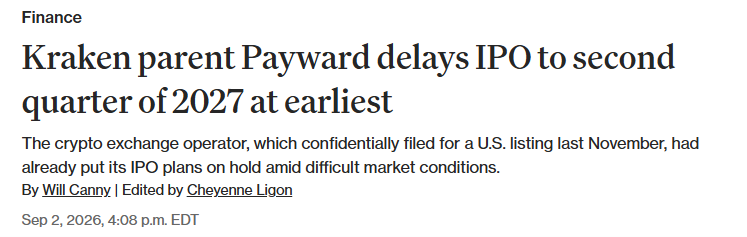
On Sept. 2, CoinDesk reported that Payward, Kraken's parent company, doesn't plan to go public before the second quarter of 2027.
At first glance, it looks like another sign that crypto's moment on public markets has cooled. Grayscale, Consensys, and Ledger have all put off their own listings too.
But a delayed IPO is not a failed IPO.
In Kraken's case, it may reflect a deliberate choice to wait for better terms rather than a sign of weakness.
That said, the wider IPO market is heating up. So why would Kraken, which already filed confidentially with the SEC, choose to wait?
The answer has less to do with Kraken's prospects… than with the terms on which it wants to go public.
Those terms are what crypto investors should pay attention to.
Why Kraken's Delay Isn't Bad News
Kraken’s last private funding round valued the company at $20 billion. The $800 million raise included a $200 million investment from Citadel Securities.
That valuation, from November 2025, set the bar.
Then crypto slid. Prices and trading volumes fell in early 2026, and Kraken paused its IPO plans in March.
Here’s the quiet part…
If Kraken lists now, it could debut at a lower valuation than private investors recently paid.
That would make it look like the market had cooled on Kraken. And once a stock trades publicly, that perception is hard to shake.
But zoom out, and we don’t see a company in retreat. The opposite, in fact.
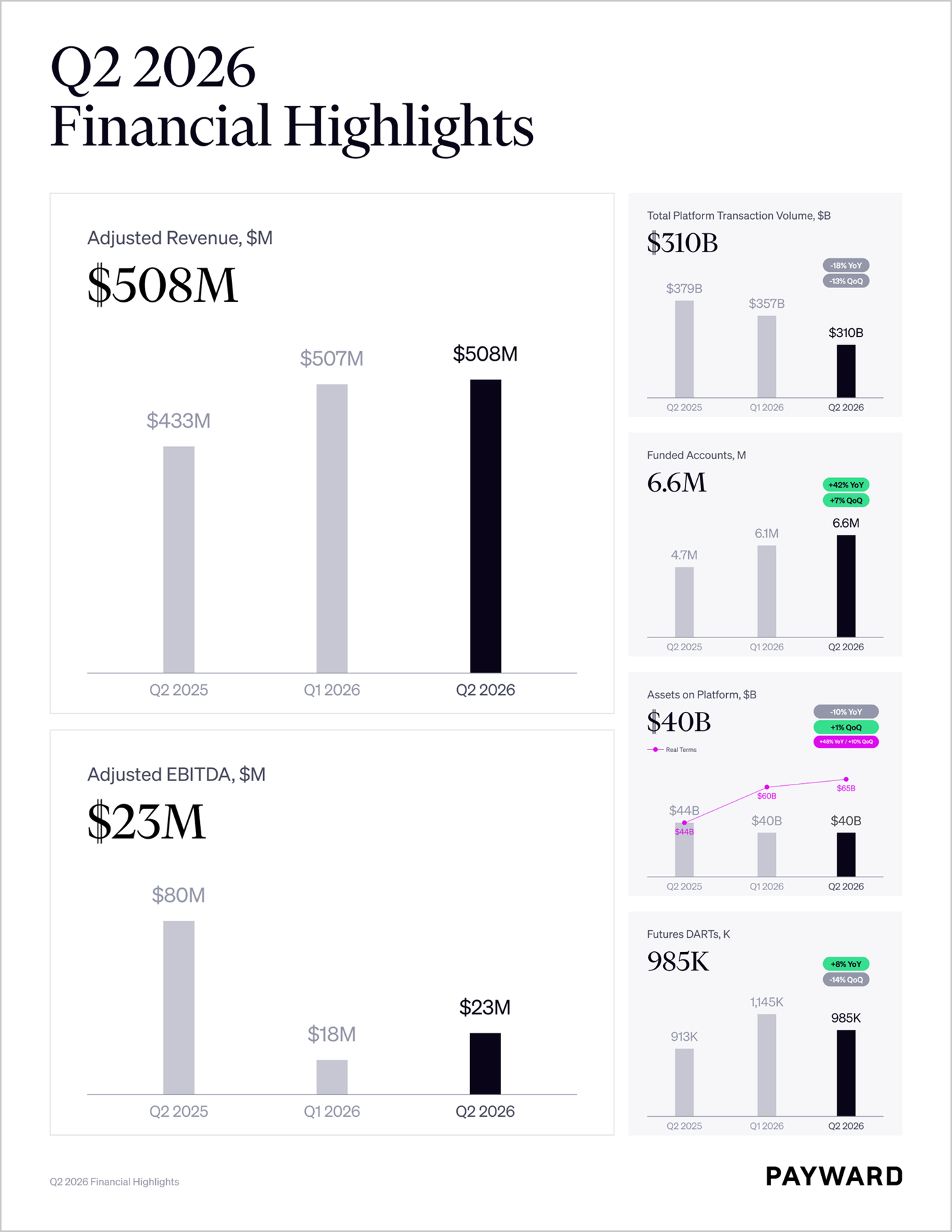
Payward reported $508 million in adjusted revenue for the second quarter, up 17% from the prior year. Funded accounts rose 42% to 6.6 million.
It also acquired Bitnomial and Reap and agreed to buy Magic Labs' wallet business. That means, in addition to simple swaps, Kraken users can now expect derivatives, payments, and wallet capabilities on the platform.
And on the IPO side, the market is having one of its strongest stretches in years, with some 1,600 companies worth $8.6 trillion lined up to go public.
So Kraken isn't running away from Wall Street. It's choosing when to meet it. On its own terms.
While Kraken waits to open one door into the public markets, it’s already helping build another — one that could let investors get in earlier with clearer rules.
Kraken Bets on ICOs
That other door is an initial coin offering, or ICO.
An IPO opens the door to TradFi company, letting public investors buy in as it enters the market.
An ICO opens that door on the blockchain. And not just for new crypto projects looking to raise funds. With tokenization, more traditional assets are also seeing ICOs for their tokenized coins.
Kraken is working on both ends.
While preparing for its own IPO, it has also been working on building an ICO market.
Kraken Launch, its token-sale platform, is built-in partnership with Legion. That gives eligible Kraken customers access to token sales before the tokens trade publicly.
Crypto has tried this before. But for many investors, it ended badly.
What Went Wrong with the First ICO Boom
In 2017, a crypto project could publish a white paper, launch a website, and raise millions of dollars by selling tokens directly to the public.
Anyone with a crypto wallet could back a network before it existed. But the market progressed more quickly than the rules governing it.
Some teams were legitimate. Many weren't.
A large number of projects had no working product, no revenue, and no users. Some couldn't explain why their token needed to exist at all.
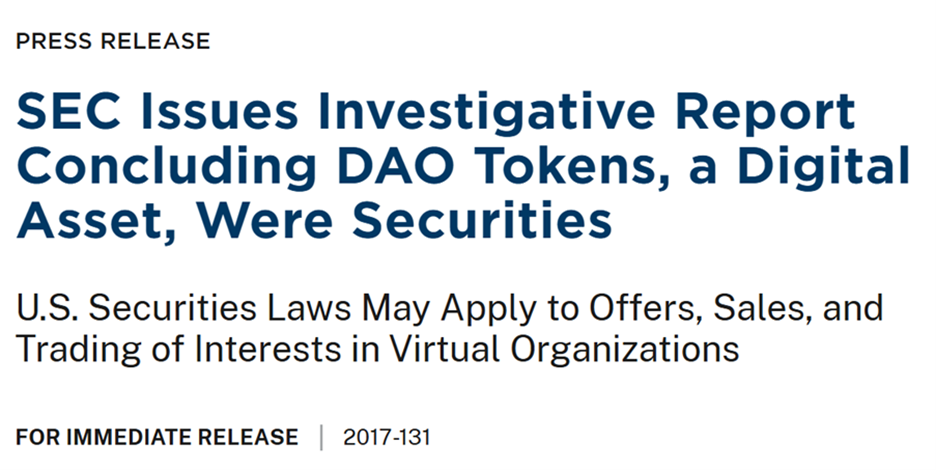
Then, in July 2017, the SEC's DAO Report concluded that some token sales could be investment contracts, putting them under U.S. securities law.
This alone didn't kill ICOs. But it definitely pushed much of the activity offshore. Other projects turned to private venture capital, leaving non-accredited U.S. investors on the sidelines.
Rules designed to protect ordinary investors… ended up shutting them out.
By the time a token reached a public exchange, venture investors had already captured the lion’s share of the gains. Venture investors bought in at low, early-stage valuations, while regular investors were stuck with higher public market prices.
The demand for early access never went away. The legal path to it did.
Now, early access may be coming back. This time with an updated regulatory framework around it.
Could Crypto Get Its JOBS Act Moment?
The 2012 JOBS Act opened doors for ordinary investors to participate in private company fundraising through Regulation Crowdfunding (Reg-CF) and an expanded Regulation A (Reg-A).
Reg-CF lets a company raise up to $5 million. Reg-A rounds can go up to $75 million, with disclosure and investor-protection rules attached.
The bargain was simple: Entrepreneurs got a legal way to raise money, and investors got the disclosure they needed to decide whether to back them.
Crypto may now be getting its own version.
On Aug. 18, the SEC proposed Regulation Crypto Assets, or Reg-CA. It’s a framework for how certain crypto-related investment contracts could raise money from the public.
Related Story: Crypto ICOs Are on the Edge of a Comeback
The limits will resemble those already in place for traditional private investing opportunities. Companies can raise up to $5 million over four years, or, under a different exemption, up to $75 million in 12 months, with financial statements and ongoing reporting requirements at the higher tier.
In short, early-stage projects eager to crowdfund would have to disclose what they’re building, how the token works, and the risks.
Nothing is final yet. Comments are due Oct. 20.
But unlike with its IPO, Kraken isn’t waiting on this front. Legion says its token sales already operate within Europe’s MiCA framework, and Reg CA could give the U.S. a similar path for offerings like these.
Rules won’t make every project a good one. But they do make the market look less like the 2017 free-for-all and more like an established capital market.
And that’s attractive to both retail and institutional investors.
More Access, Harder Choices
Crypto is moving toward Wall Street, and Wall Street is moving toward crypto.
Citadel Securities' $200 million investment in Kraken is one sign of it. Kraken's IPO may be delayed, but the convergence isn't.
That’s the story investors should focus on.
And on the natural conclusion it brings: More access also means more choices. And more ways to get it wrong when it comes to your investments.
A company can have a convincing story, a famous name, and plenty of investor attention — and still be a terrible investment at the wrong price.
Kraken knows it, too. That’s why it’s holding off on its IPO.
The same goes for regulated ICOs, if they return.
Regulation can create a framework. It can’t create a successful company. A project can follow every rule and still fail.
That’s why, reviewing the data available — like our various Weiss ratings and any official filings — is so important.
This way, you know the full picture before you invest.
Best,
Beth Canova